صغر حجم الشركة المصنعة طابعة نفث الحبر

دليل طابعة DTF 2026: كيف تعمل والتكاليف وأفضل الأحجام ونصائح الأعمال
دليل طابعة DTF 2026: كيف تعمل والتكاليف وأفضل الأحجام ونصائح الأعمال
Last Updated: March 2026
Reading Time: 15 minutes
Best For: Beginners, custom apparel startups, side hustlers, and small print businesses
Meta Description
Learn what a DTF printer is, how DTF printing works, how much it costs to start, what fabrics it can print on, and how to choose the right DTF printer in 2026.
What Is a DTF Printer?
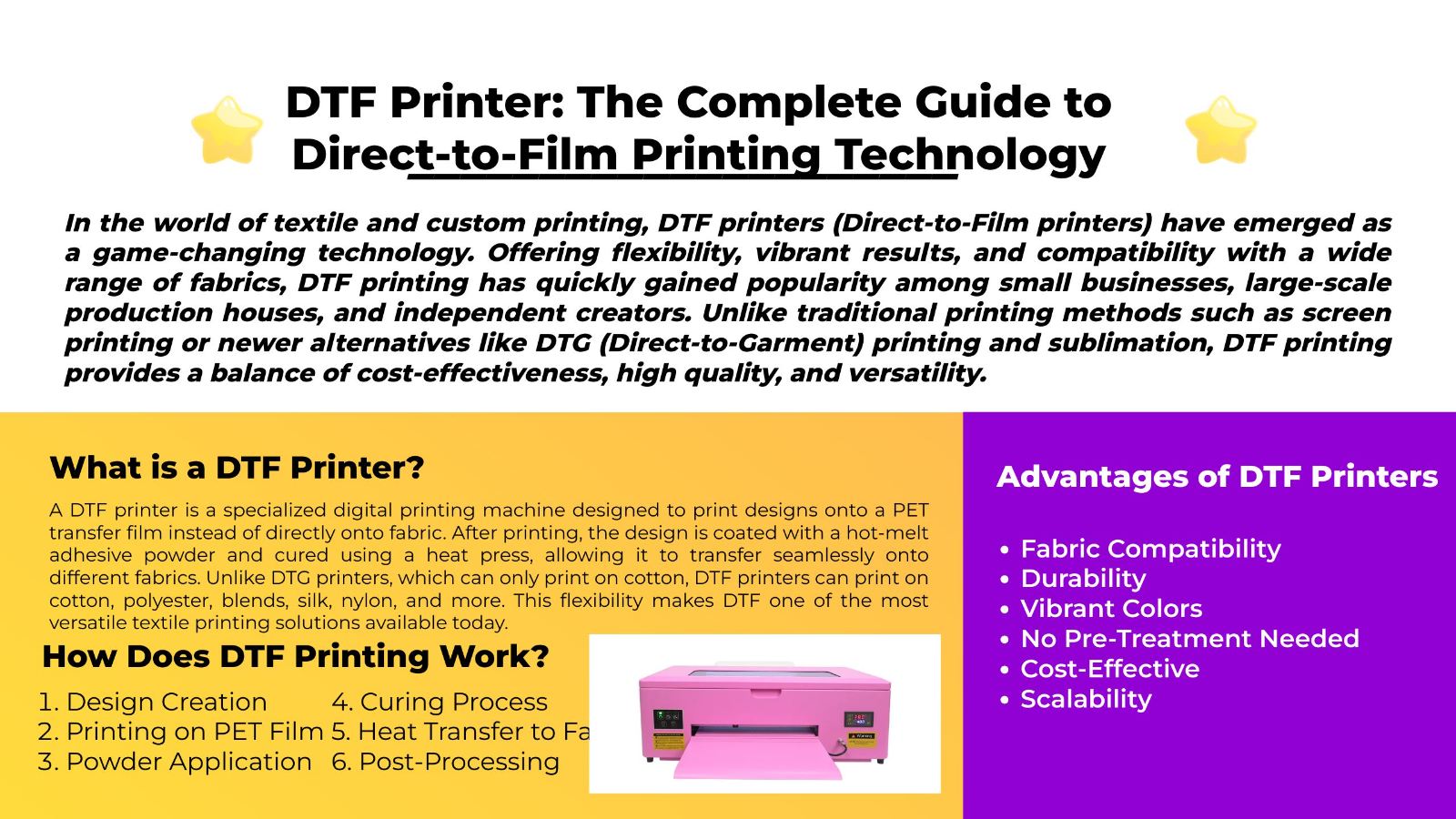
أ طابعة DTF is a digital printing machine that prints designs onto فيلم الحيوانات الأليفةينطبق مسحوق لاصق الساخن ذوبان, and then transfers the design onto fabric using a الصحافة الحرارية. DTF stands for مباشرة إلى الفيلم.
DTF printing has become one of the most popular options for custom apparel because it works well for small orders, one-off designs, and on-demand production. It can print on cotton, polyester, blends, canvas, and many other materials, including dark garments.
For many beginners and small businesses, DTF offers a practical balance of print quality, flexibility, startup cost, and scalability.
إجابة سريعة
If you are looking for a simple explanation, here it is:
- DTF printing does not require screen making
- It works for one-piece orders
- It produces vibrant colors and strong wash durability
- It can print on many fabric types
- Entry-level setups can start from around $500 for the printer itself, with a full small-business setup often starting at around $2,000–3,500
For most small businesses, A3 DTF printers are usually the most practical choice because they balance print size, cost, and production efficiency.
Why DTF Printing Is So Popular in 2026
DTF printing continues to grow because it solves several common problems in custom printing.
Main Advantages of DTF Printing
- No minimum order requirement
DTF is ideal for single-piece custom orders and short runs. - Works on light and dark fabrics
White ink allows designs to stand out on black and colored garments. - Compatible with multiple materials
Cotton, polyester, blends, canvas, and some specialty fabrics can all work well. - Strong color performance
DTF prints can produce rich, detailed, full-color designs. - Lower entry barrier than some alternatives
Compared with larger industrial printing setups, DTF is more accessible for startups and small shops. - Good fit for online custom businesses
It works especially well for Etsy sellers, Shopify stores, local print shops, and personalized gift businesses.
كيف تعمل طباعة DTF؟
DTF printing usually follows five main steps.
Step 1: Print the Design onto DTF Film
The printer outputs the design onto فيلم الحيوانات الأليفة using DTF inks, typically CMYK plus white ink.
The white layer acts as a backing so the design can transfer clearly onto both light and dark fabrics.
Step 2: Apply Hot Melt Adhesive Powder
Adhesive powder is applied to the wet ink.
This powder is essential because it helps bond the printed design to the garment during heat pressing.
Step 3: Cure the Powder
The film is heated in a curing oven or similar device.
A common starting point is around 160°C for 2–3 minutes, though exact settings may vary by film, powder, and workflow.
Step 4: Transfer with a Heat Press
The cured film is placed onto the fabric and pressed using a heat press.
A common starting point is around 150°C for 15 seconds with medium to firm pressure, but actual settings may vary by material and consumables.
Step 5: Peel the Film
After pressing and cooling, the film is peeled away.
The transferred design remains on the fabric and can offer strong adhesion, stretch, and wash performance when produced correctly.
What Can a DTF Printer Print On?
One reason DTF is so widely used is its material flexibility.
Best Materials for DTF Printing
- قطن
A top choice for T-shirts and everyday apparel - البوليستر
Popular for sportswear and performance garments - يمزج
Common in retail clothing and custom merchandise - قماش
Great for tote bags and some accessories
Other Materials That May Work
- نايلون
- الكتان
- الحرير
- Leather and faux leather
- Some coated textiles
Materials That May Be Less Suitable
- Some waterproof fabrics
- Extremely smooth synthetic surfaces
- Materials with coatings that reduce adhesion
Actual transfer performance depends on the film, powder, ink, heat press settings, and fabric finish.
DTF vs Other Printing Methods
Choosing a DTF printer becomes easier when you compare it to other common printing methods.
DTF vs Heat Transfer
Traditional transfer methods can work for simple applications, but DTF often offers:
- better color detail
- softer hand feel
- stronger performance on dark garments
- more flexibility for complex full-color designs
DTF مقابل طباعة الشاشة
Screen printing is often more efficient for large-volume jobs with simple artwork, but DTF is usually better for:
- short runs
- one-off orders
- complex multicolor designs
- fast product customization
DTF مقابل DTG
DTG can produce excellent results, especially on cotton, but DTF is often preferred when businesses need:
- more material flexibility
- easier dark-garment application
- broader product use across fabric types
DTF vs Sublimation
This is one of the most important comparisons for buyers.
Choose DTF if you need:
- printing on قطن
- printing on الملابس الداكنة
- more fabric flexibility
- custom apparel with varied material types
Choose sublimation if you need:
- printing mainly on white or light polyester
- all-over polyester applications
- dye-based prints that become part of the fabric
In simple terms, sublimation is best for white polyester, while DTF is more versatile across garment types.
Is DTF the Right Choice for Your Business?
DTF is a strong option for many businesses, but not every workflow needs it.
DTF Is a Good Fit If You:
- want to sell custom T-shirts, hoodies, tote bags, or small-batch merchandise
- need one-piece or low-volume production
- run an Etsy, Shopify, Amazon Handmade, or local custom printing business
- want to offer colorful designs on different fabric types
- are comfortable learning basic printer maintenance
DTF May Not Be the Best Fit If You:
- only produce very large bulk orders of simple designs
- do not want any daily maintenance at all
- mainly print on white polyester, where sublimation may be more suitable
- need a fully industrial automated workflow from day one
This kind of honest comparison helps buyers make better decisions and builds more trust in the content.
كيفية اختيار طابعة DTF
The best DTF printer depends on your output volume, budget, available space, and business model.
1. Choose Based on Business Size
| مرحلة الأعمال | Typical Output | Recommended Size | Budget Range | أفضل ل |
|---|---|---|---|---|
| Side hustle / testing | 10–30 pieces/day | A4 | $500–800 | Beginners, hobby users |
| Small business | 30–100 pieces/day | A3 | $1,500–2,500 | Etsy sellers, local shops, startups |
| Growing production | 100–300 pieces/day | A2 | $3,000–5,000 | Small teams, expanding businesses |
| Large-scale production | 300+ pieces/day | أ1 | $5,000–8,000 | Higher-volume operations |
2. Understand the Most Important Specifications
Printhead Type
- XP600: A common entry-level option with good value
- i3200: Often chosen for faster, higher-output production
حجم الطباعة
- A4: Good for testing, small graphics, and low-volume startup use
- A3: The most practical size for most custom apparel businesses
- A2: Better for larger graphics and higher daily production
سرعة الطباعة
A3 output often takes around 3–5 minutes per sheet in standard modes, depending on printer settings and image coverage.
Maintenance Requirements
White ink circulation and printhead care are important in DTF printing. A machine with easier maintenance and better support can save time and reduce downtime.
A4 vs A3 vs A2 DTF Printers: Which Size Should You Buy?
This is one of the most common buyer questions.
طابعة A4 DTF
الأفضل لـ:
- beginners
- testing the market
- small logos or compact graphics
- low initial budget
Not ideal for:
- larger T-shirt designs
- higher daily production
طابعة A3 DTF
الأفضل لـ:
- most apparel businesses
- standard T-shirt front prints
- better balance of cost and capacity
- sellers who want room to grow
For many buyers, A3 is the best overall starting point.
A2 DTF Printer
الأفضل لـ:
- larger prints
- more daily output
- growing businesses ready for higher production volume
Not ideal for:
- very limited budgets
- small workspaces
- buyers still validating product demand
How Much Does It Cost to Start a DTF Printing Business?
A realistic startup budget depends on whether you are buying just the printer or building a full working setup.
Basic Startup Setup
| Item | Estimated Cost |
|---|---|
| DTF printer (A3) | $1,500–2,500 |
| الصحافة الحرارية | $300–500 |
| Curing oven | $100–200 |
| Ink, film, and powder | $200–300 |
Estimated total: $2,100–3,500
Optional Costs
| Item | Estimated Cost |
|---|---|
| Computer and software | $800–1,500 |
| Photography equipment | $300–500 |
| Packaging supplies | $100–200 |
A lean startup can begin modestly, while a more polished small business setup usually costs more once tools, workspace, and branding are included.
DTF Printing Profit Potential
Many people get into DTF because it works well for high-margin custom products.
Example Cost Per Printed T-Shirt
| Cost Item | Estimated Cost |
|---|---|
| حبر | $0.3–0.5 |
| فيلم | $0.5–1 |
| مسحوق | $0.3–0.5 |
| Blank shirt | $3–5 |
Estimated total cost: $4–7
Example Selling Prices
| Order Type | Selling Price | Estimated Margin |
|---|---|---|
| One-off custom order | $20–35 | 70–80% |
| Small batch (10–50 pcs) | $15–25 | 60–75% |
| Larger batch (50+ pcs) | $10–15 | 40-60% |
Actual margins depend on labor, design time, waste rate, shipping, returns, and local market pricing.
How to Get Customers for a DTF Printing Business
Online Channels
- Etsy for personalized and gift-based products
- Amazon Handmade for wider marketplace exposure
- Shopify for building your own brand
- Instagram and TikTok for product demos and short-form content
- Facebook groups and local communities for direct customer reach
Offline Channels
- local markets and pop-up events
- schools, gyms, restaurants, and clubs
- event merchandise
- company gifts and promotional products
- local creator and craft communities
A lot of small DTF businesses grow by combining social content + local word of mouth + repeat orders.
How to Use a DTF Printer
First-Time Setup Checklist
- inspect the packaging and accessories
- remove all shipping protection materials
- place the printer on a flat, ventilated surface
- install inks according to the correct channels
- connect the printer and install the driver and RIP software
- calibrate the printhead
- run a test print
- check white ink circulation before the first production run
Daily Workflow
Before Printing
- check ink levels
- start white ink circulation
- clean the print area
- load the film correctly
During Printing
- monitor print quality
- make sure media feeds smoothly
- watch for missing nozzles or color issues
After Printing
- apply powder evenly
- cure the print
- heat press onto the garment
- cool and peel according to the film type
Before Shutdown
- clean the printhead if needed
- stop circulation properly
- cover the machine to reduce dust exposure
مشاكل طباعة DTF الشائعة
1. Clogged Printhead
Symptoms: missing lines, incomplete color, weak white layer
Possible fixes: automatic cleaning, deep cleaning, checking white ink flow
Prevention: daily maintenance and regular circulation
2. Poor Adhesion
Symptoms: peeling, weak bonding, fading after washing
Possible fixes: adjust curing, heat press temperature, pressure, and dwell time
Prevention: keep settings consistent and test by fabric type
3. Color Mismatch
Symptoms: printed color looks different from the screen
Possible fixes: color calibration, RIP adjustment, profile review, ink check
Prevention: standardize artwork and output settings
4. Powder or Film Issues
Symptoms: uneven texture, patchy transfer, film release problems
Possible fixes: check powder coverage, curing temperature, and peel timing
Prevention: match consumables carefully and test before large runs
DTF Printing Trends in 2026
Several trends are shaping the DTF market.
1. More Automation
Powder application, curing, and workflow handling are becoming more automated, helping reduce labor and improve consistency.
2. Better Beginner Accessibility
Modern systems are becoming easier to learn, with improved interfaces, tutorials, and setup support.
3. More Attention to Sustainability
There is growing interest in water-based inks, lower-energy equipment, and more eco-conscious consumables.
4. Smarter Workflow Tools
Cloud-based file handling, remote support, and AI-assisted design tools are becoming more common in small custom printing businesses.
5. Continued Growth in Personalized Products
Demand for short-run, personalized, and niche products remains strong across apparel, gifts, events, and creator-led commerce.
Frequently Asked Questions About DTF Printers
Are DTF printers good for beginners?
Yes. Many beginners start with DTF because it supports one-off orders, does not require screen making, and works across multiple fabric types. There is still a learning curve, especially around maintenance and heat settings, but it is manageable for most small businesses.
How much does a DTF printer cost in 2026?
Entry-level DTF printers often start around $500, while practical A3 small-business machines usually fall in the $1,500–2,500 range. More advanced A2 and A1 systems cost more.
What is the best DTF printer size for a small business?
For most small businesses, A3 is usually the best starting point because it offers a strong balance of print area, cost, and production efficiency.
Can DTF print on cotton and polyester?
Yes. DTF works well on cotton, polyester, blends, and several other fabrics, which is one reason it is widely used in apparel customization.
Can DTF print on dark shirts?
Yes. The white ink layer makes DTF suitable for both light and dark garments.
Is DTF better than sublimation?
It depends on the application. DTF is more versatile across fabrics and garment colors. Sublimation is better for white or light polyester and certain all-over print applications.
How durable are DTF prints after washing?
When produced and pressed correctly, DTF transfers can provide strong wash durability. Results depend on materials, workflow, and pressing accuracy.
Is DTF printer maintenance difficult?
Not usually, but it does require consistency. White ink circulation, nozzle checks, and basic cleaning are part of normal DTF operation.
Do I need graphic design skills to start?
Not necessarily. Many sellers begin with simple designs made in Canva or other easy design tools. More advanced artwork can be outsourced.
Recommended DTF Printer Types for Different Users
If you are evaluating different options, here is a simple way to think about it:
- Choose A4 if you are testing demand or starting with a very limited budget
- Choose A3 if you want the most practical all-around option for custom apparel
- Choose A2 if you already have steady orders and need more capacity
For buyers comparing models in these categories, brands such as إراست offer A4, A3, and A2 DTF printer options designed for beginners, growing businesses, and professional use.
Why Support and Training Matter When Buying a DTF Printer
Price matters, but support matters too.
For many beginners, the real cost of a printer is not only the machine itself. It also includes:
- how easy it is to learn
- how quickly problems can be solved
- whether training resources are available
- how reliable the warranty and after-sales process are
That is why many buyers compare not only print specs and size, but also support responsiveness, return policy, spare parts access, and onboarding resources.
For example, buyers considering إراست often look at factors such as training materials, after-sales support response, machine range, and beginner-friendly setup resources in addition to price.
الأفكار النهائية
DTF printing remains one of the most practical choices in 2026 for people who want to start or grow a custom apparel business.
It is especially attractive because it combines:
- flexible low-volume production
- strong print quality
- broad fabric compatibility
- relatively accessible startup costs
- room to scale over time
For most first-time buyers, the biggest decision is not just which brand to choose, but which machine size and support level best match the business they want to build.
If you are still comparing options, start by deciding your expected order volume, budget, product types, and workspace limitations. From there, it becomes much easier to narrow down the right DTF printer setup.
حول إراست
EraSmart provides custom printing equipment and solutions for small and medium-sized businesses, including DTF, UV, UV DTF, and edible printing systems. For buyers comparing beginner and professional DTF options, EraSmart offers models across A4, A3, and A2 categories, along with training resources and after-sales support.
فيلم DTFو طابعة DTFو طباعة DTFو إراستو UV الطابعة DIY
قد تكون كما تفعل أيضا

حقوق الطبع والنشر 2020 © Erasmart. | خريطة sitemap