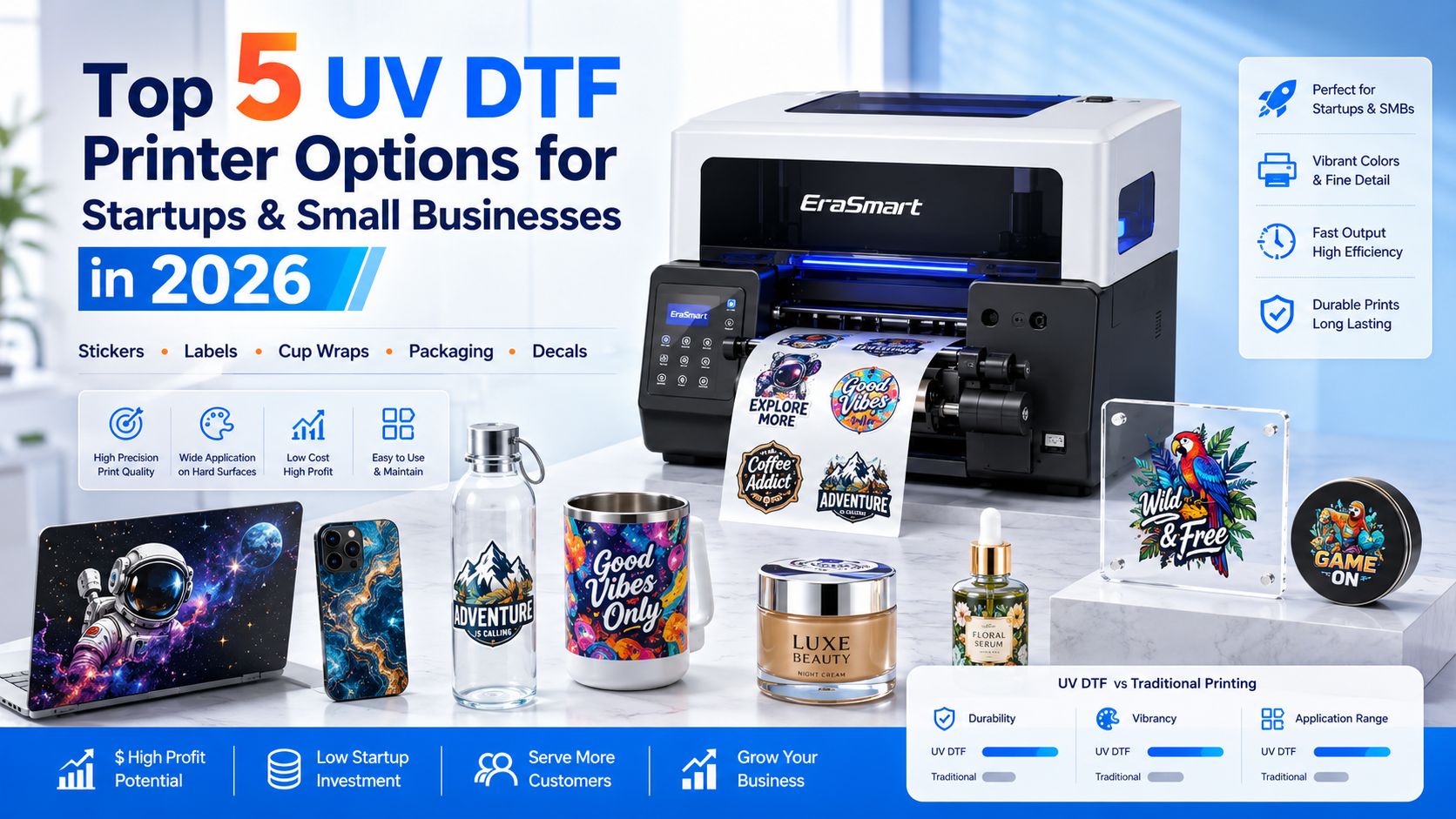
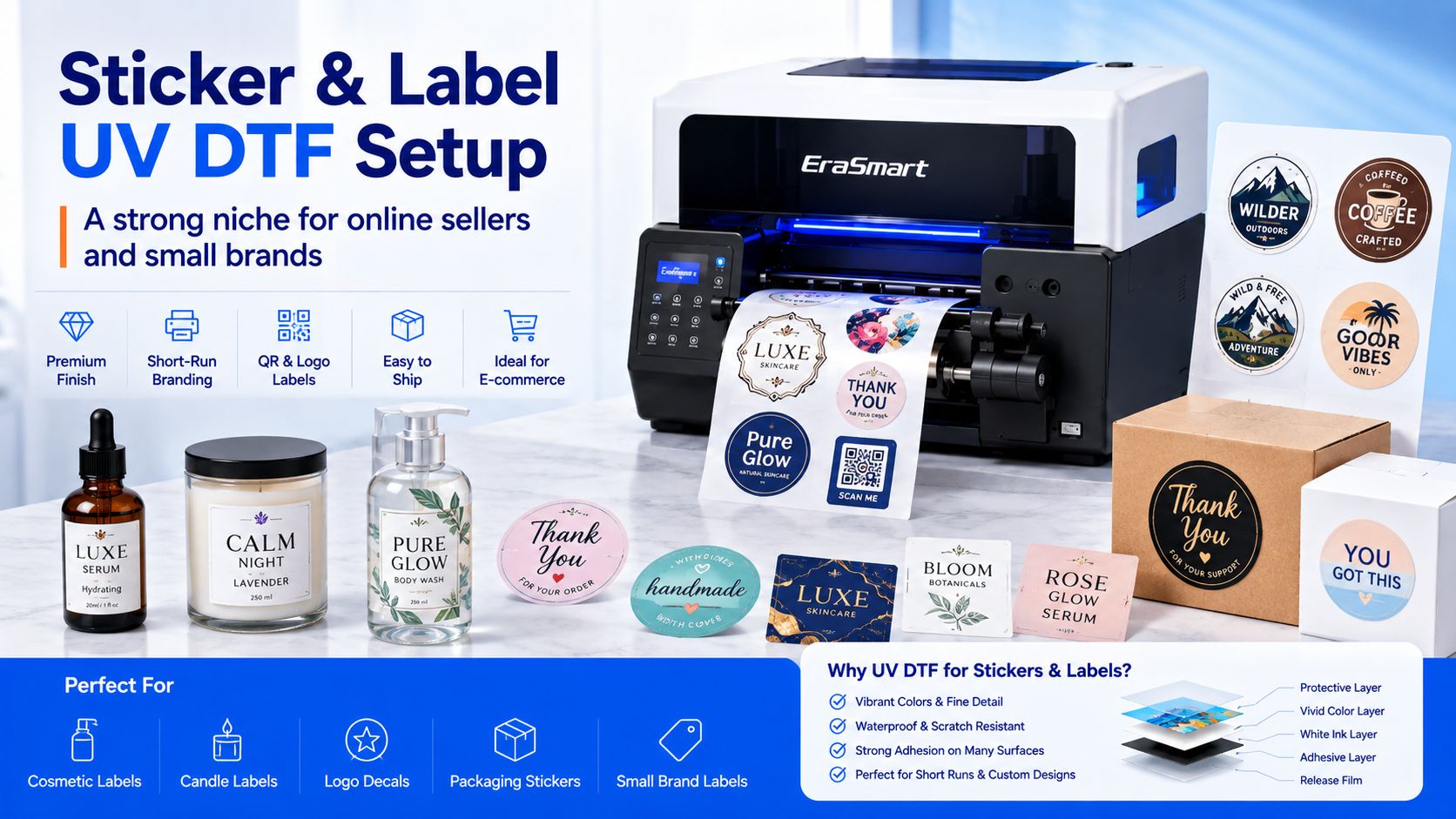
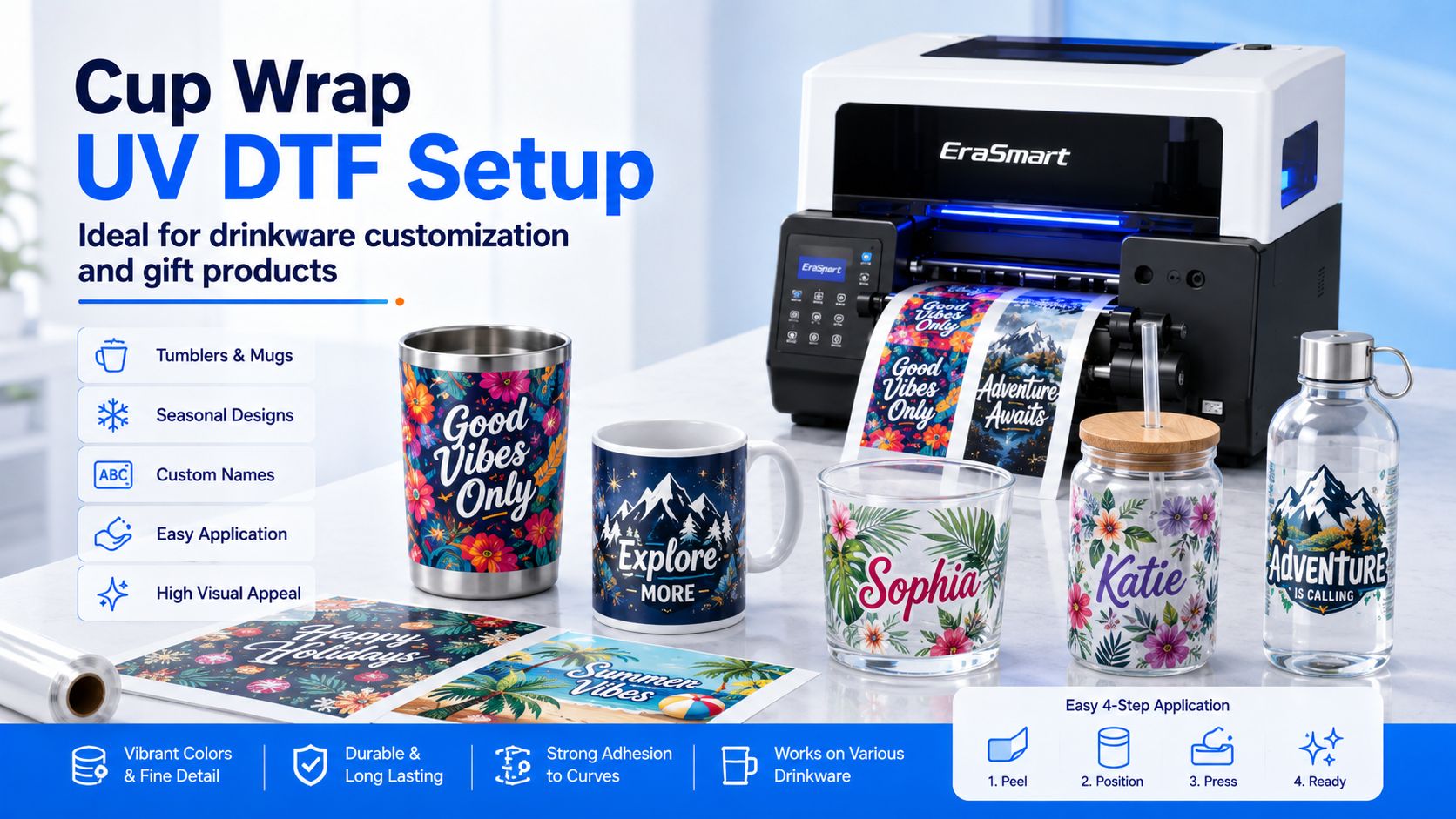
¿Qué características deben buscar las empresas emergentes en una impresora UV DTF?
A la hora de elegir una impresora UV DTF en 2026, no te centres sólo en el precio. Una startup necesita una máquina que sea estable, práctica y adaptada a productos reales.
1. Ancho de impresión práctico
El ancho A3/350 mm suele ser suficiente para adhesivos, etiquetas, envoltorios para vasos, calcomanías para botellas, etiquetas para embalajes, revestimientos para dispositivos y muchos trabajos de pequeñas empresas.
Una máquina más grande puede soportar una mayor producción, pero también necesita más espacio de trabajo, más inversión y un volumen de pedidos diario más estable.
Para muchas empresas emergentes, A3 es un mejor primer paso que saltar directamente a una configuración industrial más grande.
2. CMYK + Blanco + Barniz
Para productos UV DTF premium, CMYK por sí solo no es suficiente. La tinta blanca mejora la opacidad en superficies transparentes, oscuras o coloreadas. El barniz agrega brillo, efectos puntuales y textura elevada.
Esta combinación le ayuda a vender calcomanías de mayor valor en lugar de competir solo por el precio básico de las calcomanías.
3. Laminación en frío de película A/B
UV DTF depende del flujo de trabajo de la película A/B. La película A recibe la impresión, la película B se lamina sobre el diseño y luego se aplica la transferencia a la superficie.
Un flujo de trabajo de laminación estable es esencial porque una laminación deficiente puede provocar burbujas, una transferencia débil, un despegado desigual o una aplicación fallida.
Para obtener más detalles, lea EraSmart Película A/B para impresión UV DTF.
4. RIP estable y control de capas
El DTF UV a menudo requiere control de capa de barniz, tinta blanca y CMYK. Una buena compatibilidad con RIP ayuda a gestionar la opacidad, el barniz puntual, la calidad de los bordes, el rendimiento del color y los detalles del diseño.
Esto es especialmente importante para etiquetas QR, texto pequeño, pegatinas premium y calcomanías para envases de cosméticos.
5. Huella compacta
Las empresas emergentes suelen trabajar desde estudios domésticos, pequeñas tiendas, garajes o talleres compartidos. Un sistema UV DTF compacto es más fácil de colocar, mantener y operar.
La mejor impresora inicial no siempre es la impresora más grande. Es la impresora que se adapta a tu espacio y te permite generar pedidos estables.
6. Soporte de aplicaciones
UV DTF es un flujo de trabajo, no solo una máquina. Necesitas soporte para:
- manejo de película
- configuración de tinta
- laminación
- limpieza de superficies
- solicitud de transferencia
- técnica de pelado
- solución de problemas
- pruebas de materiales
Por eso es importante el apoyo de los proveedores. Una máquina de bajo costo sin soporte para el flujo de trabajo puede resultar costosa si provoca impresiones fallidas y desperdicio de película.