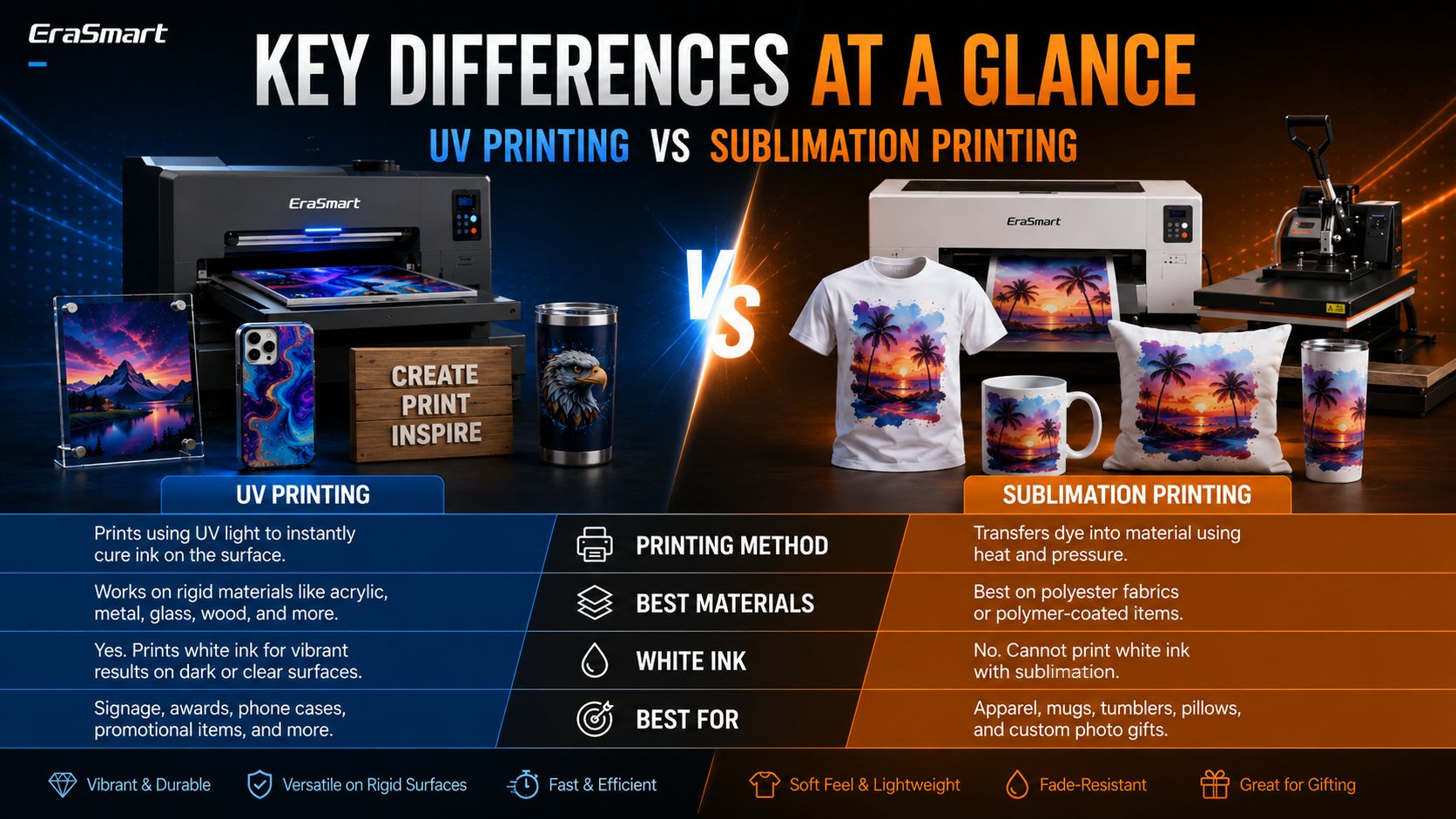
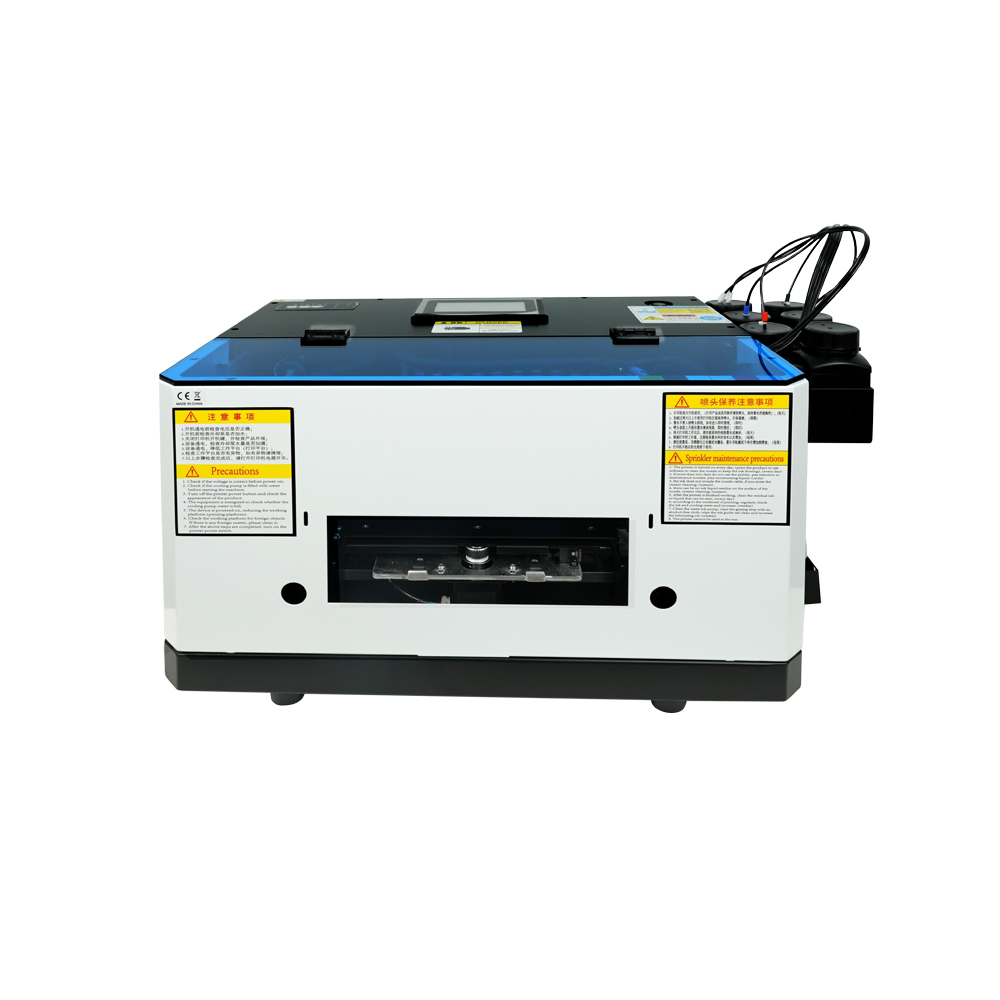
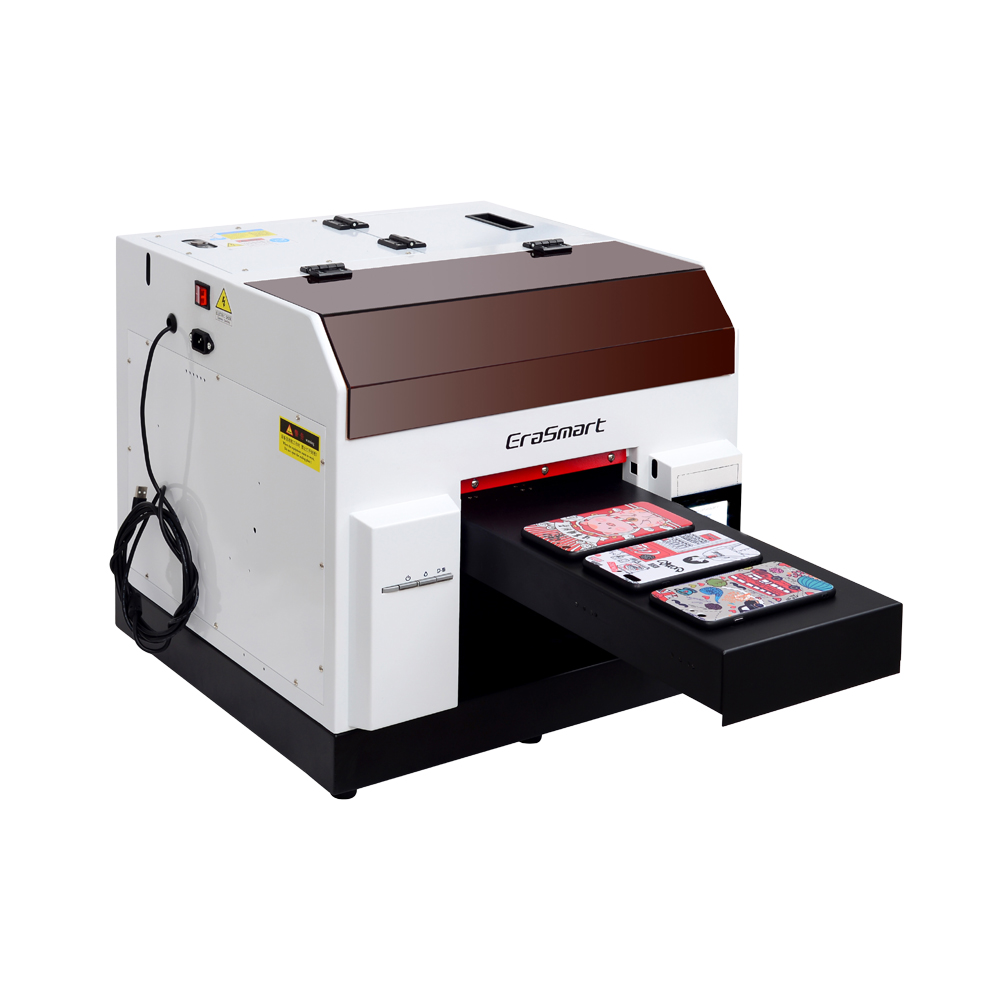
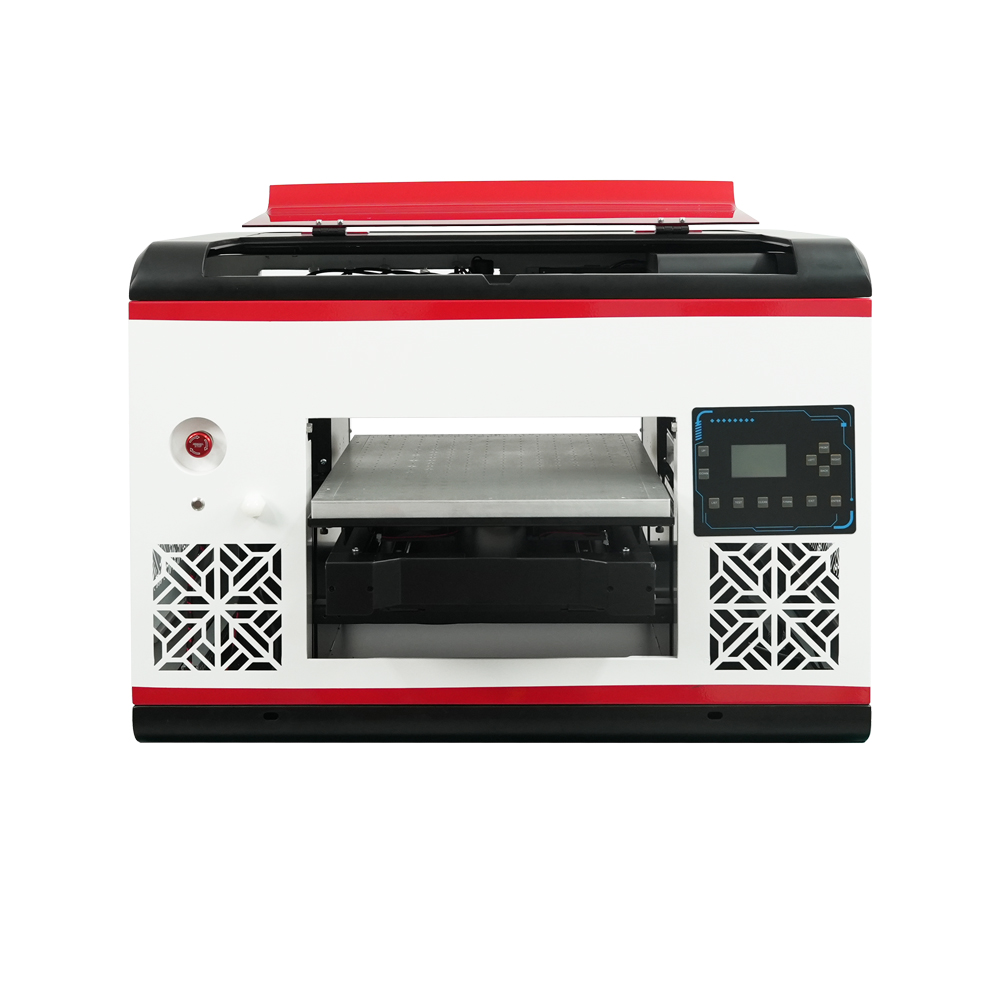
| Método de impresión | Impresión directa con tinta curable UV | Impresión transfer con calor y presión. |
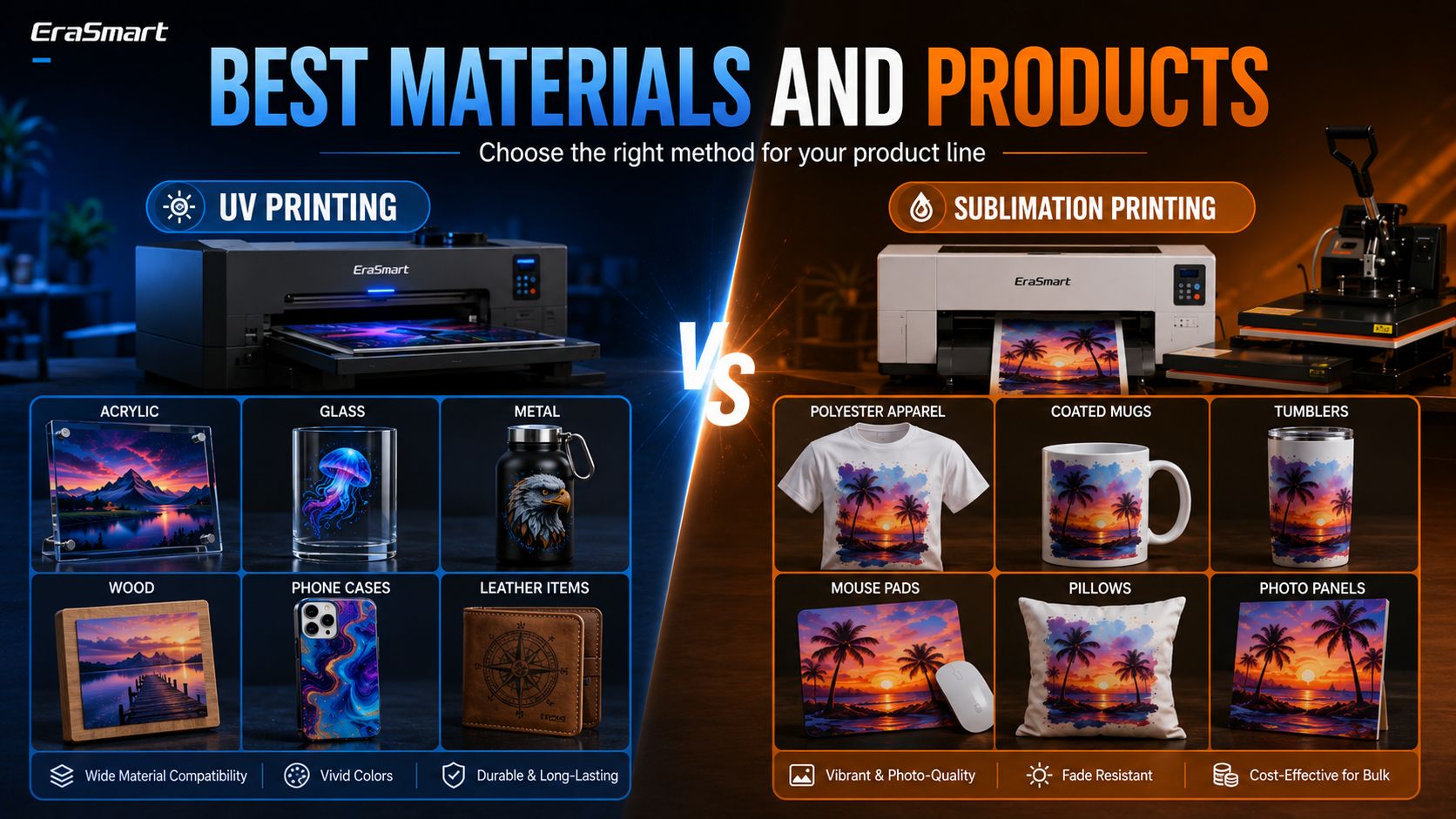
| Mejores materiales | Acrílico, vidrio, metal, madera, plástico, cerámica, cuero, fundas para teléfonos, carteles. | Tejido de poliéster, tazas revestidas, espacios en blanco revestidos, señalización suave |
| Requisito de superficie | Muchas superficies rígidas, pero algunos materiales pueden necesitar limpieza o imprimación. | Se requiere una superficie recubierta de poliéster o polímero |
| tinta blanca | Disponible para materiales oscuros, transparentes y de colores. | Normalmente no se utiliza en el flujo de trabajo de sublimación estándar. |
| Barniz / textura | Puede admitir brillo, efecto elevado y recubrimiento puntual. | Generalmente liso e incrustado en la superficie revestida. |
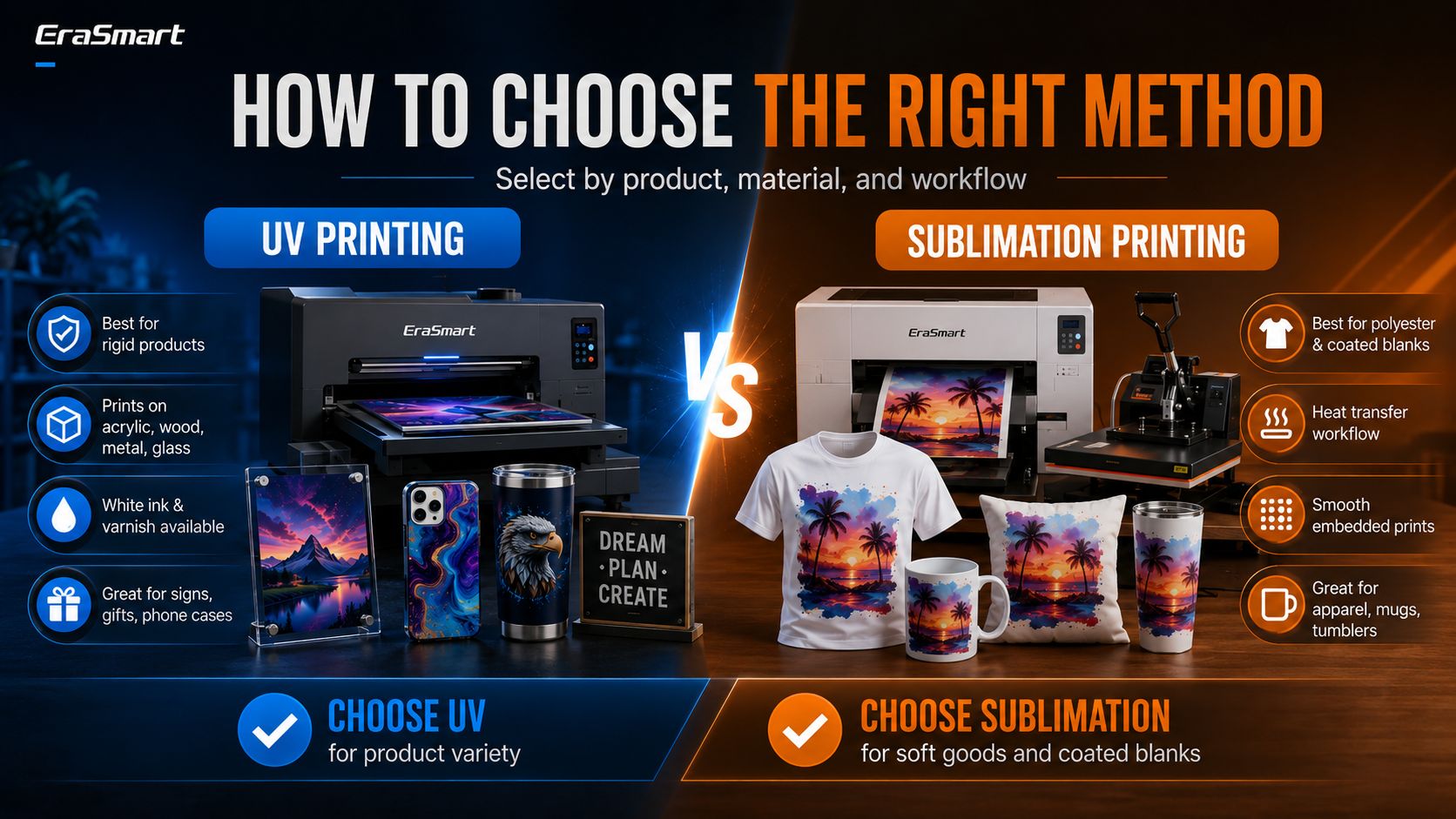
| Mejor ajuste empresarial | Regalos personalizados, fundas para teléfonos, letreros acrílicos, productos promocionales, artículos duraderos | Ropa deportiva, prendas de poliéster, tazas, señalización textil, regalos fotográficos |
| Flujo de trabajo | Imprima directamente sobre el producto | Imprima papel de transferencia y luego presione con calor. |
| Flexibilidad del producto | muy alto | Medio, dependiendo de las piezas en bruto recubiertas |
| Limitación principal | Se debe gestionar la adherencia y la preparación de la superficie. | La elección de materiales es más limitada |