Fabricante de impressoras de jato de tinta pequeno de tamanho pequeno

Impressora UV DTF vs Impressora UV: Qual é a diferença e qual você deve comprar?
6 de janeiro de 2026 Blog
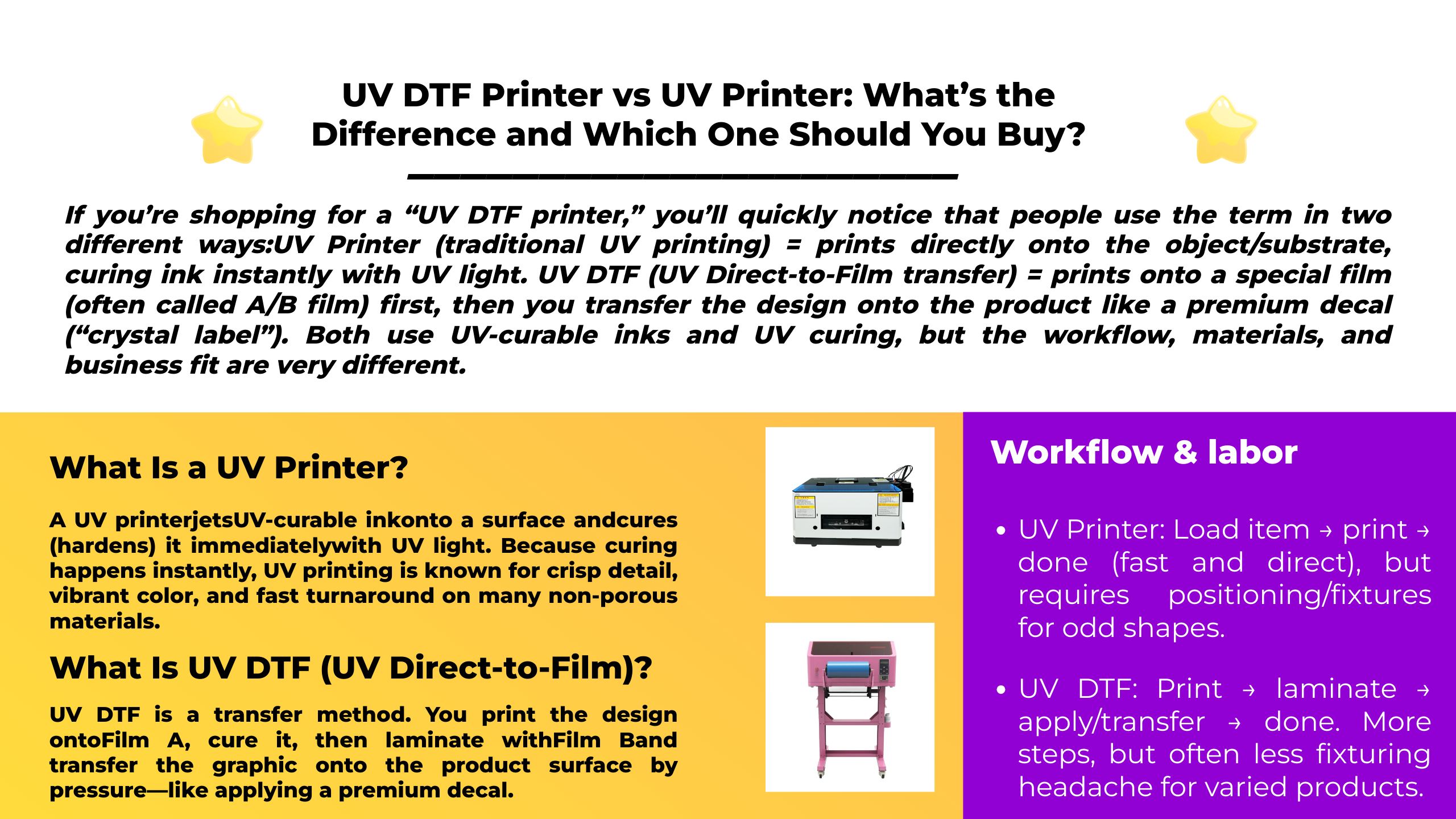
Se você estiver comprando uma “impressora UV DTF”, notará rapidamente que as pessoas usam o termo de duas maneiras diferentes:
Impressora UV (impressão UV tradicional) = estampas diretamente no objeto/substrato, curando a tinta instantaneamente com luz UV.
UV DTF (transferência UV direta para filme) = estampas em um filme especial (muitas vezes chamado Filme A/B) primeiro, depois você transfere o design para o produto como um decalque premium (“etiqueta de cristal”).
Ambos usam tintas com cura UV e cura UV, mas o fluxo de trabalho, os materiais e a adequação aos negócios são muito diferentes.
Comparação Rápida
| Categoria | UV DTF (transferência de filme) | Impressora UV (direto ao objeto) |
|---|---|---|
| “Onde você imprime?” | Sobre Filme A, depois lamine com Filme B e transferência | Diretamente no produto/substrato |
| Melhor para | Muitos itens pequenos, formas mistas, personalização rápida, decalques “etiqueta de cristal” | Painéis planos, sinalização, mídia rígida, execuções de produção, impressão direta no objeto |
| Equipamento extra | Geralmente um laminador (ou unidade integrada) | Freqüentemente, nenhum além da impressora; rotativo/acessórios para cilindros (se necessário) |
| Olhe e sinta | Estética de “etiqueta” elevada/brilhante | Aparência “impressa”; pode ser fosco/brilhante/textura dependendo do conjunto de tintas |
| Produtos comuns | Copos (como decalques), capas de telefone, caixas de presente, itens promocionais | Placas de acrílico/madeira/PVC, sinalização, painéis de controle, protótipos de embalagens |
O que é um Impressora UV?
UM Impressora UV jatos Tinta curável por UV sobre uma superfície e cura (endurece) imediatamente com luz ultravioleta. Como a cura ocorre instantaneamente, a impressão UV é conhecida por detalhes nítidos, cores vibrantes e resposta rápida em muitos materiais não porosos.
Tipos comuns de impressoras UV
- Mesa UV: imprime em lençóis rígidos e objetos colocados sobre uma mesa/cama plana.
- UV rolo a rolo: impressões em mídias flexíveis (filmes, banners, etc.).
- Mesa plana + acessório rotativo: pode imprimir em itens cilíndricos como garrafas e canecas, dependendo da configuração.
Melhor quando: você pode colocar ou fixar fisicamente o item na impressora e desejar que o design impresso diretamente nisso.
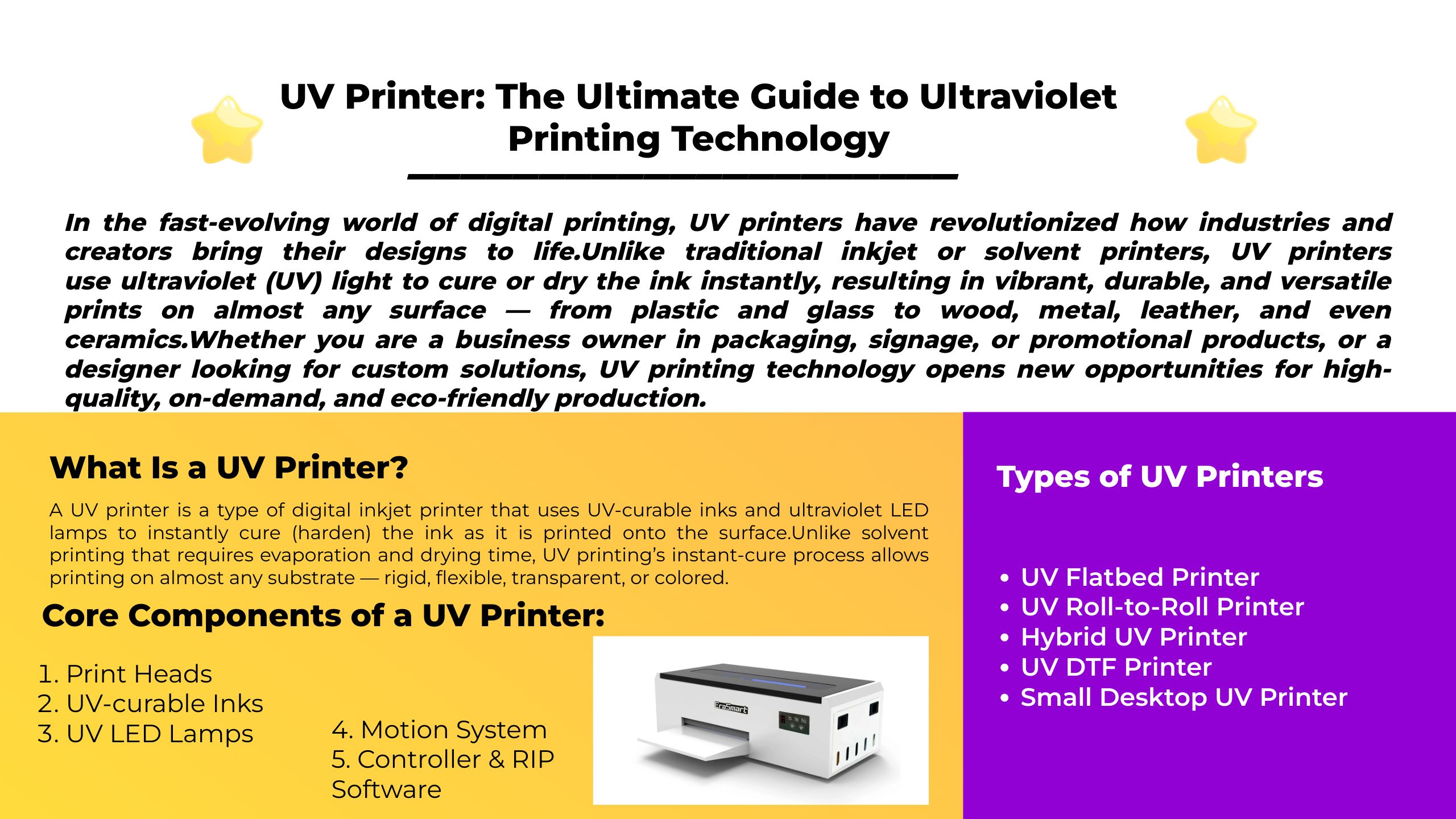
Mais sobre impressora UV: Impressora UV: o guia definitivo para tecnologia de impressão ultravioleta
O que é DTF UV (UV direto para filme)?
DTF UV é um método de transferência. Você imprime o desenho em Filme A, cure-o, então laminado com Filme B e transfira o gráfico para a superfície do produto por pressão, como se estivesse aplicando um decalque premium.
É por isso que o UV DTF é frequentemente descrito como “etiqueta de cristal” produção: não é impressão direta no objeto; isso é imprimindo um gráfico transferível que pode ser aplicado a muitos produtos.
Fluxo de trabalho típico de UV DTF (filme AB)
- Imprima o desenho em Filme A (Tinta UV + cura UV)
- Laminado com Filme B
- Descasque/transfira para o item final
- Finalize removendo a camada de suporte
Melhor quando: você vende muitos pequenos produtos personalizados, deseja transferências “semelhantes a adesivos” ou precisa de um método que funcione em muitos SKUs sem construir acessórios complexos.
Impressora UV Erasmart e Impressora DTF UV
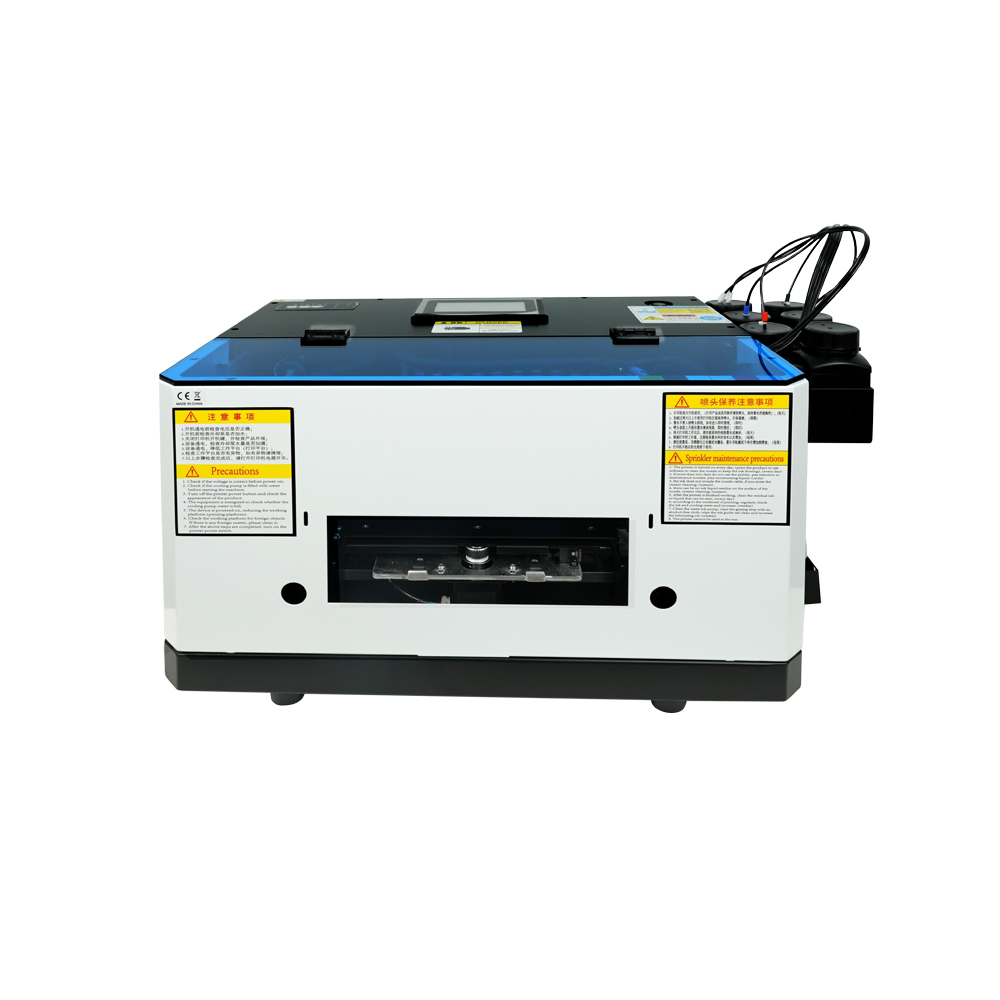
Modelo básico compacto com cabeça de impressão L800, ideal para itens pequenos e projetos de hobby (tamanho de impressão 120 * 210 mm).
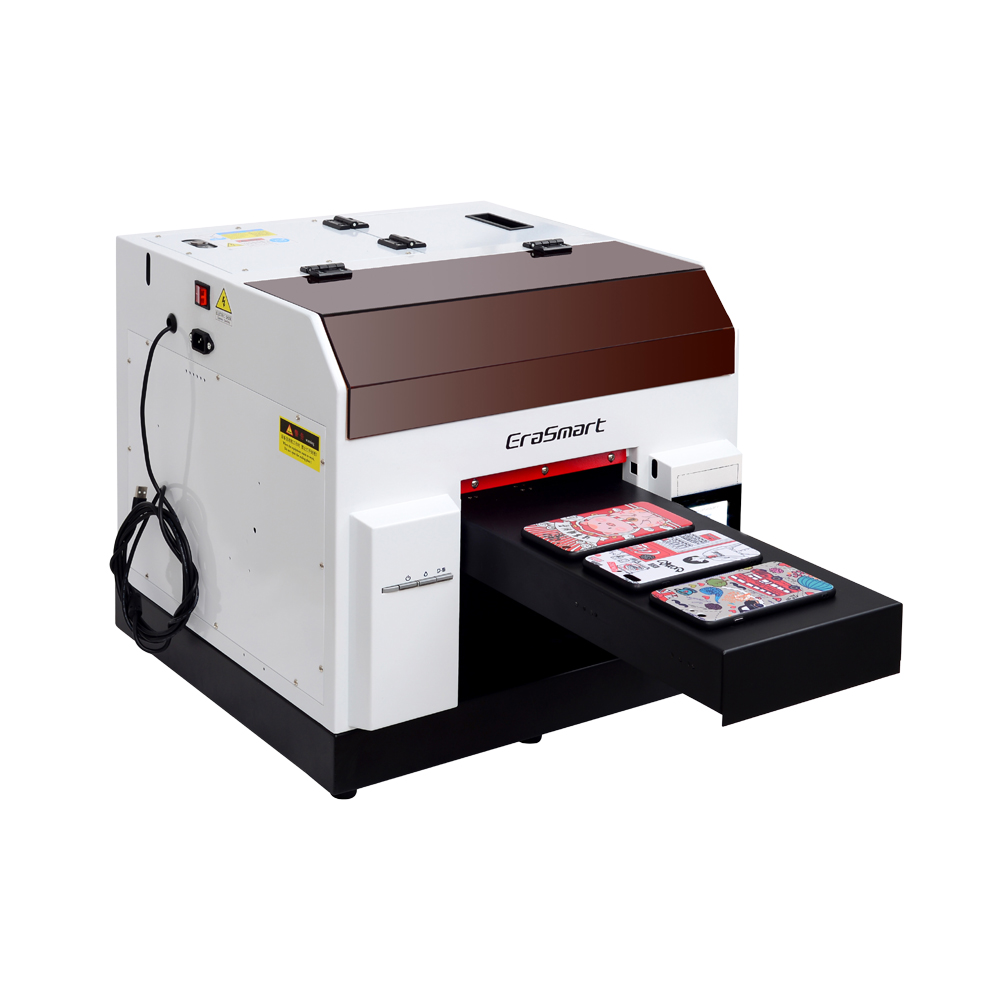
Cabeça de impressão L800 com tamanho de impressão de 210 * 290 mm, perfeita para pequenas empresas e presentes personalizados (altura de impressão de 0-130 mm).
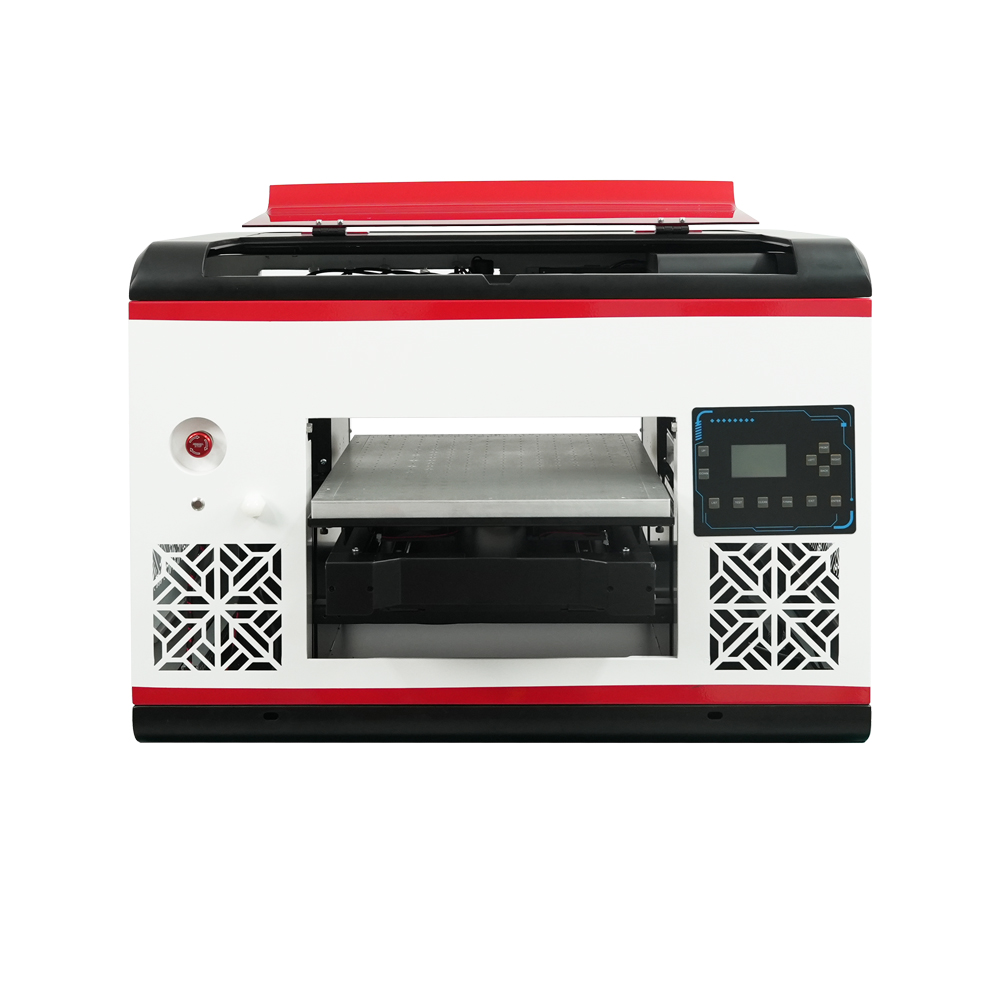
Cabeça de impressão DX7 com tamanho de impressão 350*450mm, plataforma de sucção e CMYK+WW+VV para produção de alto volume.
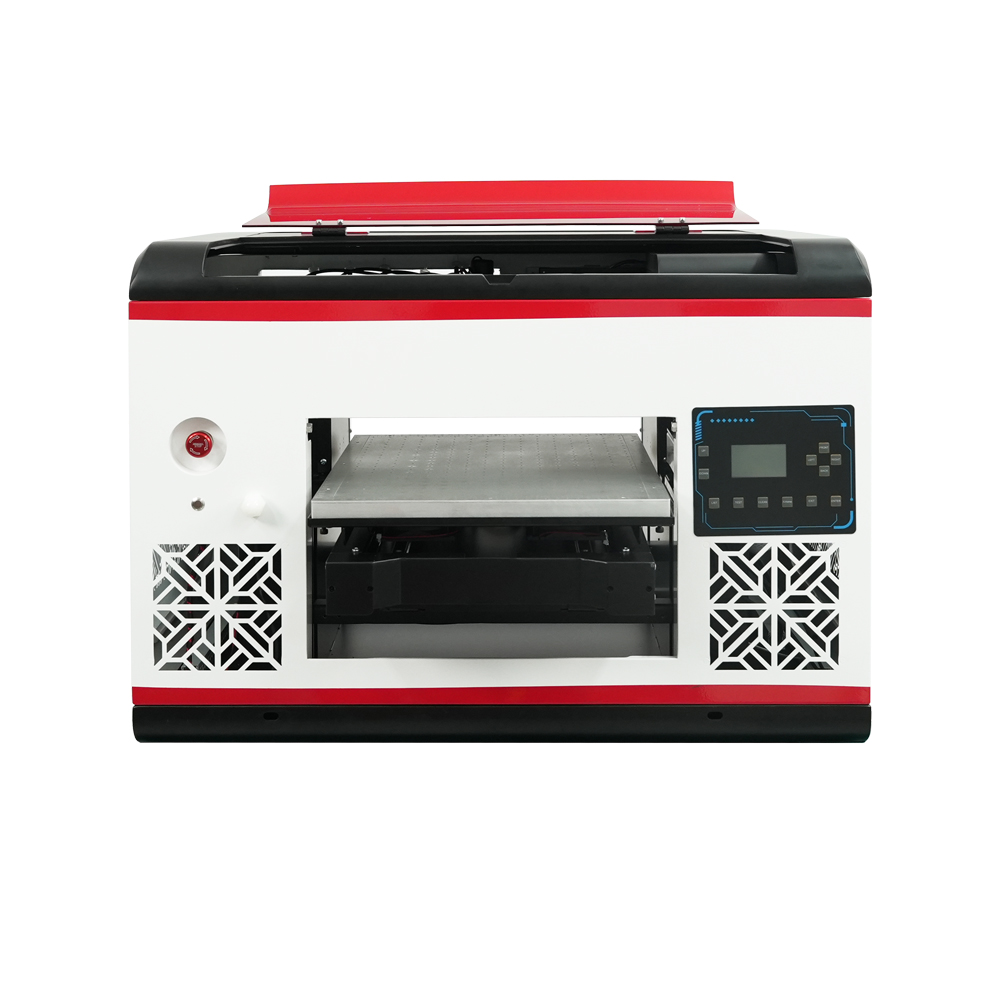
Cabeça de impressão XP600 com tamanho de impressão de 350 * 450 mm, velocidade de 5㎡/H, ideal para tiragens de produção médias a grandes.
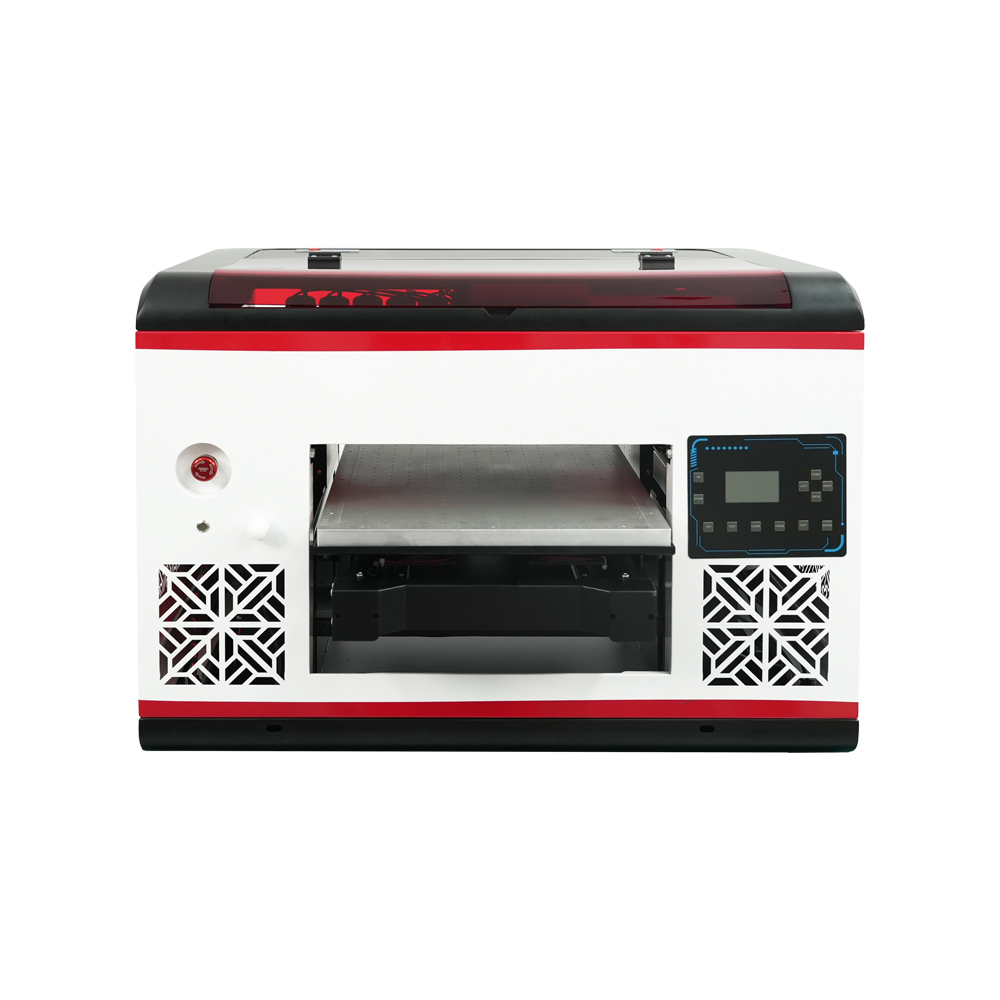
Cabeças de impressão duplas XP600 com velocidade de 5,5㎡/H, CMYK+WW+VVVVVV para maior gama de cores e produtividade.
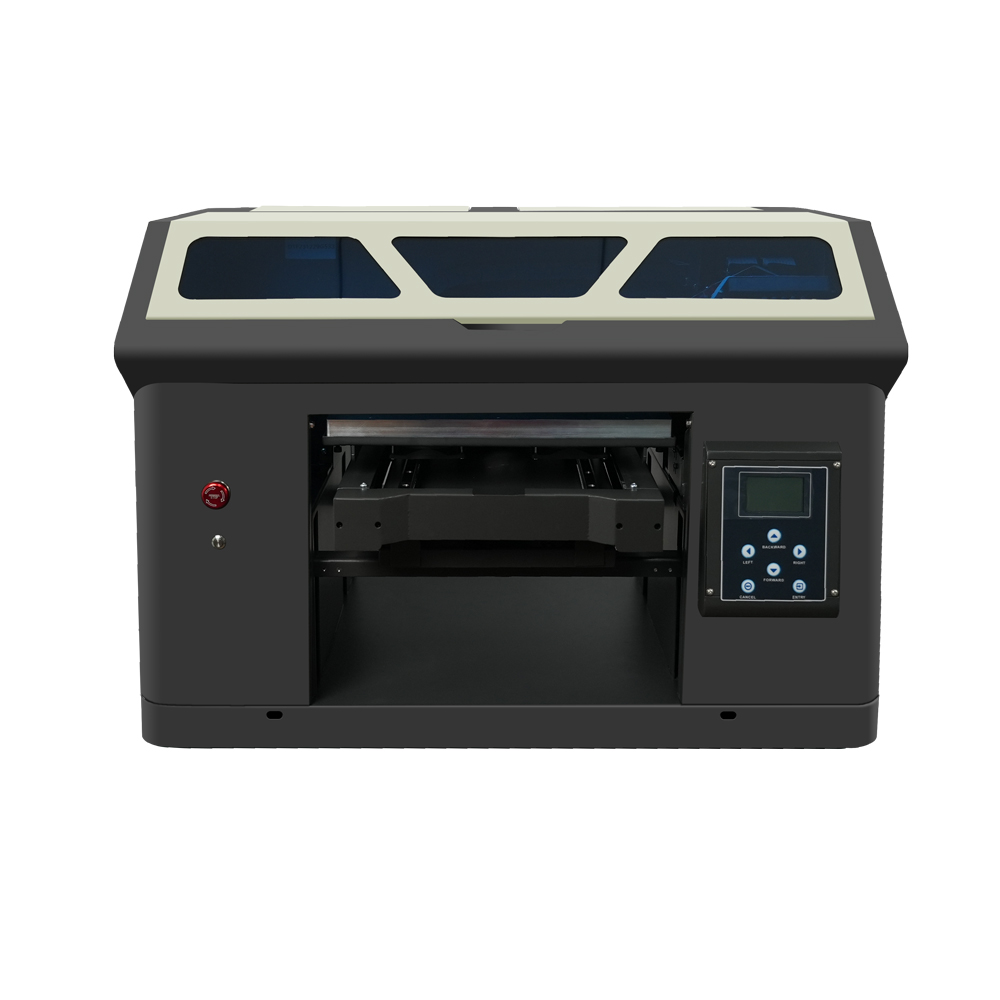
Cabeças de impressão duplas XP600 com tamanho de impressão de 350 * 450 mm, projetadas para produção contínua de nível industrial.
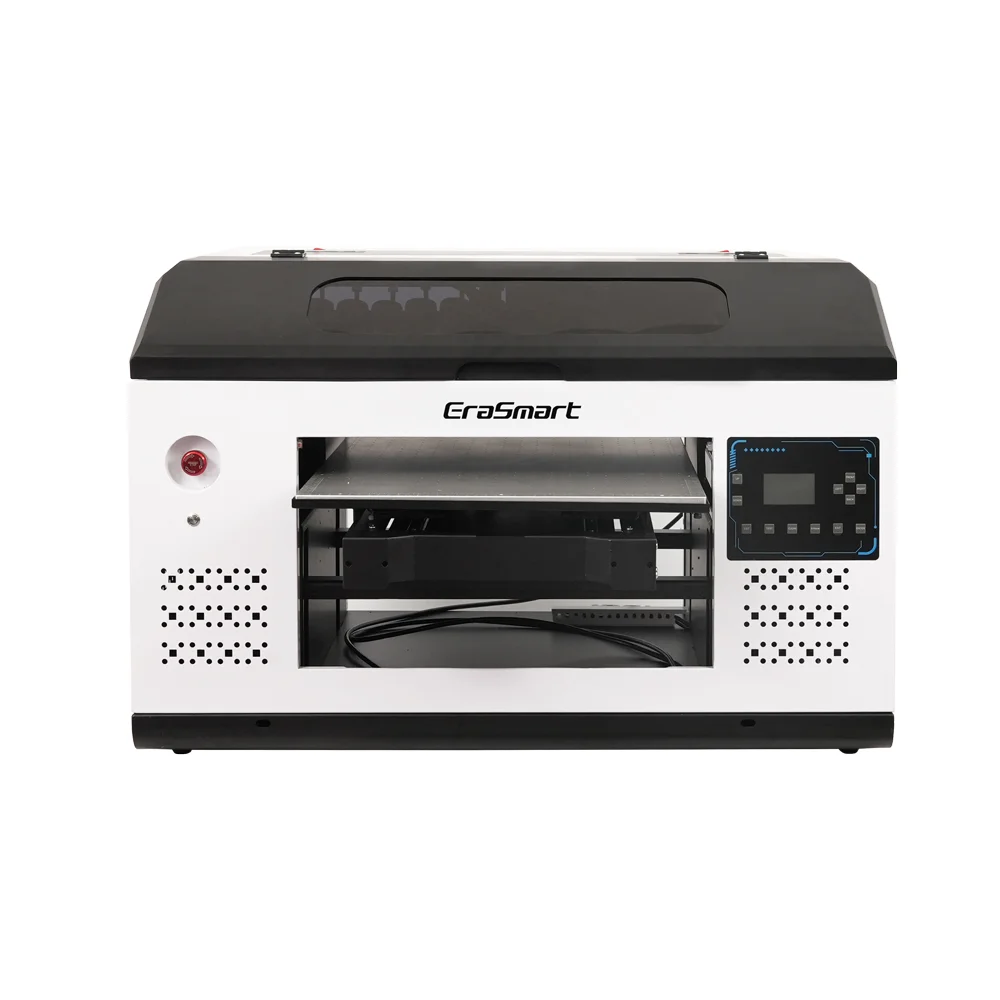
Impressora de grande formato 420*600mm com cabeçotes duplos XP600, perfeita para sinalização, painéis e materiais grandes.
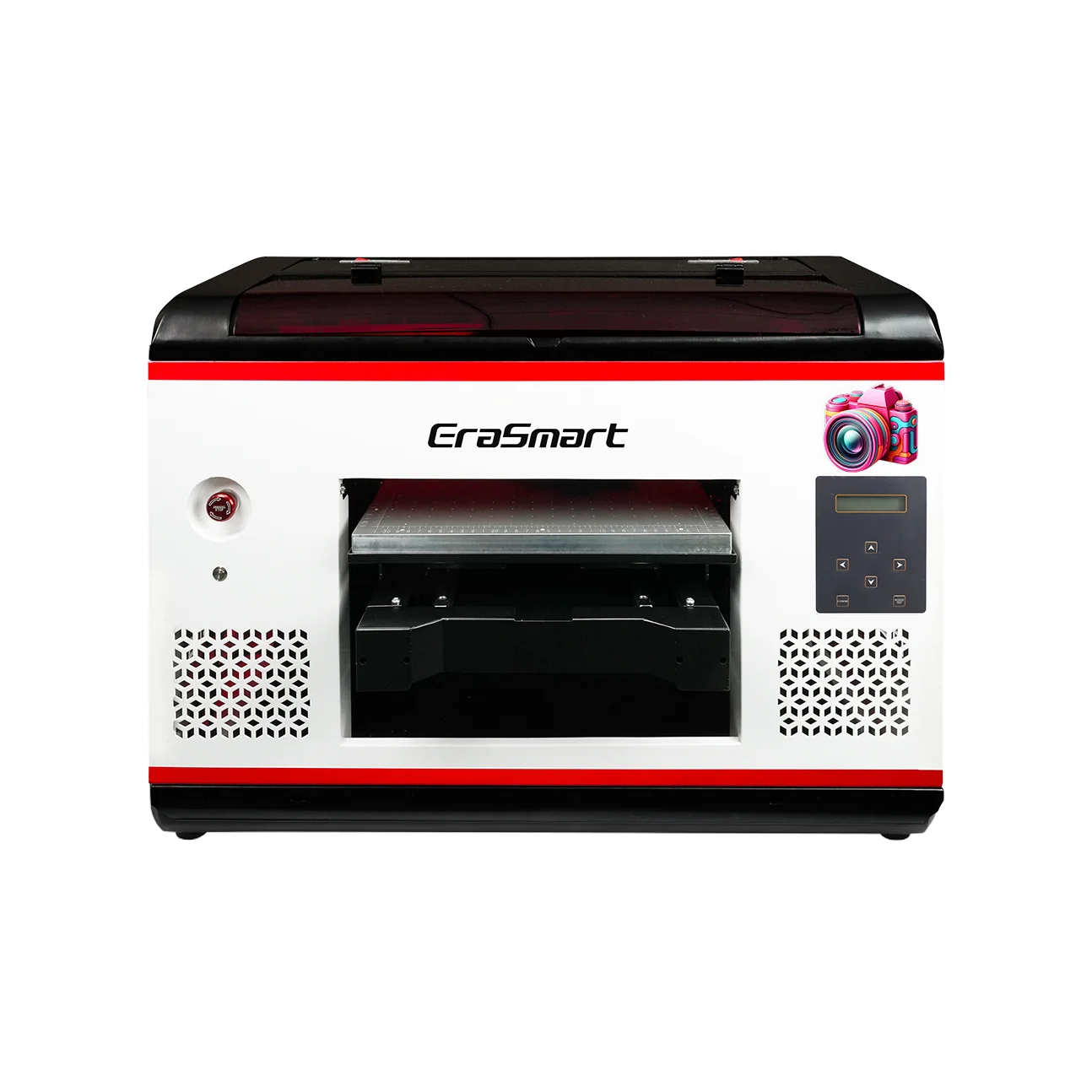
Cabeçotes XP600 duplos com laminação automática, especializados para impressão de filmes UV DTF (largura de até 350 mm).
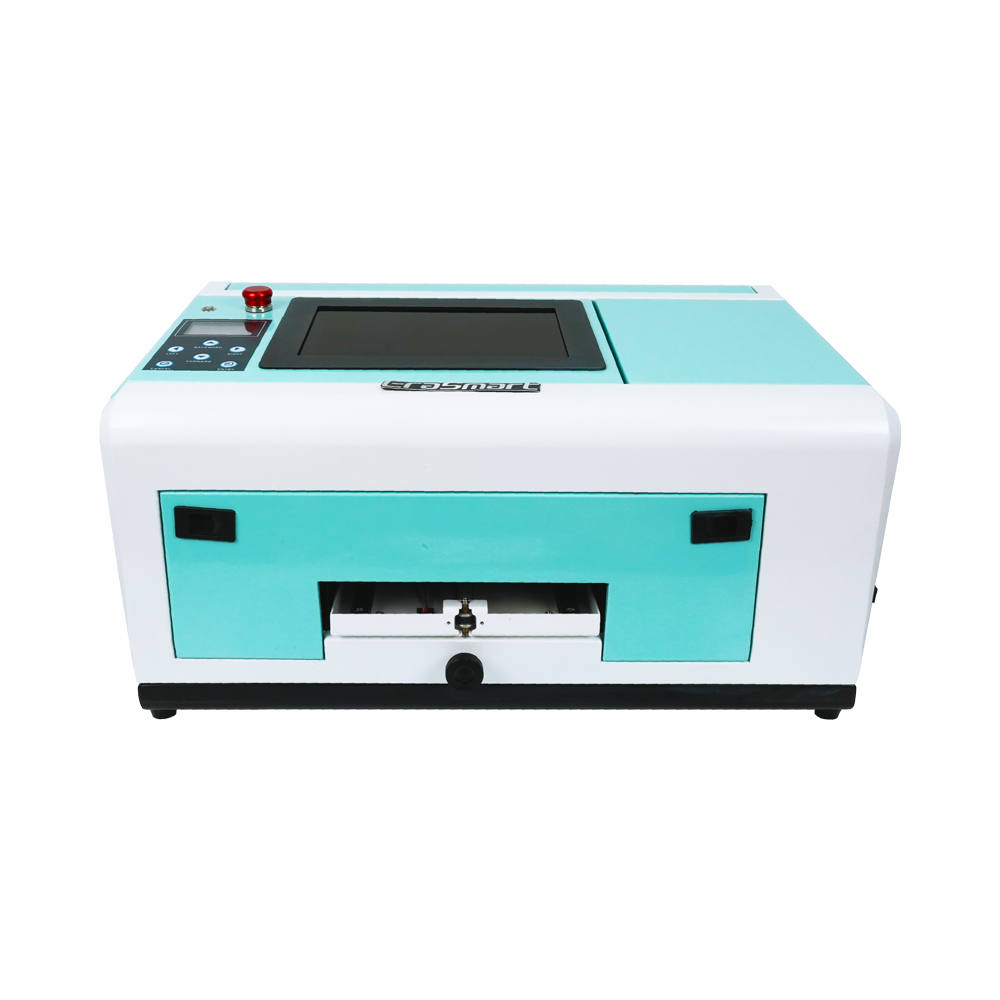
Especializado em capas de telefone (TPV/PVC/madeira/metal), com display de 10 polegadas e altura ajustável de 0-10mm.
As maiores diferenças que afetam o seu negócio
1) Fluxo de trabalho e mão de obra
- Impressora UV: Carregar item → imprimir → pronto (rápido e direto), mas requer posicionamento/fixações para formatos estranhos.
- DTF UV: Imprimir → laminar → aplicar/transferir → pronto. Mais etapas, mas muitas vezes menos dor de cabeça para produtos variados.
Conclusão prática:
Se você estiver fazendo uma personalização de alta mistura e pequenas tiragens (muitos tipos de itens por dia), o UV DTF pode ser mais fácil de operar de forma consistente.
2) Em quais produtos cada método se destaca “naturalmente”
UV DTF é excelente em:
- Copos e garrafas personalizados (como transferência de decalque)
- Capas de telefone, pequenos itens para presentes, produtos promocionais
- Etiquetas de marca para embalagens, caixas e acessórios
A impressora UV é excelente em:
- Placas de acrílico, placas de PVC, painéis de madeira
- Placas de identificação industriais, painéis de controle, protótipos
- Folhas rígidas maiores e trabalho de produção plana
3) Acabamento, textura e percepção do cliente
- UV DTF geralmente produz um acabamento tipo etiqueta que os clientes associam à marca premium (brilho, bordas em relevo, aparência “cristal”).
- A impressão direta UV parece que é impresso na superfície, e você pode escolher opções de conjuntos de tinta/verniz/textura dependendo da impressora e do fluxo de trabalho.
4) Durabilidade na vida real
A durabilidade depende do sistema de tinta, da compatibilidade do substrato e da preparação da superfície, mas geralmente:
- Impressão UV (direta): Pode ser muito durável quando a tinta adere bem ao substrato e o processo correto é usado.
- DTF UV: A durabilidade se comporta como um decalque/etiqueta de alto desempenho—excelente para muitos casos de uso, mas abrasão, produtos químicos agressivos e calor extremo podem reduzir a vida útil dependendo do filme/adesivo e da superfície.
Regra prática:
Se o produto for muito raspado, limpo quimicamente ou exposto a condições extremas, teste seu material exato + tinta + processo antes de prometer “permanente”.
Custo e equipamento: o que você realmente precisa
Configuração típica de UV DTF
- Capacidade de impressão UV (unidade UV DTF dedicada ou impressora UV configurada para DTF)
- Filme AB (Filme A + Filme B)
- Muitas vezes um laminador (alguns sistemas integram isso)
Configuração típica da impressora UV
- Impressora plana UV / rolo a rolo / impressora UV híbrida
- Luminárias para produtos repetidos (opcional, mas recomendado)
- Acessório rotativo para garrafas/cilindros (opcional, dependendo do modelo)
Drivers de custo (não apenas preço de compra):
- Resíduos consumíveis (restos de filme/laminação em UV DTF)
- Corrigindo tempo e erros de impressão (UV direto em objetos estranhos)
- Manutenção: verificações de bicos, ciclos de limpeza, controle ambiental
Qual você deve escolher?
Escolher DTF UV se você:
- Venda presentes personalizados e itens promocionais (muitos SKUs)
- Precisa de um caminho mais fácil para formas mistas sem acessórios complexos
- Deseja vender ou aplicar transferências premium estilo “etiqueta de cristal”
Escolha um Impressora UV se você:
- Imprima principalmente em materiais planos rígidos (sinalização, painéis, placas)
- Quer produção direta ao objeto com menos etapas
- Têm formatos de produtos repetíveis ou podem construir acessórios para maior eficiência
Escolher ambos se você estiver construindo uma loja de personalização completa:
- Impressora UV para placas/sinais + DTF UV para pequenos produtos/etiquetas
Este emparelhamento cobre o conjunto mais amplo de pedidos lucrativos.
Erros comuns (e como evitá-los)
Erros UV DTF
- Ignorando a limpeza da superfície → elevação da borda, bolhas
- Laminação deficiente → rugas, prateamento, transferências inconsistentes
- Esperando adesão perfeita em superfícies profundamente texturizadas
Erros da impressora UV
- Impressão em substratos incompatíveis sem preparação/primers
- Nenhuma estratégia de fixação → posicionamento lento, maior taxa de sucata
- Ignorar os limites de altura/espaço livre em objetos grossos (risco de batidas na cabeça)
Perguntas frequentes
1) Uma impressora UV DTF é apenas uma impressora UV?
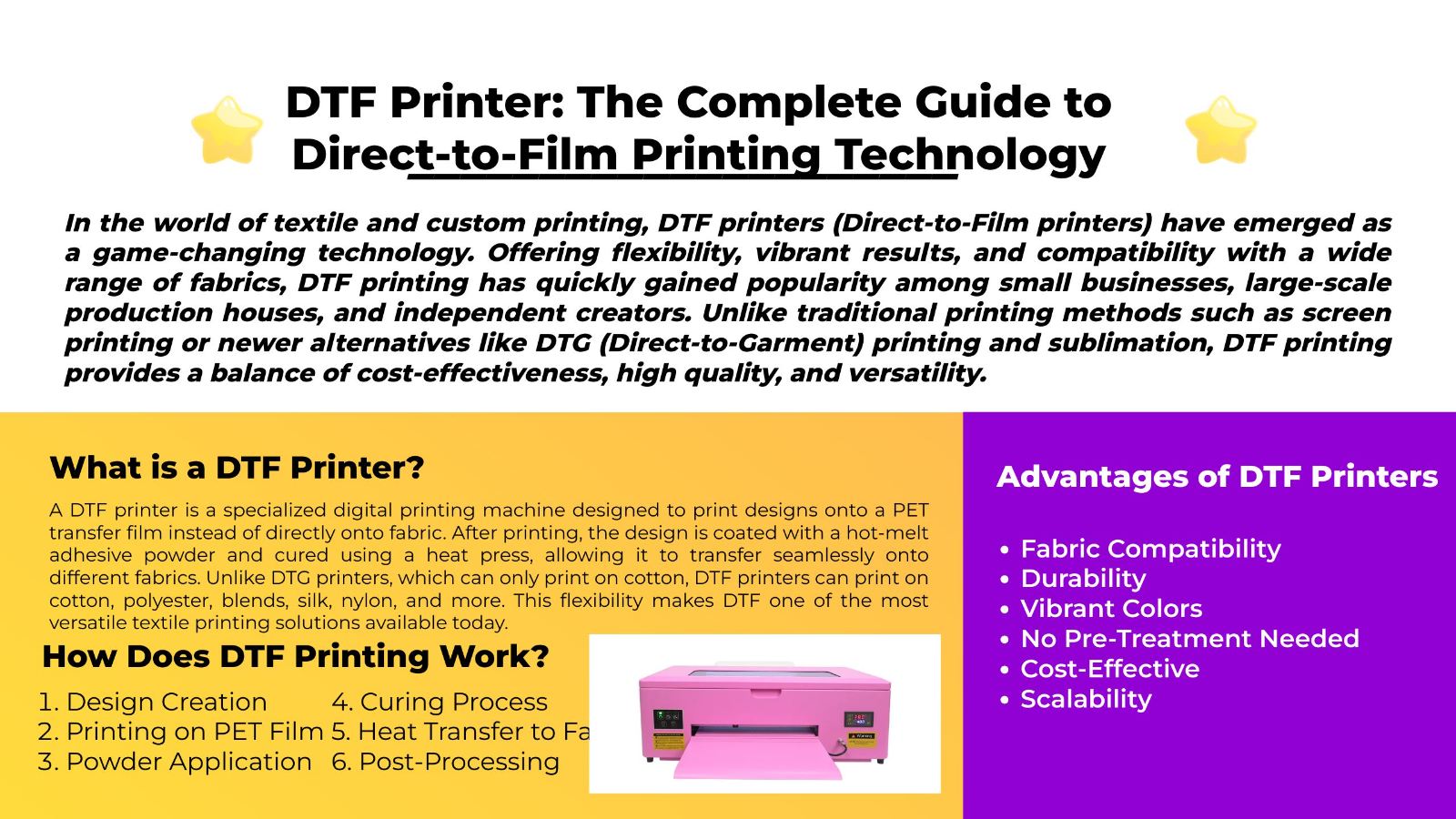
Não exatamente. DTF UV é um fluxo de trabalho de transferência. Muitos sistemas UV DTF usam tecnologia de impressão UV, mas a chave é impressão em filme e transferência, muitas vezes com laminação.
2) Preciso de um laminador para UV DTF?
Na maioria dos fluxos de trabalho de filmes AB, sim (a menos que você compre uma unidade multifuncional integrada).
3) Uma impressora UV pode imprimir em copos?
Muitas vezes sim, se a impressora suportar um acessório rotativo ou fixação adequada – mas isso depende do modelo e da configuração.
4) O que significa filme AB?
Filme AB geralmente se refere a Filme A (camada de impressão) e Filme B (camada de laminação/transferência) usada para criar decalques UV DTF transferíveis.
5) A impressão UV é “segura” para ser executada em uma pequena loja?
Pode ser, se você seguir as orientações da SDS, EPI e ventilação. As orientações de segurança geralmente destacam os riscos de exposição da pele/olhos e as preocupações de sensibilização com materiais e tintas UV.
Conclusão
- Impressora UV = melhor quando você quiser impressão direta em telas planas ou objetos fáceis de usar com um fluxo de trabalho simplificado.
- DTF UV = melhor quando você quiser decalques de transferência (“etiquetas de cristal”) que se aplicam a muitos produtos e formatos com menos complexidade de fixação.
Pode ser você também
Impressora ERASMART
Impressora UV
Impressora DTF
Impressora DTG
Máquina de prensa de calor
Impressora de publicidade
Ferramentas de impressora
Forno dtf
Hot Press
Máquina de escultura
Transferência de calor da caneca
Máquina de laminação
Consumíveis
Tinta de impressão
Capa do celular
Produto de vidro
Fluido de limpeza
Cotonete
Contate-nos
Whatsapp : +8618566233796
WeChat: +8618566233796
Mobile : +8618566233796
Web:www.erasmart.com
Comprar:www.erasmartmall.com
Copyright 2020 © Erasmart. | Sitemap
Solicite uma cotação
Basta fornecer alguns detalhes e ajudaremos você a obter cotações rápidas!