Производитель малогабаритных планшетных струйных принтеров

UV DTF против DTF: какой принтер купить для своего бизнеса?
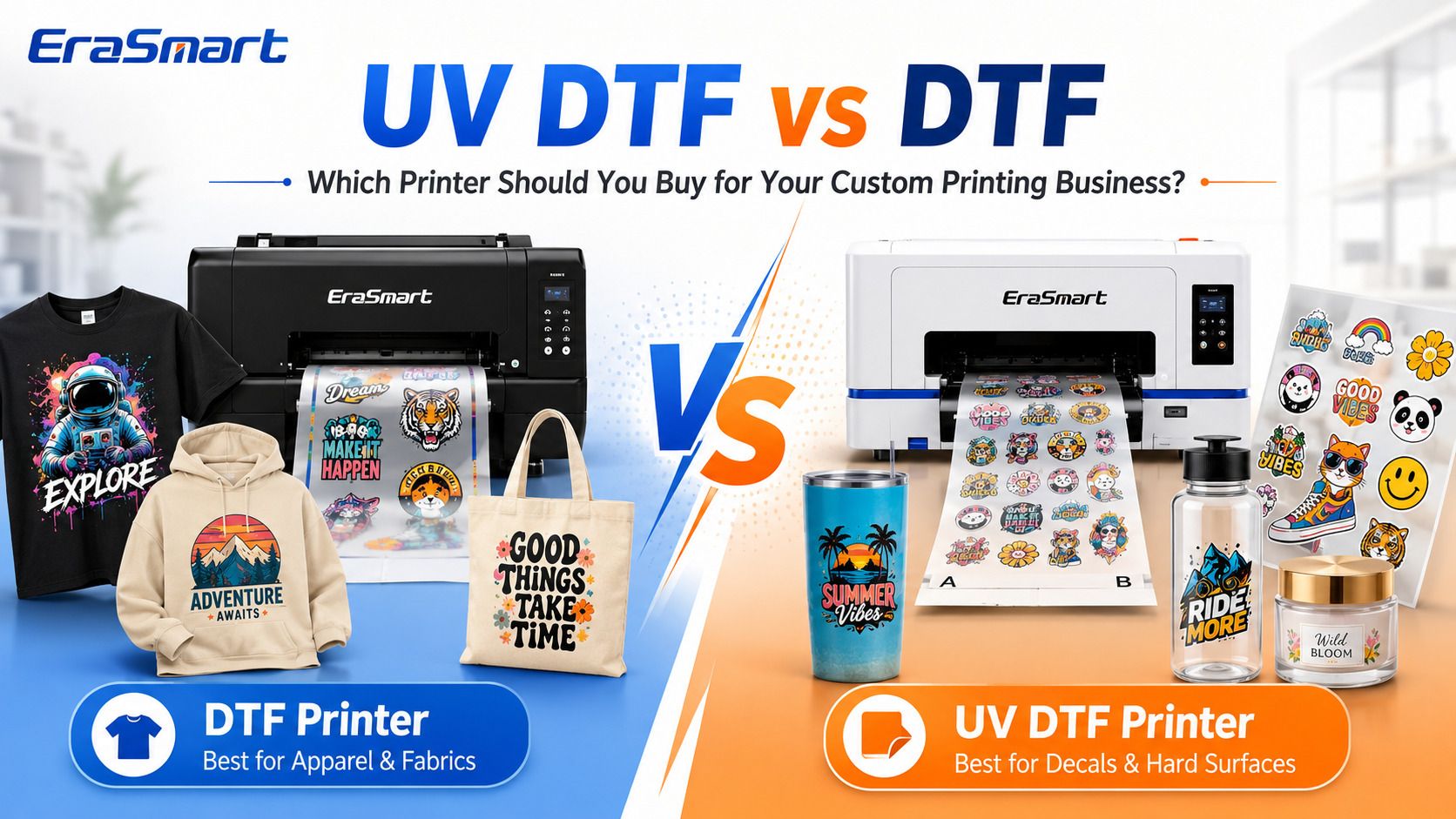
Если вы выбираете между DTF-принтером и УФ-принтером DTF, самый важный вопрос не в том, какая технология «лучше».
Лучший вопрос:
Какие продукты вы хотите продавать?
Если вашей основной продукцией являются футболки, толстовки, униформа, спортивная одежда, сумки, рабочая одежда и другие текстильные изделия, DTF принтер обычно это правильное направление.
Если вашей основной продукцией являются наклейки, обертки для чашек, наклейки для бутылок, косметические этикетки, брендинг банок для свечей, упаковочные наклейки, графика на чехлах для телефонов и другие приложения с твердой поверхностью, УФ-принтер DTF обычно лучше подходит.
И если вашей долгосрочной целью является создание более широкого бизнеса по индивидуальному заказу, обслуживающего как одежду, так и товары повседневного спроса, эти две технологии могут дополнять друг друга, а не конкурировать друг с другом.
Это руководство выходит за рамки базового определения DTF и UV DTF. Вместо этого мы сравним две системы с точки зрения покупка и бизнес-перспектива: продукция, материалы, рабочий процесс, оборудование, расходные материалы, техническое обслуживание, типы клиентов, структура заказов и потенциал расширения.
Если вам сначала нужно более широкое техническое сравнение между UV DTF, текстильным DTF и прямой УФ-печатью, прочитайте EraSmart. UV DTF против Textile DTF против планшетного UV гид.
Быстрый ответ: стоит ли покупать принтер DTF или UV DTF?
Вот самый простой способ принять решение.
| Если ваш основной бизнес… | Лучшая отправная точка |
|---|---|
| Футболки на заказ | DTF принтер |
| Толстовки и уличная одежда | DTF принтер |
| Спортивная одежда и униформа | DTF принтер |
| Сумки и товары из ткани | DTF принтер |
| Печать на заказ одежды | DTF принтер |
| Продажа трансферов DTF | DTF принтер |
| Премиальные наклейки и декали | УФ-принтер DTF |
| Обертки для чашек и наклейки на стаканы | УФ-принтер DTF |
| Брендирование бутылок и банок | УФ-принтер DTF |
| Этикетки для косметики и свечей | УФ-принтер DTF |
| Упаковочные наклейки | УФ-принтер DTF |
| Наклейки на чехлы для гаджетов и телефонов | УФ-принтер DTF |
| Кастомизация как одежды, так и твердой поверхности | Рассмотрите оба |
Основное правило:
Ткани и одежда → ДТФ
Декали и твердые поверхности → UV DTF
Не выбирайте только по цене принтера, максимальному разрешению или количеству печатающих головок в машине. Делайте покупки в соответствии с продуктами, которые ваши клиенты действительно собираются заказать.
DTF и UV DTF звучат одинаково, но это разные производственные системы
Названия могут сбить с толку, поскольку обе технологии включают «DTF», что означает Direct to Film.
Оба сначала печатают дизайн на пленке, а потом переносят его.
Но на этом сходство во многом заканчивается.
Стандартный рабочий процесс DTF для текстиля использует:
- Пигментные чернила DTF
- CMYK + белые чернила
- ПИСЬ ПЕРВАЯ ПИСЬМА
- термоплавкий клей-порошок
- порошковое отверждение
- тепловое прессование
- текстильные изделия
Рабочий процесс UV DTF использует:
- чернила, отверждаемые УФ-излучением
- CMYK + белый + лак
- Фильм
- фильм Б
- УФ-светодиодное отверждение
- ламинирование
- холодный перенос/нанесение
- изделия с твердой поверхностью
Они используют разные химические составы чернил, разные пленки, разные клеевые системы и разные методы окончательного нанесения.
Это означает, что принтер DTF нельзя просто преобразовать в принтер UV DTF путем замены пленки, а для печати футболок не следует покупать принтер UV DTF.
Рабочий процесс DTF и UV DTF: где начинается настоящая разница
Рабочий процесс является одним из наиболее важных отличий для владельца бизнеса, поскольку он определяет, какое оборудование вам нужно, сколько работы требуется оператору и как заказы перемещаются через ваш магазин.
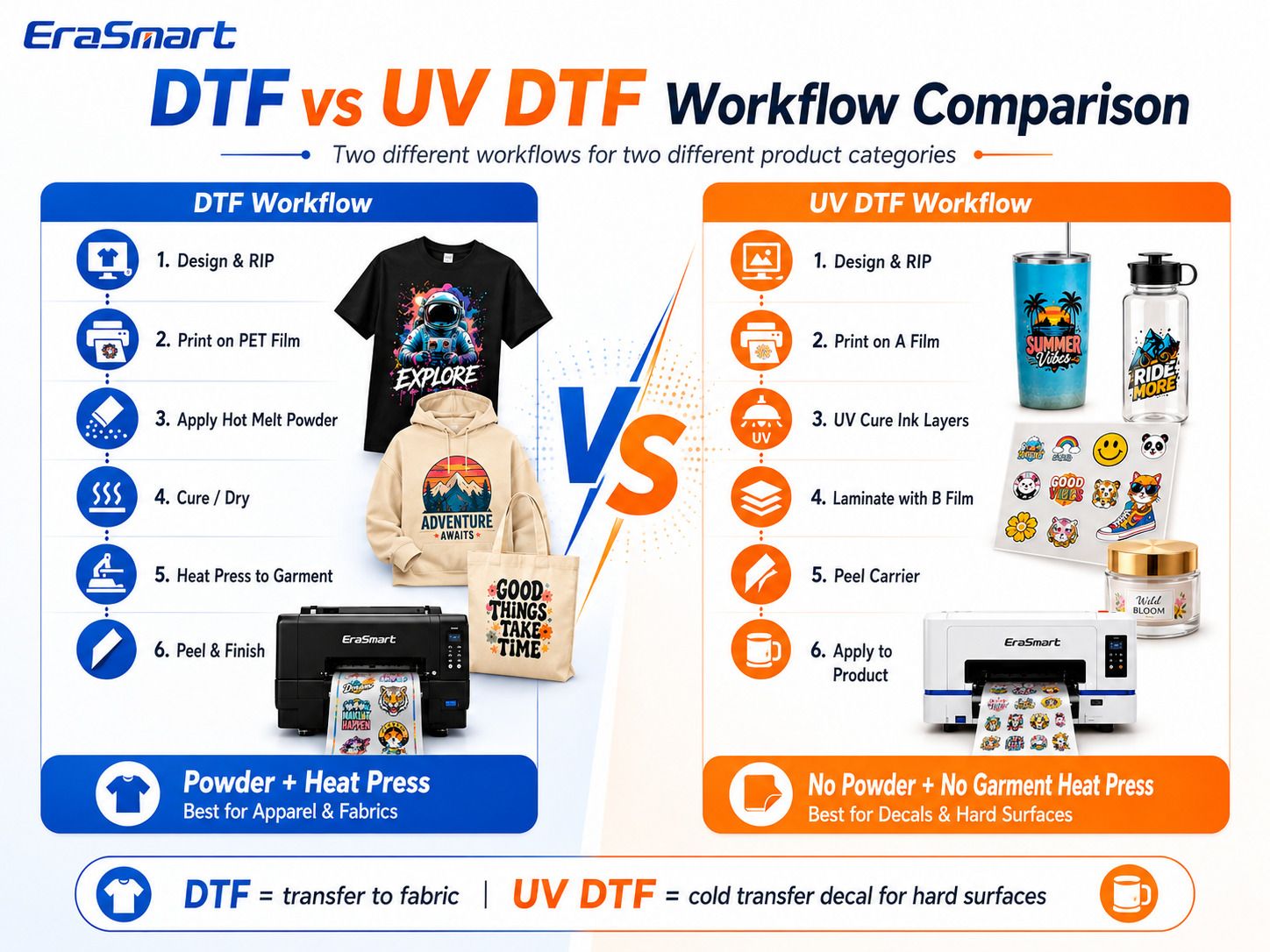
Рабочий процесс DTF
Типичный рабочий процесс DTF для текстиля выглядит следующим образом:
- Подготовьте произведение искусства.
- Обработка графических изображений в программном обеспечении RIP.
- Печать CMYK и белыми чернилами на ПЭТ-пленке.
- Нанесите термоплавкий клей-порошок.
- Отвердите или расплавьте клейкий порошок.
- Расположите трансфер на одежде.
- Термопресс для трансфера.
- Снимите пленку.
- Завершите нажатие, если необходимо.
- Осмотрите готовую одежду.
Принтер создает трансфер, но изделие не будет закончено до тех пор, пока трансфер не будет подвергнут термопрессованию.
Более подробное описание производства см. в документе EraSmart. Рабочий процесс производства DTFПолем
Рабочий процесс UV DTF
Типичный рабочий процесс UV DTF выглядит так:
- Подготовьте произведение искусства.
- Обработка слоев CMYK, белого и лака в программном обеспечении RIP.
- Печать на пленке.
- УФ-светодиоды закрепляют чернила во время печати.
- Ламинат пленкой Б.
- При необходимости разрежьте или обрежьте готовый трансфер.
- Снимите соответствующий слой носителя.
- Расположите наклейку на изделии.
- Отполируйте или прижмите его к поверхности.
- Снимите носитель.
Здесь нет термоплавкого порошка и, как правило, нет термопресса для одежды.
Эта разница делает UV DTF особенно полезным, когда клиенты приносят много разных твердых продуктов, которые в противном случае потребовали бы приспособлений для прямой печати или позиционирования.
Какие продукты вы на самом деле хотите продавать?
Это должно быть первое решение о покупке.
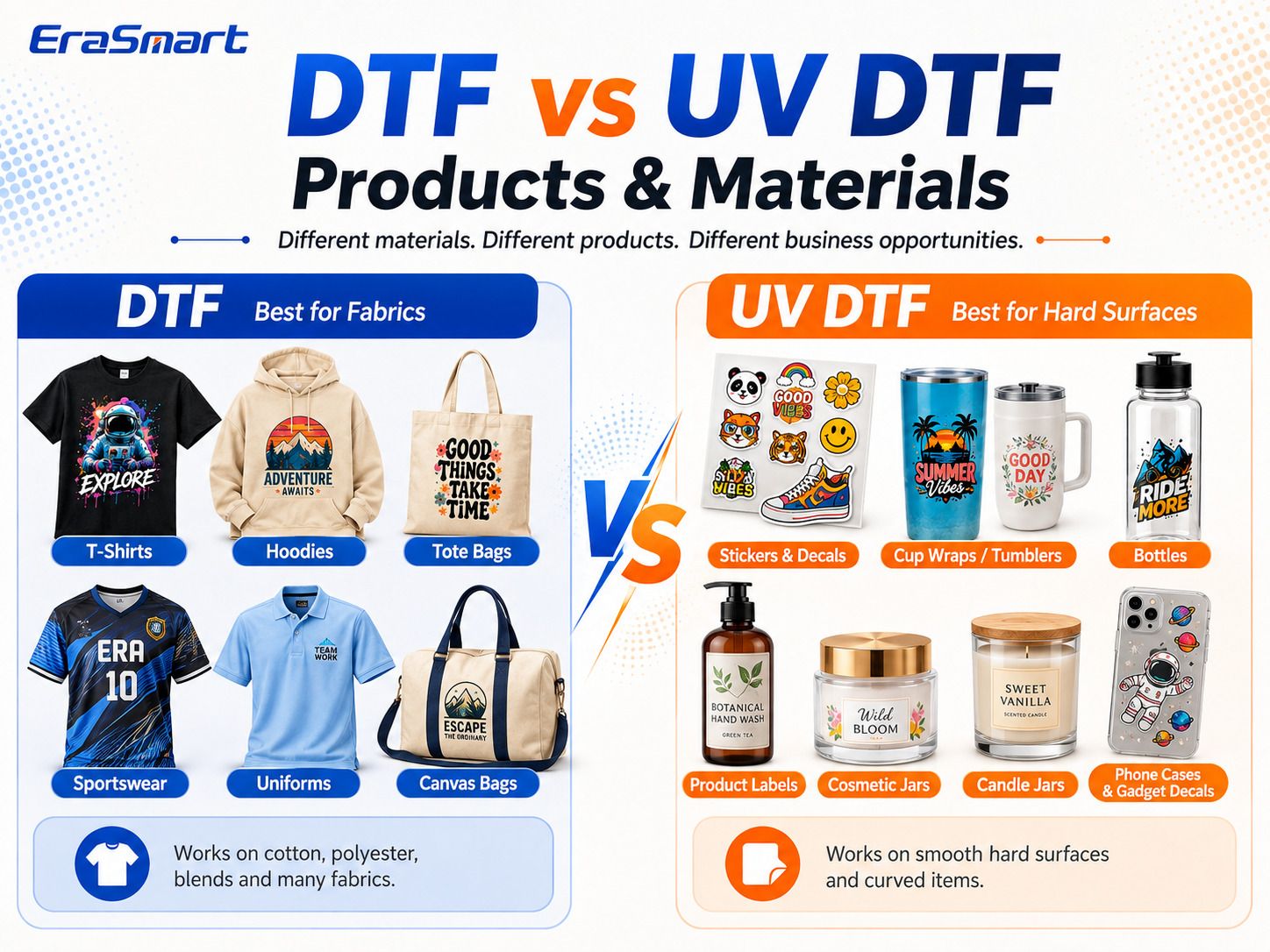
Выбирайте DTF для одежды и тканей
DTF создан вокруг текстильного декора.
Общие продукты включают в себя:
- футболки
- толстовки
- толстовки
- спортивные трикотажные изделия
- униформа
- спецодежда
- сумки-тоут
- холщовые сумки
- командная одежда
- Фирменные товары
- рубашки для мероприятий
- школьная и клубная одежда
- персонализированная одежда
- печать на заказ одежды
DTF особенно полезен, когда магазин обрабатывает одежду разных цветов и смешанные объемы заказов.
Белые чернила создают непрозрачную основу, позволяя переносить красочные рисунки как на темную одежду, так и на светлые ткани.
Магазин DTF также может продавать сами трансферы, а не только продавать готовую одежду. Это создает еще одну потенциальную бизнес-модель: печать групповых листов или трансферов для местных предприятий по производству одежды, продавцов ремесел, школ или других декораторов одежды.
Исследуйте полную Принтер EraSmart DTF диапазон, если одежда — ваше основное направление.
Выбирайте UV DTF для наклеек, этикеток и изделий с твердой поверхностью.
UV DTF создан на основе переносимых УФ-декалей.
Типичные продукты включают в себя:
- наклейки премиум-класса
- наклейки с логотипом
- обертывания чашек
- стаканы
- бутылки с водой
- брендинг стеклянной посуды
- этикетки на банках со свечами
- этикетки на косметические бутылки
- упаковка продукта
- наклейки на подарочные коробки
- наклейки на чехол для телефона
- скины гаджетов
- Этикетки с QR-кодом
- брендинг рекламной продукции
- этикетки для малого бизнеса
Вместо того, чтобы помещать объект в принтер, вы сначала создаете наклейку на пленке, а затем наносите ее.
Это полезно для предприятий, производящих продукцию разных форм и SKU.
Например, один и тот же логотип может быть нанесен на бутылку, банку, подарочную коробку, акриловое изделие или другую совместимую гладкую поверхность после соответствующего испытания на адгезию.
Исследуйте EraSmart УФ-принтер DTF модельный ряд, если наклейки и товары повседневного спроса являются вашим основным рынком.
Совместимость материалов: ткань против твердых поверхностей
Распространенная ошибка при покупке состоит в том, что UV DTF — это просто «лучший DTF», потому что в него добавляются УФ-чернила и лак.
Это не.
Они решают разные материальные проблемы.
DTF разработан для текстиля, подходящего для термопрессования.
Типичные области применения DTF включают хлопок, полиэстер, смесовые ткани, холст и многие распространенные материалы для одежды.
Тем не менее, операторам по-прежнему следует тестировать новые ткани, покрытия, растягиваемость, температуру прессования и адгезию, прежде чем принять производственный заказ.
UV DTF разработан для совместимых твердых поверхностей
UV DTF обычно используется на чистых, гладких твердых поверхностях, таких как:
- стакан
- акрил
- металл
- контейнеры с покрытием
- пластиковые изделия
- упаковка
- бутылки
- банки
- выбранные деревянные поверхности
- гаджеты и аксессуары
Текстура поверхности и поверхностная энергия имеют значение.
Наклейка UV DTF, которая очень хорошо прилипает к гладкому стеклу, может по-разному вести себя на маслянистом пластике, необработанной древесине, силиконоподобном материале, сильно текстурированной поверхности или гибком изделии.
Перед серийным производством всегда рекомендуется протестировать фактическую заготовку.
Внешний вид печати и качество обслуживания клиентов
DTF и UV DTF также создают совершенно разные готовые продукты.
DTF: гибкая графика одежды
Хорошая передача DTF может обеспечить:
- яркое полноцветное произведение искусства
- белая подкладка для темной одежды
- мелкая графическая детализация
- мелкосерийная персонализация
- гибкое украшение одежды
Окончательное ощущение зависит от покрытия произведения искусства, плотности чернил, клеящего порошка, отверждения, прессования и самой одежды.
Большой сплошной рисунок, естественно, будет отличаться от маленького логотипа на груди с большим количеством негативного пространства.
UV DTF: премиум-декаль и рельефные эффекты
UV DTF может использовать:
CMYK + Белый + Лак
Лак позволяет добиться таких эффектов, как:
- блеск
- точечный блеск
- поднятые детали
- Премиальные эффекты логотипа
- фактурные декоративные акценты
Это делает UV DTF привлекательным для фирменных этикеток, посуды для напитков, упаковки, подарочной продукции и декоративной графики премиум-класса.
Его по-прежнему следует рассматривать как переносимый слой декали, а не как печать непосредственно на подложке.
Оборудование и расходные материалы: что вам действительно нужно?
Принтер — это только часть инвестиций.
Вы должны сравнить всю производственную систему.
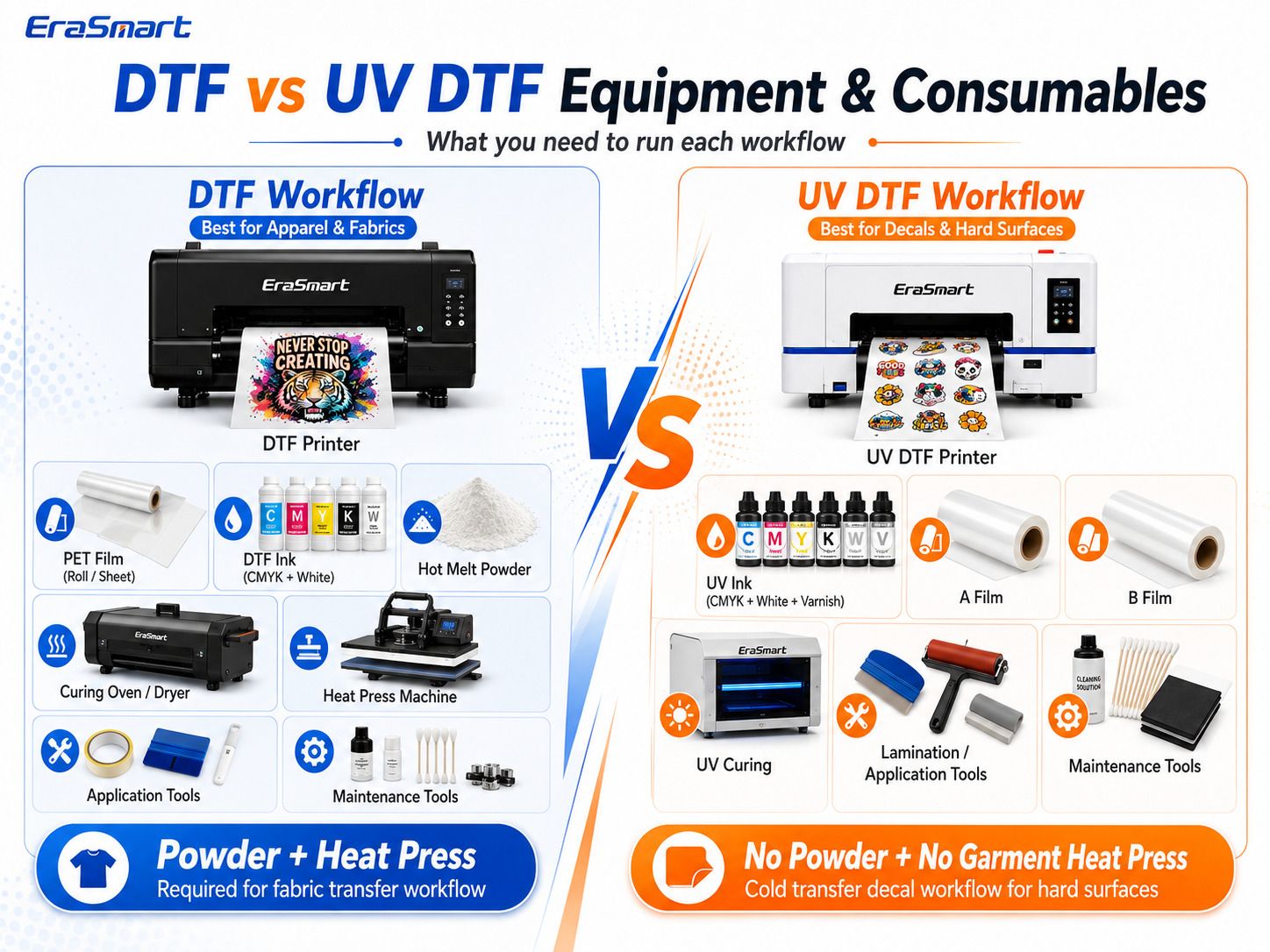
Производственная система DTF
Полный рабочий процесс DTF может потребовать:
- DTF принтер
- CMYK + белые чернила DTF
- ПИСЬ ПЕРВАЯ ПИСЬМА
- термоплавкий клей-порошок
- система нанесения порошка
- печь для отверждения или сушилка
- тепловой пресс
- RIP Software
- чистящий раствор
- инструменты для обслуживания
- пустая одежда
Небольшие цеха могут наносить порошок вручную и использовать отдельное оборудование для отверждения.
По мере увеличения производства автоматические порошковые шейкеры и сушилки могут сократить ручную работу и улучшить консистенцию.
Для покупателей, рассматривающих такое обновление, EraSmart также предоставляет Принтер A3 MAX XP600 DTF с шейкером для порошкаПолем
Система производства УФ DTF
Рабочий процесс UV DTF обычно требует:
- УФ-принтер DTF
- УФ-чернила CMYK
- белые УФ-чернила
- лак
- Фильм
- фильм Б
- Ультрафиолетовая система
- система ламинирования
- RIP Software
- инструменты для обрезки/применения
- средства для уборки и ухода
Рабочий процесс EraSmart UV DTF не содержит порошка и не требует использования термопресса для одежды для стандартного нанесения декалей.
Это сильно отличает структуру производства от текстильной DTF.
Какой рабочий процесс содержит больше шагов?
Это зависит от того, что вы считаете.
DTF требует дополнительных этапов производства одежды после печати трансфера:
порошок → отверждение → термопресс → кожура
UV DTF требует:
УФ-отверждение во время печати → ламинат → обрезка → нанесение → очистка
Поэтому вопрос не должен звучать так: «У какого из них меньше шагов?»
Лучший вопрос:
Какой рабочий процесс подходит для продуктов, которые вы хотите продавать повторно?
Если 90% ваших заказов составляют футболки, рабочий процесс DTF будет выглядеть естественным.
Если 90% ваших заказов составляют обертки для чашек и упаковочные наклейки, рабочий процесс UV DTF будет иметь гораздо больше смысла.
Обслуживание: какой принтер проще приобрести?
Ни одну из систем нельзя рассматривать как не требующую обслуживания.
Принтеры DTF и UV DTF оснащены струйными печатающими головками и системами белых чернил, которые требуют надлежащего режима работы.
Приоритеты обслуживания DTF
Операторам DTF необходимо управлять:
- Белые чернила циркуляция
- проверка дюз
- состояние печатающей головки
- укупорочная станция
- стеклоочиститель
- чернильные линии
- загрязнение порошком
- хранение пленки
- комнатная температура и влажность
- рутина во время простоя
Белые чернила содержат более тяжелый пигмент и являются одной из основных причин регулярной эксплуатации и обслуживания DTF.
EraSmart’s Руководство по обслуживанию DTF содержит дополнительные рекомендации по техническому обслуживанию.
Приоритеты обслуживания UV DTF
Операторам UV DTF также необходимо управлять:
- состояние печатающей головки
- система белых чернил
- УФ -чернила
- лаковый канал
- проверка дюз
- укупорка и очистка
- Хранение пленки A/B
- качество ламинации
- Ультрафиолетовая система
- пыль и загрязнения
UV DTF удаляет термоплавкий порошок из рабочего процесса, но это не означает, что сам принтер можно оставлять неиспользованным на неопределенный срок без ухода.
Для любой системы ежедневная эксплуатационная дисциплина важнее маркетинговых фраз, таких как «простота обслуживания».
Что проще для новичка?
Универсального ответа не существует.
Самый простой принтер для новичка — это обычно принтер, соответствующий первой категории продуктов новичка.
DTF легче понять, если вы уже хотите продавать одежду
Если ваша бизнес-идея:
«Я хочу продавать футболки и толстовки на заказ».
У DTF есть четкий путь:
дизайн → трансфер → термопресс → одежда.
Вашими основными областями обучения будут:
- подготовка художественных работ
- Настройка RIP
- управление белыми чернилами
- порошковое отверждение
- нажатие
- тестирование одежды
UV DTF легче понять, если вы хотите продавать наклейки и товары длительного пользования на заказ
Если ваша бизнес-идея:
«Я хочу продавать обертки для стаканов, этикетки и специальные наклейки для продуктов».
UV DTF дает вам рабочий процесс, который естественным образом соответствует этим продуктам.
Вашими основными областями обучения будут:
- Настройка CMYK/белый/лак
- А/Б фильм
- ламинирование
- расположение декалей
- техника нанесения
- испытание на адгезию подложки
Покупка неправильной системы усложняет новичку задачу, чем правильный выбор любой технологии.
Бизнес-модели DTF и UV DTF
Разница станет еще более очевидной, когда вы перестанете думать о принтерах и начнете думать о клиентах.
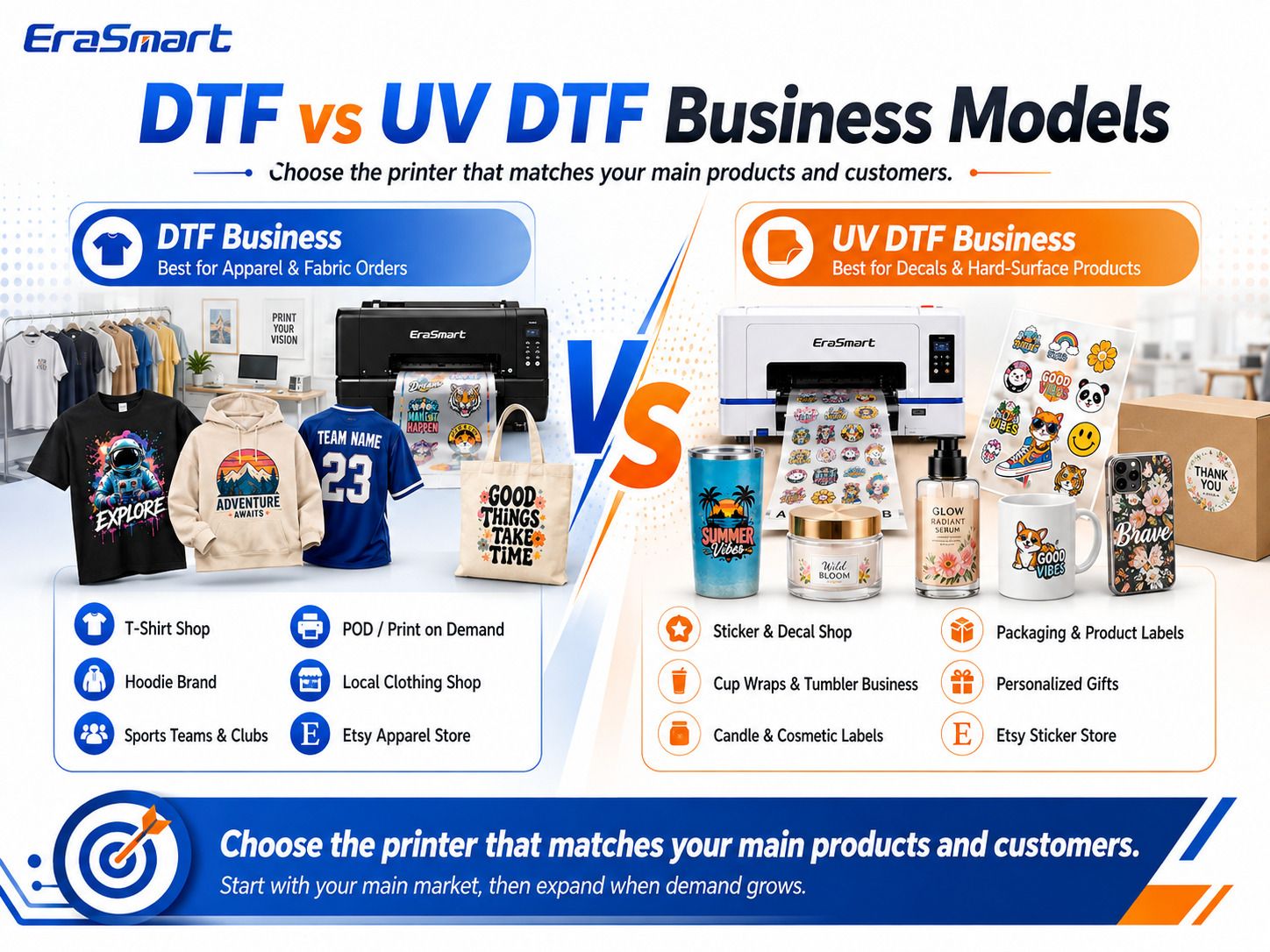
Бизнес-модели ДТФ
DTF идеально подходит для:
Магазин футболок на заказ
Клиенты присылают дизайны и заказывают рубашки в небольших или средних количествах.
Одежда с печатью по требованию
По мере поступления заказов могут быть подготовлены и изготовлены несколько дизайнов.
Бренды уличной одежды и одежды
Бренды могут запускать небольшие коллекции, не готовя экраны под каждый дизайн.
Школьная, командная и клубная одежда
Названия, номера, логотипы и меняющийся дизайн подходят для производства цифровой передачи.
Корпоративные товары
Рубашки для сотрудников, одежда для мероприятий, спецодежда и фирменная одежда могут способствовать повторному обращению.
Поставщик трансферов DTF
Вместо того, чтобы гладить одежду самостоятельно, вы можете продать готовые трансферы другим декораторам.
Бизнес-модели UV DTF
UV DTF идеально подходит для:
Магазин наклеек и декалей
Производите переводные изображения на твердую поверхность премиум-класса для потребителей и предприятий.
Бизнес по упаковке чашек
Создавайте изображения для стаканов, стеклянных чашек, бутылок и посуды для питья.
Упаковка и этикетки продукции
Обслуживайте небольшие бренды, которым нужны привлекательные этикетки и наклейки небольшим тиражом.
Брендинг свечей и косметики
Создайте декоративный брендинг для совместимых банок и контейнеров.
Персонализированный подарочный бизнес
Используйте наклейки, чтобы персонализировать различные подарочные изделия, не печатая каждый предмет напрямую.
Поставщик брендинга B2B
Обслуживайте кафе, салоны, магазины подарков, местные товарные бренды, компании, занимающиеся проведением мероприятий, а также компании, занимающиеся рекламной продукцией.
Что лучше для Etsy и интернет-магазинов?
Оба могут работать хорошо, но ведут в разные магазины.
Интернет-магазин ДТФ
Возможные продукты:
- графические футболки
- пользовательские толстовки
- персонализированная спортивная одежда
- рубашки для мероприятий
- сумки-тоут
- создатель товаров
- трансферы одежды
Эта модель подойдет продавцам, чья визуальная идентичность основана на одежде.
УФ DTF Интернет-магазин
Возможные продукты:
- наклейки
- обертывания чашек
- наклейки для стаканов
- этикетки для бутылок
- сезонные коллекции наклеек
- персонализированные этикетки
- пакеты брендинга для малого бизнеса
УФ-трансферы DTF также можно продавать без готовой заготовки, что снижает необходимость хранить на складе все возможные чашки, банки или бутылки.
Что лучше для местных типографий?
Это зависит от вашей местной клиентской базы.
DTF привлекателен, если вы регулярно получаете:
- заказы на рубашки для персонала ресторана
- одежда спортивной команды
- школьные рубашки
- заказы на строительство/спецодежду
- клубные товары
- одежда для мероприятий
- корпоративная униформа
UV DTF привлекателен, если вашим клиентам нужно:
- упаковочные этикетки
- брендинг бутылки
- наклейки на продукцию
- настройка стакана
- Наклейки с QR-кодом
- Рекламные подарки
- этикетки для косметики/свечей
- небольшой брендинг
В конечном итоге местная типография может иметь спрос и на то, и на другое.
Что имеет больший потенциал роста?
Ни одна из технологий автоматически не приносит больше денег.
Прибыль зависит от:
- местный спрос
- цена продажи
- стоимость материала
- напрасно тратить
- использование машины
- труд
- позиционирование продукта
- маркетинг
- удержание клиентов
- повторные заказы
DTF дает вам путь роста в сфере одежды.
Вы можете переехать из:
небольшие индивидуальные заказы → работа с брендами одежды → бандитские листы → трансферные продажи → более крупные производственные системы.
UV DTF дает вам возможность роста внутри декораций с твердой поверхностью.
Вы можете переехать из:
наклейки → напитки → упаковочные этикетки → B2B-брендинг → рекламная продукция → крупномасштабное производство наклеек.
Лучшая платформа для роста — это та, которая связана с клиентской базой, которую вы реально можете создать.
Можете ли вы запустить DTF и UV DTF вместе?
Да. Фактически, эти две системы могут дополнять друг друга, поскольку они ориентированы на разные категории продуктов.
Представьте, что посетитель кафе хочет получить полный пакет фирменных товаров.
С помощью DTF вы можете создавать:
- футболки для персонала
- рекламные толстовки
- рубашки для мероприятий
- сумки-тоут
С помощью UV DTF вы можете создавать:
- наклейки с логотипом чашки
- брендинг бутылки
- Наклейки с QR-кодом
- упаковочные этикетки
- Брендирование подарочной коробки
Таким образом, один клиент может создавать заказы на несколько типов продуктов.
Вот почему зрелая мастерская по настройке может в конечном итоге использовать обе системы.
Но это делает нет это означает, что новичок должен автоматически купить оба в первый же день.
Начните с системы, которая соответствует вашей самой сильной возможности в отношении продукта. Добавьте второй рабочий процесс, когда это оправдано требованиями клиентов.
EraSmart A3 MAX DTF против принтера A3 UV DTF
В качестве более практичного примера покупки рассмотрим две системы EraSmart класса A3.
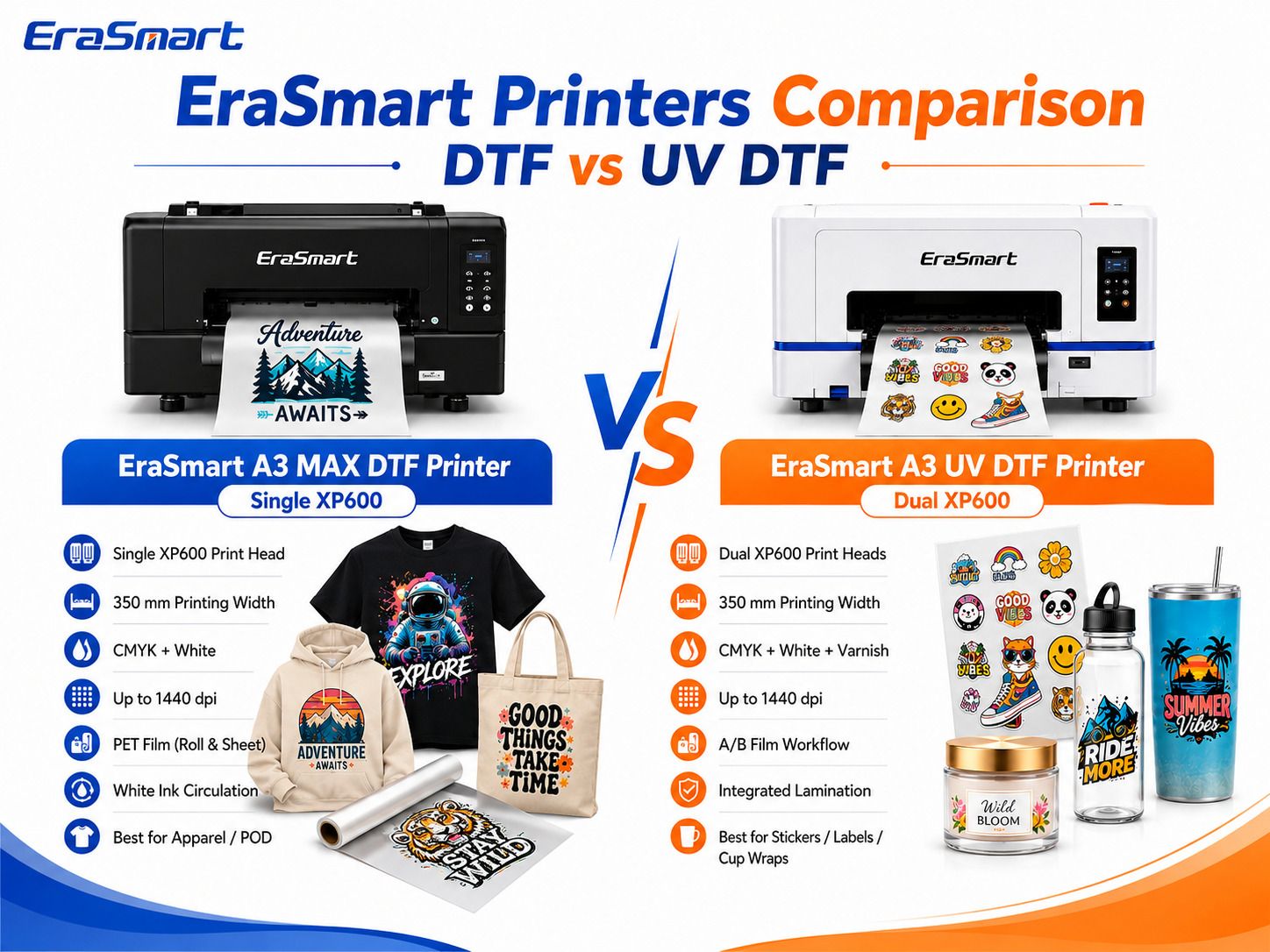
| Спецификация | Принтер EraSmart A3 MAX DTF | УФ-DTF-принтер EraSmart A3 |
|---|---|---|
| Основное приложение | Передача одежды | Наклейки с твердой поверхностью |
| печатающая головка | Одиночный XP600 | Двойной XP600 |
| Максимальная ширина печати | 350 мм | 350 мм |
| Цветовая система | CMYK + Белый | CMYK + Белый + Лак |
| Разрешение | До 1440 т/д | До 1440 т/д |
| Фильм | ПЭТ-пленка, рулон и лист | A/B УФ-пленка DTF |
| Рабочий процесс с клеем | Термоплавкий порошок | Система клейкой пленки A/B |
| Выклятый | Требуется отверждение порошка | УФ-светодиодное отверждение |
| Ламинирование | Не является частью стандартного рабочего процесса передачи DTF. | Интегрированный рабочий процесс холодного ламинирования |
| Тепловой пресс | Требуется нанесение на одежду | Нет термопресса для одежды для стандартного нанесения наклеек |
| Управление белыми чернилами | Циркуляция белых чернил | Управление белыми чернилами/УФ-чернилами |
| Лучшее соответствие | Одежда, POD, текстиль | Наклейки, этикетки, обертки для чашек, переводные картинки |
Принтер EraSmart A3 MAX DTF — одиночный XP600
В Принтер EraSmart A3 MAX DTF — одиночный XP600 — это трансферный принтер для текстиля класса А3, разработанный для работы с ПЭТ-пленкой шириной 350 мм.
Ключевые особенности включают в себя:
- Одна печатающая головка XP600
- ширина печати до 350 мм
- CMYK + белый
- Поддержка рулонов и листов ПЭТ-пленки
- до 1440 точек на дюйм
- Белые чернила циркуляция
- Рабочий процесс Riin / EraRip
- разработан для индивидуальной одежды и приложений POD
Это практическое направление для магазинов, которые хотят производить собственные трансферы одежды без немедленного перехода на более широкую производственную платформу А1.
УФ-принтер EraSmart A3 DTF — Dual XP600
В УФ-DTF-принтер EraSmart A3 разработан на основе рабочего процесса с наклейками на пленку A / B.
Его основная конфигурация включает в себя:
- Двойные печатающие головки XP600
- ширина носителя до 350 мм
- CMYK + белый + лак
- до 1440 точек на дюйм
- Рабочий процесс фильма A/B
- УФ-отверждение
- холодный/комплексный рабочий процесс ламинирования
- нет термоплавкого порошка
- без термопресса для одежды для стандартного нанесения наклеек
- предназначен для наклеек, этикеток, обертывания чашек и трансферов на твердую поверхность.
Важное различие не в том, что у одной машины одна печатающая головка, а у другой — две.
Важное отличие состоит в том, что машины предназначены для двух разных предприятийПолем
Не сравнивайте количество печатающих головок, не сравнивая рабочий процесс
Это заслуживает особого внимания.
Покупатель может увидеть:
- Один XP600 на одном принтере
- Dual XP600 на другом принтере
и сразу предположим, что машина с двумя головками просто «лучше».
Это бесполезное сравнение.
Печатающие головки настраиваются в соответствии с системой подачи чернил, шириной, требованиями к слою и предполагаемым рабочим процессом.
УФ-принтеру DTF может потребоваться соблюдение требований CMYK, белого цвета, лака и отверждения/ламинирования.
Текстильный DTF-принтер оптимизирован для печати CMYK + белый трансфер.
Поэтому:
Не выбирайте DTF или UV DTF только на основе количества печатающих головок.
Выбирайте в зависимости от того, что вам нужно сделать.
Стоимость: что дешевле использовать?
Ответственного универсального ответа не существует, поскольку затраты варьируются в зависимости от рынка, поставщика, размера продукта, расхода чернил, отходов, труда и типа заказа.
Вместо этого сравните структуру затрат.
Структура затрат DTF
Включать:
- DTF-чернила
- ПЭТ-пленка
- термоплавкий порошок
- энергия лечения
- тепловой пресс
- пустая одежда
- чистящие средства
- неудачные переводы
- обслуживание
- труд
Структура затрат UV DTF
Включать:
- УФ -чернила
- белые чернила
- лак
- Фильм
- фильм Б
- ламинирование
- чистящие средства
- неудачные декали
- применение труда
- обслуживание
- пустая продукция, если вы продаете готовую продукцию
Самая низкая стоимость квадратного метра не обязательно приводит к лучшему бизнесу.
Наклейка на чашку премиум-класса или косметическая этикетка могут продаваться совсем иначе, чем большое изображение на футболке.
Всегда рассчитывайте стоимость на основе готовый продукт, который вы продаете, а не только чернила или пленка.
Требования к пространству
Обе системы формата A3 могут вписаться в относительно компактные среды индивидуальной печати, но их рабочие процессы различаются.
Рабочая область DTF
Планируем помещение для:
- принтер уф
- ПЭТ-пленка
- пудра
- система отверждения
- тепловой пресс
- подготовка одежды
- завершенные переводы
- удержание порошка
- вентиляция
Если вы добавите автоматический шейкер для порошка, производственная площадь увеличится, но рабочий процесс станет более автоматизированным.
Рабочая область UV DTF
Планируем помещение для:
- УФ-принтер DTF
- Хранение пленки A/B
- ламинирование
- резка/обрезка
- применение наклейки
- склад твердых продуктов
- чистящие средства
Предприятию UV DTF, возможно, не понадобится термопресс для одежды, но ему может потребоваться гораздо больше места для хранения, если вы продаете много различных заготовок твердых товаров.
Какая система лучше для смешанных небольших заказов?
Здесь обе технологии работают хорошо, но на разных рынках.
DTF является сильным, когда один заказ клиента содержит:
- пять дизайнов рубашек
- несколько цветов одежды
- разные имена
- номера команд
- небольшое количество на дизайн
UV DTF силен, когда один заказ содержит:
- несколько наклеек с логотипом
- несколько размеров бутылок
- обертывания чашек
- упаковочные этикетки
- разные персонализированные имена
Оба рабочих процесса помогают малым предприятиям избежать традиционных высоких требований к настройке.
Разница заключается в категории продукта.
Какую систему следует купить в первую очередь?
Используйте следующее руководство по принятию решений.
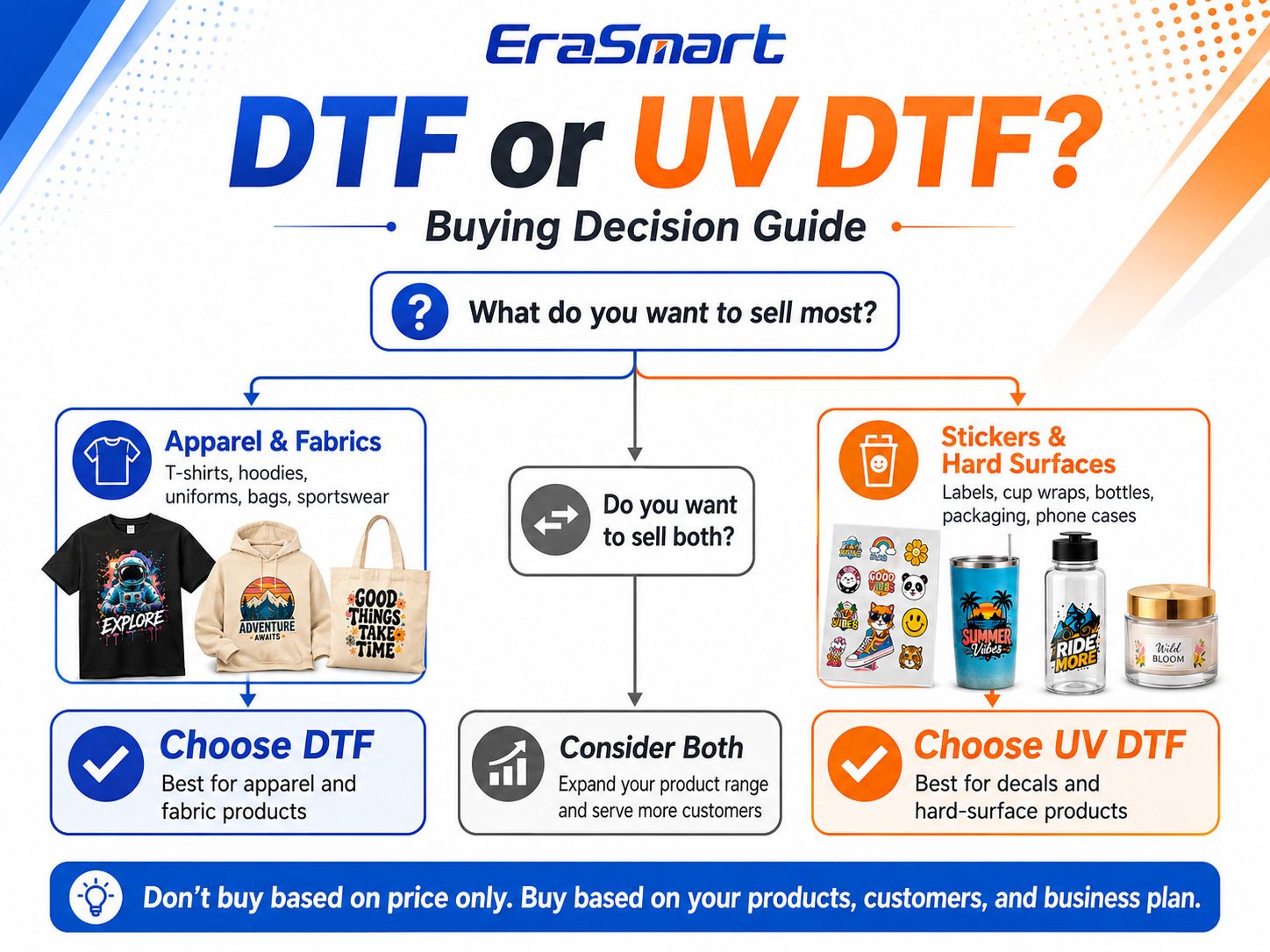
Выбирайте DTF, если:
- большая часть вашей продукции — это одежда
- клиенты хотят футболки и толстовки
- вы хотите создать бренд одежды
- вы хотите служить командам и школам
- вы планируете продавать переводы DTF
- вам нужна полноцветная печать на темных вещах
- POD одежда — ваш основной бизнес
Начните с Принтер EraSmart DTF диапазон.
Выбирайте UV DTF, если:
- наклейки и наклейки — ваша основная продукция
- вы хотите продавать обертки для чашек
- вы продаете свечи или косметические бренды
- упаковочные этикетки являются важным рынком
- клиенты приносят бутылки, банки или подарочную продукцию
- вам нужен эффект точечного лака
- вы хотите заняться трансфером на твердую поверхность
Начните с УФ-DTF-принтер EraSmart диапазон.
Рассмотрите оба варианта, если:
- у вас уже есть клиенты, которые просят как одежду, так и брендовые товары повседневного спроса.
- вы хотите предлагать полные пакеты товаров
- вашим существующим клиентам DTF нужны этикетки и упаковка для чашек
- вашим существующим клиентам с наклейками нужна одежда
- объем вашего заказа может поддерживать два отдельных рабочих процесса
- у вас достаточно рабочего места и персонала для обслуживания обеих систем
Не покупайте две машины просто потому, что вам нужно «больше возможностей».
Купите вторую систему после того, как потребительский спрос подтвердит, что эти возможности реальны.
DTF против UV DTF: окончательное сравнение
| категория | DTF | УФ ДТФ |
|---|---|---|
| Первичный рынок | Одежда | Наклейки с твердой поверхностью |
| Типичные продукты | Футболки, толстовки, униформа, сумки | Наклейки, стаканчики, бутылки, этикетки, упаковка |
| Чернила | Пигментные чернила DTF | чернила, отверждаемые УФ-излучением |
| Цветовая конфигурация | CMYK + Белый | CMYK + Белый + Лак |
| Фильм | ДОМАШНИЙ ПИТОМЕЦ | А/Б фильм |
| Клей | Термоплавкий порошок | Клей для пленки A/B |
| Выклятый | Порошковое отверждение | УФ-светодиод |
| Окончательный трансфер | Тепловой пресс | Холодное применение |
| Тепловой пресс | да | Обычно нет |
| Пудра | да | Нет |
| Эффекты лака | Нет стандартного слоя лака. | да |
| Основное направление технического обслуживания | Белые чернила, печатающая головка, рабочий процесс с порошком | Белые чернила, УФ-чернила, лак, печатающая головка, пленка/ламинирование. |
| Лучший новичок | Новичок, специализирующийся на одежде | Новичок, специализирующийся на наклейках и товарах длительного пользования |
| Лучшее бизнес-направление | POD, одежда, трансферы | Наклейки, этикетки, брендирование подарков/продуктов |
Окончательный ответ: UV DTF или DTF — какой принтер купить?
Если ваш бизнес построен вокруг Футболки, толстовки, униформа, спортивная одежда, сумки и текстильные товары., купить DTF принтерПолем
Если ваш бизнес построен вокруг наклейки, этикетки, обертки для чашек, бутылки, банки, упаковка, гаджеты и наклейки с твердой поверхностью., купить УФ-принтер DTFПолем
Если вашим клиентам постоянно требуется брендирование одежды и продуктов, рассмотрите возможность использования обеих систем, как только объем заказов оправдает инвестиции.
Самая большая ошибка при покупке — это выбор по спецификациям перед выбором продукта.
Не начинайте с:
У какого принтера больше печатающих головок?
Не начинайте с:
Какой принтер имеет самый высокий DPI?
И не начинайте с:
Какой принтер дешевле?
Начните с:
Что я собираюсь продать и кто это купит?
Как только ответ станет ясен, выбор между DTF и UV DTF станет намного проще.
Часто задаваемые вопросы
UV DTF лучше, чем DTF?
Нет. UV DTF и DTF предназначены для разных применений. DTF лучше подходит для переноса тканей и одежды, а UV DTF предназначен для декалей, которые наносятся на совместимые твердые поверхности.
Может ли УФ-принтер DTF печатать футболки?
UV DTF не следует рассматривать как замену текстильного DTF. Для футболок, толстовок, униформы и тканевых изделий используйте текстильную ткань. DTF принтерПолем
Может ли принтер DTF печатать обертки для чашек?
Стандартные текстильные трансферы DTF предназначены для текстиля, подходящего для термопрессования. Для упаковки чашек, бутылок, этикеток и наклеек с твердой поверхностью используйте УФ-принтер DTFПолем
Требуется ли для UV DTF термопресс?
Стандартные УФ-наклейки DTF используют рабочий процесс с пленкой холодного переноса A/B и обычно не требуют для нанесения термопресса для одежды.
Нужен ли DTF порошок?
Да. В стандартном текстильном производстве DTF используется термоплавкий клейкий порошок, который наносится на отпечатанный трансфер и отверждается перед термопрессованием.
Использует ли UV DTF порошок?
Нет. В UV DTF используются чернила, отверждаемые УФ-излучением, и система переноса пленки A/B, а не термоплавкий порошок DTF.
В чем разница между пленкой DTF и пленкой UV DTF?
В текстильной DTF обычно используется переводная пленка из ПЭТ, на которую перед термопрессованием наносятся чернила DTF и порошок термоплавкого клея.
UV DTF обычно использует пленочную систему A/B. Изображение печатается и закрепляется УФ-излучением на пленке А, затем ламинируется и переносится на пленку Б.
Что лучше для малого бизнеса?
Если компания в основном продает одежду, DTF обычно является лучшей стартовой системой. Если компания в основном продает наклейки, этикетки, обертки для чашек и товары длительного пользования, UV DTF обычно является лучшей стартовой системой.
Что легче поддерживать?
Оба требуют регулярного обслуживания струйного принтера. DTF требует тщательного управления рабочим процессом с белыми чернилами и порошком. UV DTF также требует печатающей головки, белых чернил, лака, УФ-чернил и управления пленкой/ламинированием. Ни один из них не следует считать не требующим обслуживания.
Могу ли я начать с DTF и добавить UV DTF позже?
Да. Это практический путь расширения для предприятия по производству одежды, которое начинает получать запросы на наклейки, посуду для напитков, упаковочные этикетки и другие продукты с твердой поверхностью.
Могу ли я начать с UV DTF и добавить DTF позже?
Да. Компании, занимающиеся наклейками, подарками и брендингом продуктов, могут позже добавить DTF, когда клиенты начнут запрашивать футболки, толстовки, униформу для персонала и одежду.
Не уверены, подходит ли DTF или UV DTF вашему бизнесу?
Сообщите EraSmart:
- какие продукты вы хотите продавать
- какие материалы вы будете настраивать
- ваш типичный объем заказа
- ожидаемое ежедневное производство
- ваше рабочее пространство
- независимо от того, начинаете ли вы из дома или управляете типографией
- ваш будущий план расширения продукта
Наша команда может помочь вам сравнить правильные DTF принтер а также УФ-принтер DTF рабочий процесс на основе ваших реальных продуктов, а не рекомендации машины только по техническим характеристикам.
Может быть, вам тоже нравится

Copyright 2020 © Erasmart. | Карта сайта