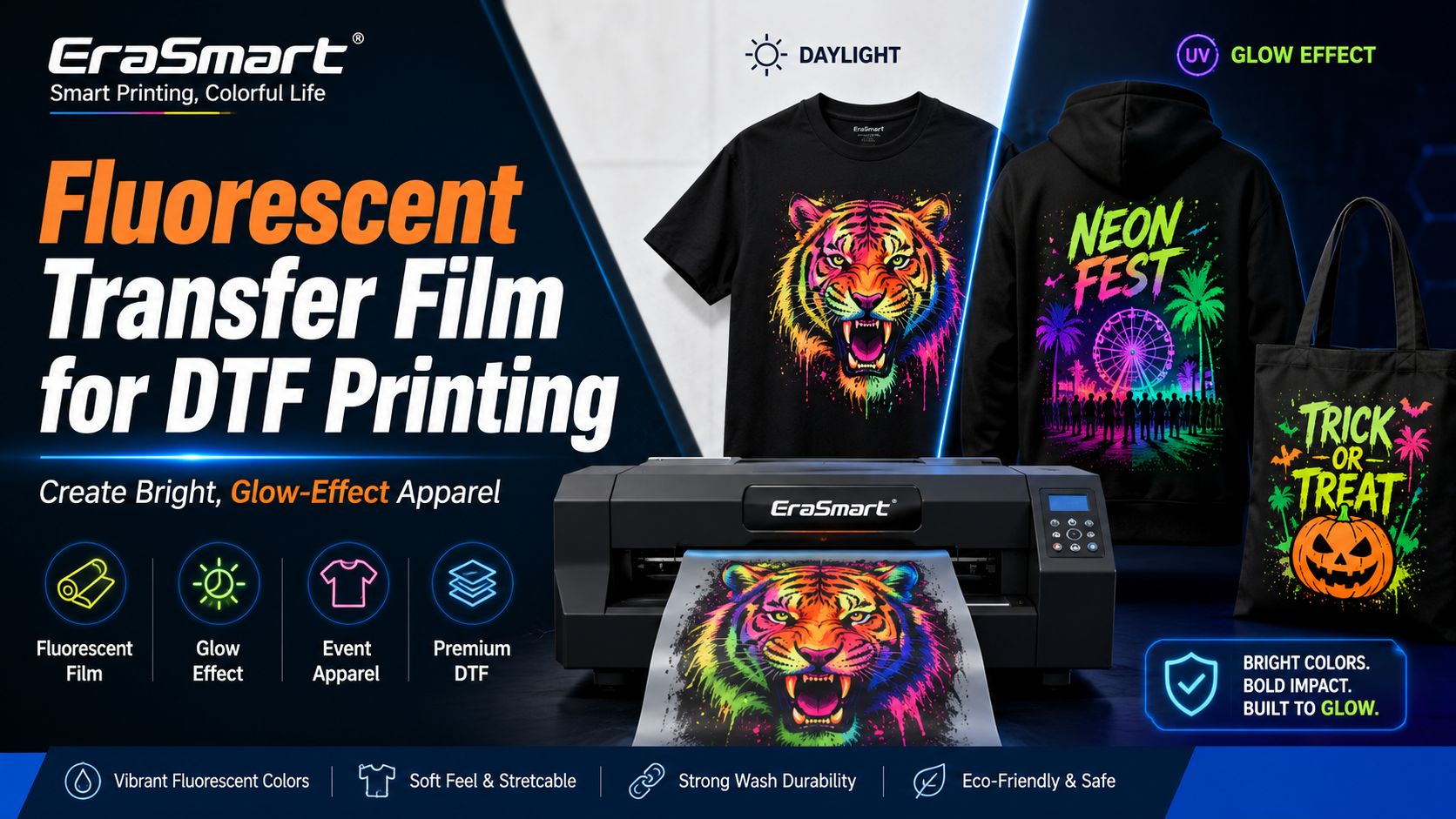
Fluorescent transfer film gives DTF printing a more eye-catching visual effect than standard transfer film. Instead of only producing normal full-color graphics, it can help create designs that look brighter, more vivid, and more attractive under special lighting conditions. For apparel businesses, this opens a useful product direction: event shirts, festival merchandise, Halloween collections, night market apparel, streetwear drops, kidswear, dancewear, clubwear, and limited-edition fashion products.
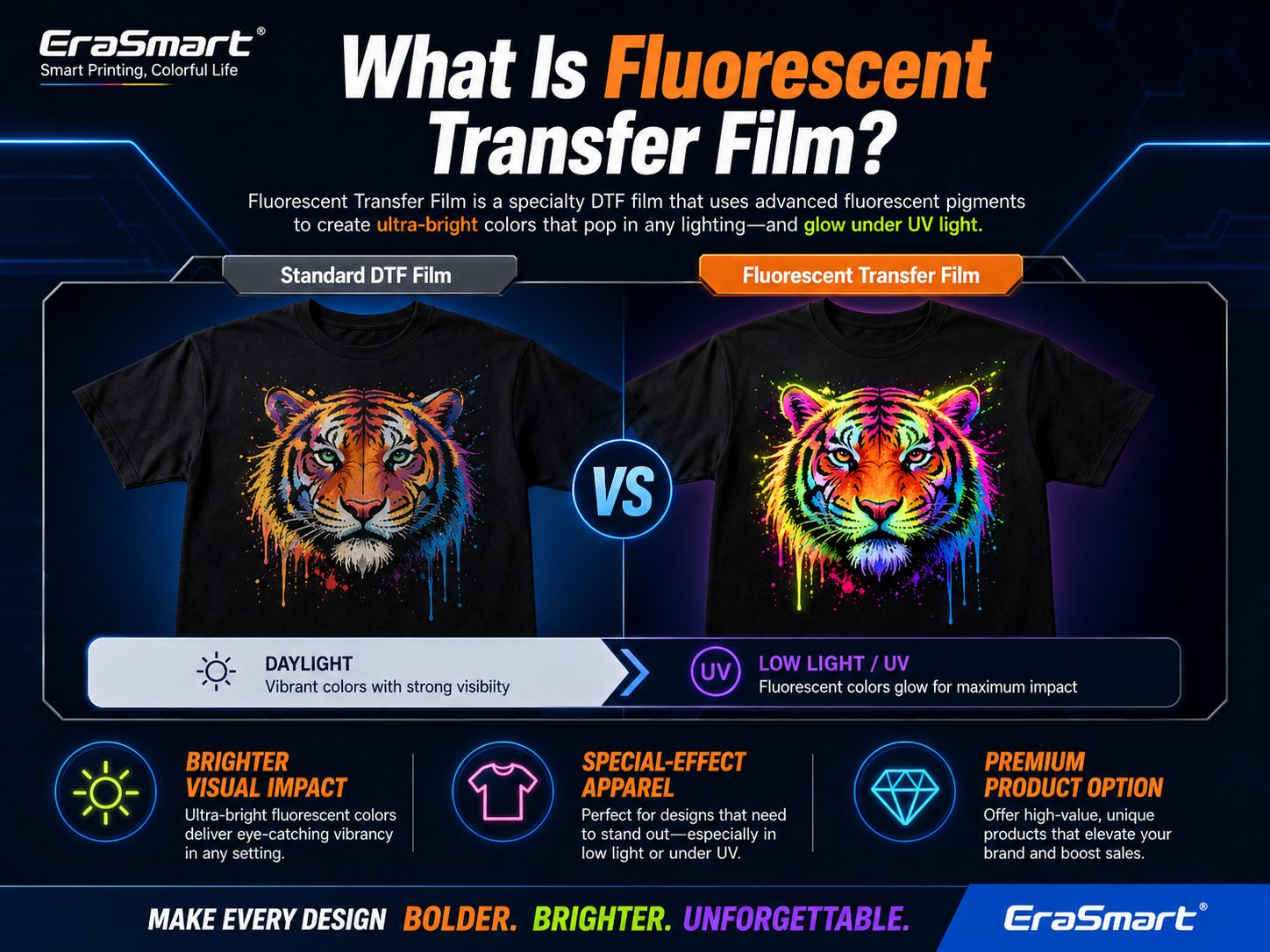
In the DTF market, “fluorescent” can refer to two related but different effects. One is fluorescent color printing, which uses special fluorescent inks to create vivid neon-like colors. Another is glow-effect transfer film, where a fluorescent or phosphorescent coating absorbs light energy and releases visible glow in darker environments. Some glow transfer films use a coating layer on the printable side of the film; after printing and heat transfer, that effect layer remains with the design on the garment surface.
– Procolored”))
Standard film is still best for daily apparel production, while fluorescent film is better for products where brightness, novelty, and visual impact can justify a higher selling price.

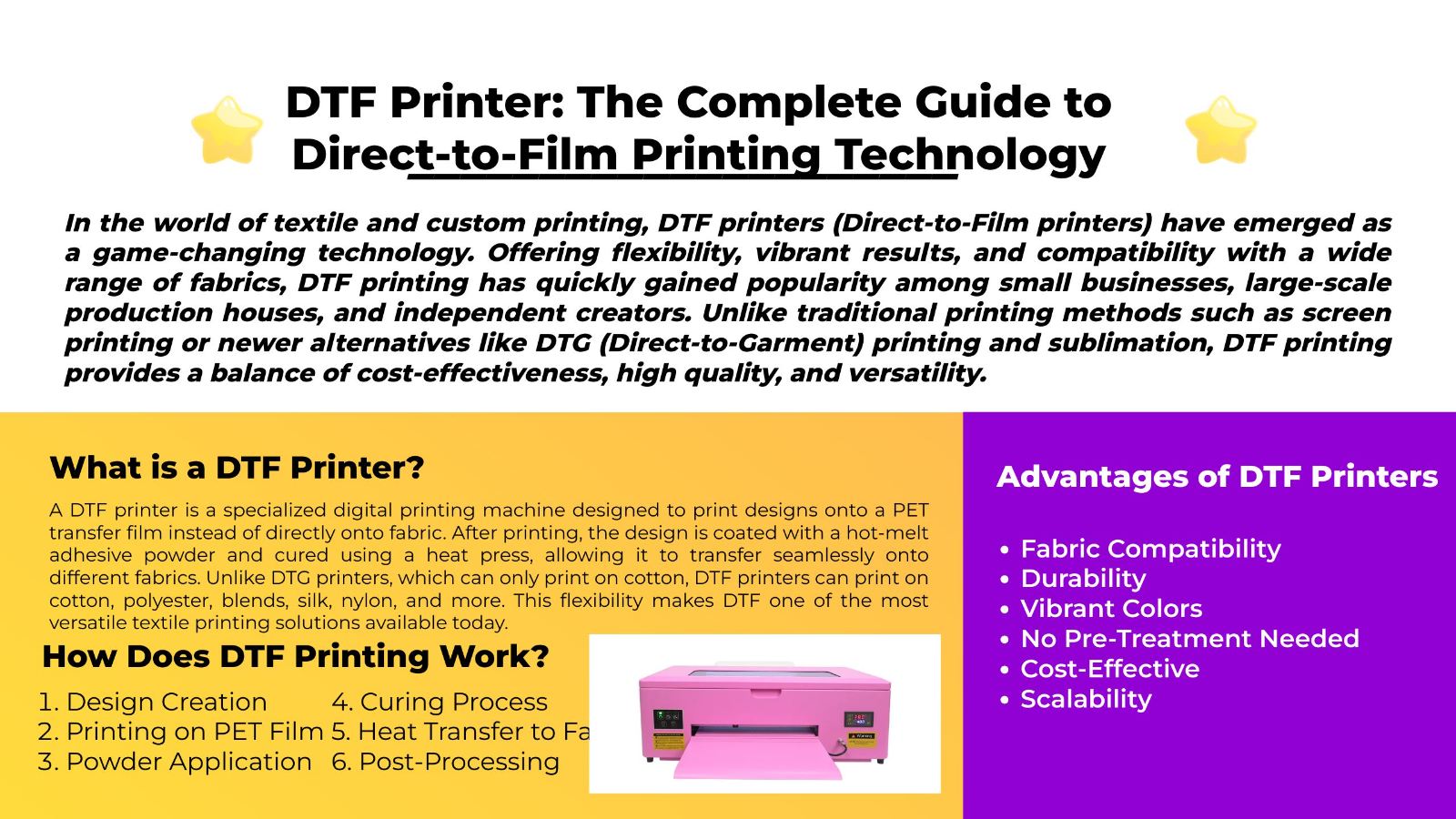
Fluorescent transfer film is a special DTF film designed to create brighter or glow-effect transfers on garments. In a typical DTF workflow, the design is printed onto PET film, adhesive powder is applied, the powder is cured, and the design is transferred to the garment by heat press. Fluorescent transfer film follows the same basic production logic, but the film or ink system adds a special visual effect.
Some glow-effect films include a fluorescent coating on the printable side. The design is printed onto this coating, then the coating transfers together with the printed image during heat pressing. After exposure to sunlight or UV light, the effect layer can create a glow in darker environments.
Fluorescent DTF printing can also be achieved through special fluorescent inks. These inks contain fluorescent agents that make colors look more intense under ultraviolet light, helping designs stand out more strongly than normal CMYK prints.

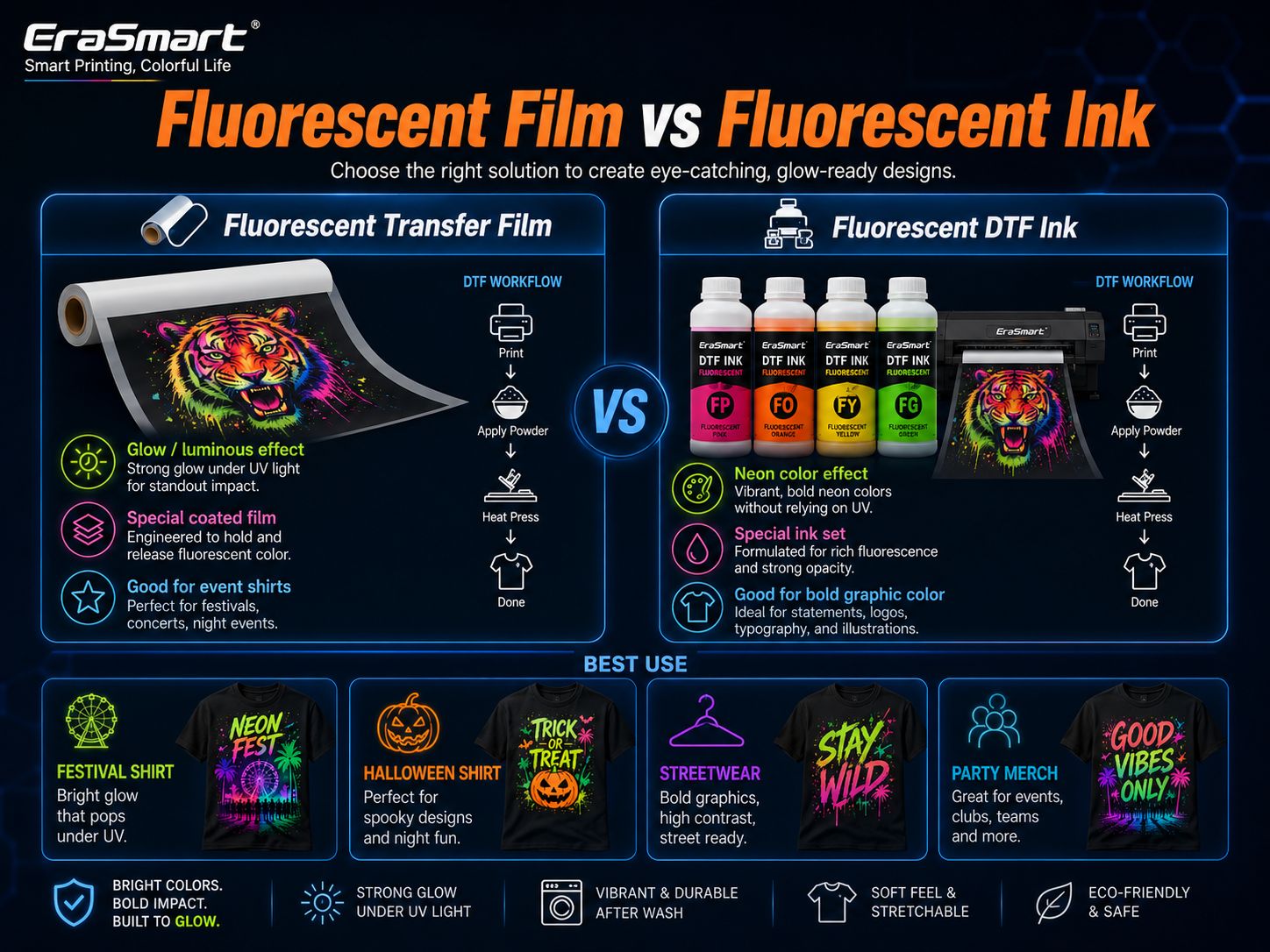
| Öğe | Fluorescent Transfer Film | Fluorescent DTF Ink |
|---|---|---|
| Main effect | Glow or luminous film effect | Bright neon-like printed color |
| How it works | Special coating transfers with the design | Fluorescent ink is printed as part of the artwork |
| Best use | Glow-effect shirts, night themes, event apparel | Neon graphics, fashion artwork, bright branding |
| Equipment change | Usually film change | May require ink channel / ink configuration support |
| Design style | Works well with bold graphics and highlight areas | Works well with colorful artwork and neon palettes |
| İş değeri | Special-effect premium product | Expanded color expression |
The important point is that not all fluorescent products are the same. A glow transfer film may create an afterglow effect after absorbing light, while fluorescent ink usually creates brighter color performance under strong light or UV light. Businesses should confirm the exact effect before selling the product to customers.
A normal T-shirt may compete mainly on design and fabric quality. A fluorescent or glow-effect T-shirt adds a surprise element. Customers can see one effect in daylight and another effect under UV light or in darker environments. That makes the product easier to position as a premium or limited-edition item.
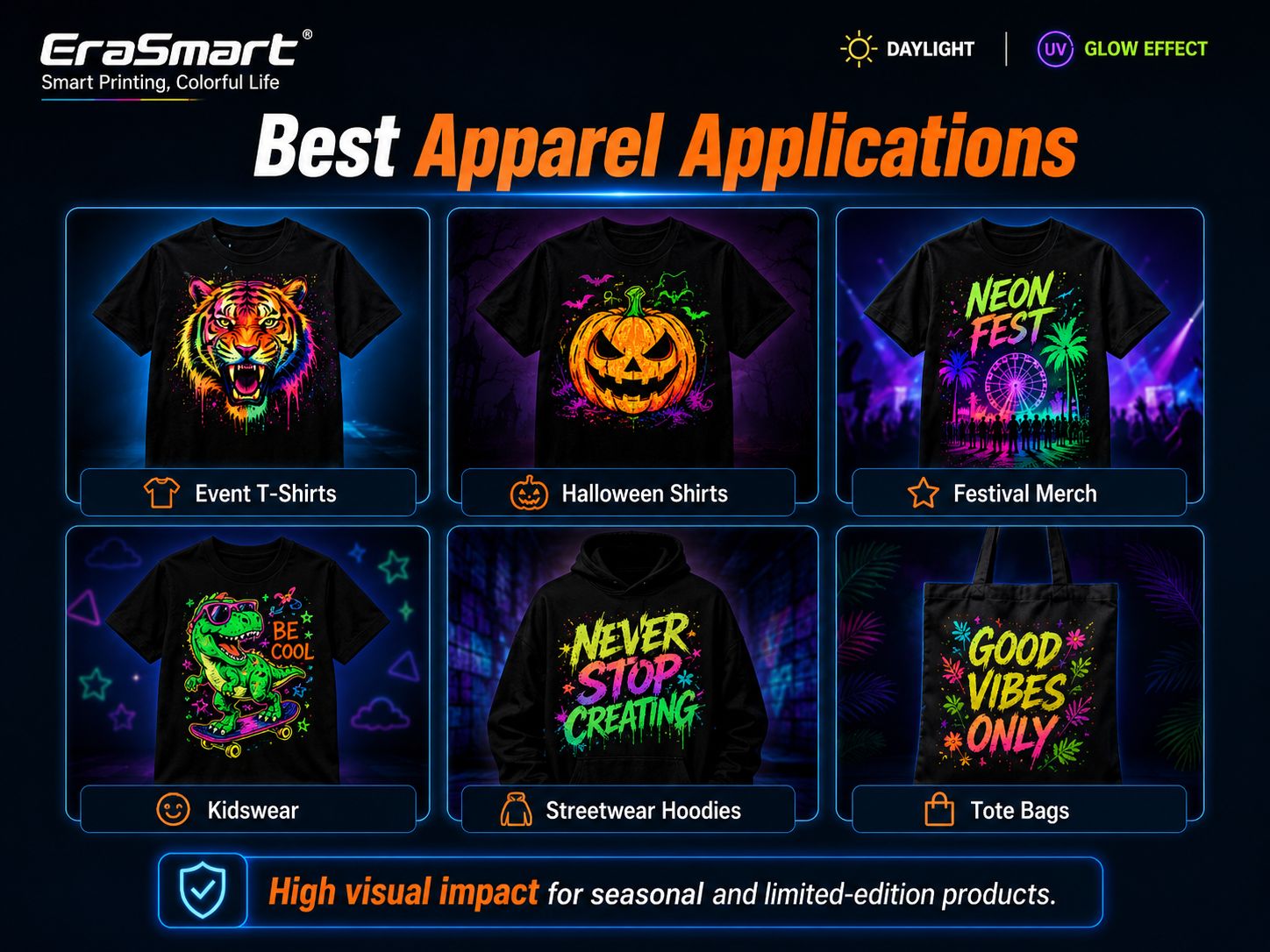
Fluorescent transfer film works especially well for:
Halloween shirts
music festival merch
nightclub and party apparel
glow party shirts
school event shirts
sports fan shirts
streetwear drops
kidswear designs
dance team apparel
tourism and souvenir shirts
Glow-effect film is often promoted around Halloween and themed apparel because dark environments make the effect more obvious.
Many custom T-shirt shops sell similar products: names, logos, photos, and standard full-color graphics. Fluorescent film gives a small shop another reason for customers to choose a higher-priced design. It is not only “custom printed”; it becomes “custom printed with a special visual effect.”
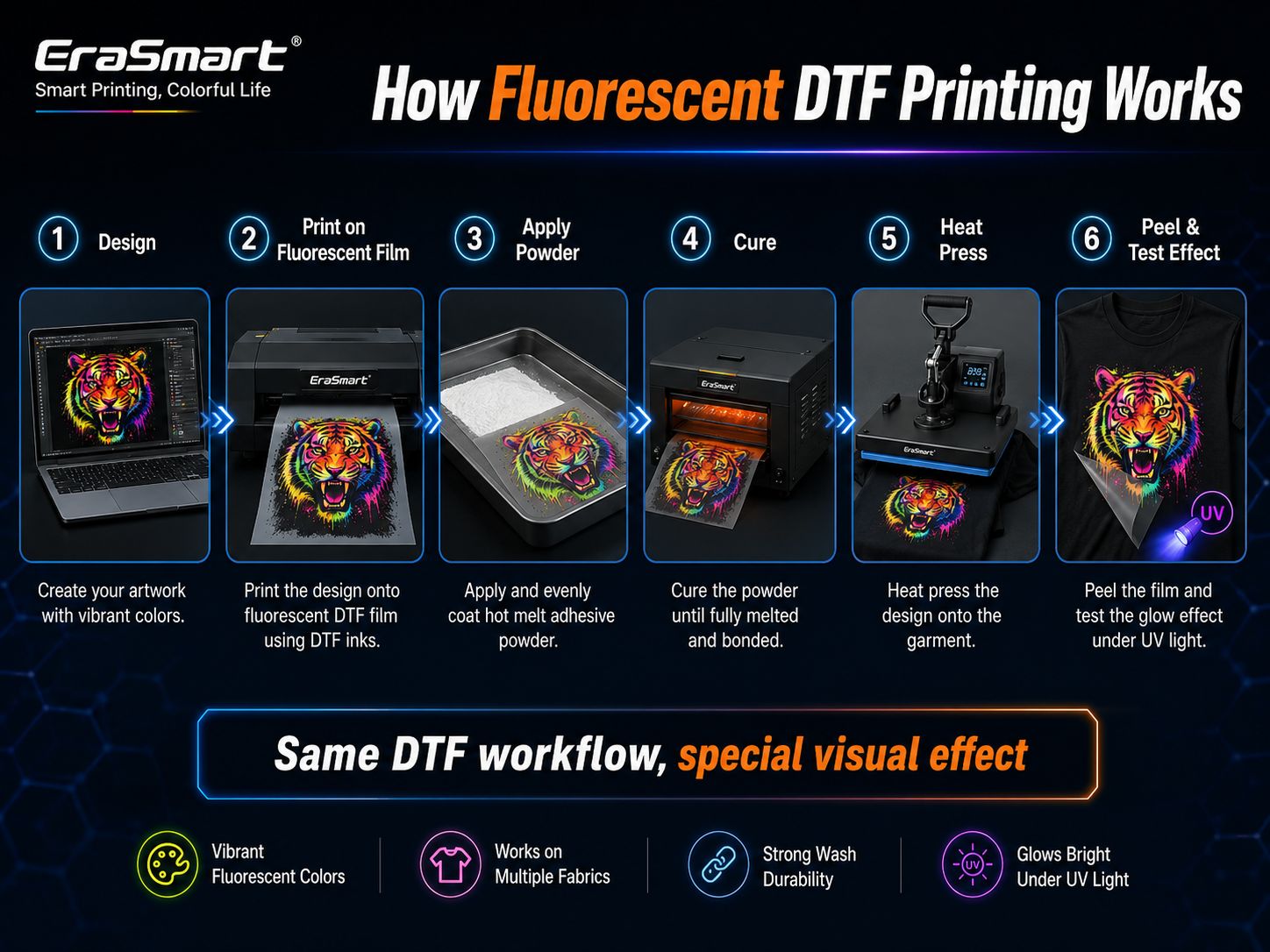
Fluorescent transfer film still follows the basic DTF workflow: print on film, apply hot-melt powder, cure, heat press, and peel. That means shops already familiar with DTF can add fluorescent products without completely changing their business model.

A typical workflow includes:
Create the design
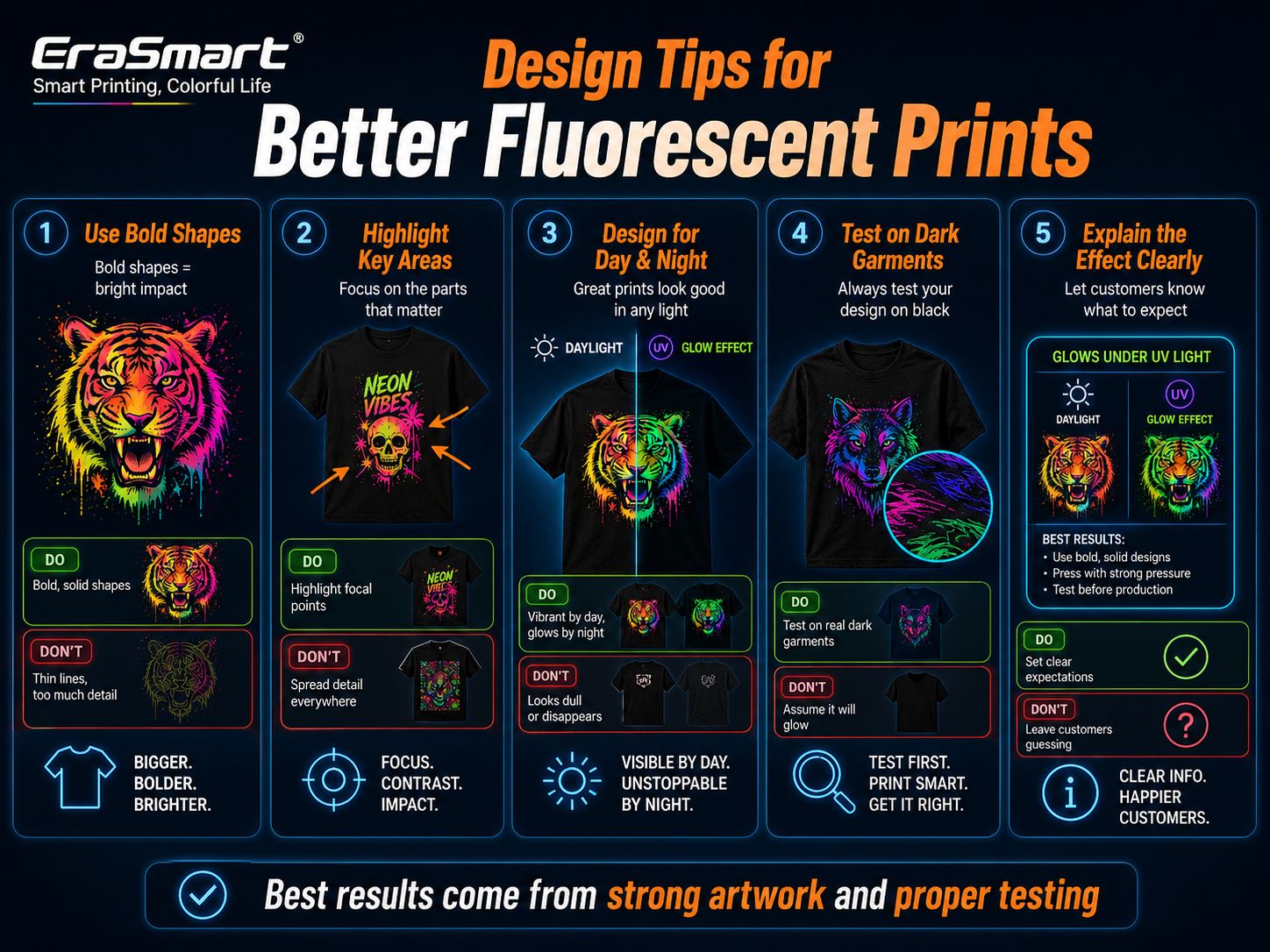
Use bold artwork, strong contrast, and areas where the fluorescent or glow effect will be visible.
Print on fluorescent DTF film
Print the artwork onto the correct printable side of the fluorescent transfer film.
Yapışkan toz uygulayın
Spread hot-melt powder evenly while the ink is still wet.
Tozu iyileştirin
Use the correct oven or shaker-dryer settings. Time and temperature should be adjusted according to film, powder, ink, and equipment.
Heat press onto garment
Transfer the design with suitable temperature, pressure, and time.
Film türüne göre soyun
Some films require cold peel, while others may allow warm peel. Always follow the film supplier’s instruction.
Test the effect
Expose the print to sunlight, UV light, or strong light, then check the glow or fluorescent performance in the expected environment.
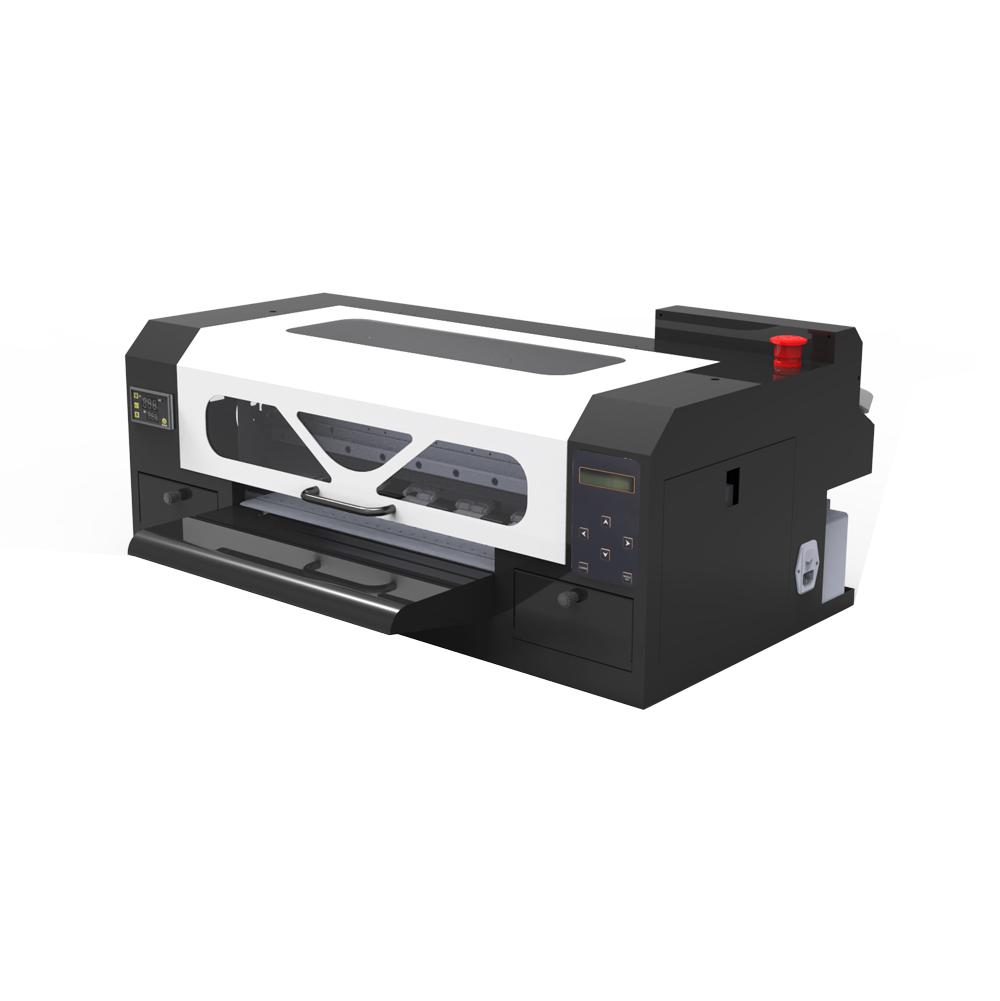
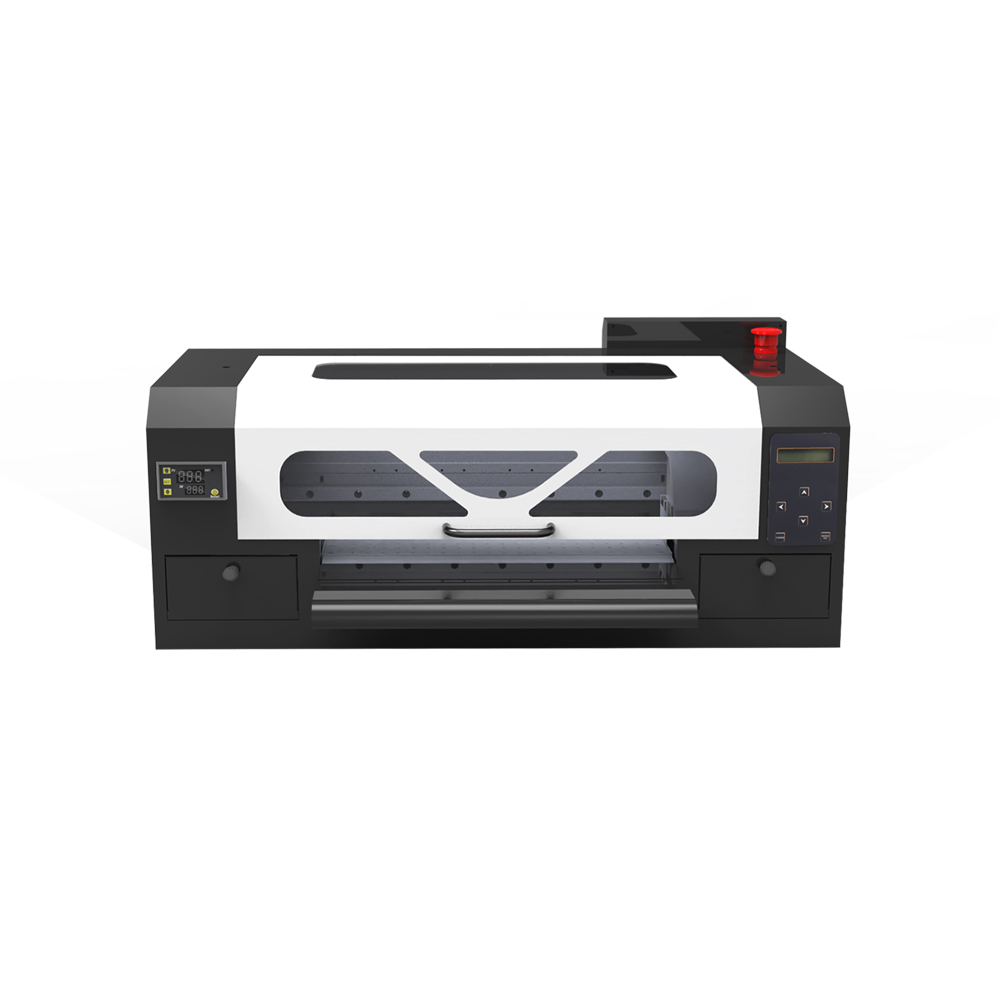
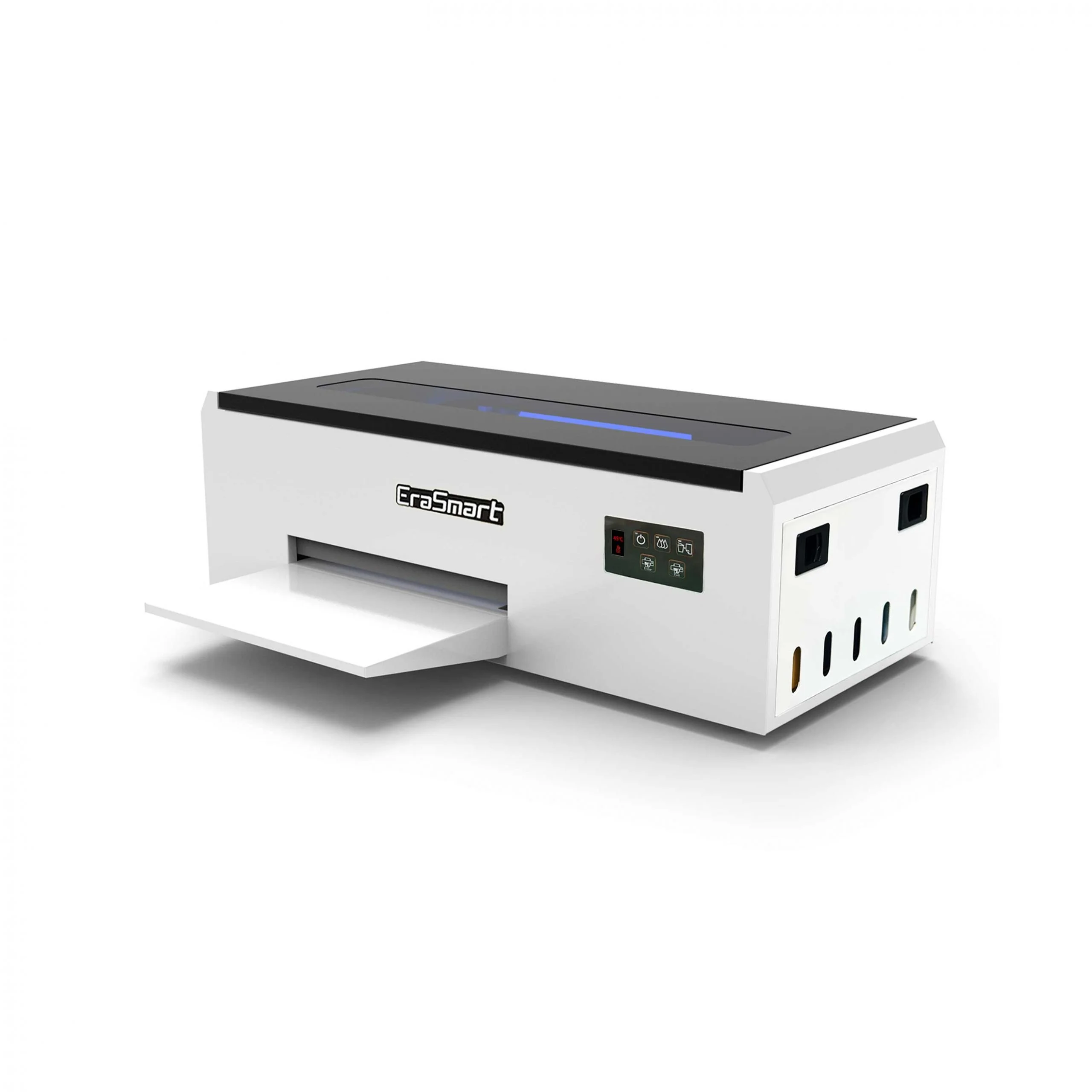
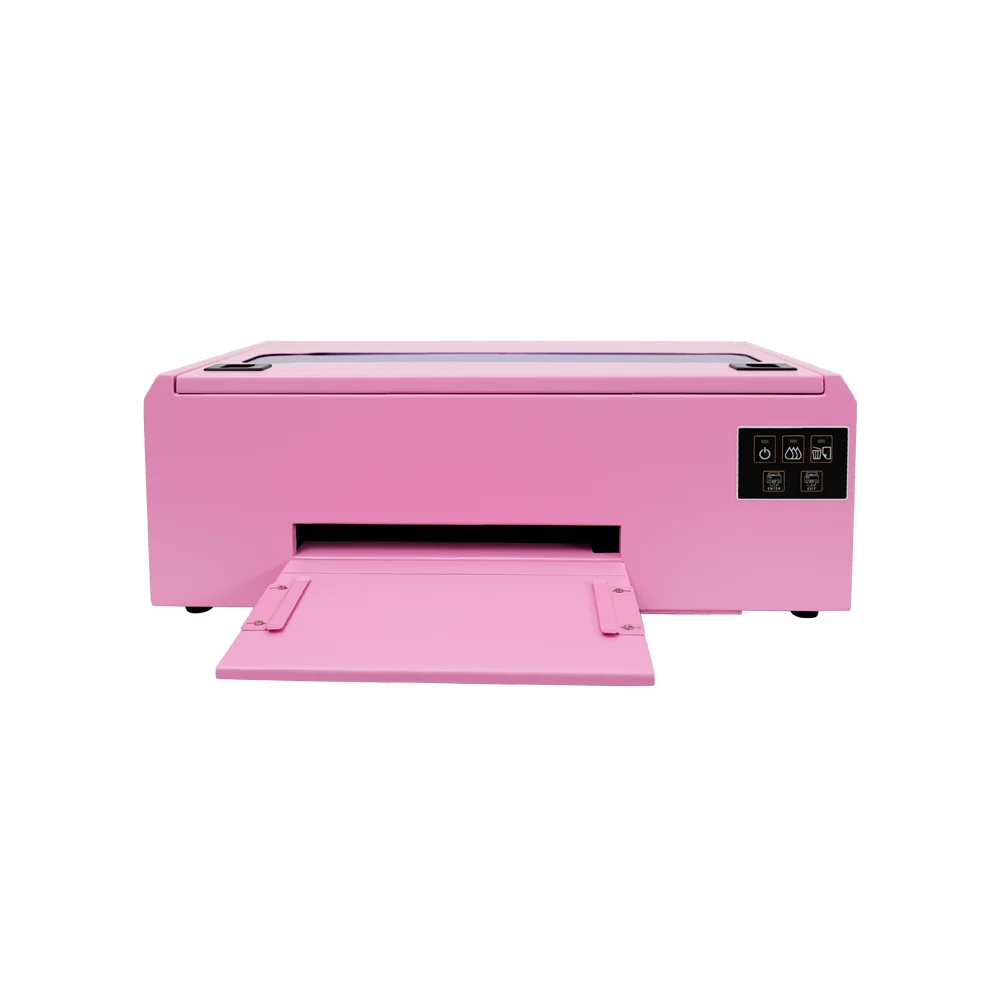
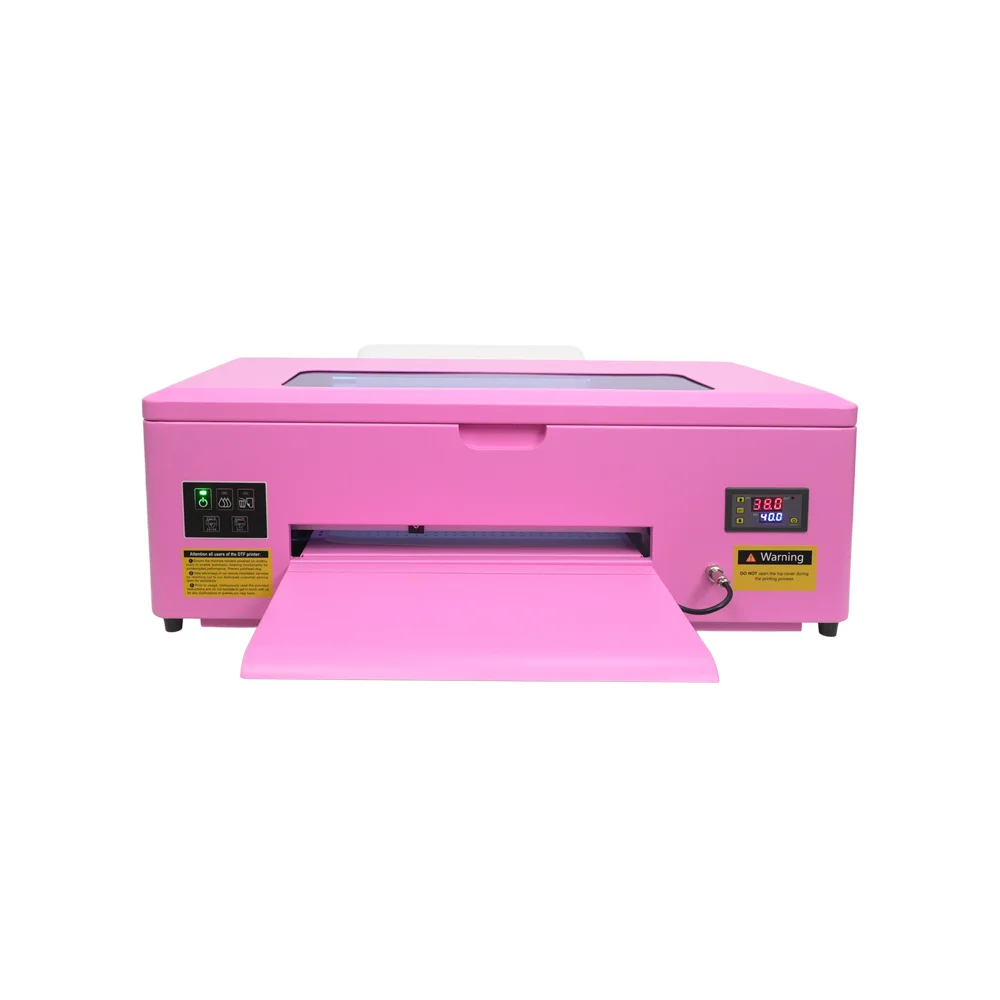
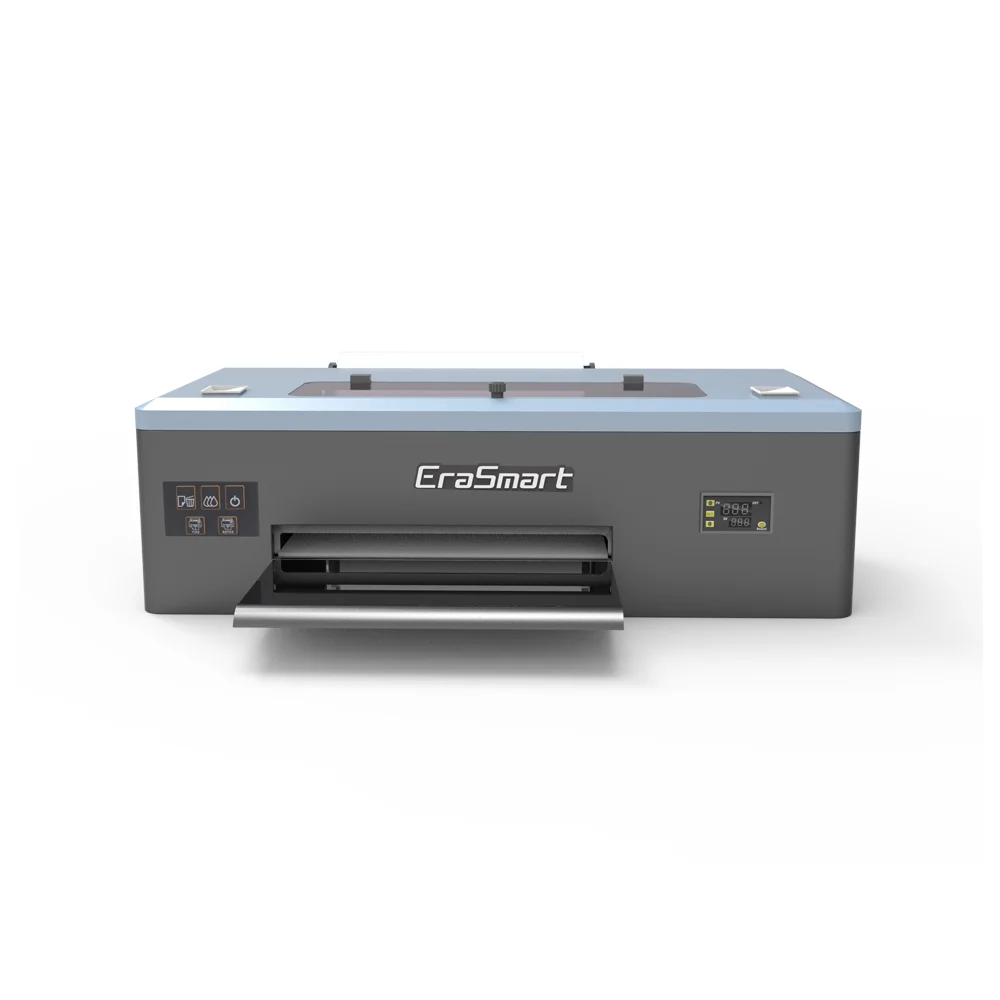
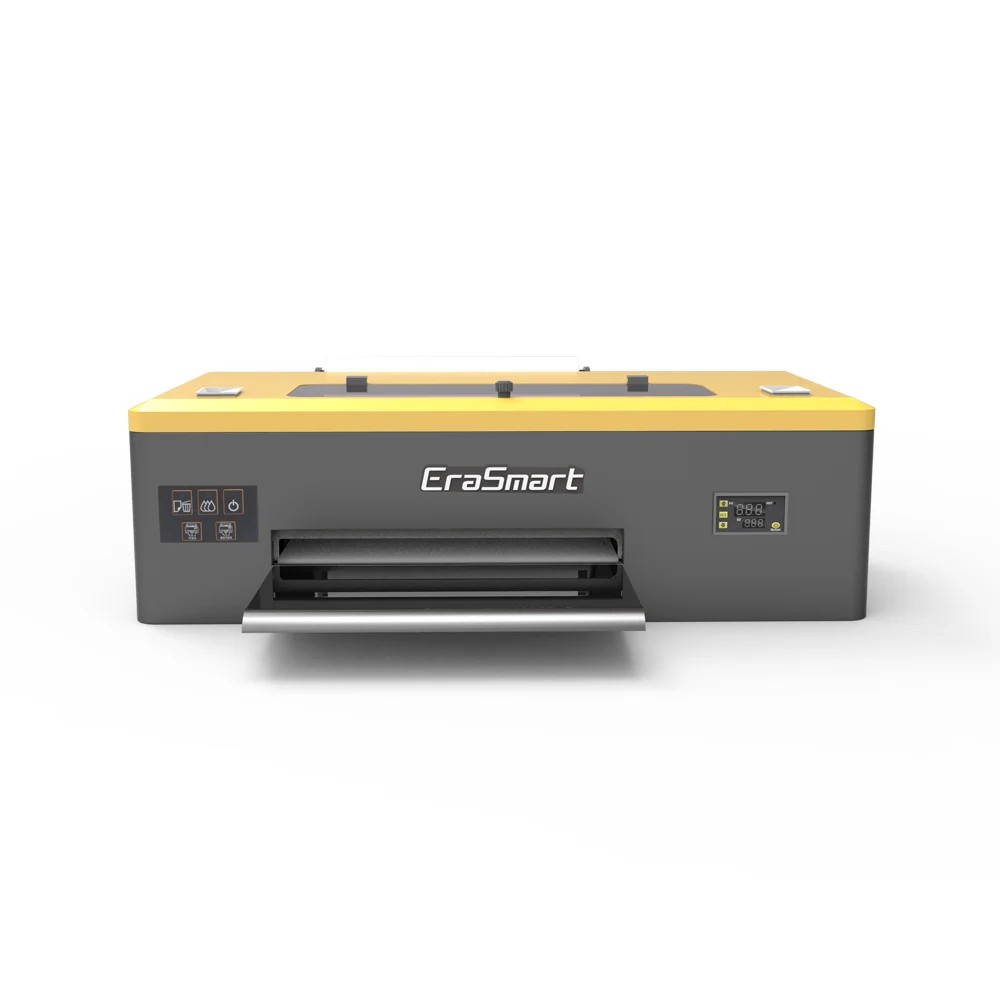
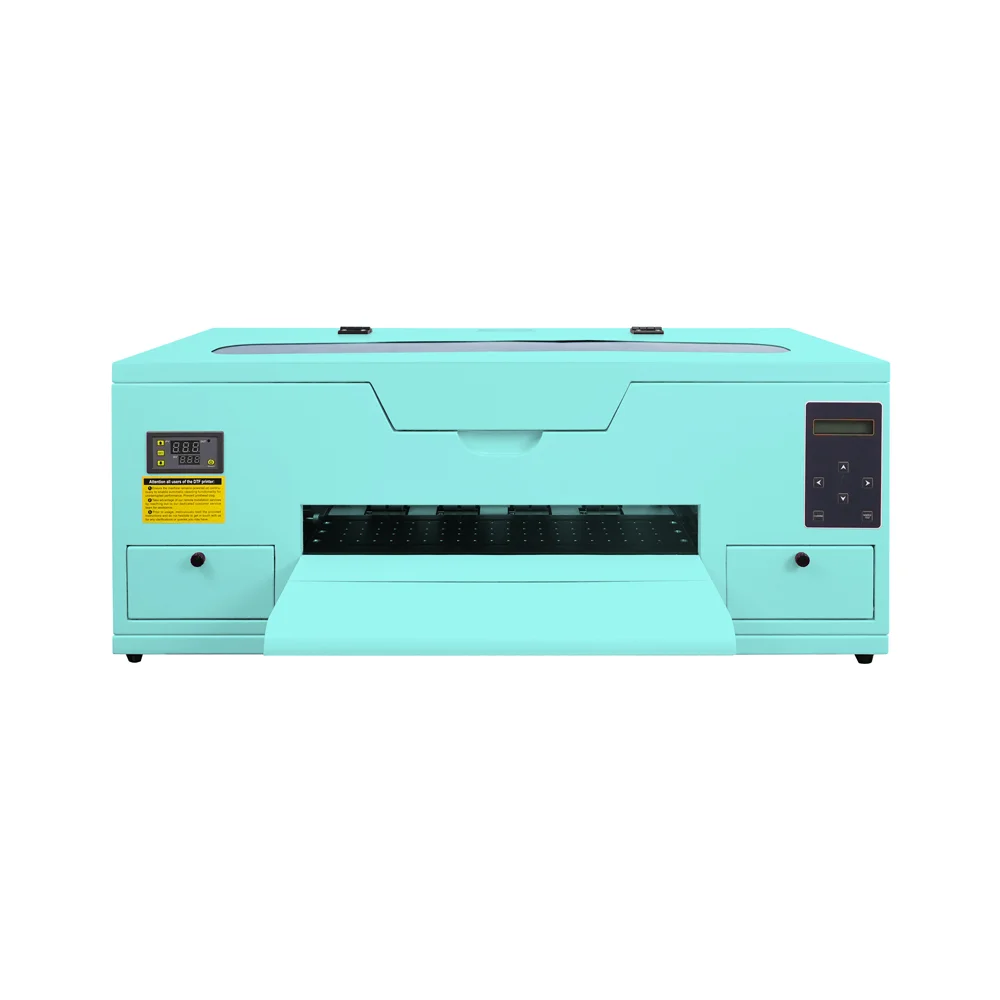
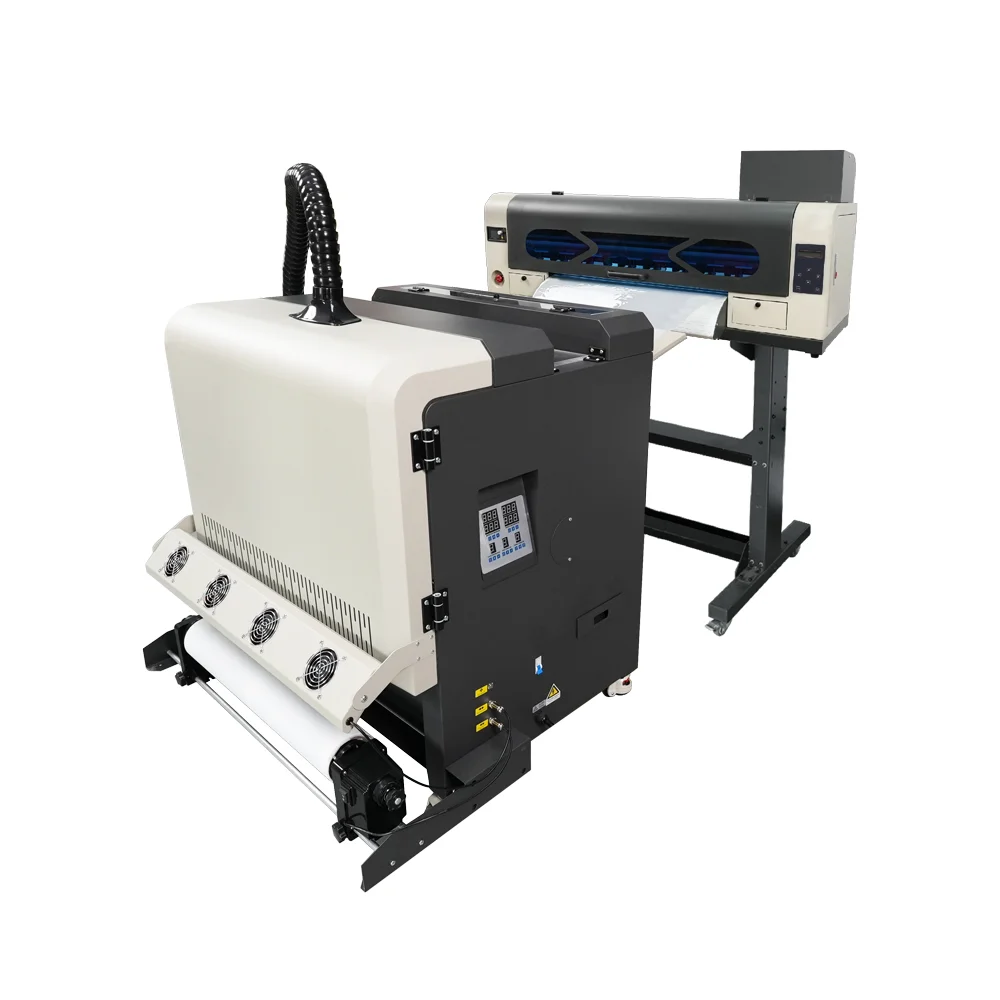
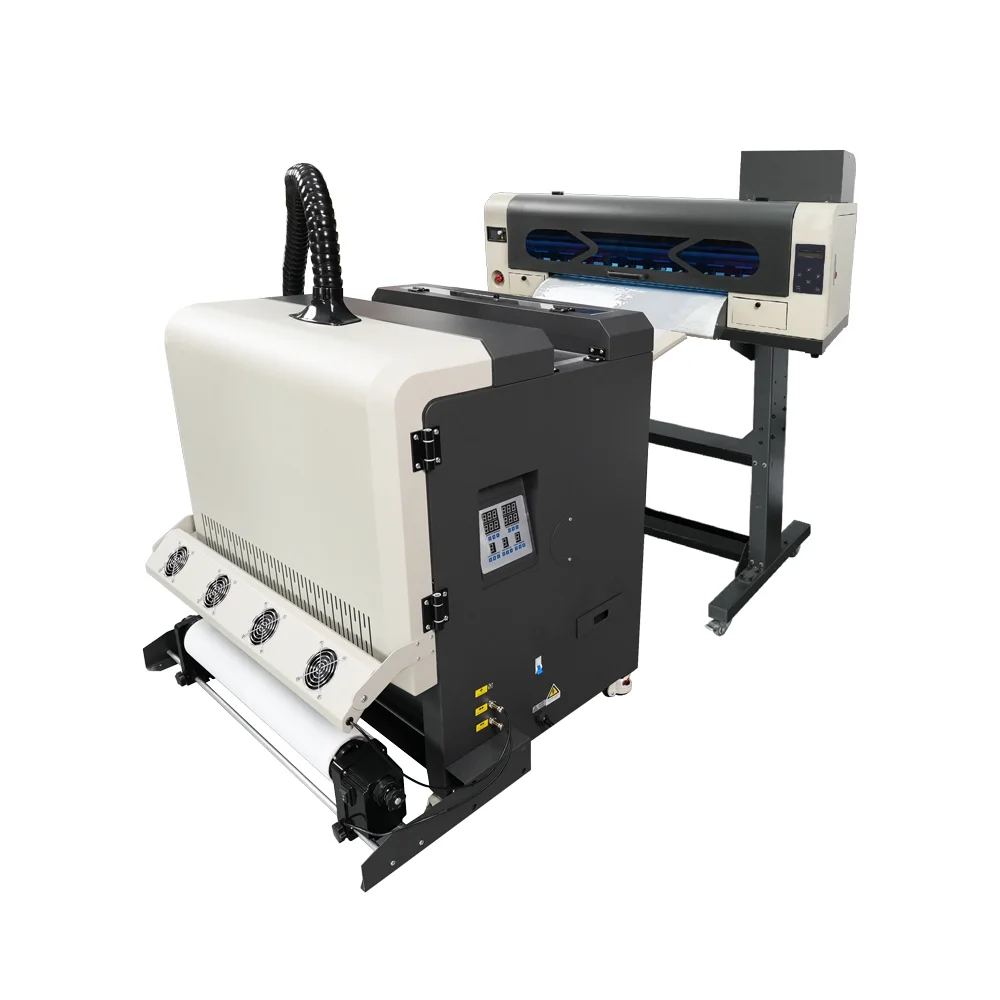
EraSmart’s DTF printers are designed around the same core DTF process: print, add powder, and press. The DTF printer category also emphasizes compatibility with cotton, silk, polyester, denim, leather, nylon, blends, and dark-colored garments, making DTF suitable for flexible apparel production.

Fluorescent and glow effects look better when the design has enough visible area. Thin lines and very small details may not show the special effect clearly.
Do not make every part of the design fluorescent. A better approach is to use the effect for outlines, logos, eyes, lightning, text highlights, stars, flames, moonlight, skeleton elements, or event branding.
A good fluorescent DTF design should look attractive in normal daylight and still create a surprise in low-light or UV-light conditions.
Dark garments often need a strong white ink underbase for color clarity. White ink setup is important in DTF because it supports visibility, opacity, and detail on dark fabrics.
Fluorescent or glow-effect DTF prints can be highly visible in certain environments, but they should not be sold as certified safety reflective or high-visibility protective products unless the material has proper testing and certification.

| Ürün | Neden Çalışıyor? |
|---|---|
| Event T-shirts | Strong visual effect for parties, teams, and campaigns |
| Halloween shirts | Glow effect matches spooky and night themes |
| Festival apparel | Bright graphics stand out under stage and UV lighting |
| Kidswear | Fun, playful, and easy to market |
| Streetwear | Good for limited drops and bold designs |
| Sports fan shirts | Names, numbers, mascots, and slogans can be highlighted |
| Dancewear | Works well under performance lighting |
| Hoodies | Larger design area supports bold glow graphics |
| Tote bags | Good add-on product for events and merch shops |
For most businesses, fluorescent DTF should be positioned as a special product line, not only a consumable option.
Fluorescent transfer film is not necessary for every job. Standard DTF film is usually better for:
daily T-shirt orders
corporate uniforms
fashion basics
fotoğraf baskıları
school shirts
bulk merch
clean brand logos
products where special effects are not needed
If the customer wants accurate brand color, soft hand feel, and predictable production, standard DTF film may be the better choice. If the customer wants a dramatic special effect, fluorescent film becomes more valuable.
Possible causes include insufficient light exposure, wrong film type, low-quality material, poor curing, or artwork areas that are too small. Test the film before taking customer orders.
Check powder coverage, curing temperature, pressing time, pressure, and garment compatibility. DTF relies on correct adhesive powder behavior and heat press conditions.
Use proper white ink support and test the artwork before production. Dark fabrics need stronger opacity control.
Possible causes include under-curing, poor powder bonding, incorrect pressing, incompatible garment surface, or low-quality film. Wash testing is important before selling a new special-effect product.
Clearly explain whether the product is neon, UV-reactive, or glow-in-the-dark. These effects are not identical.
For small studios and startup apparel sellers, fluorescent transfer film is a good add-on product after the standard DTF workflow is stable. Start with normal DTF production first, then add fluorescent film for limited editions, holiday collections, event shirts, and high-margin custom products.
For growing shops, fluorescent DTF can become part of a broader product ladder:
| İş Aşaması | Önerilen Odaklanma |
|---|---|
| Beginner | Standard DTF film and basic T-shirt orders |
| Early growth | Add fluorescent transfer film for seasonal designs |
| Established shop | Offer glow-effect collections and event merch |
| Higher volume | Use shaker workflow for consistent powdering and curing |
| Brand-focused shop | Build limited-edition fluorescent apparel drops |
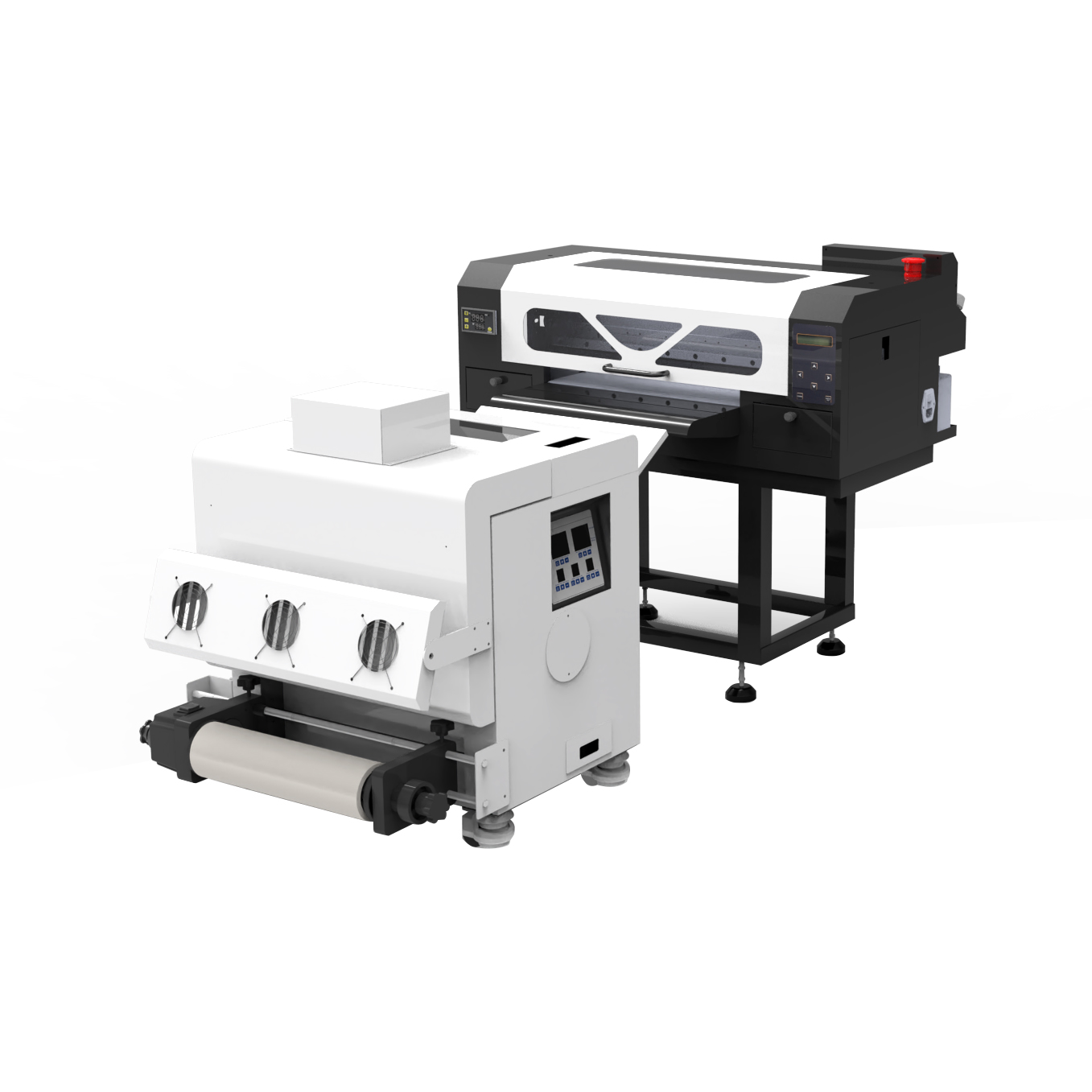
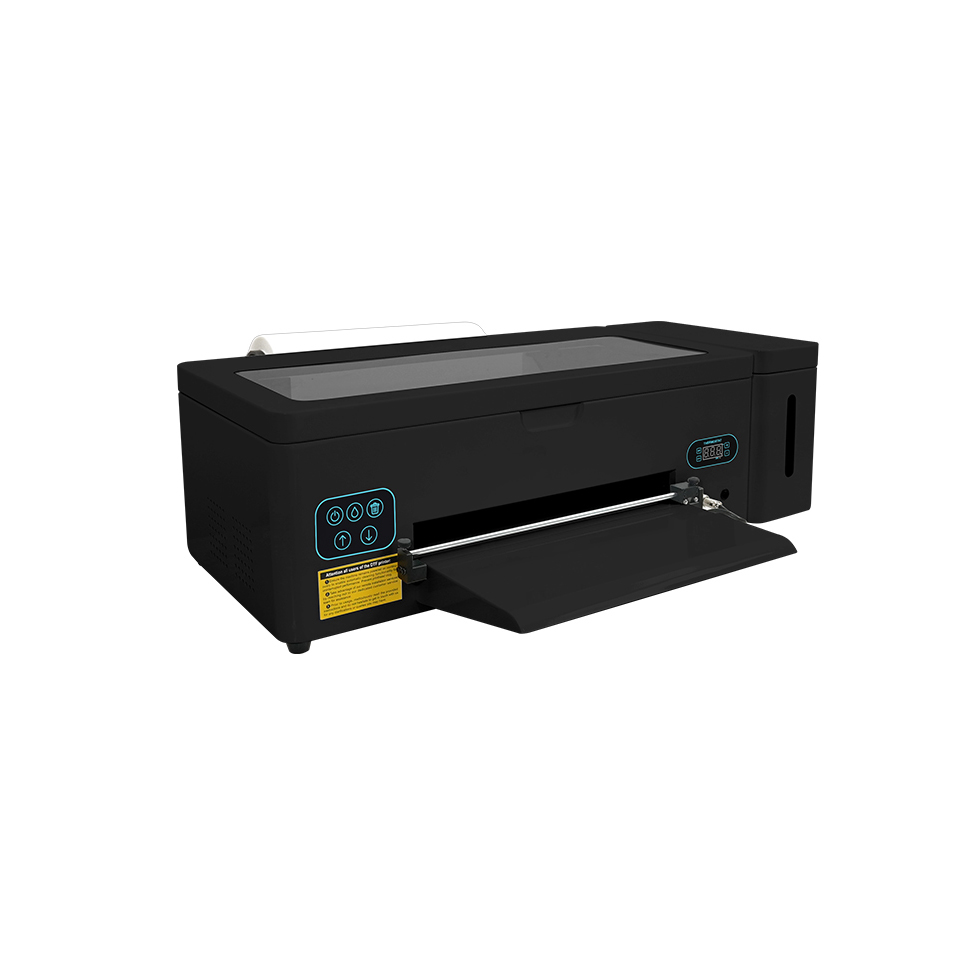
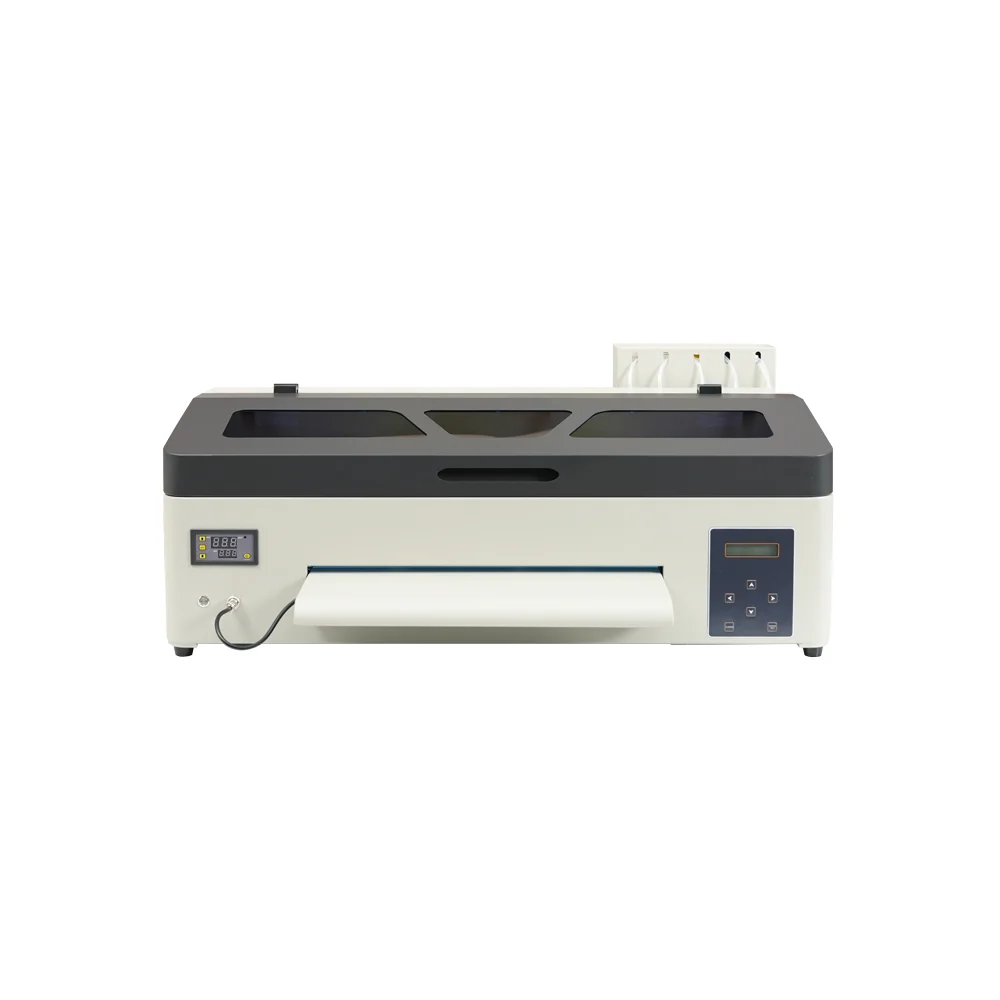
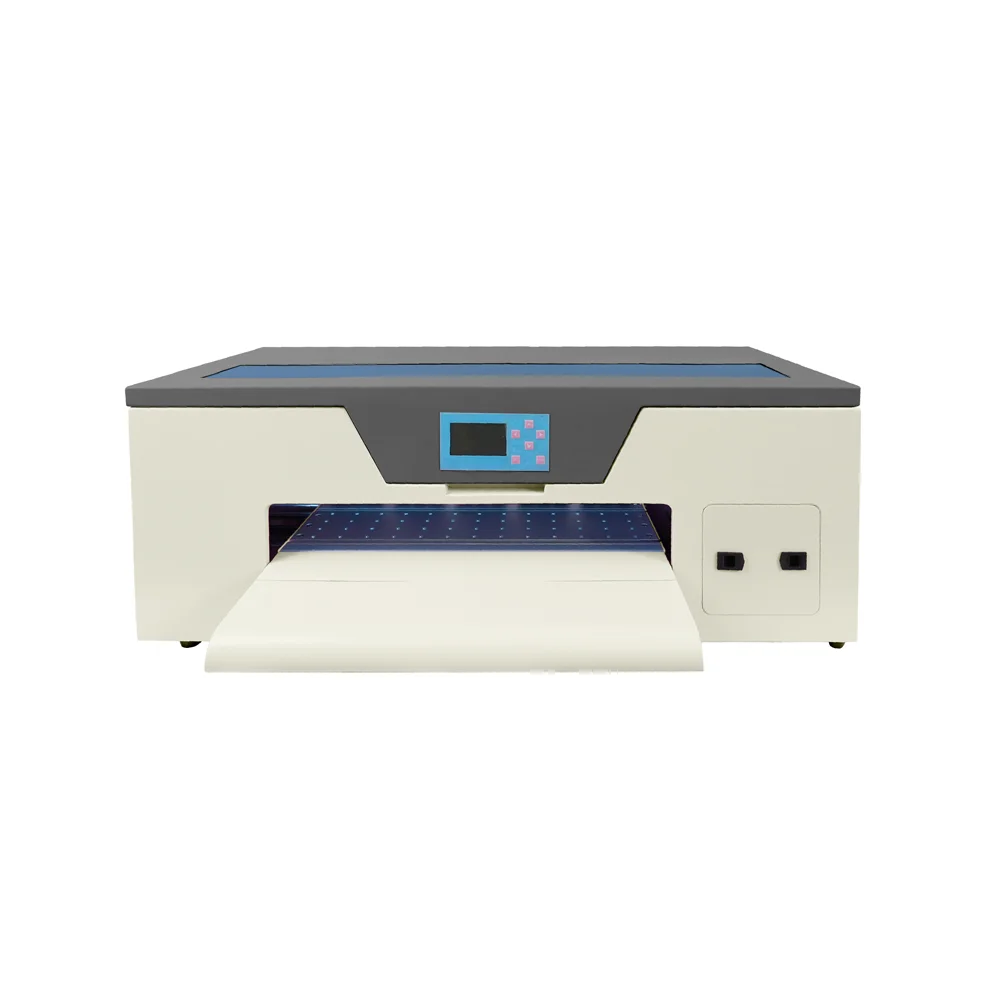
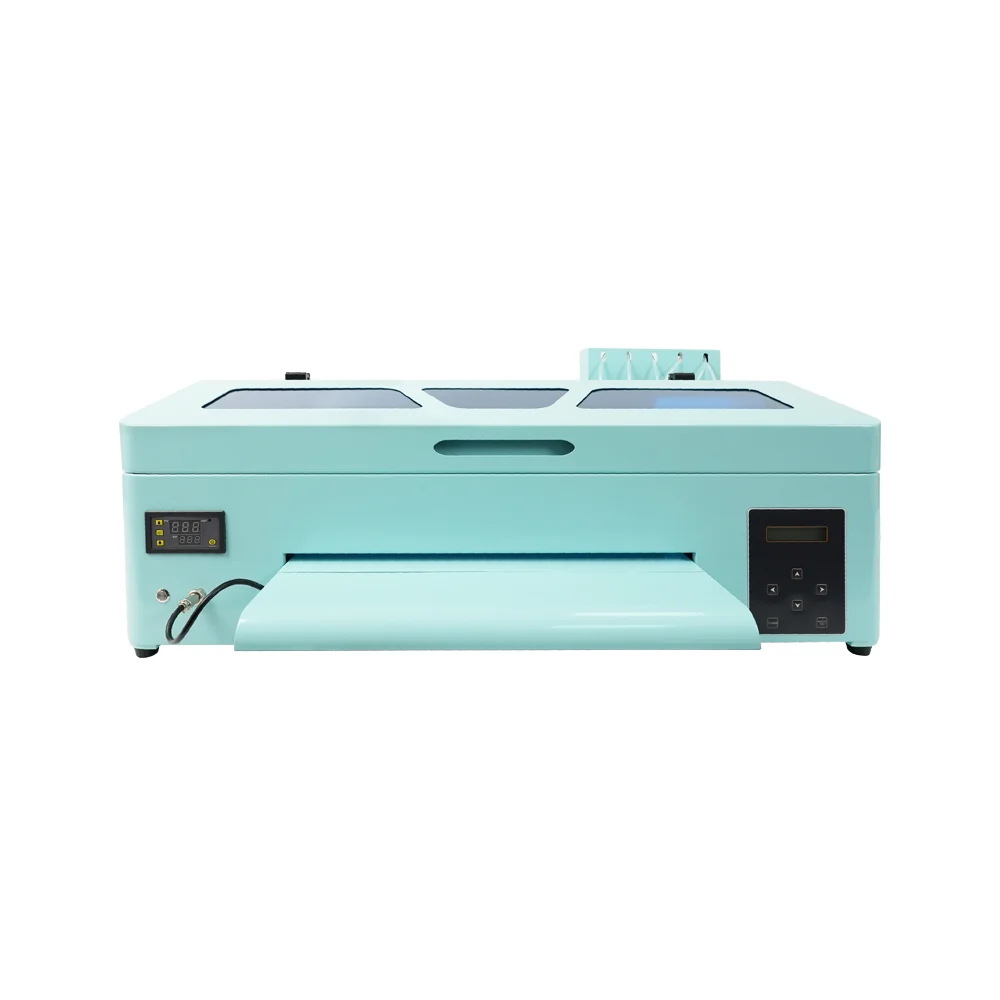
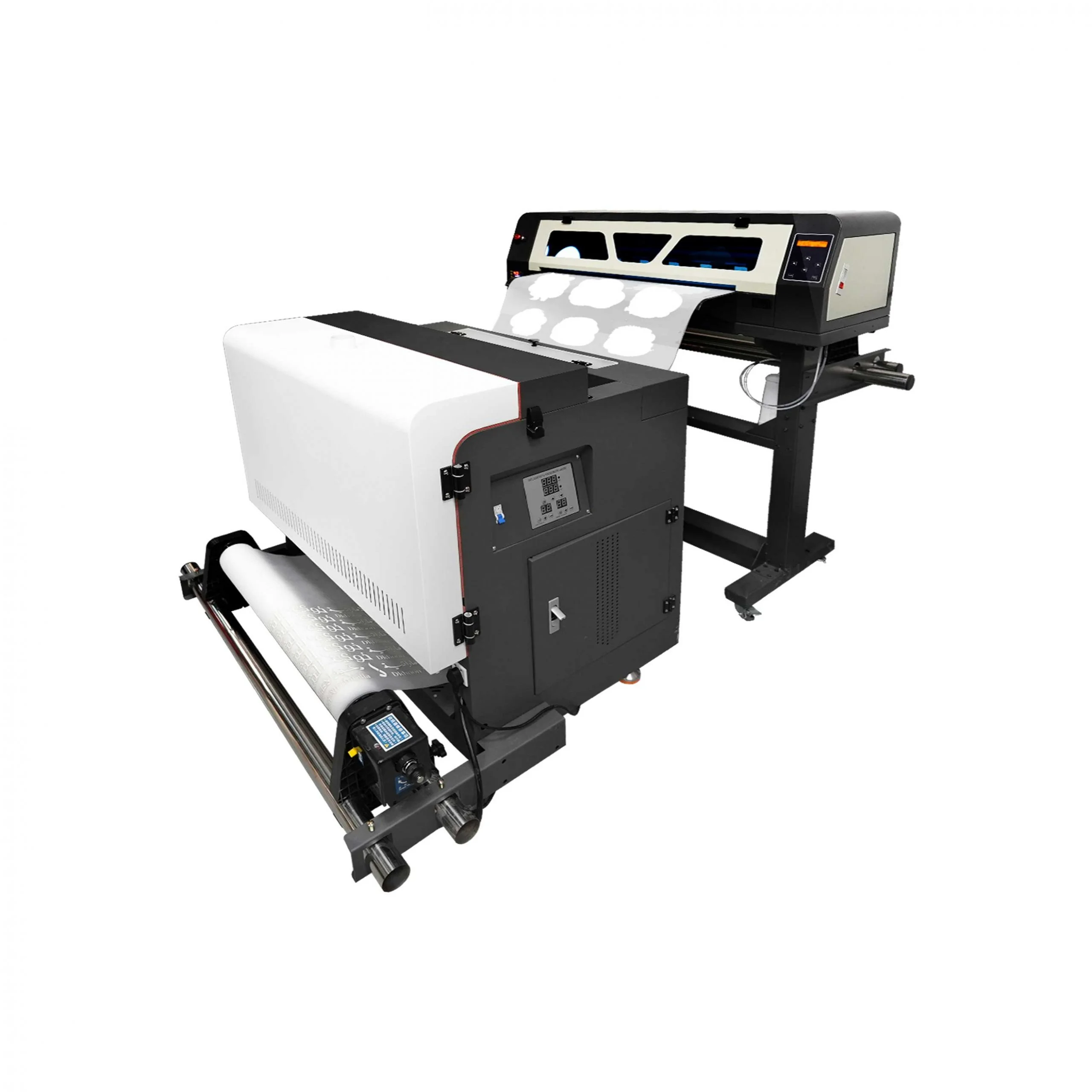
EraSmart’s DTF lineup includes compact A4 models, startup-friendly L1800 / A3 systems, A3 MAX XP600 models, A3 MAX with powder shaker workflow, and wider A1 systems. This makes it possible to start small and upgrade based on real production demand.
Yes, fluorescent transfer film is worth using when the product needs a special visual effect and customers are willing to pay for something more unique than a standard print.
It is especially suitable for event apparel, Halloween collections, festival merchandise, night-themed streetwear, kidswear, sports shirts, and limited-edition custom designs. But it should be used strategically. Standard DTF film is still better for daily production, while fluorescent film is best for special-effect products with higher perceived value.
For EraSmart customers, the best approach is to build a stable DTF workflow first, then introduce fluorescent transfer film as a premium consumable option for creative apparel growth.
Not always. Some fluorescent products look brighter under UV light, while glow-effect films absorb light energy and release a visible glow in darker conditions. Always test the actual material before selling it as glow-in-the-dark.
DTF printing is commonly used across cotton, polyester, blends, denim, leather, nylon, and dark-colored garments, but every special film should be tested with your target fabric before production.
For fluorescent transfer film, the workflow may be similar to standard DTF if the effect is built into the film. For fluorescent ink printing, the printer may need a suitable ink configuration or extra channels depending on the system. Some fluorescent ink setups use additional fluorescent colors such as fluorescent red, yellow, green, and orange to expand the color range.
The best products are T-shirts, hoodies, tote bags, event apparel, festival merch, Halloween shirts, kidswear, streetwear, and dancewear.
No. Fluorescent or glow-effect prints are decorative unless the material is specifically tested and certified for safety use.
Want to add fluorescent transfer film to your DTF apparel business? Share your target garments, design style, expected order volume, and current printer model with EraSmart. Our team can help you match the right DTF printer, transfer film, ink, powder, curing workflow, and heat press settings for special-effect apparel production.
UV yazıcı
DTF yazıcı
DTG yazıcı
Isı Pres Makinesi
Reklam yazıcısı
DTF Fırını
Sıcak Pres
Oyma makinesi
Kupa ısı transferi
Laminasyon makinesi
Mürekkep Mürekkebi
Cep telefonu kasası
Cam ürün
Temizlik sıvısı
Pamuklu çubuk
WhatsApp : +8618566233796
Wechat : +8618566233796
Mobil : +8618566233796
Web :www.erasmart.com
Mağaza:www.erasmartmall.com
Bize WhatsApp
Sadece birkaç ayrıntı sağlayın ve hızlı teklifler almanıza yardımcı olacağız!