UV printing, textile DTF printing, and UV DTF printing are often mentioned together, but they are not the same workflow. Each technology is designed for different materials, products, production steps, and business models. Choosing the wrong one can lead to poor product fit, wasted consumables, slow production, or a machine that does not match your real customer orders.
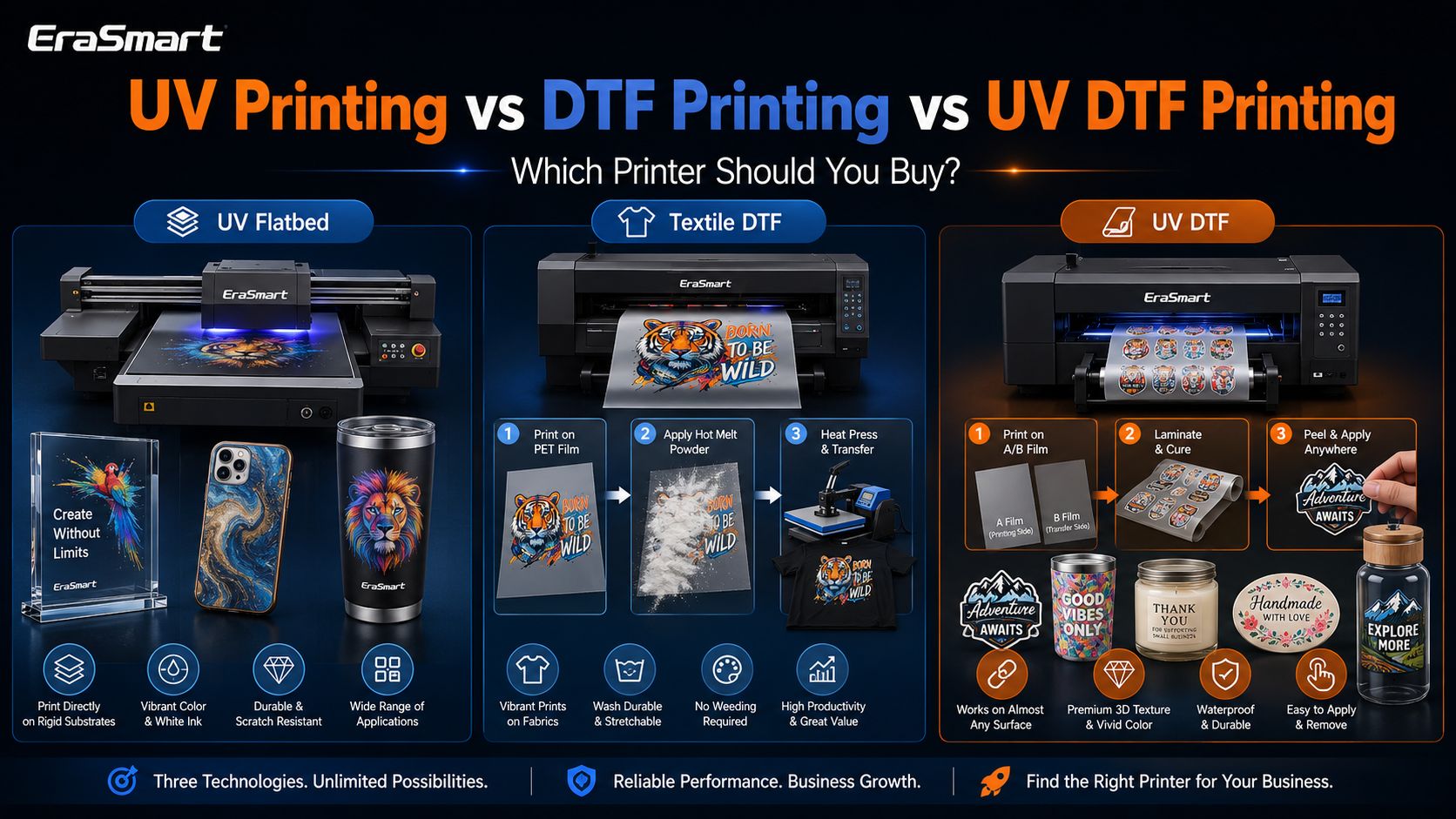
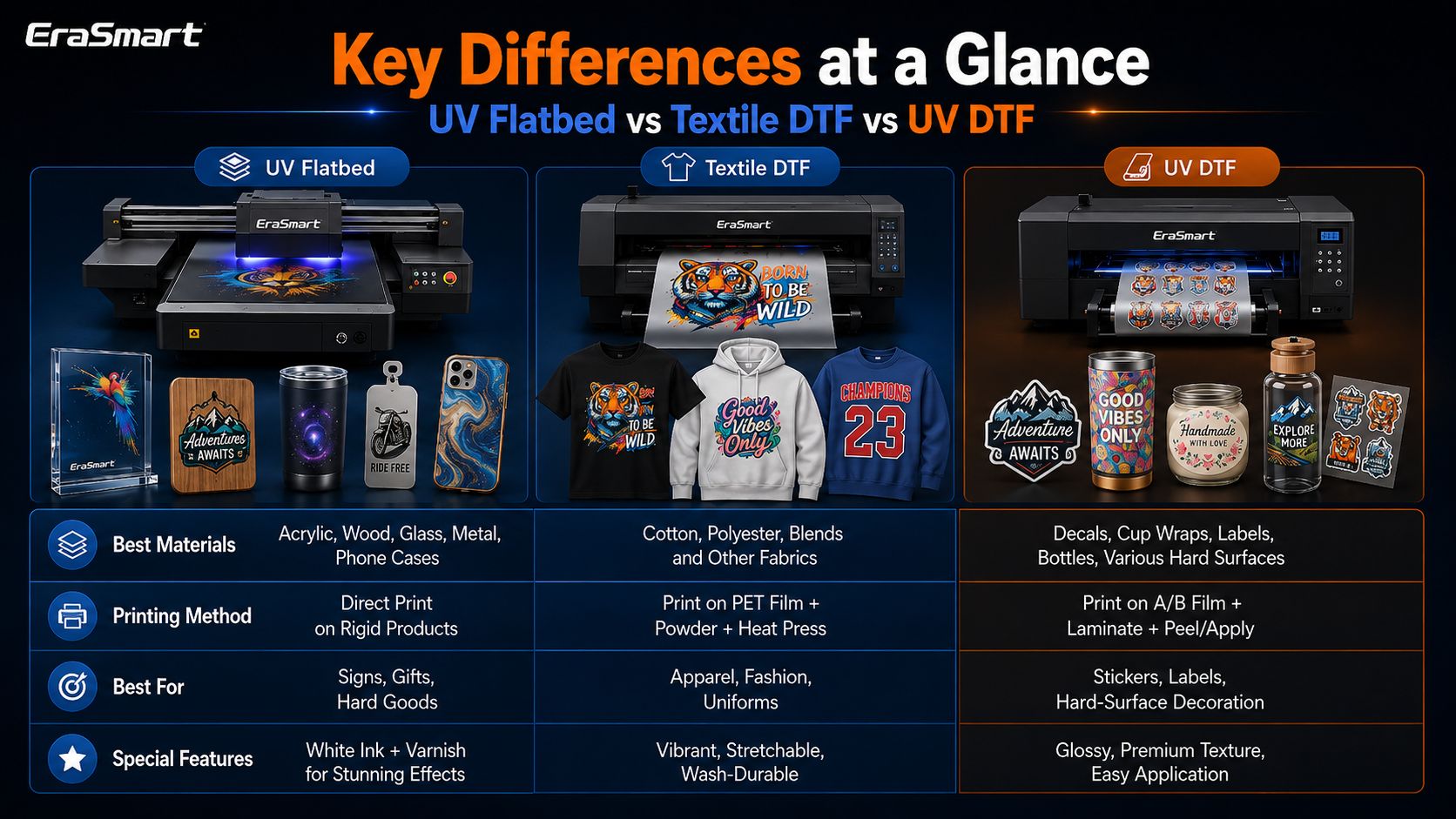
For EraSmart customers, the easiest way to understand the difference is this: UV flatbed printing is for direct printing on rigid products, textile DTF is for garments and fabric transfers, and UV DTF is for hard-surface decals, stickers, cup wraps, labels, and small custom goods. EraSmart’s own guide center separates these three workflows because each one serves a different production direction: DTF for apparel, UV flatbed for rigid and specialty materials, and UV DTF for hard-surface transfer applications.
| Mục tiêu kinh doanh | Best Technology |
|---|---|
| T-shirts, hoodies, uniforms, sportswear, cotton/polyester/blends | Textile DTF Printing |
| Acrylic, wood, glass, metal, phone cases, signs, packaging samples | UV Flatbed Printing |
| Stickers, labels, cup wraps, gadget skins, cosmetic packaging, hard-surface decals | In UV DTF |
| Direct printing onto flat or slightly raised rigid products | UV Flatbed Printing |
| Transfer printing onto garments | Textile DTF Printing |
| Cold-transfer decals for hard products | In UV DTF |
| Premium gloss, spot varnish, raised label-style effects | UV DTF or UV Flatbed Printing |
| Apparel-focused startup | Textile DTF Printing |
| Gift and product customization startup | UV DTF or UV Flatbed Printing |
The most important point is that UV DTF is not the same as textile DTF. UV DTF is mainly for hard-surface transfers, while textile DTF is the standard choice for garments such as T-shirts, hoodies, uniforms, and mixed-fabric apparel.
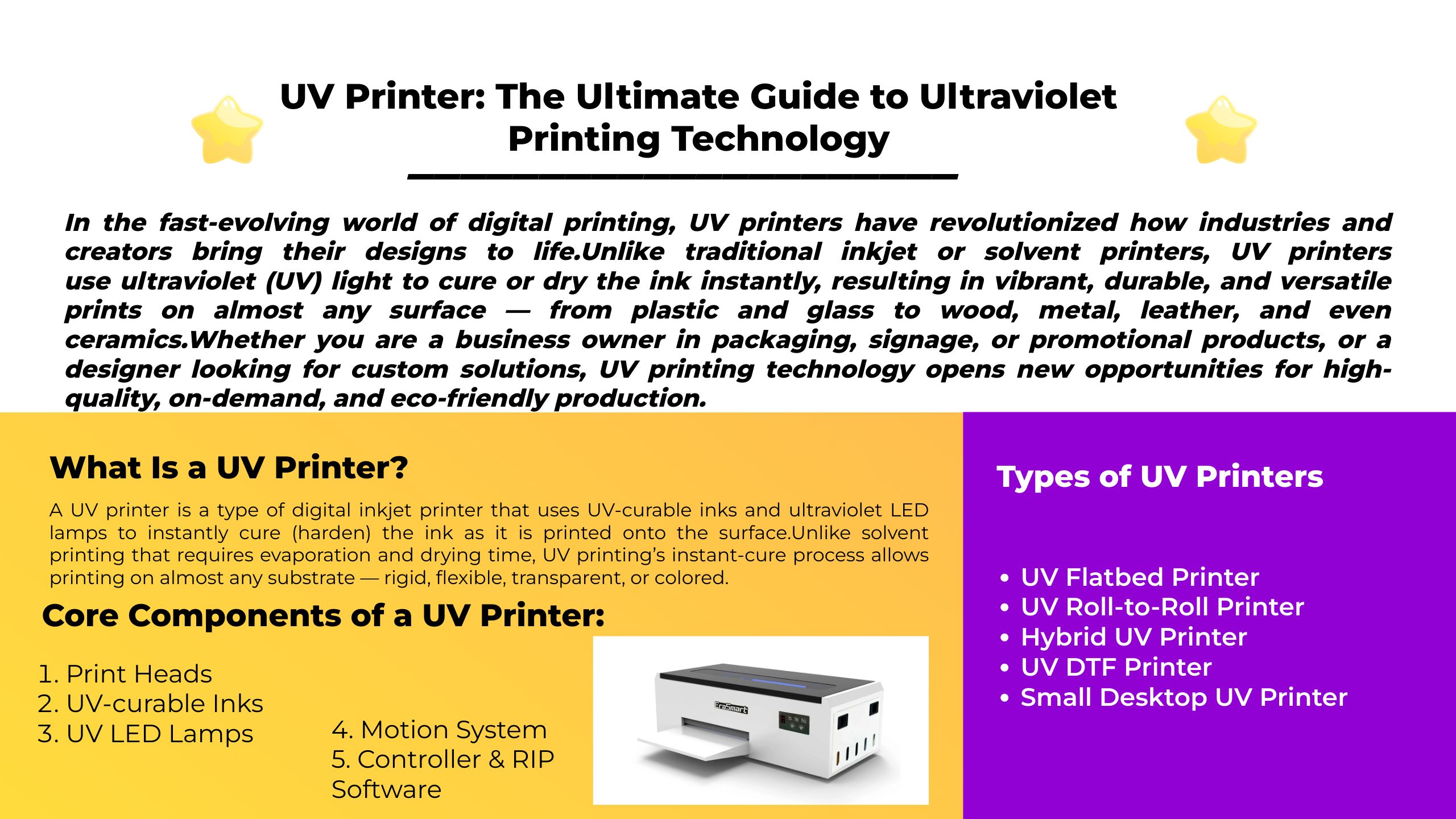
UV printing usually refers to UV flatbed printing. A UV printer applies UV-curable ink directly onto the product surface, and UV light cures the ink almost immediately. This makes it suitable for rigid and specialty materials such as acrylic, glass, metal, wood, plastic, leather, ceramic, phone cases, signs, and promotional products.
The main advantage of UV flatbed printing is direct-to-object production. You place the item on the printer bed, position the design, print directly onto the product, and the ink cures during the printing process. EraSmart’s buyer-focused UV printer guide explains that UV and DTF both support short-run customization and fast turnaround, but they differ in ink chemistry, compatible materials, workflow, durability, hand-feel, and total cost of ownership.
Đọc liên quan: https://www.erasmart.com/uv-printer-vs-dtf-printer/
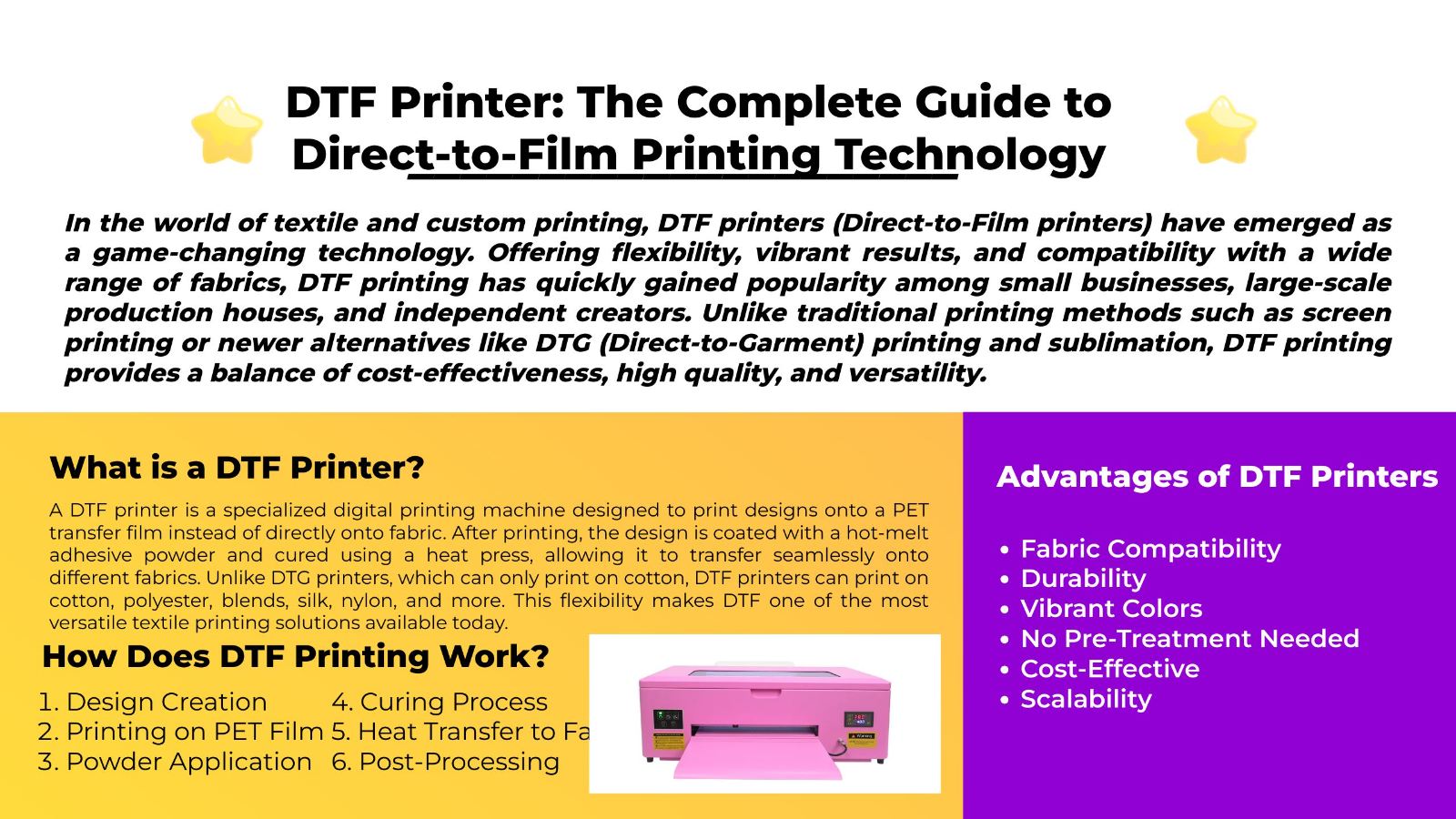
Textile DTF printing is the DTF process used for garments and fabrics. The printer prints the design onto PET transfer film, applies hot-melt adhesive powder, cures the powder, and then transfers the design onto fabric with a heat press. EraSmart’s workflow explanation describes textile DTF as film printing, powder application, curing, and heat press transfer.
Textile DTF is best for:
T-shirts
hoodies
uniforms
sportswear
cotton garments
polyester garments
blended fabrics
short-run apparel orders
custom brand merchandise
local team and event apparel
The business advantage is simple: textile DTF gives apparel businesses one flexible workflow for many garment types. It is especially useful when customers need small batches, mixed sizes, full-color artwork, dark garments, or personalized designs.
UV DTF printing is a transfer process for hard surfaces. It uses UV ink, A/B film, and lamination to create decals that can be applied to smooth hard products. Instead of printing directly onto the object, the printer creates a transfer first, and the finished decal is applied later.
EraSmart’s UV DTF printer page describes the A3 UV DTF model as a solution for decals, labels, and cup wraps, with A3 / 350 mm width, CMYK + White + Varnish, up to 1440 dpi, powderless A/B film workflow, and cold lamination.
UV DTF is best for:
cup wraps
stickers
product labels
cosmetic packaging labels
glass decals
acrylic labels
metal tags
phone and laptop skins
water bottle decoration
short-run brand stickers
premium gift customization
EraSmart’s A/B film guide explains the typical UV DTF workflow clearly: print on A film, laminate with B film, cut the transfer, apply it to the substrate, press or squeegee out air, and peel the carrier layer according to the film instructions.

| Nhân tố | UV Flatbed Printing | Textile DTF Printing | In UV DTF |
|---|---|---|---|
| Main purpose | Direct printing on hard products | Transfer printing for garments | Chuyển đề can cho bề mặt cứng |
| Ink type | Mực UV có thể chữa được | Textile DTF ink | Mực UV có thể chữa được |
| Transfer film | KHÔNG | PET DTF film | A/B UV DTF film |
| bột | KHÔNG | Yes, hot-melt powder | KHÔNG |
| Máy ép nhiệt | Usually no | Đúng | Usually no heat press for standard decal application |
| Sản phẩm tốt nhất | Acrylic, wood, glass, metal, phone cases, signs | T-shirts, hoodies, sportswear, uniforms | Nhãn dán, nhãn, giấy bọc cốc, vỏ đựng đồ dùng |
| Mực trắng | Yes, often important | Yes, important for dark garments | Yes, important for opacity and premium effects |
| Sơn bóng | Yes, depending on setup | No standard varnish layer | Yes, often used for gloss / raised effect |
| Vật phẩm cong | Phụ thuộc vào lịch thi đấu | Không phù hợp | Good for many decal-style curved applications |
| Apparel | Not the right primary method | Sự lựa chọn tốt nhất | Không được đề xuất |
| Business fit | Hard product customization | Apparel production | Hard-surface transfer products |

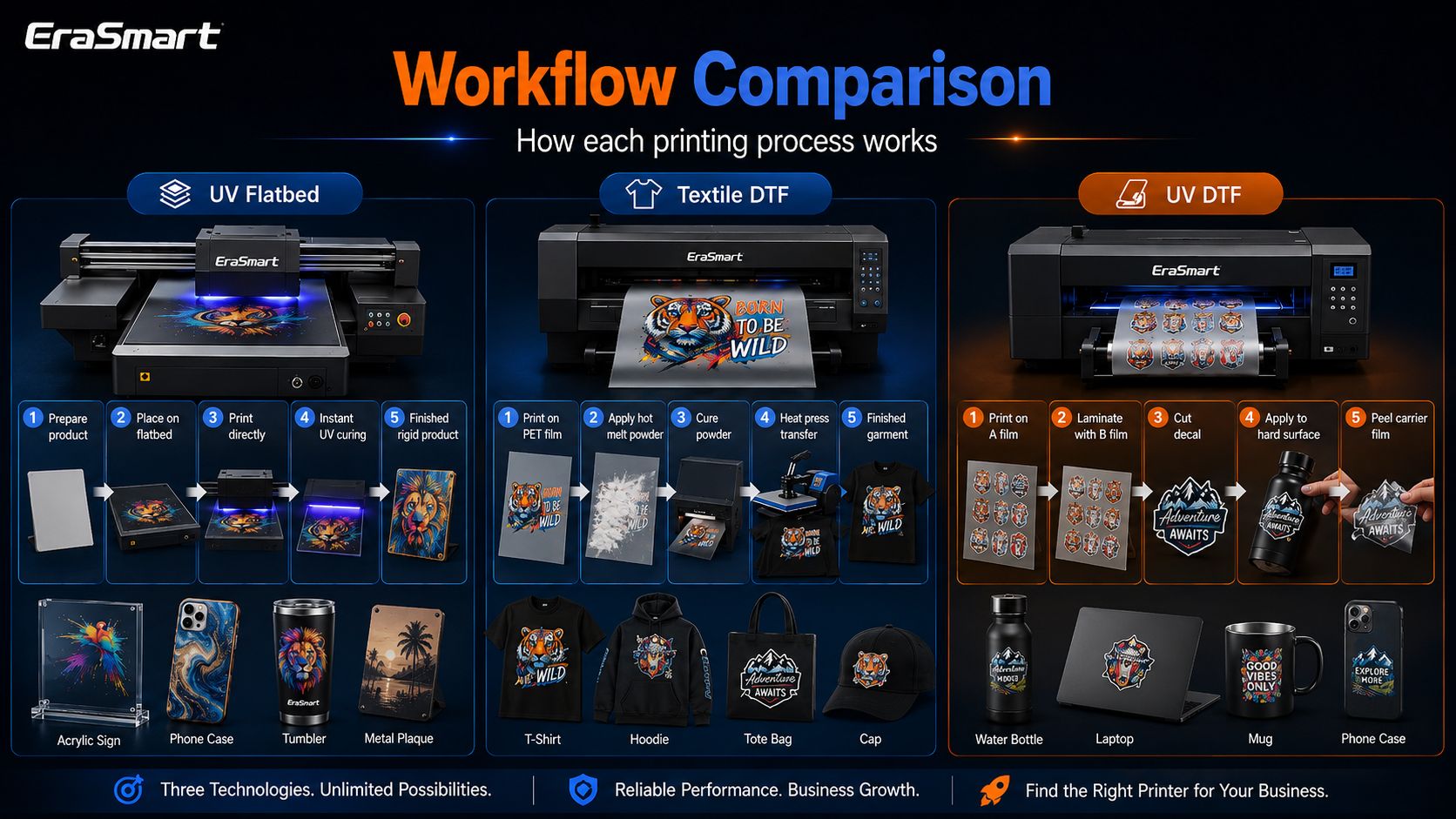
UV flatbed printing is usually the most direct workflow:
Prepare the material surface
Place the product on the flatbed
Align the artwork
Print directly onto the product
UV light cures the ink during printing
Remove the finished product
This workflow is efficient for flat rigid products, especially when the item shape is easy to position. However, irregular objects may require jigs, fixtures, or surface testing.
Textile DTF has more steps, but it is very practical for apparel:
Print the design onto PET film
Apply hot-melt adhesive powder
Cure the powder
Ép nhiệt chuyển lên quần áo
Peel according to film type
Final press if needed
This process is scalable when paired with a shaker, dryer, and standardized heat press settings. EraSmart’s guide notes that textile DTF repeatability depends on powder coverage, curing, and consistent press parameters.
UV DTF is a decal workflow:
Print the design on A film with UV ink
Laminate with B film
Cắt chuyển khoản
Apply the transfer onto a clean hard surface
Press or squeegee out air
Peel the carrier film
UV DTF repeatability depends heavily on film pairing, lamination quality, surface preparation, and correct application technique. EraSmart’s A/B film guide also notes that dust, poor lamination pressure, oily surfaces, humidity, and wrong peel technique can all affect the final transfer.

For T-shirts, hoodies, uniforms, sportswear, and mixed fabric apparel, textile DTF is the right choice.
UV DTF should not be promoted as a T-shirt printing method. It is designed for hard-surface transfers. EraSmart’s UV DTF small business guide clearly states that if your business focuses on shirts, hoodies, or other fabric products, textile DTF is the better process.
Đã đọc thực tế: https://www.erasmart.com/best-uv-dtf-printer-for-small-business/
For stickers, labels, cup wraps, bottle decals, cosmetic packaging labels, and hard-surface branding, UV DTF is usually the better choice.
UV DTF allows businesses to create premium-looking decals without printing directly onto every product. This is useful for small businesses that want to sell finished decals, apply branding to many product types, or produce short-run custom packaging and gift decoration. EraSmart’s UV DTF page positions the A3 UV DTF printer for decals, labels, cup wraps, gadget skins, glass, tile, metal, leather, wood gifts, and seasonal short-run branding.
For phone cases, both UV phẳng Và UV DTF can be useful, but they serve different workflows.
Chọn UV phẳng if you want to print directly onto the phone case and control the full print position on the product. Choose UV DTF if you want to create transfer decals that can be applied to phone cases and other hard goods later. For small businesses with many SKU variations, UV DTF can reduce fixturing pressure because the decal is produced first and applied afterward.
For flat acrylic, wood, glass, metal, ceramic tiles, plaques, signs, and panels, UV flatbed printing is often the best primary method. It prints directly onto the object and is suitable for premium custom hard goods.
UV DTF can also be useful for smooth hard surfaces, especially when you want decal-style decoration or when direct printing and fixturing would be slower. EraSmart’s UV DTF vs Textile DTF vs UV Flatbed guide explains that UV flatbed prints directly onto the item, while UV DTF produces decals that can be applied later; they can complement each other rather than fully replace each other.
UV DTF is not the correct primary method for apparel. It is for hard-surface decals. For garments, choose textile DTF.
Both use UV ink, but the workflow is different. UV flatbed prints directly onto the product. UV DTF prints onto film and creates a transfer decal. The right choice depends on whether you want direct printing or transfer application.
The machine is only one part of the production system. You should also consider consumables, maintenance, film compatibility, surface preparation, labor steps, operator skill, after-sales support, and the product categories you want to sell.
UV printing and UV DTF both depend on surface compatibility. Smooth, clean, stable surfaces usually perform better. Oily, dusty, textured, or low-surface-energy materials may require testing or preparation.
No single printer is perfect for every market. A serious custom printing business may eventually use textile DTF for apparel, UV DTF for decals and cup wraps, and UV flatbed printing for rigid product decoration.
If your business is mainly apparel, start with an EraSmart DTF printer. Textile DTF is the better choice for T-shirts, hoodies, uniforms, sportswear, and mixed fabric orders.
If your business is mainly stickers, labels, cup wraps, cosmetic labels, gadget skins, or hard-surface decals, start with an EraSmart UV DTF printer. The A3 UV DTF system is especially suitable for businesses that want a compact workflow for premium decals and hard-surface customization.
If your business is mainly acrylic signs, phone cases, wood gifts, glass products, metal plates, packaging samples, or direct-to-object printing, choose an EraSmart UV printer.
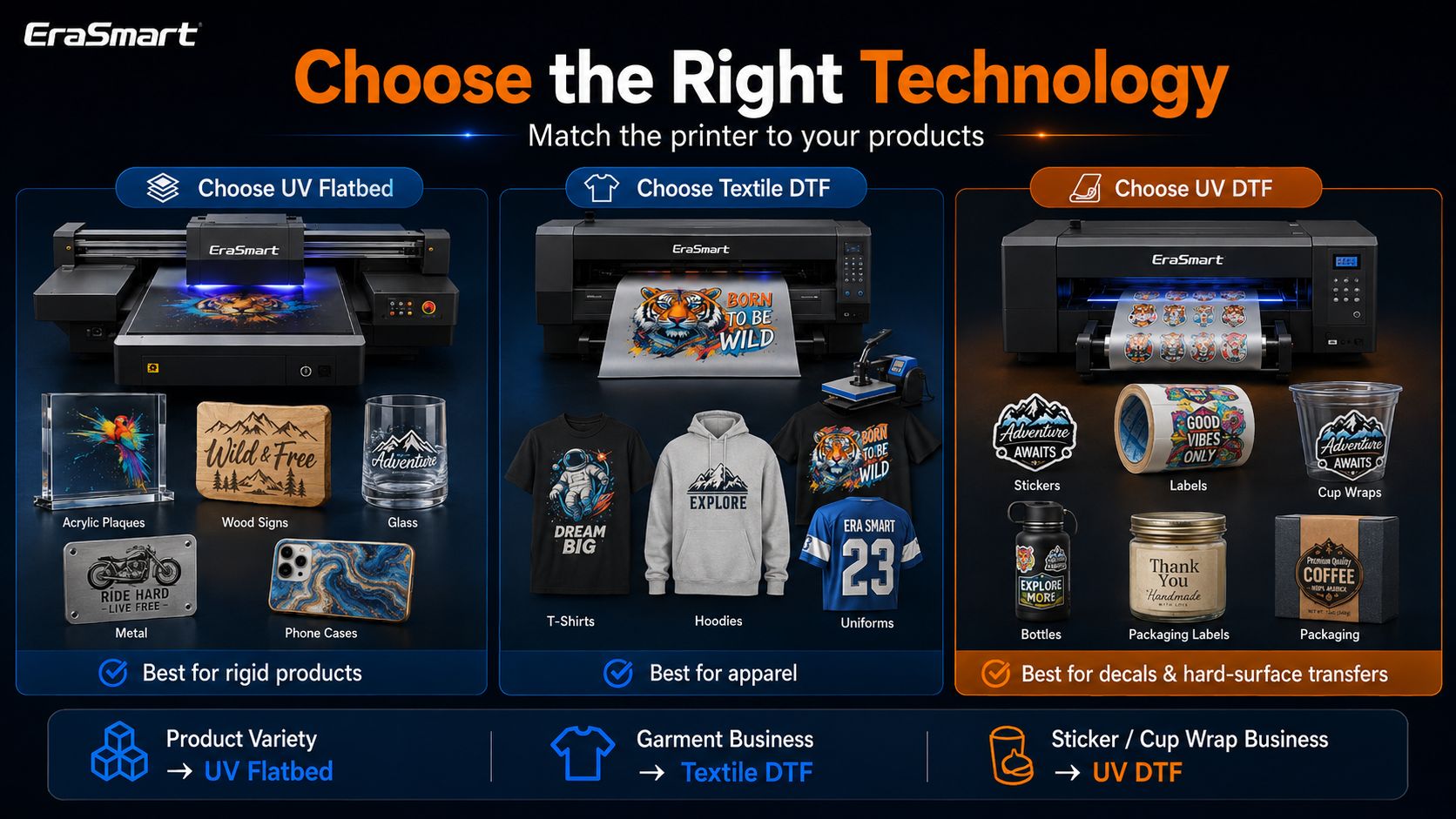
If your business wants to cover multiple markets, choose by priority:
Apparel first → Textile DTF
Stickers and cup wraps first → UV DTF
Rigid products and direct printing first → UV flatbed
Apparel + hard goods → combine DTF with UV DTF or UV flatbed
Labels + acrylic + packaging + gifts → combine UV DTF and UV flatbed
Chọn textile DTF printing if your business is built around apparel.
Chọn UV flatbed printing if your business is built around direct printing on rigid products.
Chọn In UV DTF if your business is built around decals, stickers, labels, cup wraps, and hard-surface transfers.
The best purchase is not the machine with the most features. It is the machine that matches your product catalog, material type, workflow, and growth plan. EraSmart supports all three categories—DTF printers, UV printers, and UV DTF printers—so the smarter buying decision is to start from your target products first, then choose the technology that fits that product path.
Need help choosing between DTF, UV flatbed, and UV DTF? Share your target products, material type, print size, expected daily order volume, and budget range with EraSmart. Our team can help you match the right machine, workflow, consumables, and upgrade path for your business.
Máy in UV
Máy in DTF
Máy in DTG
Máy ép nhiệt
Máy in quảng cáo
Lò nướng DTF
Báo chí nóng
Máy chạm khắc
Truyền nhiệt cốc
Máy làm cán
In mực in
Vỏ điện thoại di động
Sản phẩm thủy tinh
Làm sạch chất lỏng
Gạc bông
WhatsApp, +8618566233796
WeChat, +8618566233796
Di động +8618566233796
Web :www.erasmart.com
Cửa hàng:www.erasmartmall.com
WhatsApp chúng tôi
Chỉ cần cung cấp một vài chi tiết và chúng tôi sẽ giúp bạn nhận được báo giá nhanh!