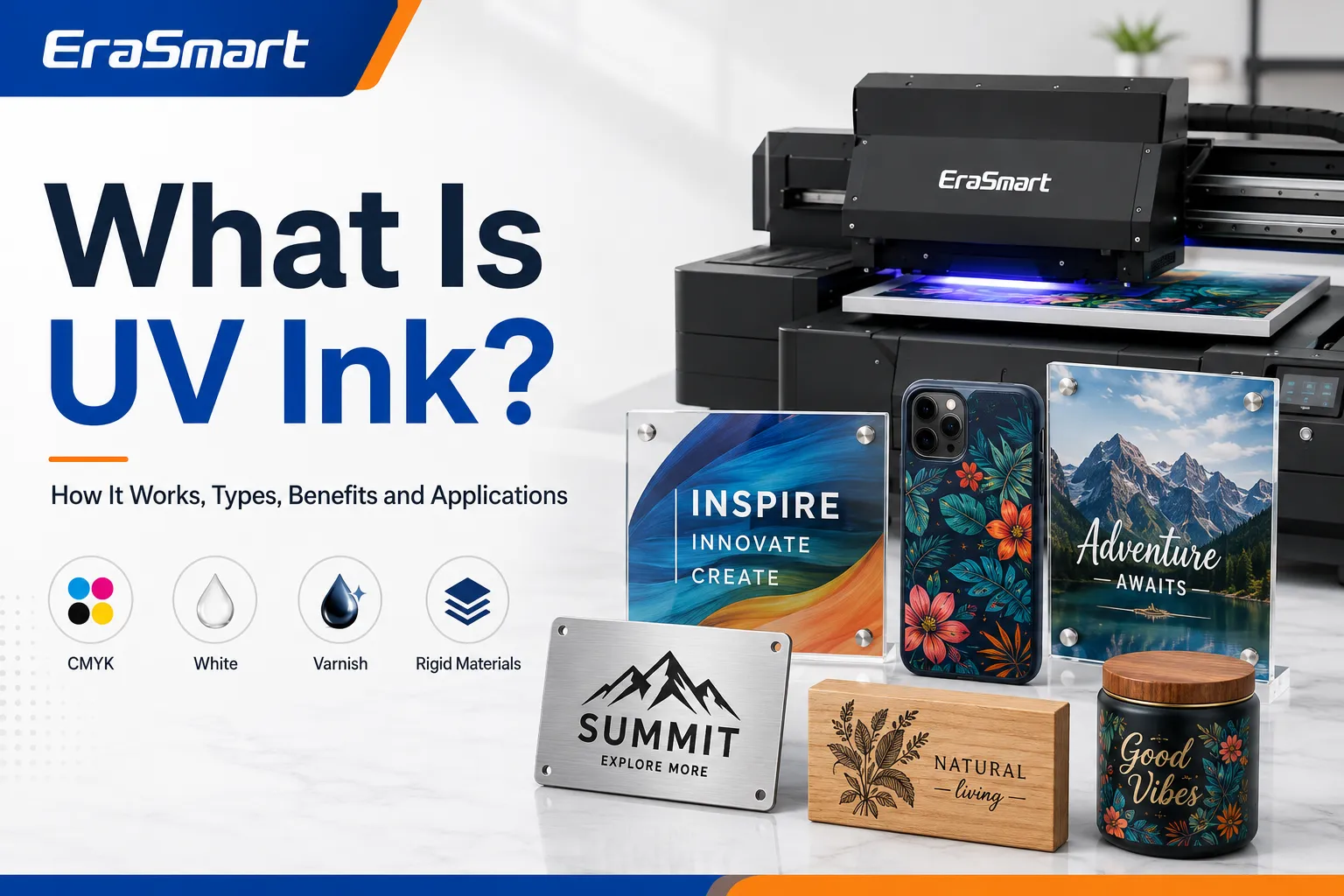
UV ink is a specialized digital printing ink that cures when exposed to ultraviolet light.
Unlike ordinary aqueous or solvent-based ink, UV ink does not rely mainly on absorption or long evaporation times. A compatible UV printer applies the ink directly to the product surface and uses built-in UV LED lamps to cure the printed layer during production.
This printing method makes it possible to decorate many rigid, coated and non-porous products, including:
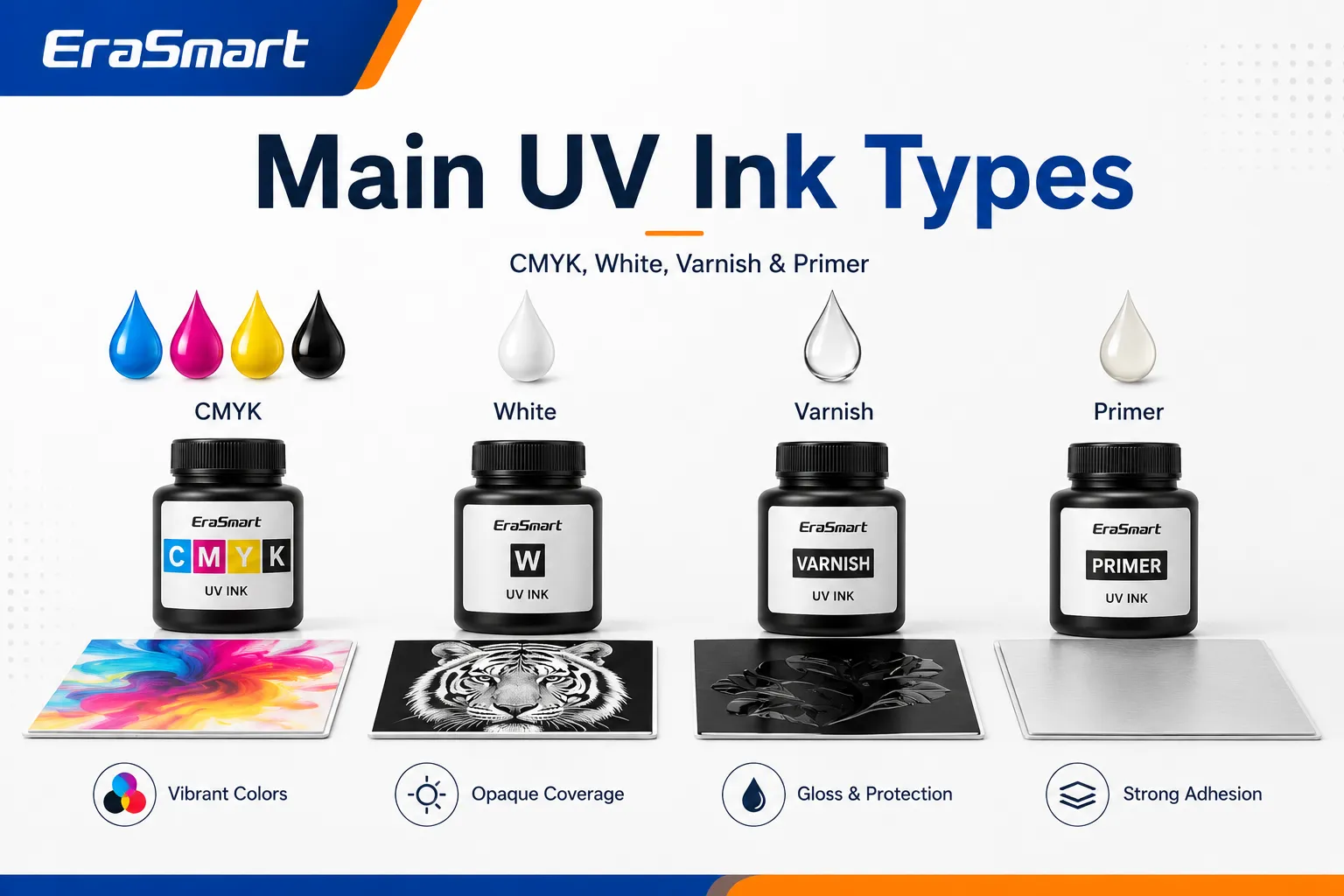
Modern UV printing systems may combine CMYK color ink with white ink, clear varnish and, on selected machines, primer. These additional channels allow businesses to print on transparent and dark materials, produce spot-gloss effects and create raised or textured designs.
However, UV ink is not a universal ink that can be used in any printer. The ink must be compatible with the printer, printhead, ink-delivery system, UV curing lamps, RIP software and intended printing materials.
This guide explains what UV ink is, how it works, the main UV ink types, suitable materials, advantages, limitations, maintenance requirements and how to choose the right ink system.
| Mục | UV ink characteristics |
|---|---|
| Phương pháp bảo dưỡng | UV LED light |
| Standard colors | Cyan, magenta, yellow and black |
| Specialty channels | White, varnish and primer |
| Primary applications | Hard and coated products |
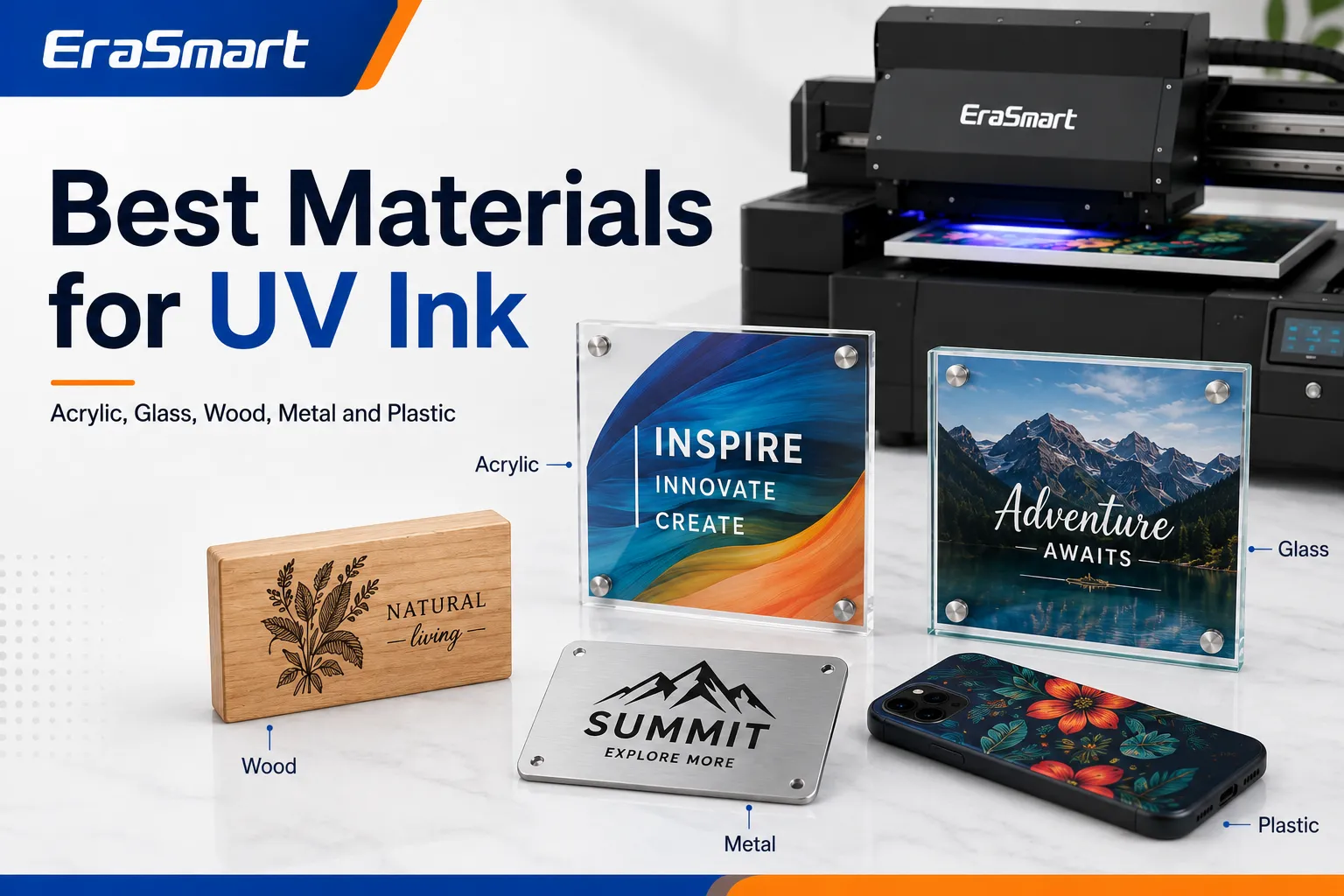
| Common materials | Acrylic, glass, metal, wood and plastic |
| Phương pháp in | Direct surface printing |
| Drying requirement | No separate air-drying stage |
| Main advantage | Fast curing and broad product range |
| Hạn chế chính | Adhesion varies between materials |
| Thiết bị cần thiết | Compatible UV printer |
For a complete overview of UV printer structures, workflows and applications, see the EraSmart UV printer complete guide.

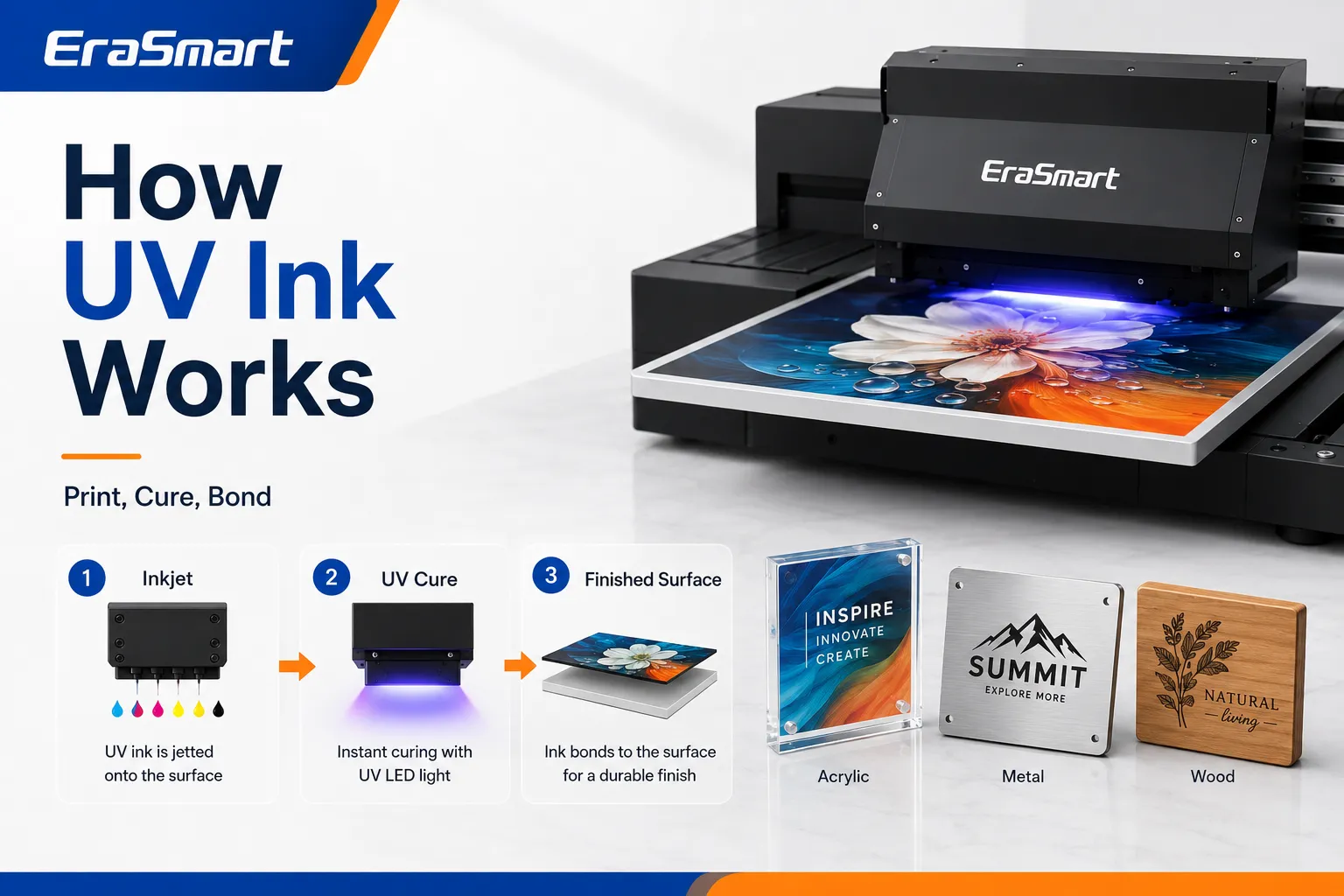
A UV printer uses inkjet printheads to place extremely small droplets of liquid UV ink directly onto the product surface.
The printer’s UV LED lamps then expose the ink to ultraviolet energy. This starts a curing reaction that changes the liquid ink into a fixed printed layer.
A typical UV printing workflow includes:
Because curing happens during printing, products can usually move to inspection, packing or further processing without waiting for a long drying period.
Traditional ink may dry through:
UV-curable ink behaves differently. It remains mainly on the material surface and becomes a solid ink layer when exposed to the printer’s UV light.
This surface-printing process helps produce:
The final result still depends on the printer settings, lamp output, ink formulation, layer thickness and substrate.
UV ink is a carefully formulated chemical system rather than a simple mixture of pigment and water.
Its exact composition varies by manufacturer and ink model, but the main components generally include the following.
Pigments create the visible color.
Standard UV printers commonly use:
Depending on the machine configuration, additional colors may include:
These components help create the cured ink film.
They can influence:
Photoinitiators respond to ultraviolet energy and help begin the curing reaction.
The ink formulation and UV lamp system must work together. An ink designed for one printer should not automatically be considered compatible with another UV system.
Additives may be used to control:
Small differences in formulation can significantly affect printhead performance and substrate adhesion.

A UV printer may use several different ink channels, each performing a specific function.
CMYK ink creates the main color image.
The four standard channels are:
They are used to reproduce:
The final appearance depends on more than the CMYK values in the artwork. It can also be affected by:
Printing the same image on white acrylic, clear acrylic and dark metal can therefore produce different results.

White ink is one of the most valuable capabilities of a UV printer.
It allows the printer to produce visible designs on:
White ink can be used in several ways.
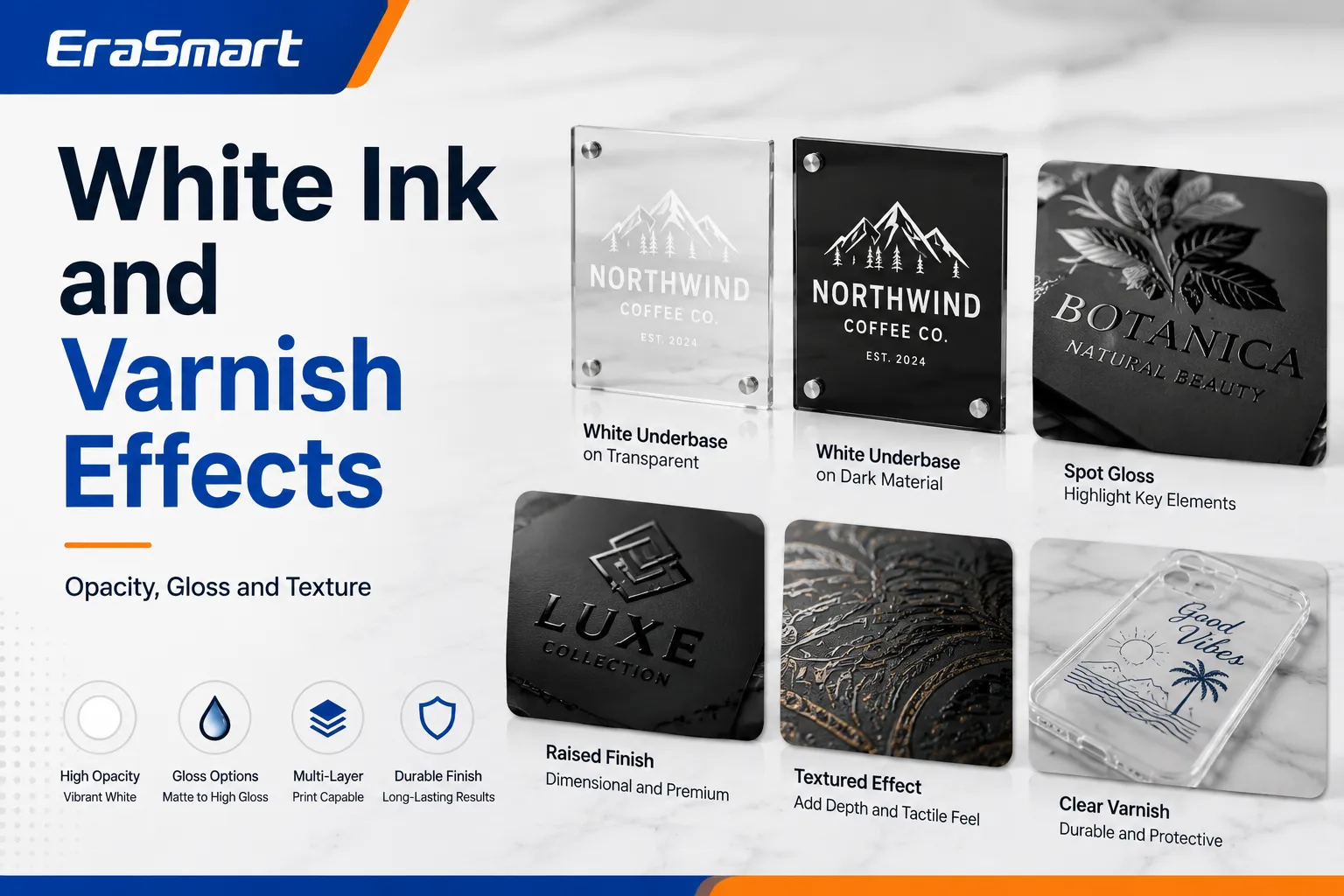
A white layer is printed beneath CMYK to prevent the substrate color from changing the appearance of the design.
This is particularly useful for:
When printing on the back of transparent acrylic or glass, white ink can be printed behind the color image to improve opacity and visibility from the front.
White ink may also be printed independently for:
Some UV workflows use several layers, such as:
The correct layer order depends on how the finished product will be viewed.
For a deeper explanation of these channels, read the EraSmart UV ink guide for CMYK, white and varnish.
Varnish is a transparent UV-curable ink used to change the appearance and texture of selected print areas.
It can create:
Varnish is normally printed as an additional layer rather than replacing CMYK or white ink.
The quality of a varnish effect depends on:
Raised varnish effects may require multiple passes, which increases production time and ink consumption.
Primer is a clear adhesion-support layer that can improve UV ink bonding on selected difficult surfaces.
It may be useful for:
Primer can sometimes be applied manually, while selected UV printers support primer as an ink channel.
However, primer does not make every material automatically printable. The product still needs to be:
Always perform an adhesion test before accepting a large order.
UV inks may also be classified according to the flexibility of the cured ink layer.
Harder formulations are generally intended for rigid products that do not bend significantly.
Typical applications include:
Potential advantages include:
The limitation is that the ink layer may crack if the product bends or flexes beyond the ink’s capability.
Flexible formulations are designed to tolerate more movement.
Possible applications include:
Flexible UV ink is still not normally the first choice for stretch garments. Apparel-focused production is generally better suited to DTF or DTG technology.
See the comparison between UV printers and DTF printers when deciding between hard-product and textile printing.

UV printing supports a broad range of products, but material compatibility should always be tested.
| Vật liệu | Sản phẩm thông dụng | Main consideration |
|---|---|---|
| Acrylic | Signs, photo blocks, awards | White ink may be required |
| Thủy tinh | Decorative panels and gifts | Primer may improve adhesion |
| Kim loại | Nameplates, signs and cards | Remove oil and contamination |
| Gỗ | Ornaments, signs and décor | Grain affects print appearance |
| Nhựa | Phone cases and promotional items | Plastic chemistry varies |
| gốm sứ | Tiles and coated products | Perform adhesion testing |
| Leather-like materials | Wallets, covers and accessories | Check flexibility |
| PVC | Cards, signs and displays | Confirm ink compatibility |
| Cardboard | Mẫu bao bì | Surface coating affects adhesion |
| Coated products | Quà tặng tùy chỉnh | Coating quality is critical |
The phrase “UV printing works on almost anything” should be treated carefully. A material may physically fit inside the printer but still have poor ink adhesion.
For more detailed substrate guidance, read the EraSmart UV printer materials guide.
Acrylic is one of the most popular UV printing materials.
It can be used for:
Transparent acrylic often uses white ink as a backing layer or underbase.
Back-printing can also protect the printed image behind the acrylic surface.
UV printing can decorate:
Glass surfaces are smooth and non-porous, so adhesion testing is essential.
Cleaning, primer or pretreatment may be required depending on the glass and intended use.
Metal UV printing applications include:
Oil, dust and protective coatings can reduce adhesion. The surface should be cleaned using a method suitable for the material.
UV ink can be used on:
Natural wood grain may remain visible through the print. White ink can be used to create a more consistent color base.
Plastic is widely used for:
There are many different plastic formulations. Some accept UV ink easily, while others require primer or surface treatment.
Always test the exact product rather than assuming all plastics behave the same way.
A small or commercial UV printer can support many product categories.
Popular applications include:
You can explore more ideas in EraSmart’s guide to things to print with a UV printer.
UV ink is cured during the printing process.
This reduces the need for:
The completed product can usually move quickly to inspection and packaging.
UV printers can print directly onto the product surface.
This can eliminate the need for:
Direct printing can simplify short-run and personalized production.
One UV printer may produce several product categories, such as:
This makes UV printing attractive for small customization studios that want to serve several markets.
White ink allows printing on:
Without white ink, CMYK colors may appear weak or transparent on these products.
Varnish can increase perceived product value through:
These effects can help a small printing business offer premium product options.
Because UV printing is digital, the artwork can change from one product to the next.
Điều này hữu ích cho:
UV ink should never be added to an ordinary office inkjet printer.
A suitable UV printing system requires:
Using incompatible ink may damage the printer.
UV ink can print on many materials, but adhesion is not guaranteed.
Potential problem surfaces include:
Cleaning, primer or professional surface treatment may be necessary.
UV ink forms a cured layer on top of the surface.
On soft or stretchy clothing, this layer may:
For textile products, DTF or DTG is usually more appropriate.
A UV flatbed printer requires a safe distance between the printhead and product.
Problems may occur when the product is:
Incorrect height can reduce print quality or cause a printhead collision.
White ink contains dense pigment that can settle over time.
Without correct circulation and maintenance, problems may include:
UV printing expenses may also include:
Read EraSmart’s guide on how much UV printing costs for a broader cost overview.
| Tính năng | Mực UV | mực DTF | Mực thăng hoa | mực DTG |
|---|---|---|---|---|
| Sản phẩm chính | Rigid and coated products | Chuyển vải | Polyester and coated gifts | In áo trực tiếp |
| Phương pháp bảo dưỡng | UV light | Chữa bột và ép nhiệt | Heat transfer | Heat curing |
| Mực trắng | Common | Common | Normally unavailable | Common |
| Vật liệu tốt nhất | Acrylic, wood, metal, glass and plastic | Bông, polyester và hỗn hợp | Polyester and polymer coatings | Primarily suitable garments |
| Cảm giác bề mặt | Cured surface layer | Lớp chuyển linh hoạt | Dye becomes part of material | Ink printed directly onto garment |
| Varnish option | Có sẵn | Normally unavailable | Unavailable | Normally unavailable |
| Heat press needed | KHÔNG | Đúng | Đúng | Used for curing |
UV ink is usually best for direct decoration of hard products.
Sublimation may be better for coated mugs, mousepads and polyester goods. See UV printing vs sublimation for a more detailed comparison.
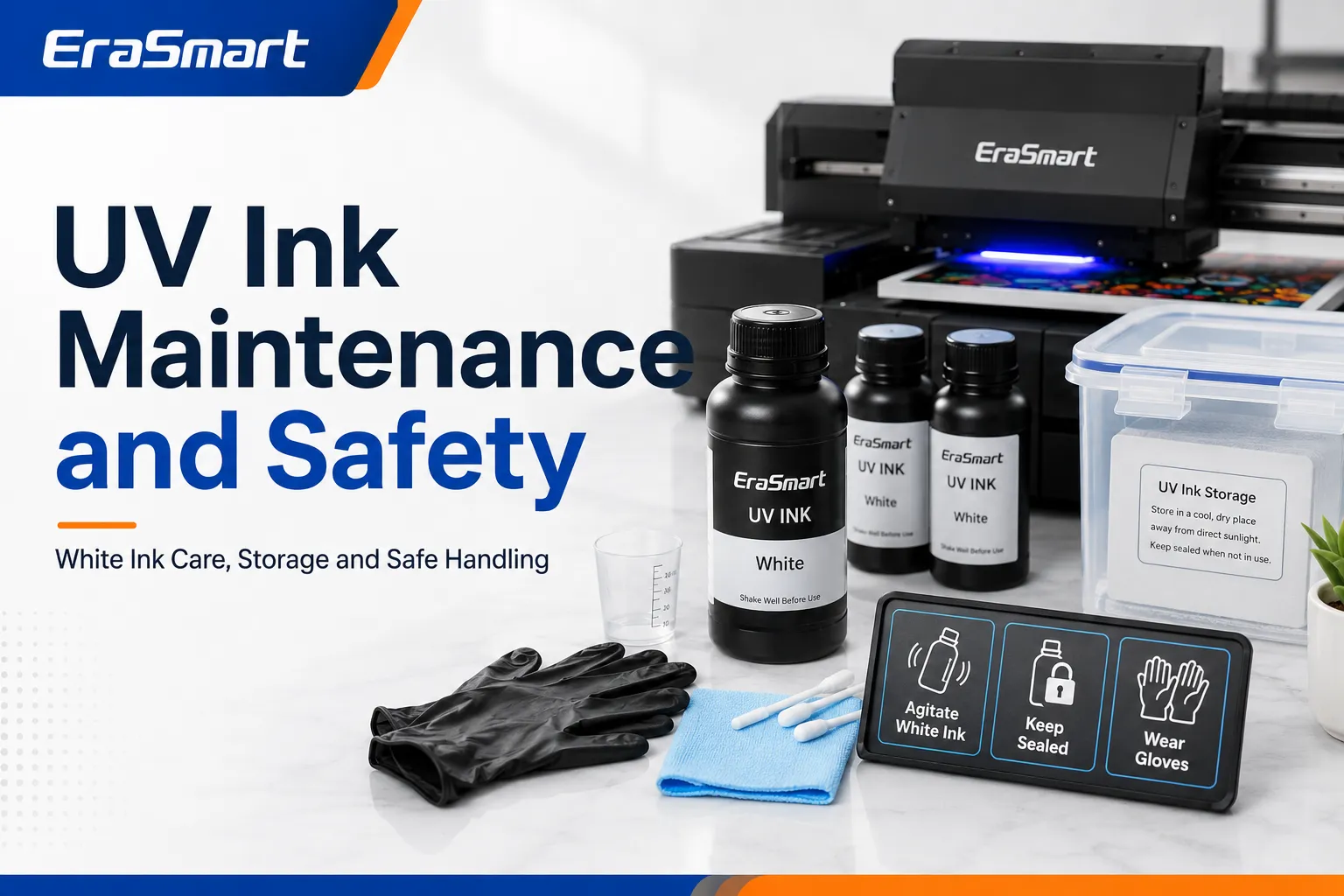
White UV ink contains a high concentration of opaque pigment.
When the ink remains still for an extended period, the pigment may begin to settle.
This can lead to:
Modern UV printers may include:
These systems reduce risk but do not eliminate the need for regular operator maintenance.
Follow the maintenance routine specified for the printer rather than applying a generic schedule.
Các EraSmart UV printer maintenance guide explains daily, weekly and idle-period considerations.
Nguyên nhân có thể bao gồm:
Recommended actions include:
Nguyên nhân có thể bao gồm:
Stop production and check the printer, ink and curing settings. Do not assume that repeatedly exposing the product to UV light will always solve the problem.
Nguyên nhân có thể bao gồm:
Run the printer’s approved white-ink maintenance process and perform a nozzle check.
Nguyên nhân có thể bao gồm:
Color should be evaluated using physical printed samples, not only a computer monitor.

Uncured UV ink should be handled as a chemical product.
Possible hazards may include:
Always follow the Safety Data Sheet supplied with the ink.
Recommended precautions include:
Do not automatically assume that a cured UV print is approved for:
Suitability depends on the specific ink, product, curing performance and applicable regulations.
Storage instructions vary between ink formulations, so the product label and technical documentation should always take priority.
General practices include:
Do not transfer UV ink into an unmarked container.
Choose ink that is approved or verified for the specific printer.
Kiểm tra:
Do not select ink only because the bottle size fits the printer.
List the products your business intends to print.
Ví dụ:
The ink formulation should match the intended substrates and required flexibility.
Common UV printer configurations include:
A business printing dark phone cases and transparent acrylic will normally benefit from white ink.
A business offering premium decorative products may also benefit from varnish.
White ink expands the range of printable products, but it also increases:
The benefits should be compared with the products you plan to sell.
Varnish may be valuable for:
It may not be necessary for a business focused only on standard flat color printing.
Before production, print test samples on the exact material.
Evaluate:
Do not rely only on a generic material name such as “plastic” or “metal.”
Before selecting a UV ink or printer, confirm the availability of:
A low ink price does not compensate for unstable production or missing technical support.
UV printing can be a strong choice for small studios focused on custom hard-surface products.
Potential products include:
A compact UV printer allows businesses to produce short runs without screens, printing plates or transfer paper.
However, profitability depends on:
Before purchasing equipment, compare working size, ink channels, material height and production requirements in the EraSmart UV printer range.
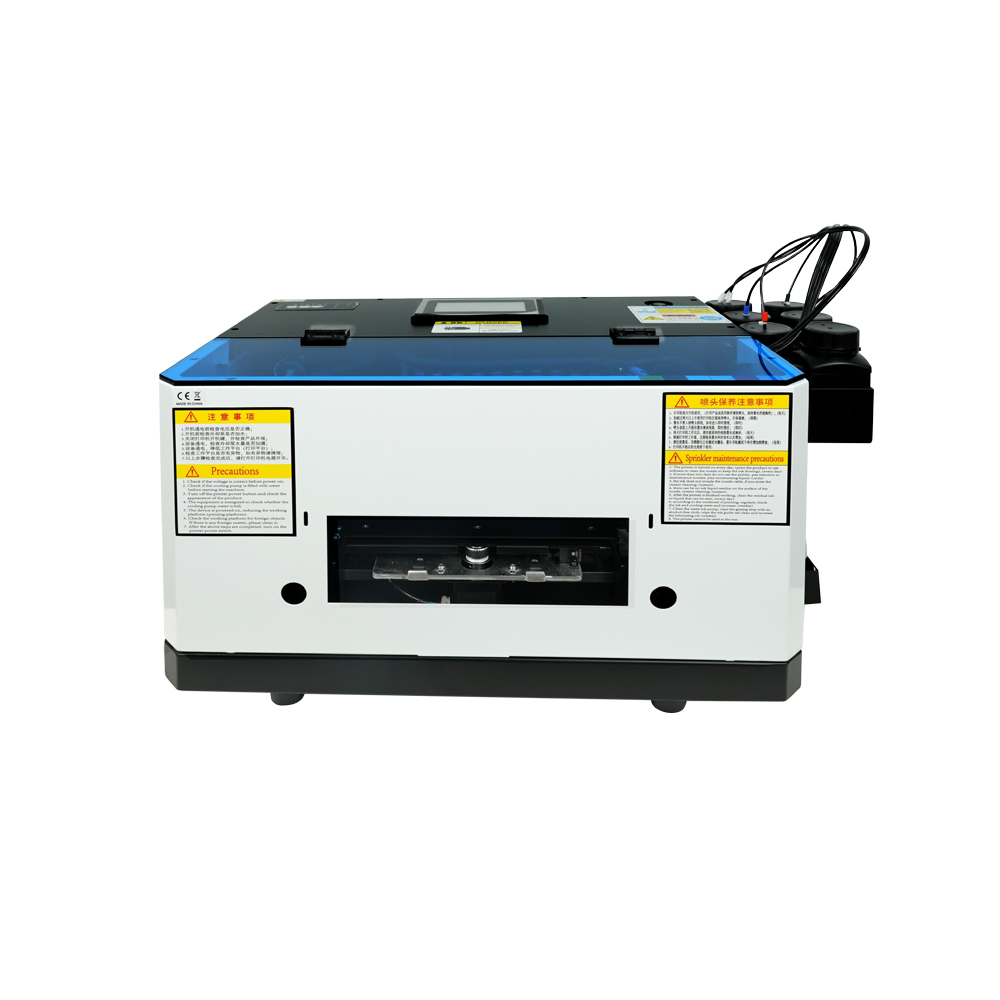
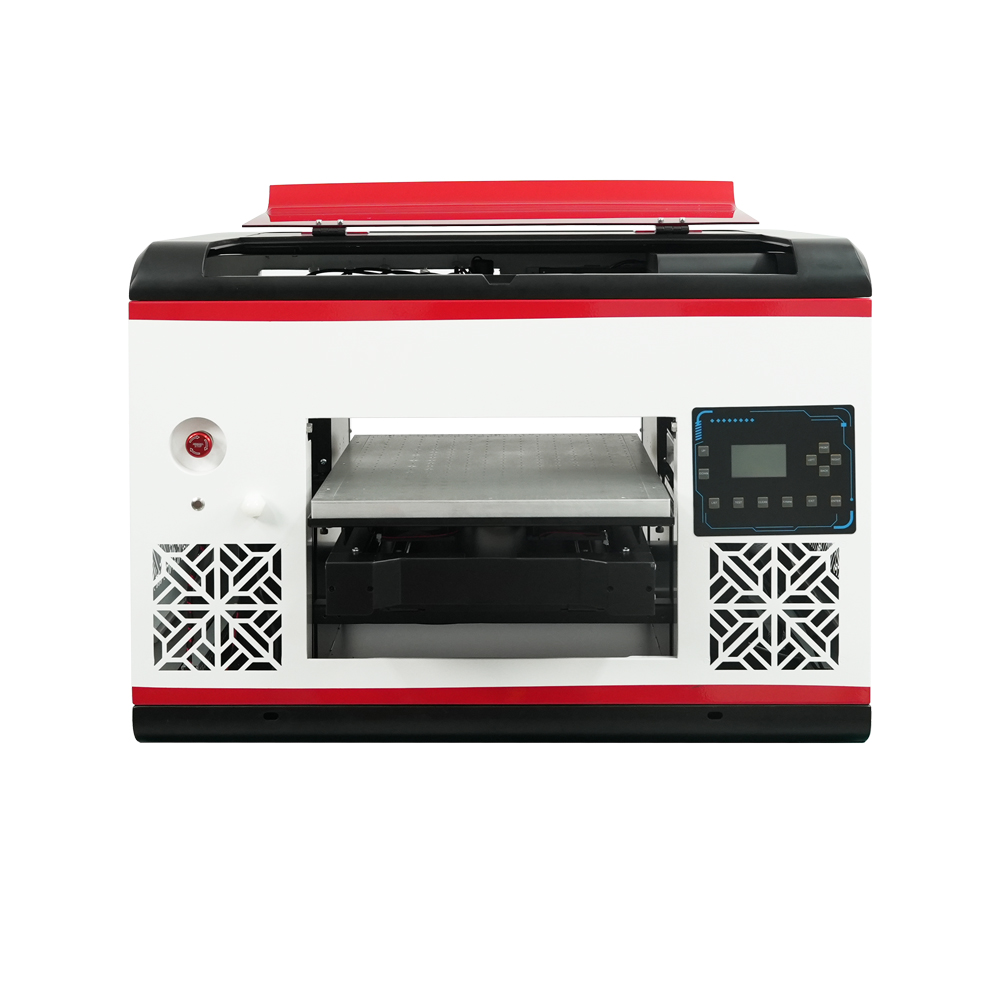
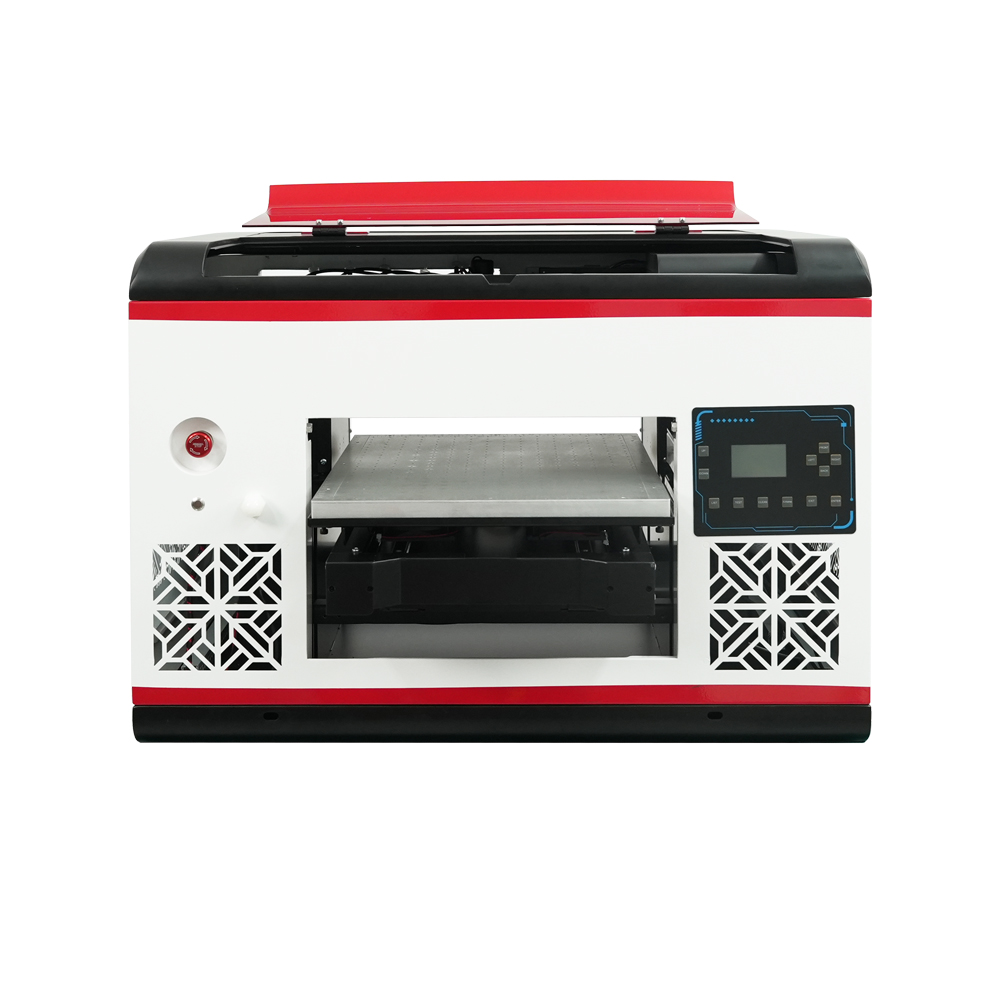
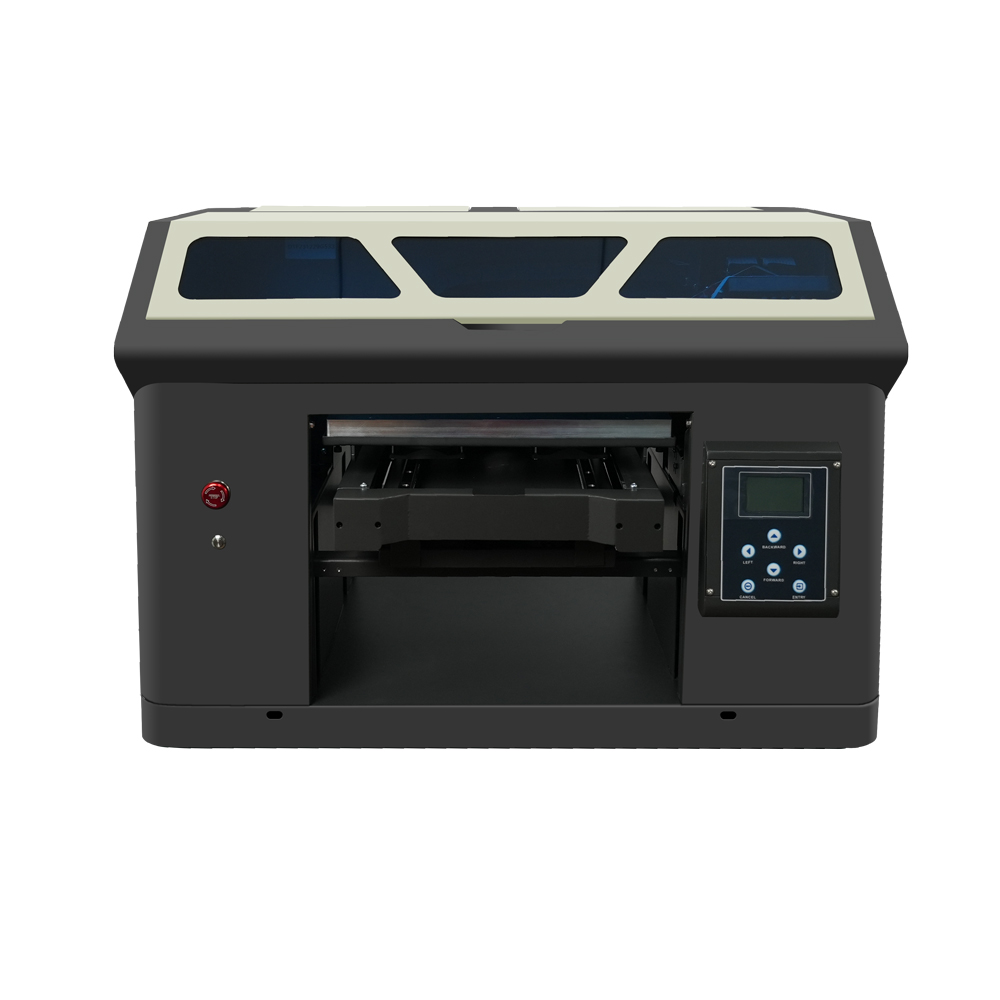
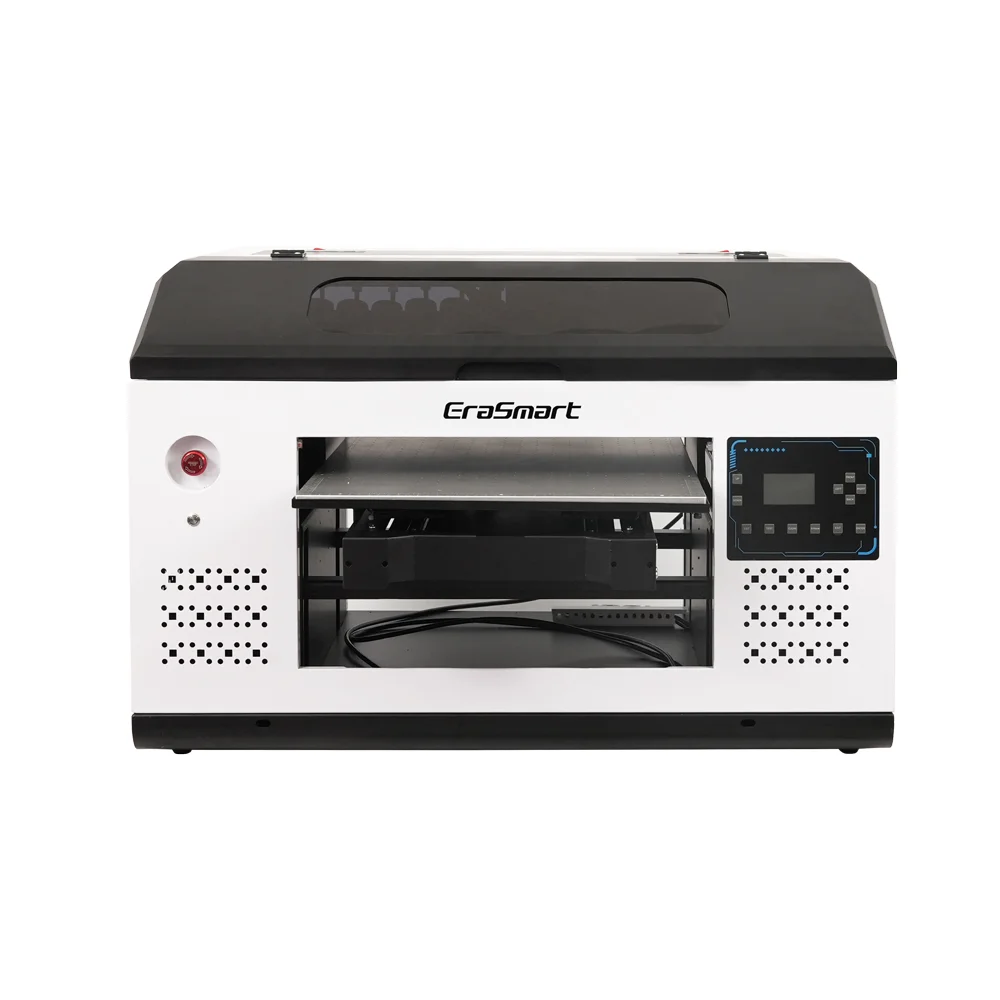
Model cấp thấp nhỏ gọn với đầu in L800, lý tưởng cho các vật phẩm nhỏ và dự án theo sở thích (kích thước in 120*210mm).
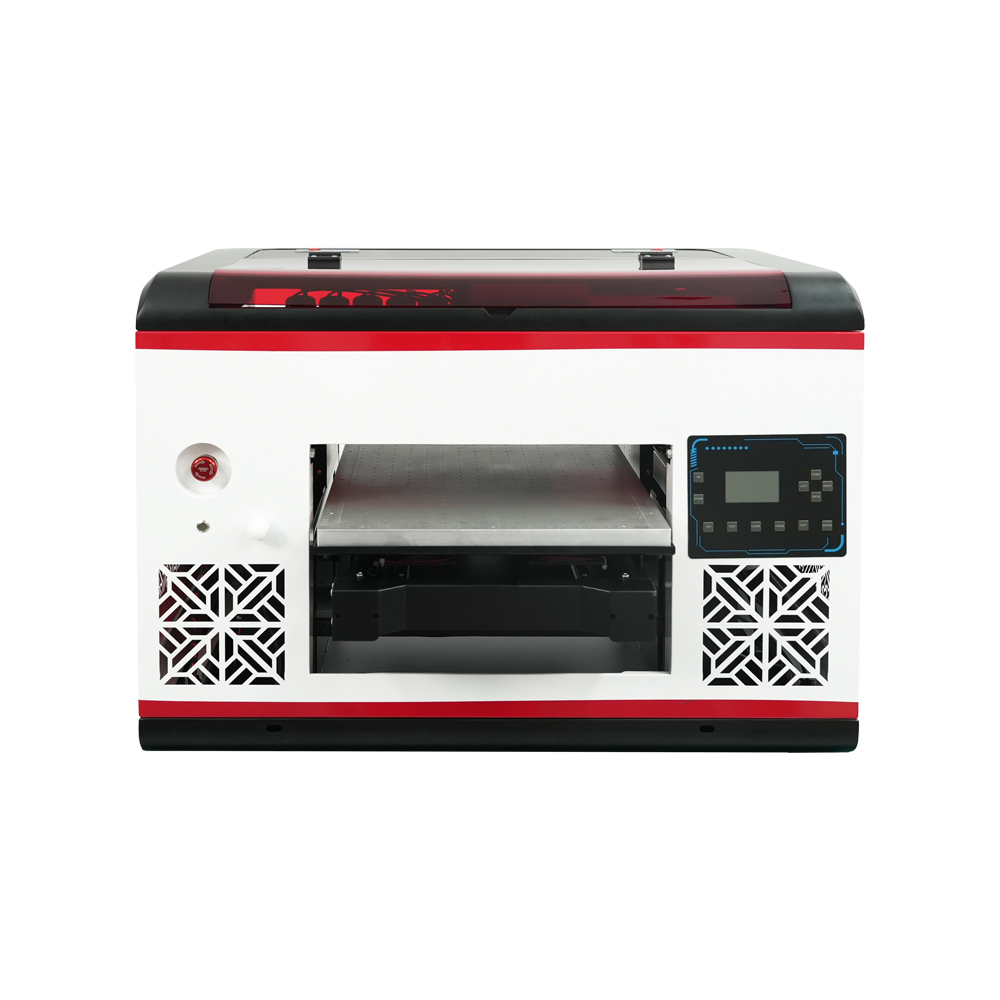
Đầu in L800 với kích thước in 210*290mm, hoàn hảo cho các doanh nghiệp nhỏ và quà tặng cá nhân hóa (chiều cao in 0-130mm).
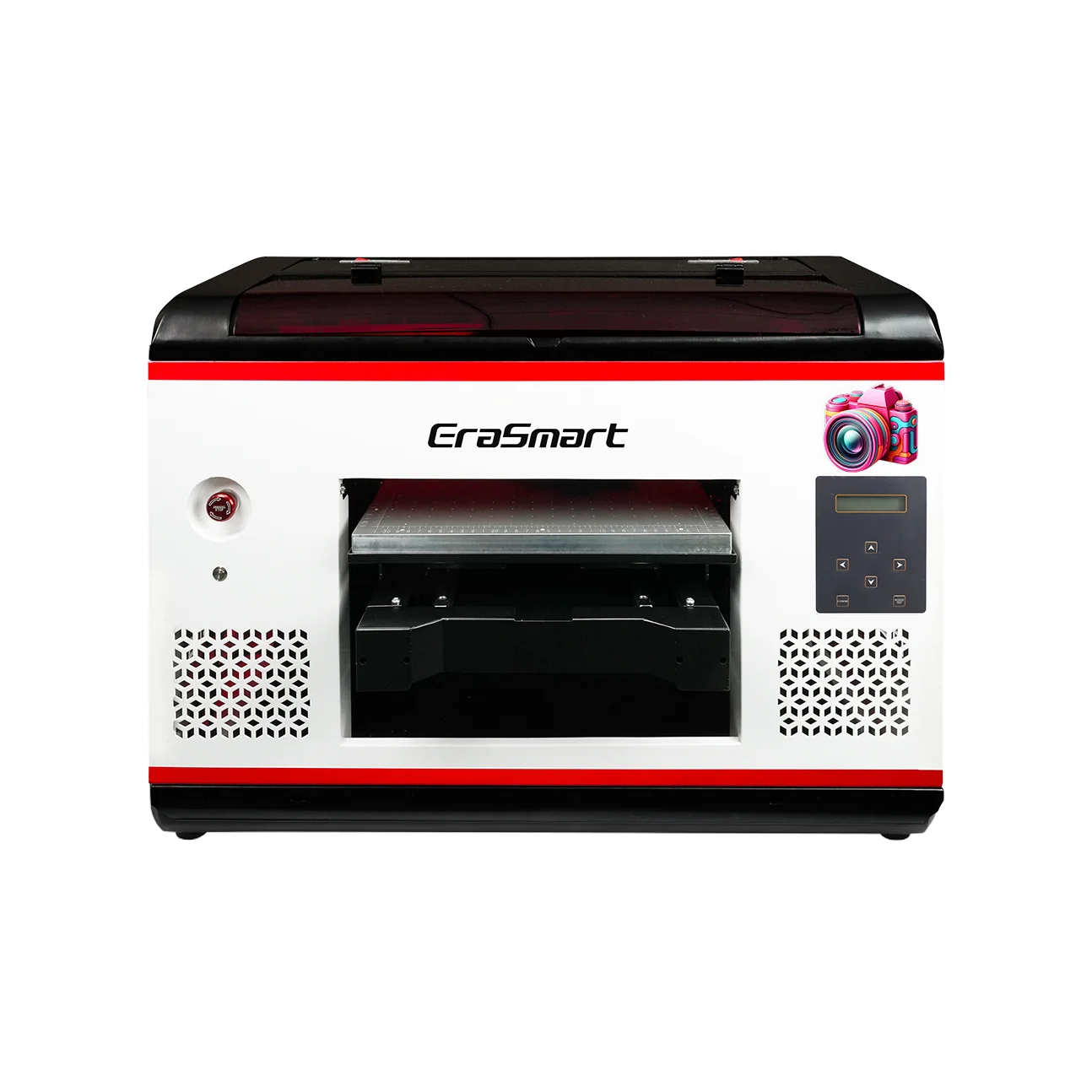
Đầu in DX7 với kích thước in 350*450mm, bệ hút và CMYK+WW+VV để sản xuất số lượng lớn.
Đầu in XP600 với kích thước in 350*450mm, tốc độ 5㎡/H, lý tưởng cho các hoạt động sản xuất từ trung bình đến lớn.
Đầu in kép XP600 với tốc độ 5,5㎡/H, CMYK+WW+VVVVVV để nâng cao gam màu và năng suất.
Đầu in kép XP600 với kích thước in 350*450mm, được thiết kế để sản xuất liên tục cấp công nghiệp.
Máy in khổ lớn 420*600mm với hai đầu XP600, hoàn hảo cho bảng hiệu, bảng điều khiển và vật liệu lớn.
Hai đầu XP600 có chức năng cán màng tự động, chuyên dùng cho in phim UV DTF (chiều rộng lên tới 350mm).
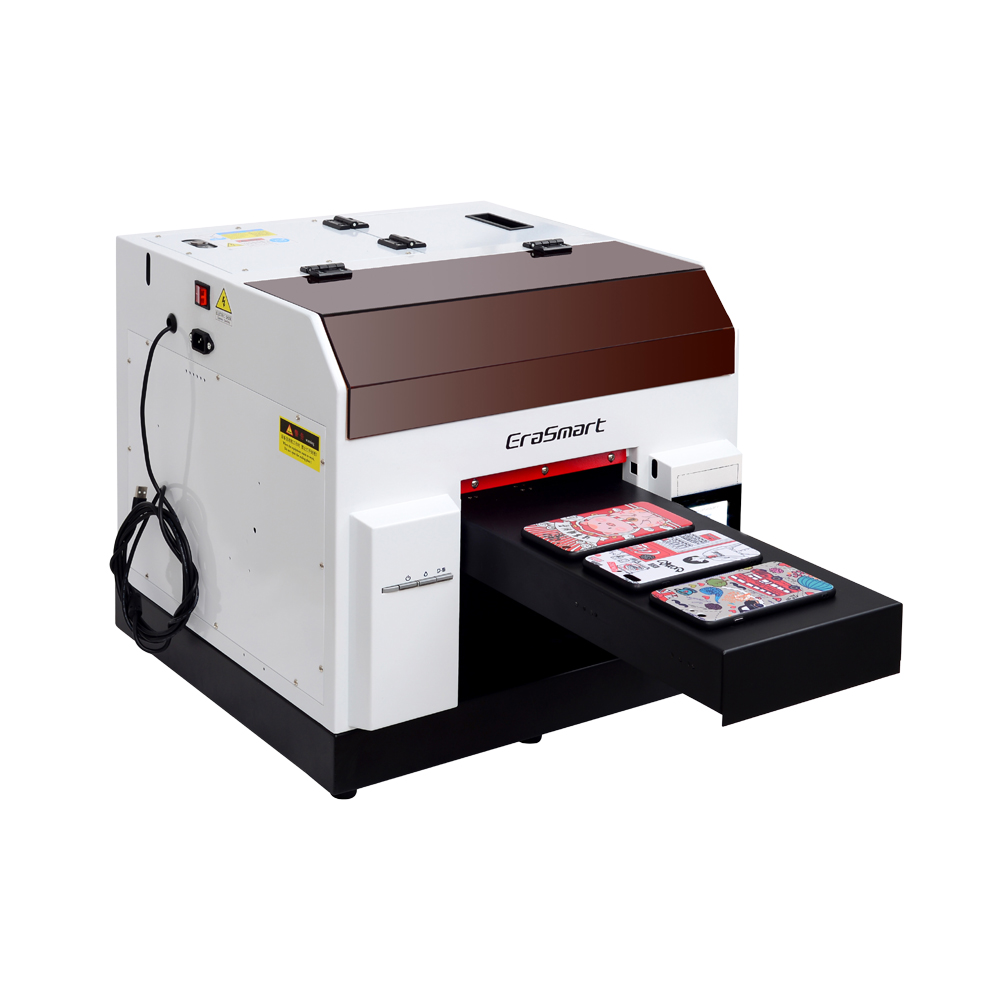
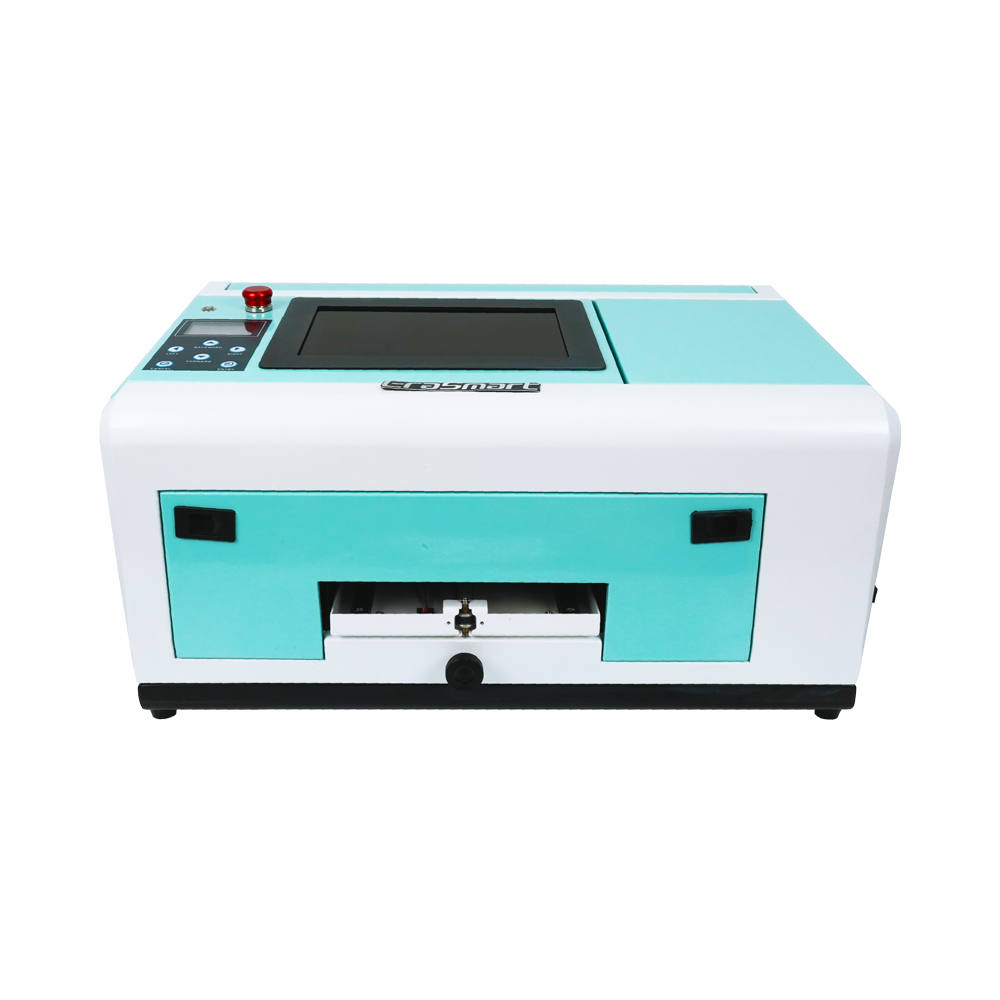
Chuyên dùng cho ốp điện thoại (TPV/PVC/gỗ/kim loại), màn hình 10 inch, điều chỉnh độ cao 0-10mm.
UV ink is a specialized ink system that cures under ultraviolet light and creates a printed layer directly on a compatible product surface.
Its main advantages include:
Its main limitations include:
The best UV ink is not simply the brightest or least expensive option.
It is the ink that matches:
EraSmart provides compact and commercial UV printer solutions for phone cases, acrylic, promotional products, signs, packaging samples and other custom hard-surface applications.
UV ink is a specialized printing ink that cures when exposed to ultraviolet light inside a compatible UV printer.
The printer’s UV LED lamps expose the freshly printed ink to ultraviolet energy, starting a reaction that converts it into a fixed printed layer.
UV ink is normally cured quickly during printing. Complete curing still depends on the ink formulation, UV lamp, print mode and layer thickness.
Yes, but some glass products may require cleaning, primer or another pretreatment to achieve reliable adhesion.
UV ink can print on many plastics, but plastic formulations vary. The exact product should be tested before production.
Yes. Metal should be cleaned to remove oil, dust, fingerprints and surface contamination before printing.
A properly cured UV print may provide good water resistance during normal use. Performance still depends on the substrate, adhesion and intended environment.
No. UV ink requires a compatible ink system, printhead and UV curing hardware.
No. UV ink is cured by UV light rather than being transferred with heat.
UV ink is generally not recommended for standard stretch clothing. DTF or DTG is normally more suitable.
White UV ink is used as an underbase, backing layer or standalone white graphic on transparent, dark and colored materials.
UV varnish is a clear ink channel used to create gloss, raised and textured effects.
Some materials print well without primer. Glass, metal and certain plastics may require primer or pretreatment.
White ink contains dense pigment that can settle during idle periods. Circulation and maintenance help keep the pigment distributed and reduce clogging risk.
Máy in UV
Máy in DTF
Máy in DTG
Máy ép nhiệt
Máy in quảng cáo
Lò nướng DTF
Báo chí nóng
Máy chạm khắc
Truyền nhiệt cốc
Máy làm cán
In mực in
Vỏ điện thoại di động
Sản phẩm thủy tinh
Làm sạch chất lỏng
Gạc bông
WhatsApp, +8618566233796
WeChat, +8618566233796
Di động +8618566233796
Web :www.erasmart.com
Cửa hàng:www.erasmartmall.com
WhatsApp chúng tôi
Chỉ cần cung cấp một vài chi tiết và chúng tôi sẽ giúp bạn nhận được báo giá nhanh!
Hãy cho chúng tôi biết nhu cầu in ấn của bạn. Nhóm của chúng tôi sẽ trả lời trong vòng 24 giờ.