Fabricant d'imprimantes à jet d'encre à plat de petite taille

UV DTF vs Textile DTF vs UV Flatbed: Differences, Best Use Cases, Costs, and Which Printing System Fits Your Business
February 27, 2026 Blog
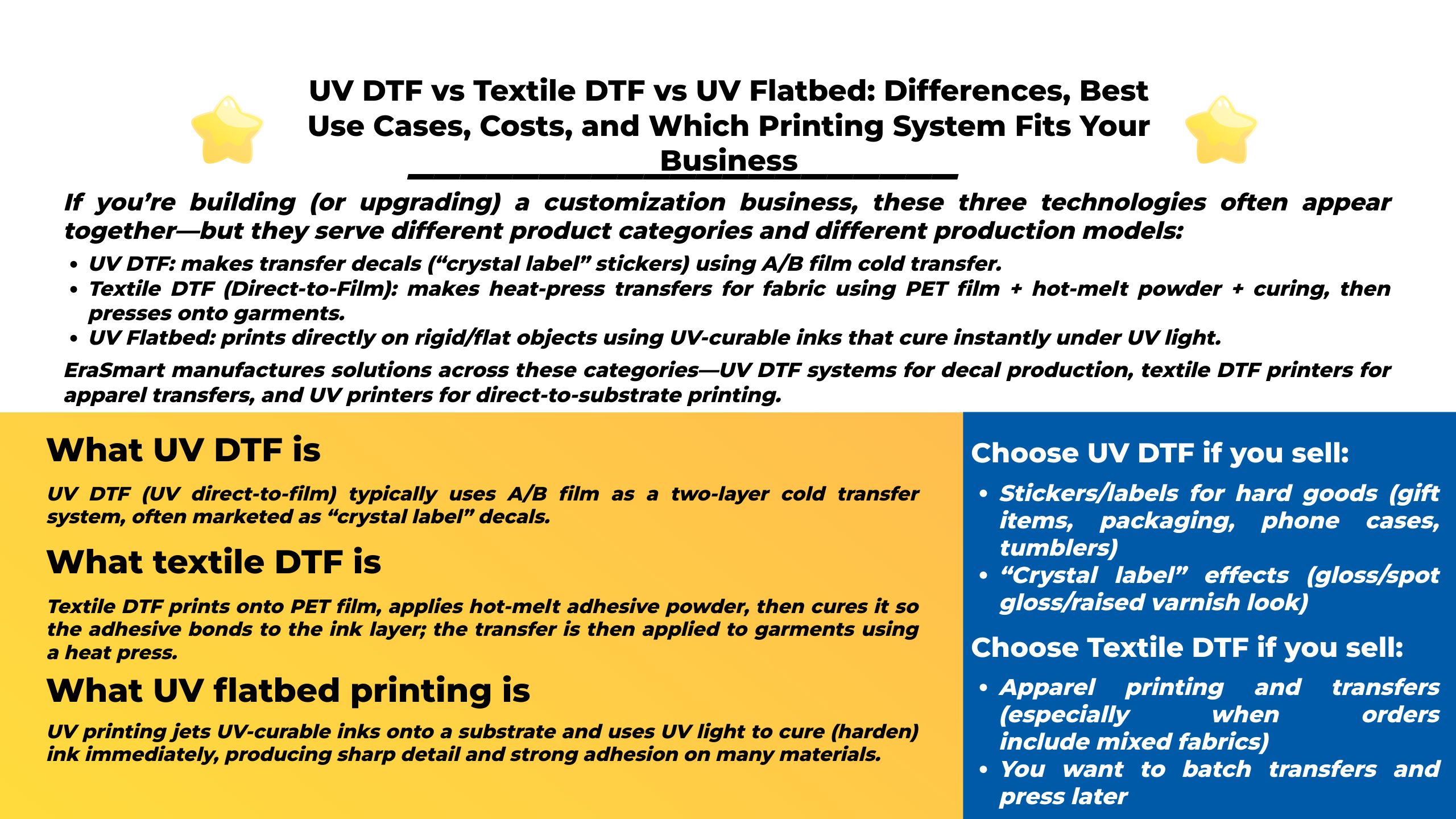
If you’re building (or upgrading) a customization business, these three technologies often appear together—but they serve different product categories et different production models:
UVDTF: makes transfer decals (“crystal label” stickers) en utilisant A/B film cold transfer.
Textile DTF (Direct-to-Film): makes heat-press transfers for fabric en utilisant PET film + hot-melt powder + curing, then presses onto garments.
UV à plat: prints directly on rigid/flat objects en utilisant Encres durcissables aux UV that cure instantly under UV light.
EraSmart manufactures solutions across these categories—UV DTF systems for decal production, textile DTF printers for apparel transfers, and UV printers for direct-to-substrate printing.
Quick Comparison Table
| Catégorie | UV DTF (A/B Film Decals) | Textile DTF (PET Film + Powder) | UV Flatbed (Direct UV Printing) |
|---|---|---|---|
| Primary output | Transfer decals / “crystal label” stickers | Heat-press transfers for garments | Direct print on rigid/flat items ( |
| Core workflow | Print on Film A → laminate Film B → apply/peel | Print on PET film → powder → cure → heat press | Jet UV ink on substrate → UV light cures instantly |
| Best products | Tumblers/phone cases/packaging labels/hard goods decals | T-shirts/hoodies/workwear/transfers on fabric | Signs, acrylic/wood/PVC panels, flat products, industrial marking |
| Needs heat press? | Typically no (cold transfer) | Yes (heat press transfer) | No (UV cures ink instantly) |
| Consommables | A/B film, UV inks | PET film, hot-melt powder, DTF inks | UV inks, substrates (optional primers depending on material) |
| Strength | Fast decal production + premium label finish | Broad fabric coverage + scalable apparel workflow | True direct printing on rigid items; sharp detail and adhesion |
| Limitation | Not meant for textiles | Not for hard-goods decals without other methods | Curved/irregular items often need jigs/fixtures |
1) UVDTF: Best for Stickers, Labels, and Hard-Goods Decals
What UV DTF is
UV DTF (UV direct-to-film) typically uses Film A/B as a two-layer cold transfer system, often marketed as “crystal label” decals.
Standard AB workflow
Imprimer sur Film A
Stratifié avec Film B
Apply to the product surface, burnish, then peel
This is why UV DTF excels for branded stickers on hard goods: you mass-produce decals, then apply them to many SKUs without building fixtures for each product shape.
What it’s best for
- “Crystal label” stickers and premium decals for tumblers, mugs (outer surface), bottles, phone cases, gift boxes, acrylic, glass, coated metal, etc.
EraSmart UV DTF option
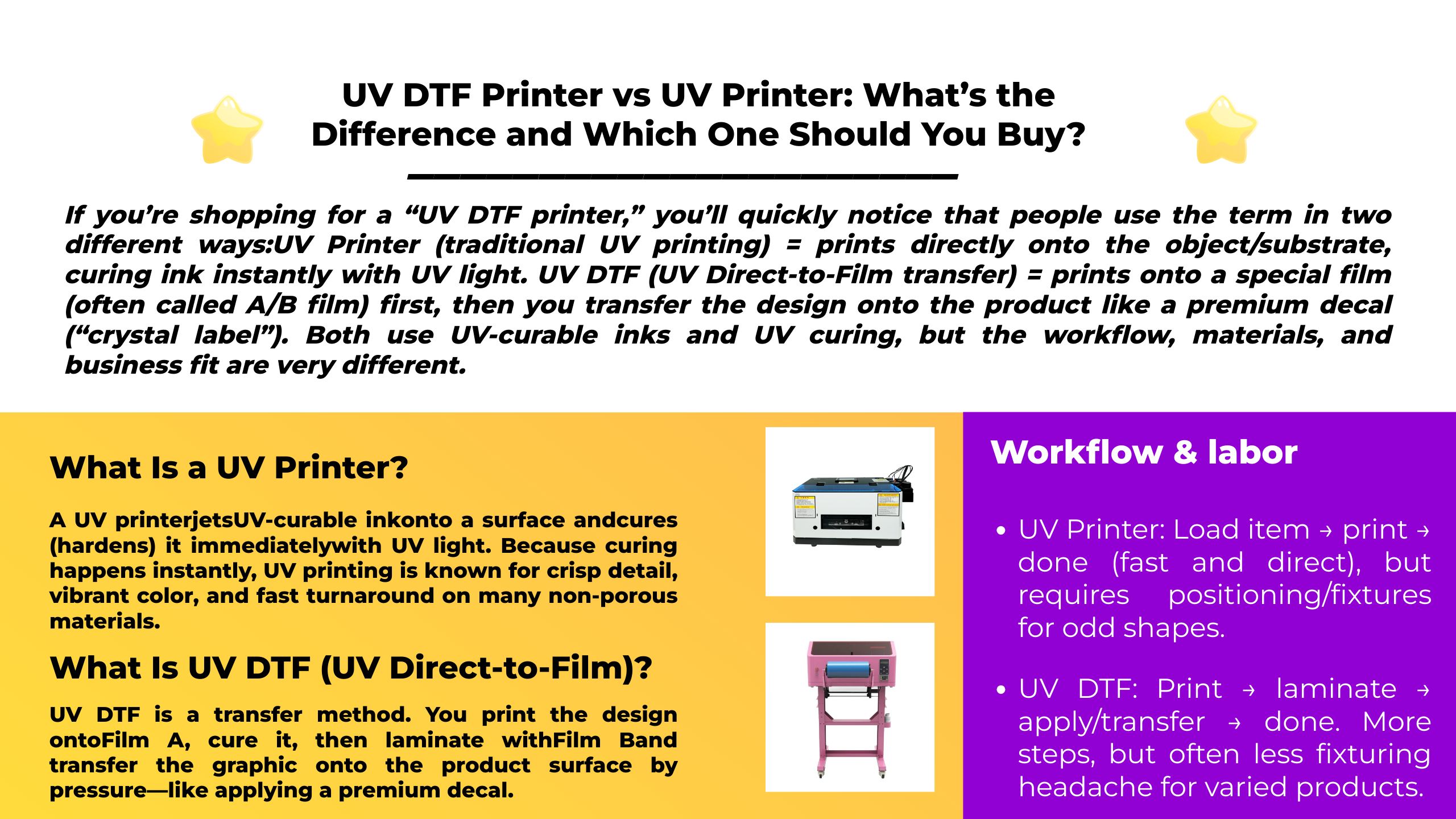
EraSmart’s UV DTF offering highlights an A3 (350mm) UV DTF printer designed for decals/labels with CMJN + Blanc + Vernis, “powderless A/B film,” and “no oven, no heat press,” plus up to 1440 ppp.
Business advantage: UV DTF is often the fastest path to launch a profitable sticker/decal product line for gifting, customization, and packaging.
Modèle présenté — Imprimante A3 UV DTF
Production UV DTF de qualité professionnelle pour autocollants, étiquettes et emballages de gobelets. Encombrement réduit, sortie stable et flux de travail de transfert à froid sans effort.
- Largeur d'impression jusqu'à 350 mm (A3)
- CMJN + Blanc + Vernis en un seul passage ; effets spot-gloss
- Jusqu'à 1440 ppp pour des micro-textes et des détails nets
- Sans poudre Film A/B; pas de four, pas de presse à chaud
- Flux de travail intégré de plastification à froid
Spécifications clés
| Paramètre | Valeur |
|---|---|
| Largeur maximale du support | A3 / 350mm |
| Canaux | CMJN + Blanc + Vernis |
| Résolution | Jusqu'à 1 440 ppp |
| Flux de travail | Films A/B UV DTF · Stratification à froid |
| Meilleure utilisation | Autocollants, étiquettes, emballages de tasses, skins de gadgets |
| DÉCHIRER | Riin / EraRip / Photoprint (prise en charge ICC) |
2) Textile DTF: Best for Apparel Transfers and Mixed Fabric Jobs
What textile DTF is
Textile DTF prints onto Film PET, s'applique poudre adhésive thermofusible, then cures it so the adhesive bonds to the ink layer; the transfer is then applied to garments using a presse chauffée.
Many step-by-step guides describe the same essentials: film printing → powder → curing → press transfer.
What it’s best for
- T-shirts, hoodies, uniforms, sportswear, and mixed fabrics (cotton/poly/blends), especially when you want a scalable transfer workflow.
EraSmart textile DTF options
EraSmart offers a imprimante DTF lineup (from A3 class machines to wider formats), and also publishes DTF guidance that describes printing to Film de transfert d'animaux then transferring via heat press.
Business advantage: Textile DTF is the most flexible “one workflow for many garment types” approach when your revenue is primarily apparel.
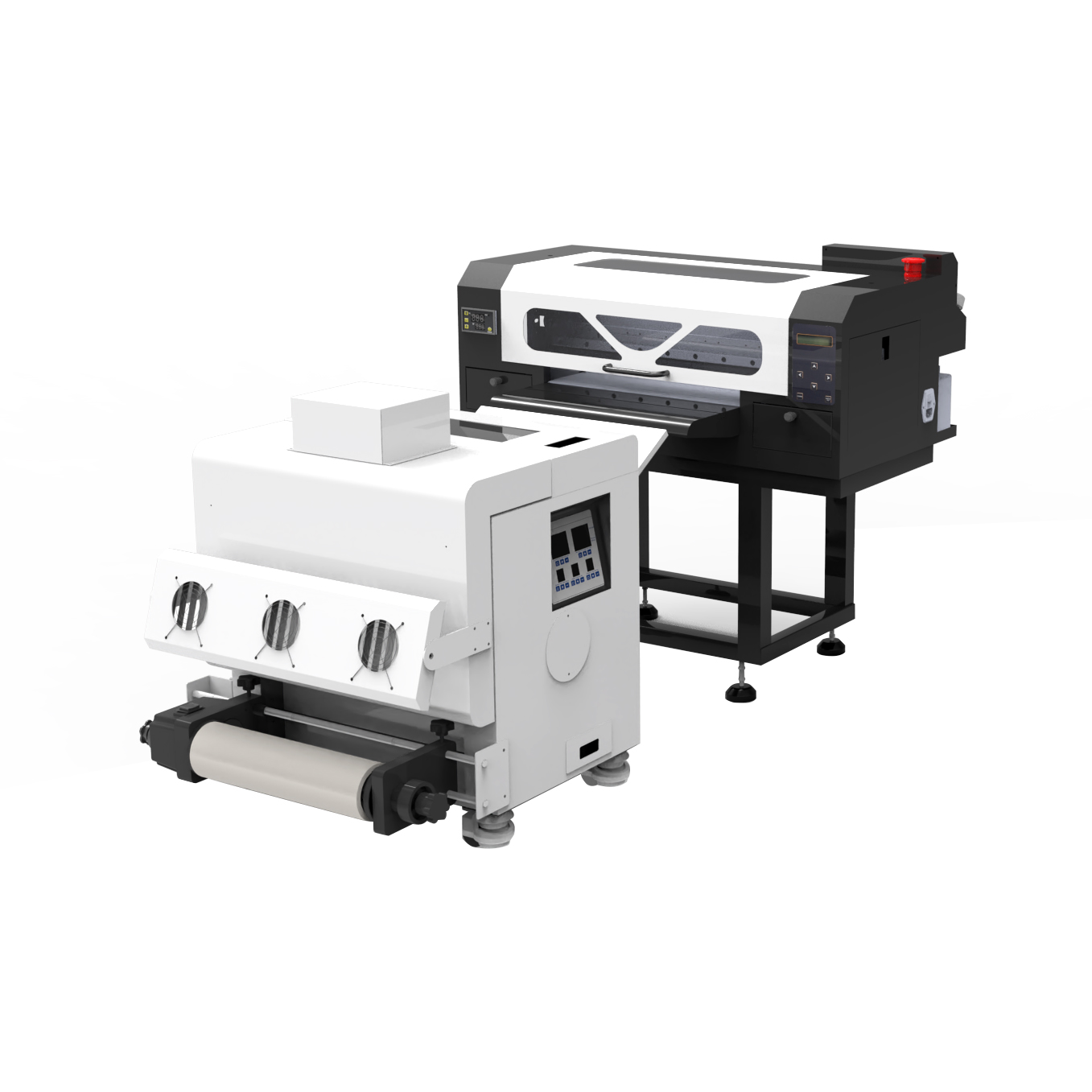
Une solution prête pour la production, conçue pour les ateliers qui ont besoin d'un débit plus élevé et d'un flux de travail plus automatisé.
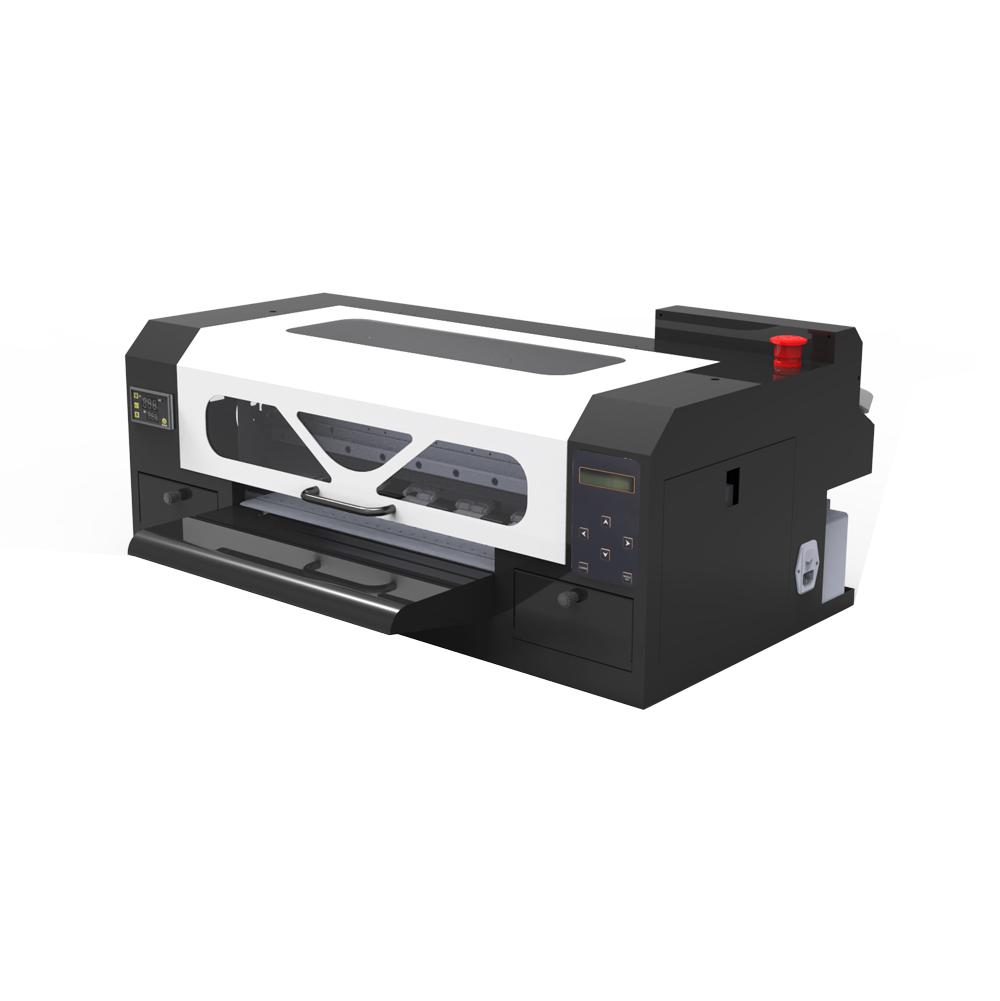
Des performances équilibrées pour les imprimeries qui ont besoin de vitesse et de sortie stable dans un format A3.
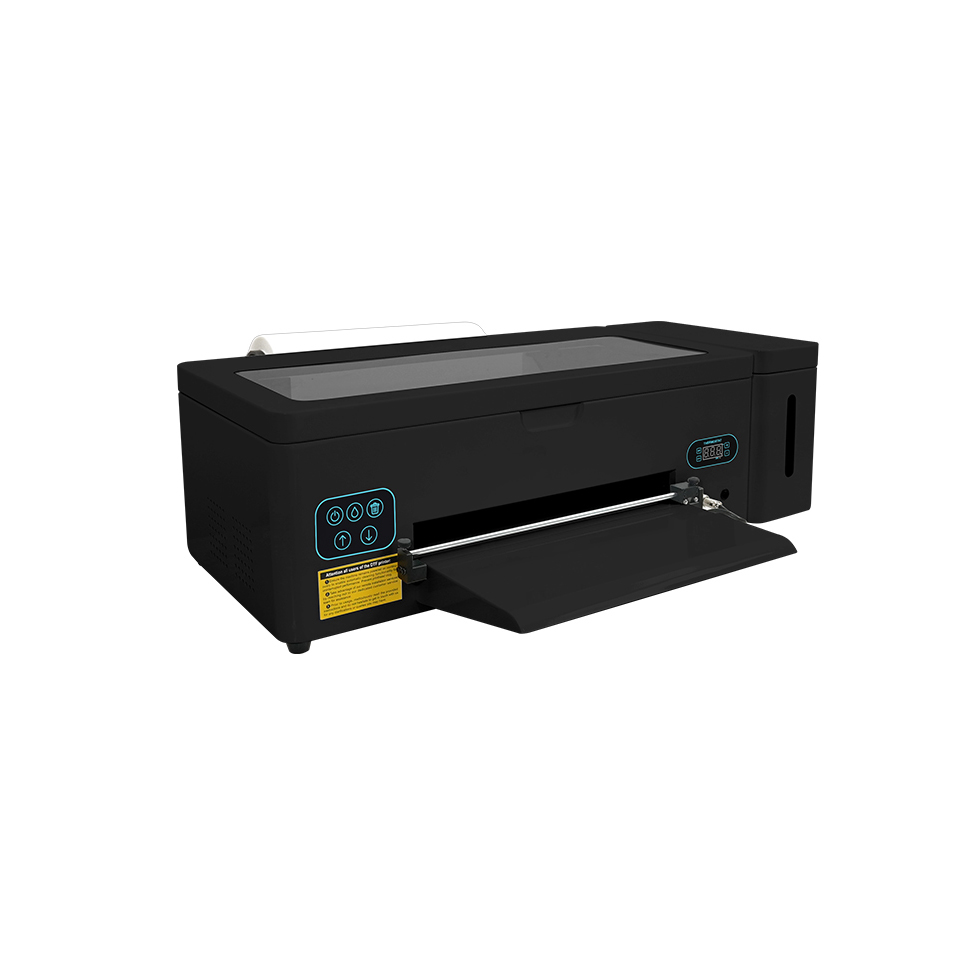
Un choix pratique pour les startups et les petits studios qui souhaitent une sortie fiable sans surinvestir.
3) UV Flatbed: Best for Direct Printing on Rigid, Flat Items
What UV flatbed printing is
UV printing jets Encres durcissables aux UV onto a substrate and uses UV light to cure (harden) ink immediately, producing sharp detail and strong adhesion on many materials.
UV flatbed printers are typically used for direct printing on rigid, flat items such as signage panels, boards, and flat product surfaces.
What it’s best for
- Signalisation, acrylic panels, wood boards, PVC sheets, branded plates, product prototypes, and flat items where you want the print directly on the object (not as a transfer).
EraSmart UV printer options
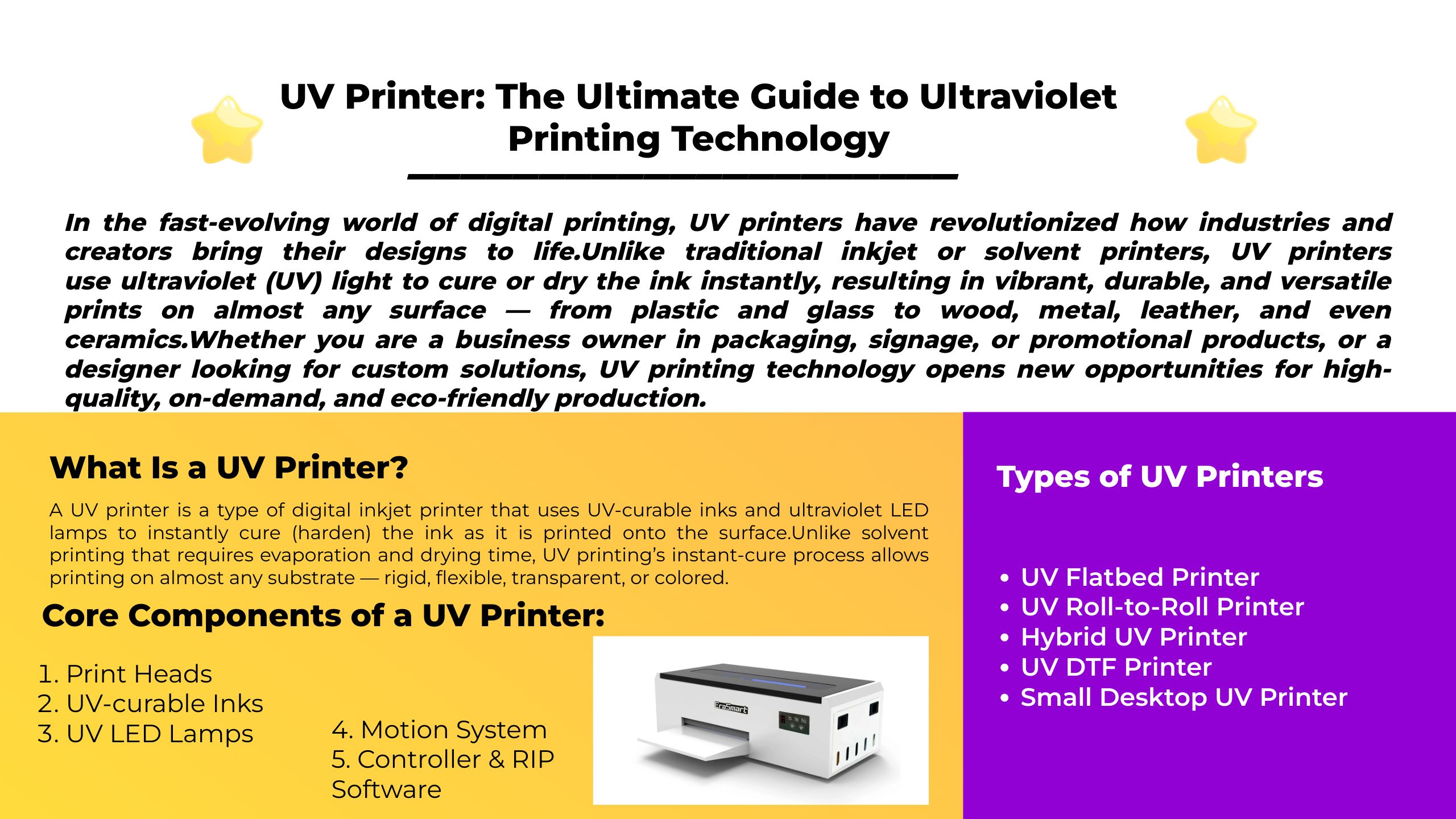
EraSmart lists Imprimante UV products and positioning for materials such as metal, acrylic, ceramic, wood, PVC, TPU, and more (model-dependent), which aligns with typical UV flatbed use cases.
Business advantage: UV flatbed printing is ideal when your business sells rigid goods and you want a direct, production-style workflow.
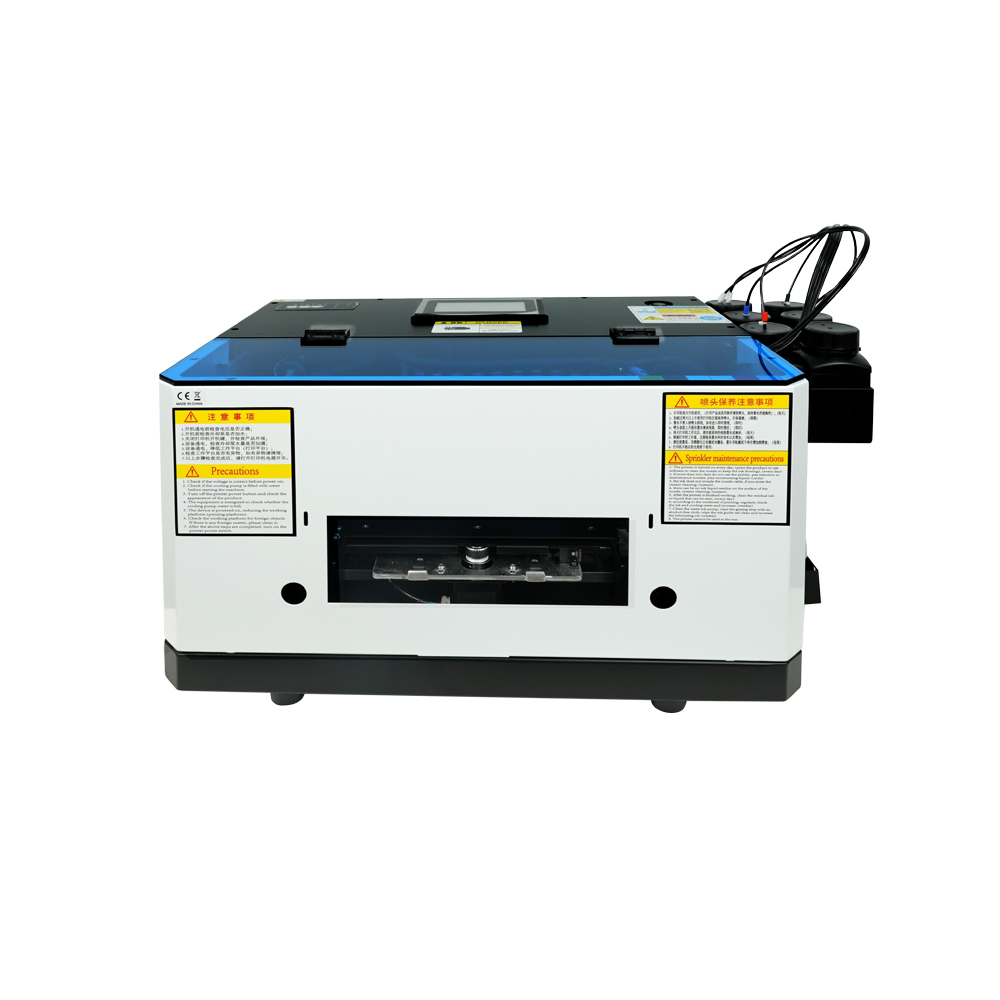
Modèle compact d'entrée de gamme avec tête d'impression L800, idéal pour les petits objets et les projets de loisirs (taille d'impression 120*210 mm).
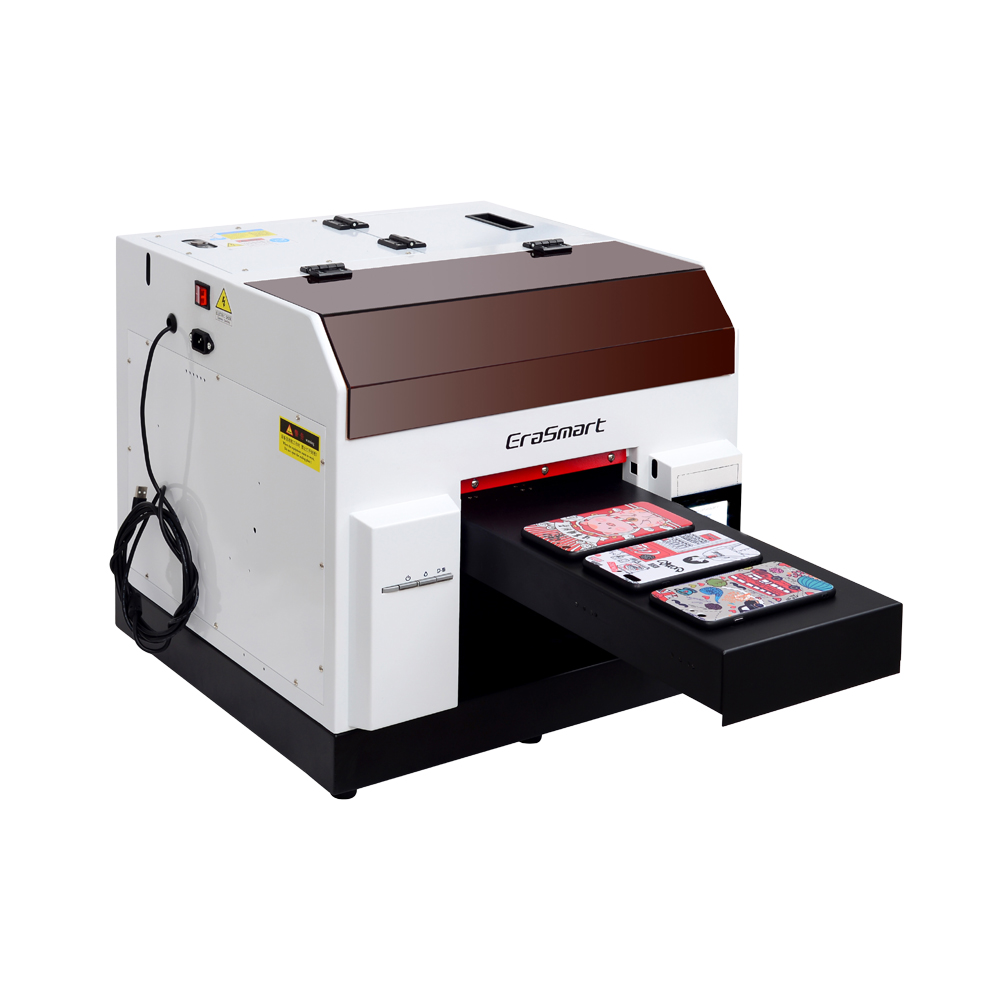
Tête d'impression L800 avec une taille d'impression de 210 x 290 mm, parfaite pour les petites entreprises et les cadeaux personnalisés (hauteur d'impression de 0 à 130 mm).
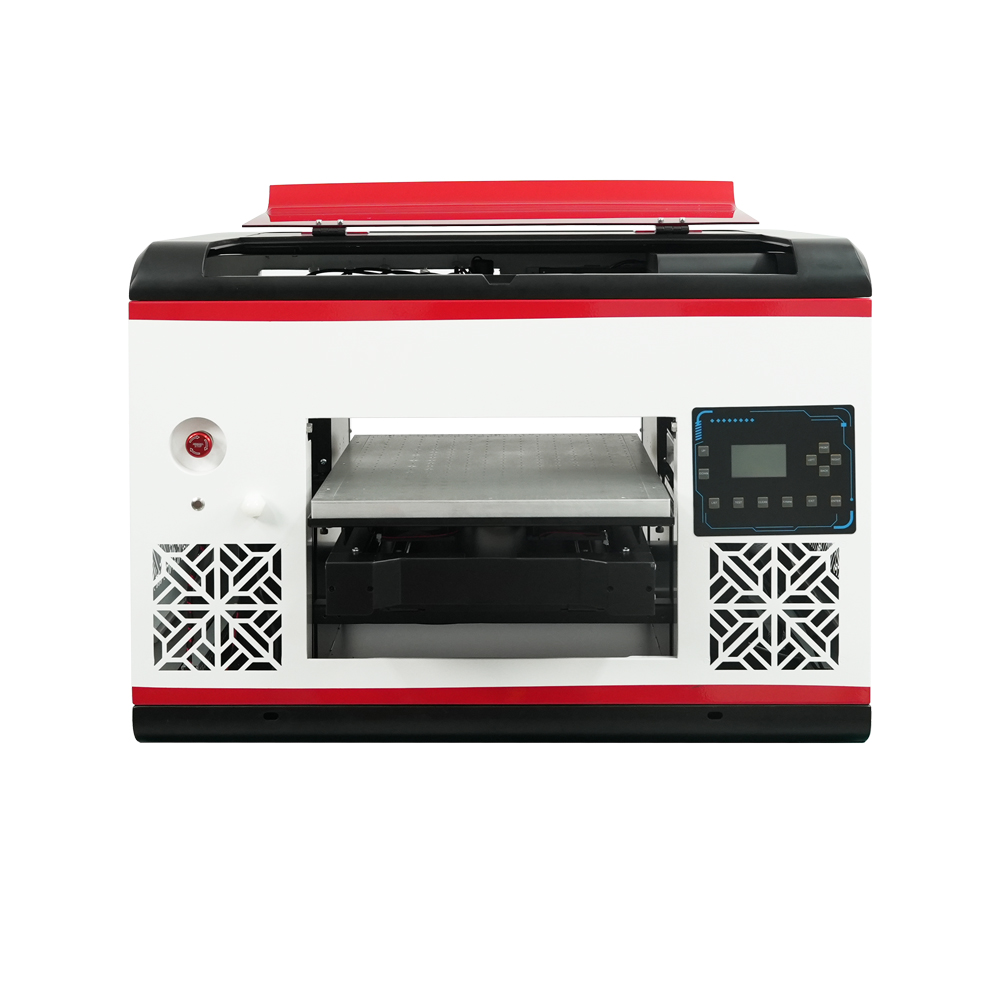
Tête d'impression DX7 avec taille d'impression 350*450 mm, plate-forme d'aspiration et CMJN+WW+VV pour une production en grand volume.
How to Choose the Right System by Business Model
Choose UV DTF if you sell:
Stickers/labels for hard goods (gift items, packaging, phone cases, tumblers)
“Crystal label” effects (gloss/spot gloss/raised varnish look)
Choose Textile DTF if you sell:
Apparel printing and transfers (especially when orders include tissus mixtes)
You want to batch transfers and press later
Choose UV Flatbed if you sell:
Signage, panels, and products that can be placed flat on a bed
Industrial-style direct print on rigid items
Operations and Cost Drivers That Matter in Real Production
Labor & throughput
UVDTF : fast decal production; labor shifts to lamination/cutting/application (often efficient across many SKUs).
Textile DTF: additional steps (powder + cure + press), but very scalable with a shaker/oven and standardized pressing.
UV Flatbed: fewer steps per print (place item → print), but odd shapes can increase setup time via fixtures/jigs.
Consumables and repeatability
UV DTF repeatability is strongly tied to film pairing (A/B), lamination quality, and surface prep.
Textile DTF repeatability depends on powder coverage, curing, and consistent press parameters.
UV Flatbed success depends on substrate compatibility and proper curing, since UV ink cures instantly on the surface.
Common Misconceptions
“UV DTF is for T-shirts.”
UV DTF is primarily used for hard-surface transfers; textile DTF is the standard transfer method for garments.“UV flatbed can replace UV DTF.”
UV flatbed prints directly onto the item; UV DTF produces decals that can be applied later. They can complement each other rather than replace each other.“Textile DTF doesn’t need curing.”
DTF guides consistently emphasize a curing step that melts/bonds the powder before pressing.
FAQ
Is UV DTF the best choice for stickers?
Pour hard-surface decals and “crystal label” style stickers using AB film cold transfer, UV DTF is often the most direct workflow.
Is Textile DTF better than DTG for most small apparel shops?
Many shops choose textile DTF when they need broad fabric compatibility and a transfer workflow, since it prints to film and presses onto garments.
What makes UV flatbed printing special?
UV flatbed printing cures ink instantly with UV light, which helps produce sharp detail and enables printing on many rigid substrates.
Conclusion
Many profitable shops expand in phases:
Start with UV DTF to launch stickers/labels and monetize hard goods quickly (packaging + gifts).
Add Textile DTF when apparel orders become steady (merch, uniforms, local teams).
Add UV à plat when you move into signage/panels or direct rigid printing jobs.
EraSmart supports all three categories (UV DTF, DTF, UV printers) and positions itself as a manufacturer of small flatbed and transfer printing systems.
Peut-être que tu as aussi
Imprimante EraSmart
imprimante uv
imprimante DTF
Imprimante DTG
Presse à chaud
Imprimeur publicitaire
Outils d'impression
four DTF
Presse à chaud
Machine à découper
Tasse transfert de chaleur
Machine de laminage
Consommables
Encre à imprimer
Cas de téléphone portable
Produit en verre
Liquide nettoyant
Coton-tige
Contactez-nous
WhatsApp: +8618566233796
WeChat: +8618566233796
Mobile: +8618566233796
Web :www.erasmart.com
Boutique:www.erasmartmall.com
Copyright 2020 © Erasmart. | Plan du site
WhatsApp nous
Demander un devis
Fournissez simplement quelques détails et nous vous aiderons à obtenir des citations rapides!