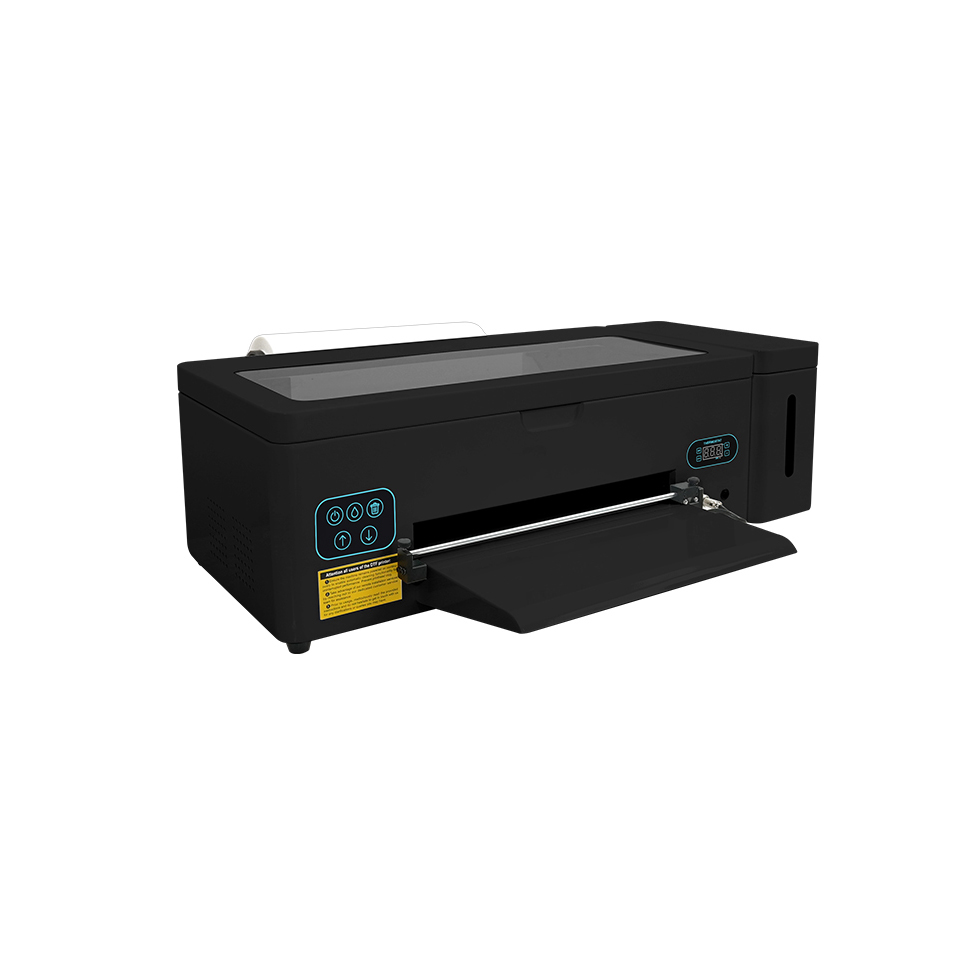
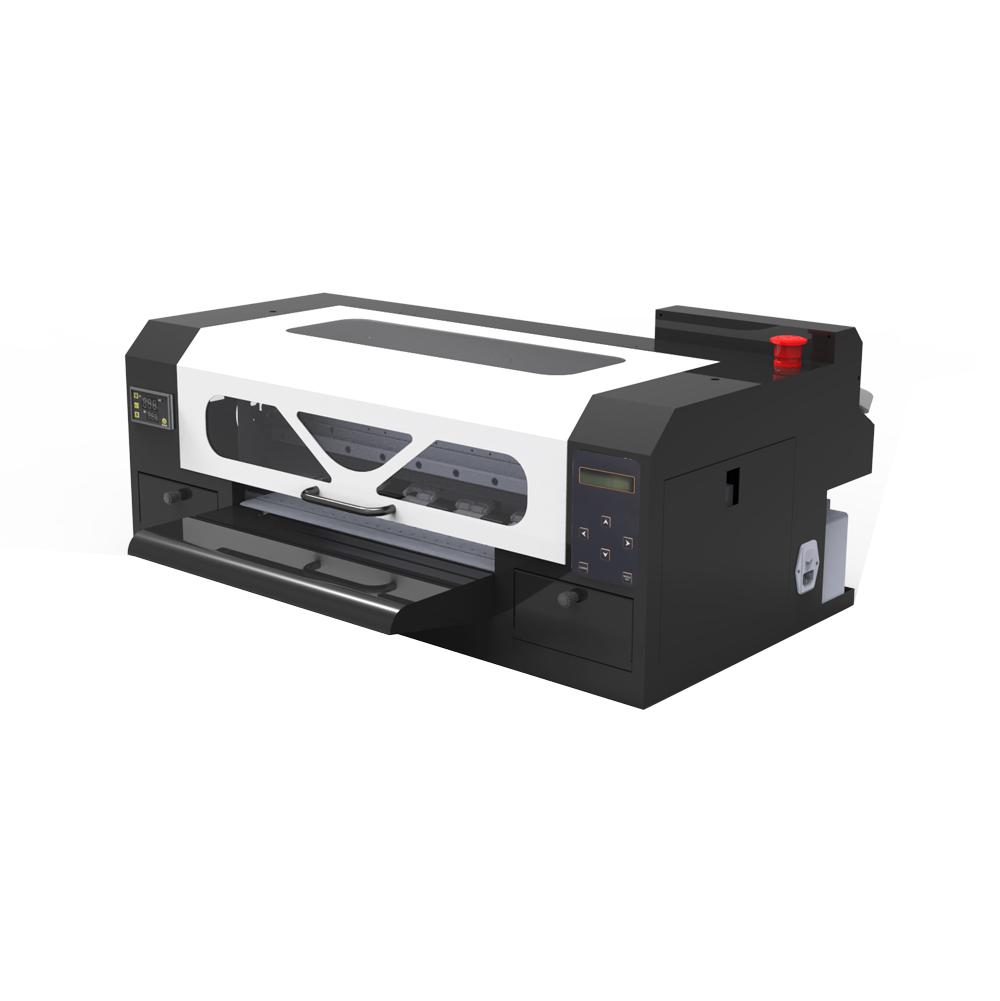
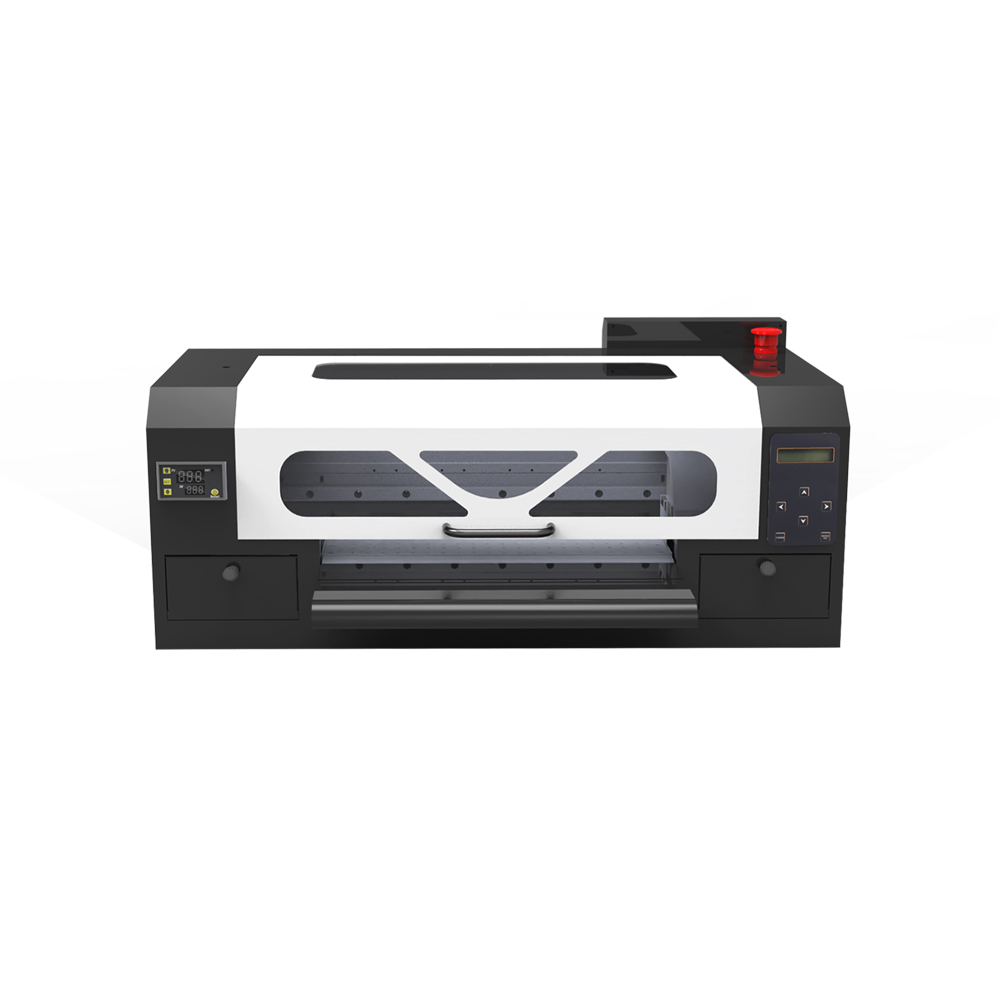
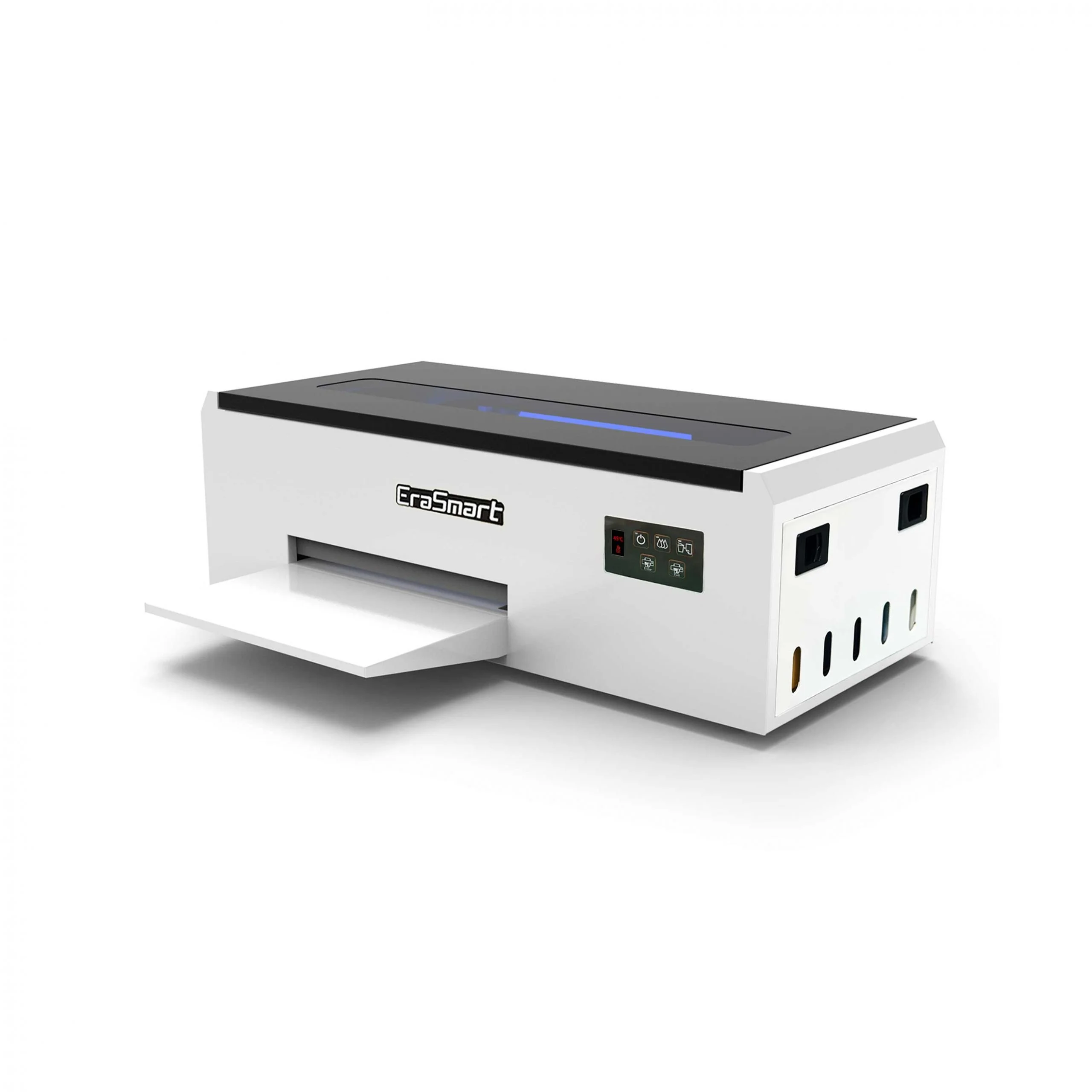
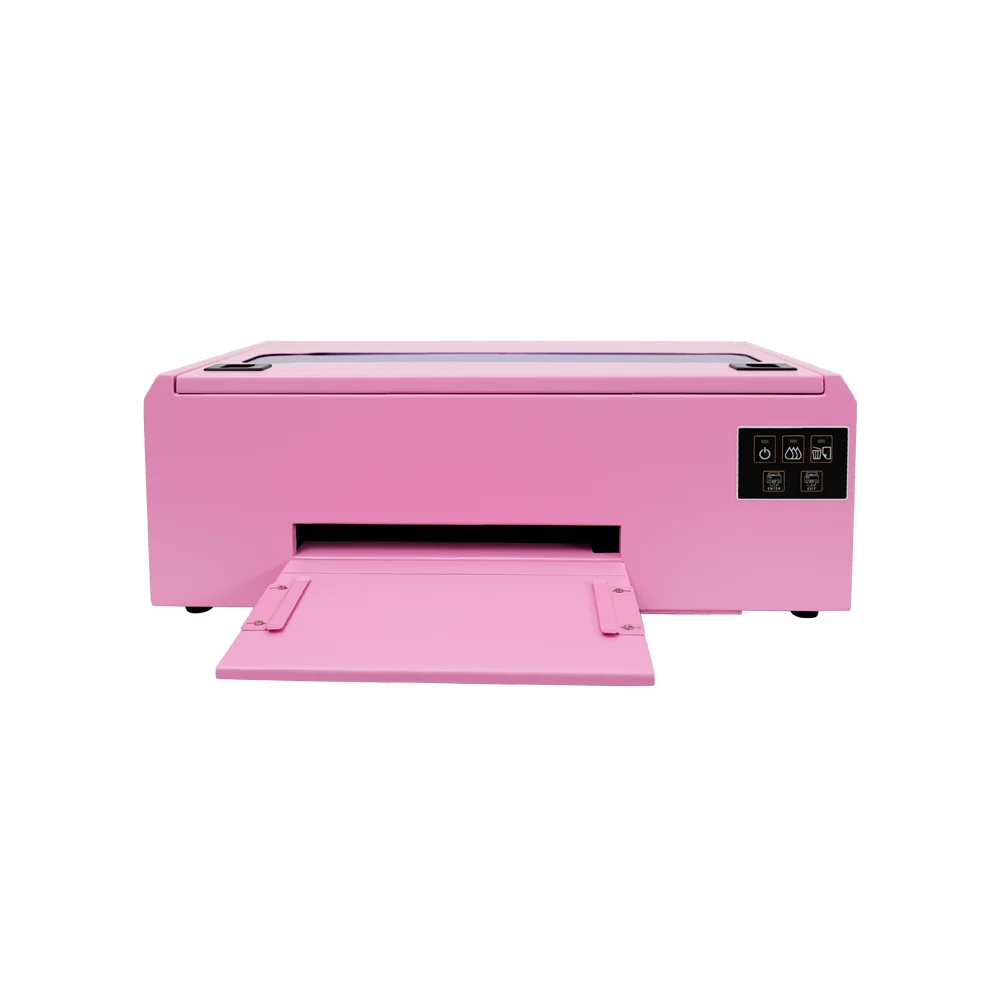
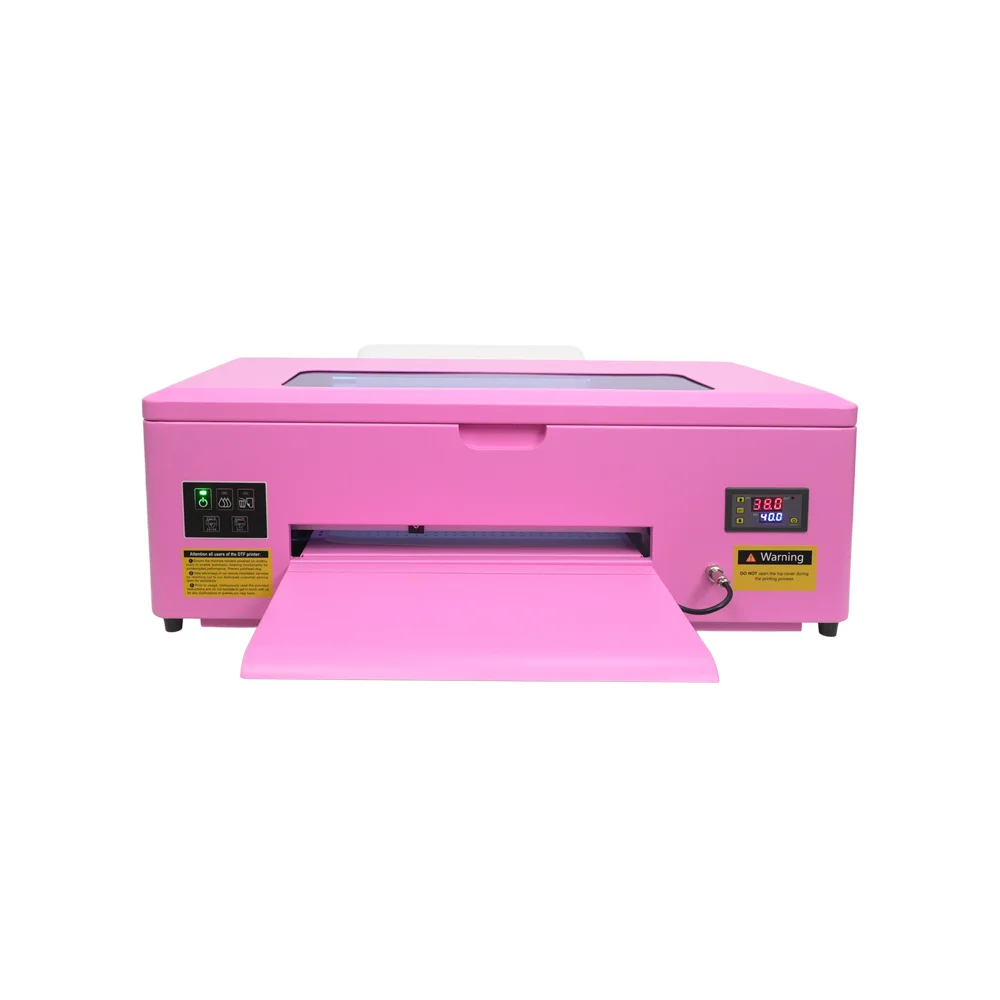
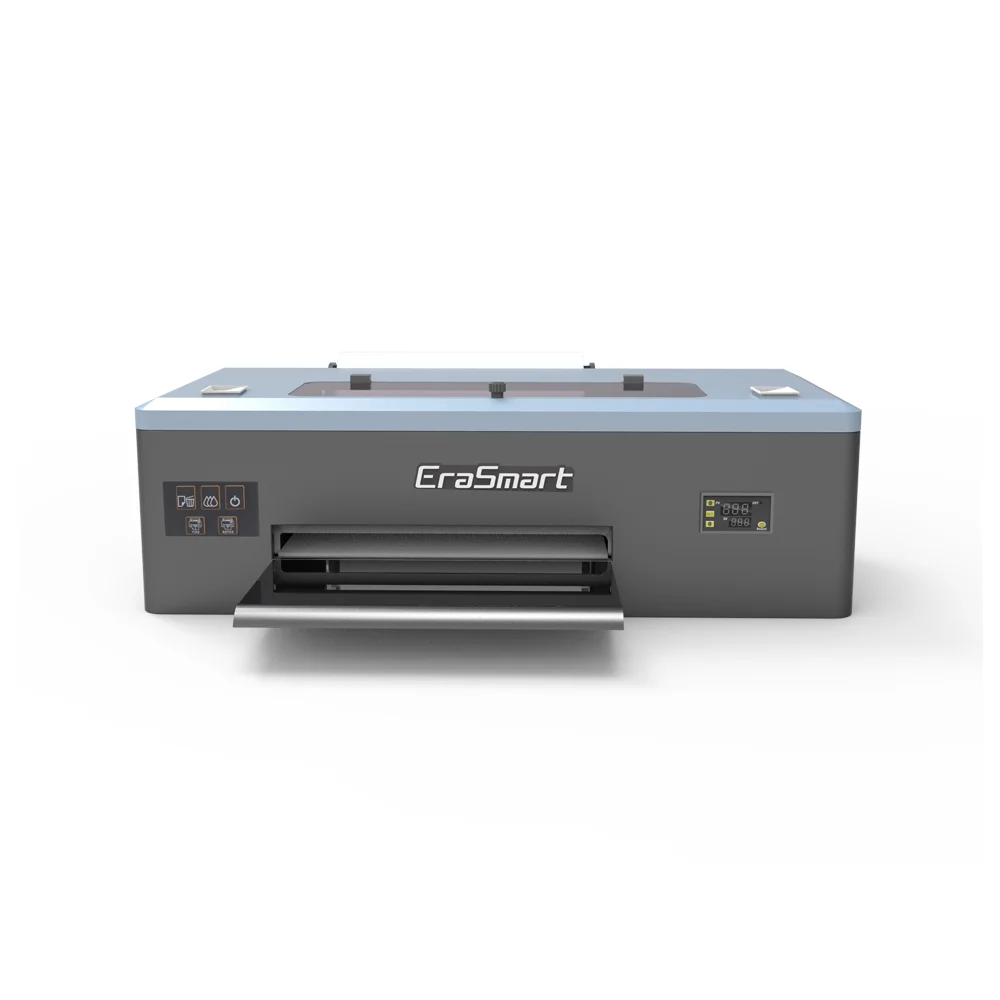
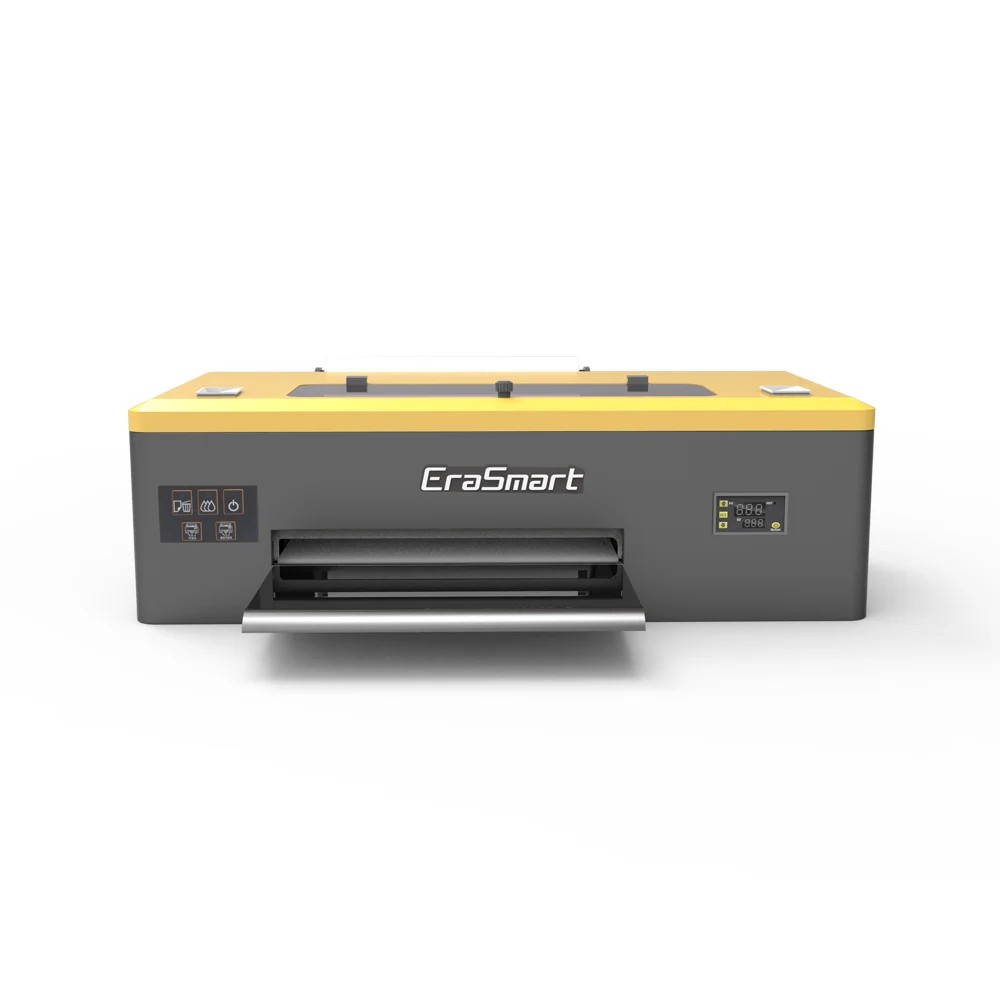
Produsen printer inkjet flatbed ukuran kecil

86-18566233796 [email protected]

Blog How to Start a T-Shirt Business with DTF Printing: A Step-by-Step Guide for Beginners

How to Start a T-Shirt Business with DTF Printing: A Step-by-Step Guide for Beginners

June 23, 2026 Blog

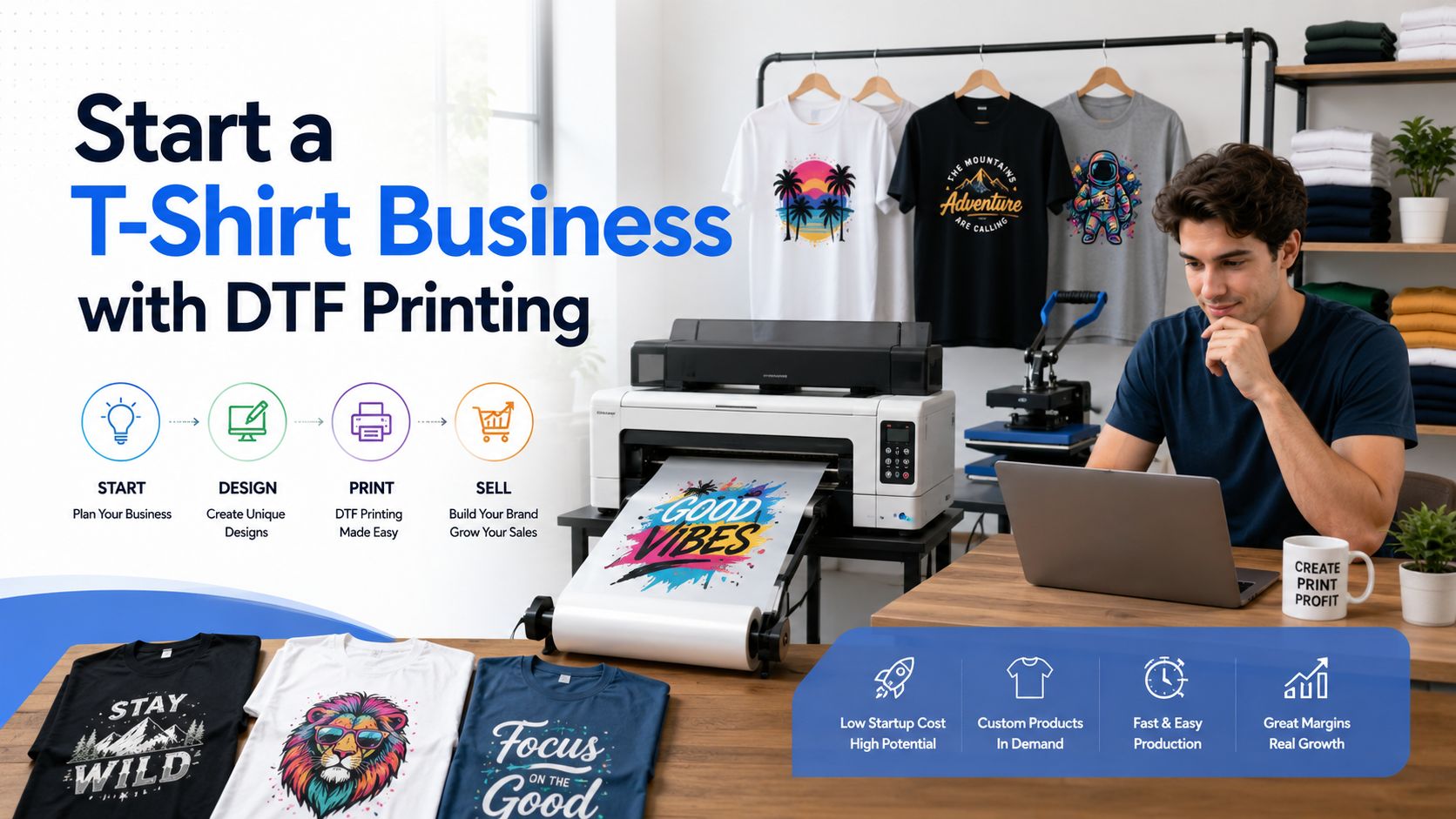
Starting a T-shirt business is one of the most practical ways to enter the custom apparel market. T-shirts are easy to understand, easy to personalize, easy to sell online, and suitable for many customer groups: brands, schools, sports teams, events, companies, families, creators, local businesses, and fashion startups.

But a successful T-shirt business is not built only on good designs. It needs the right niche, reliable blanks, a repeatable printing workflow, clear pricing, strong product photos, marketing channels, and equipment that matches your real order volume.

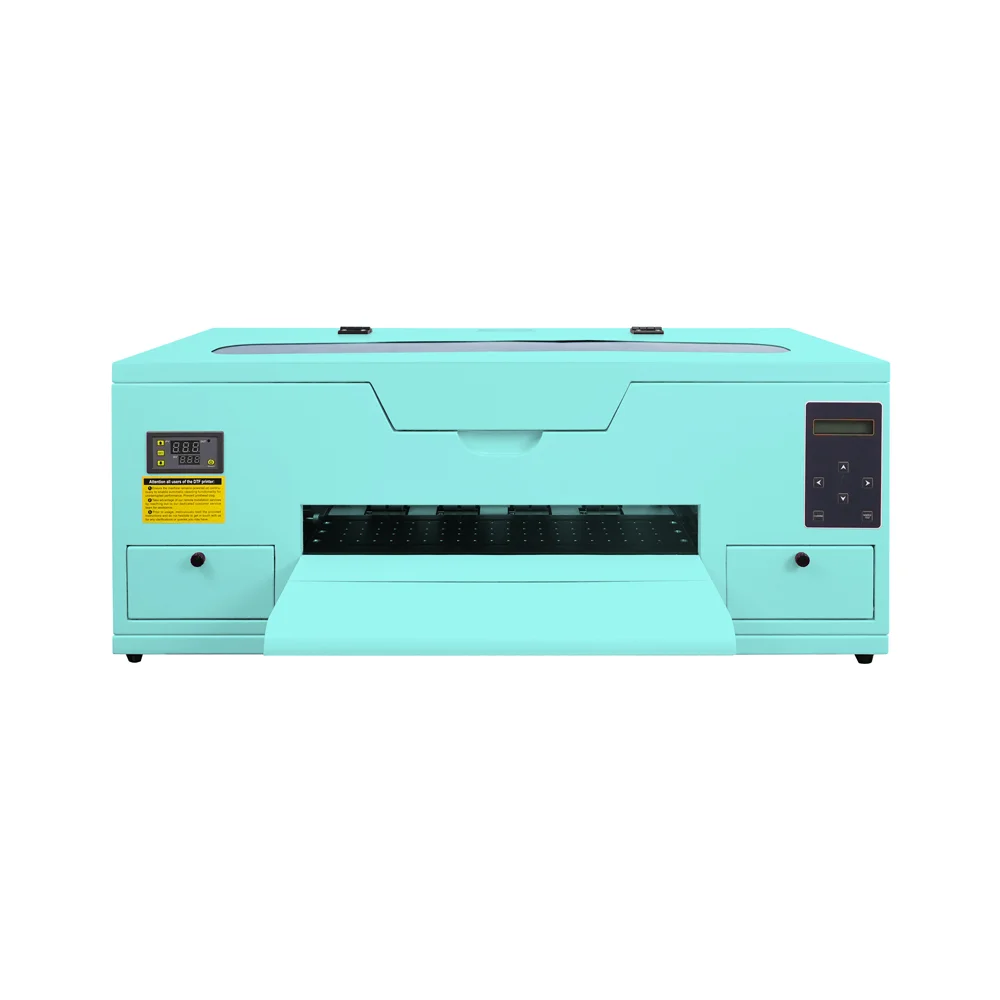
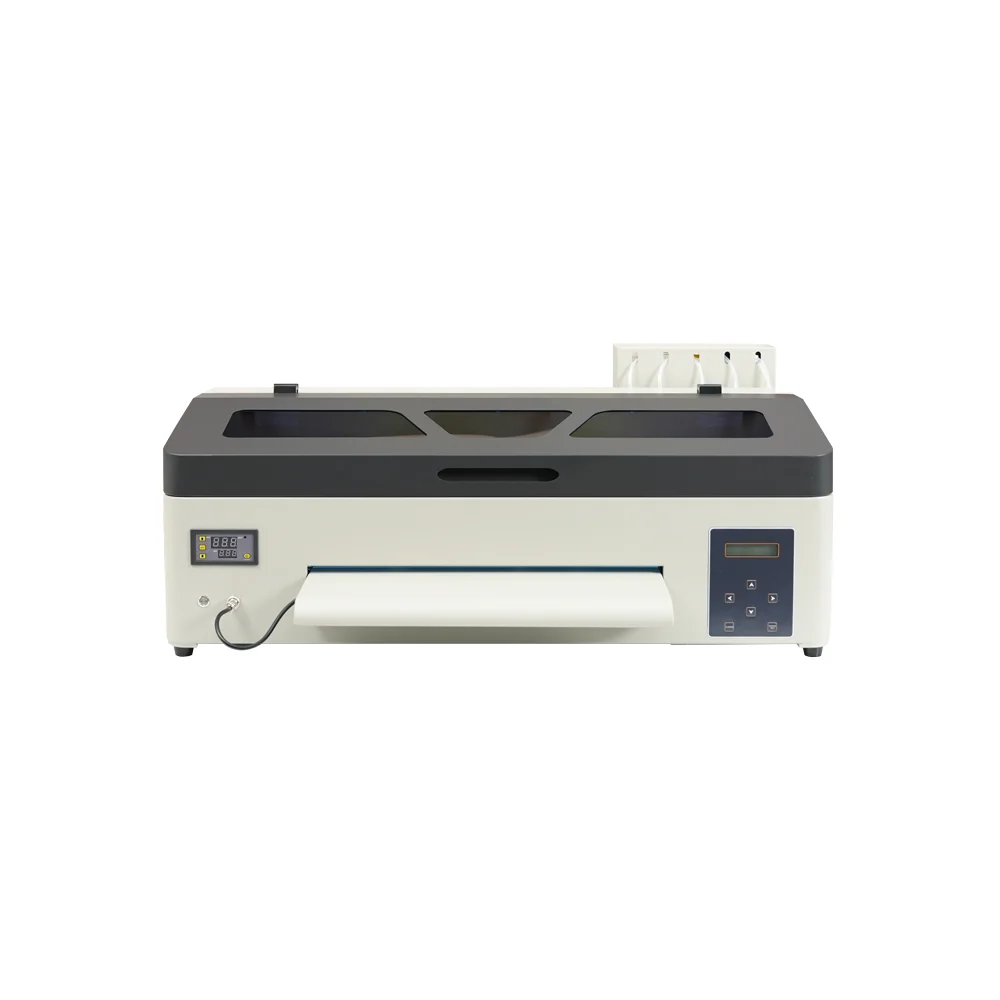
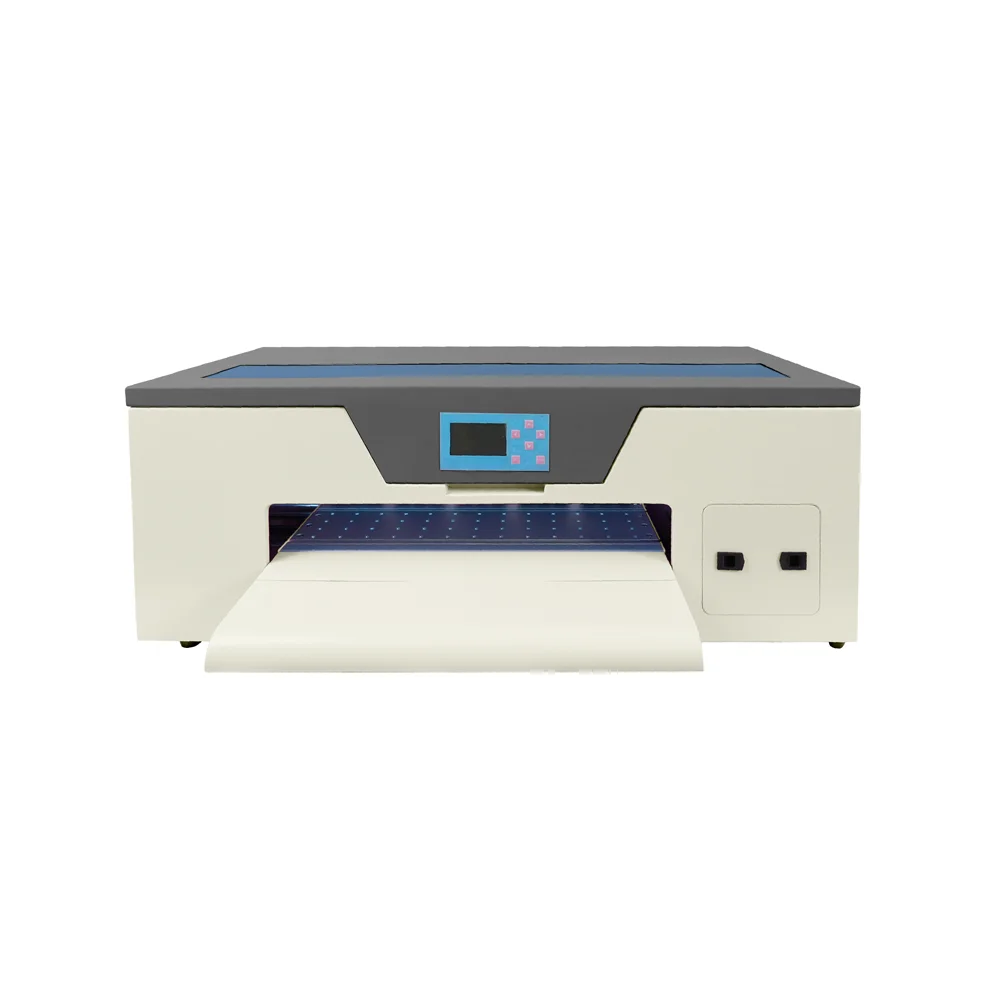
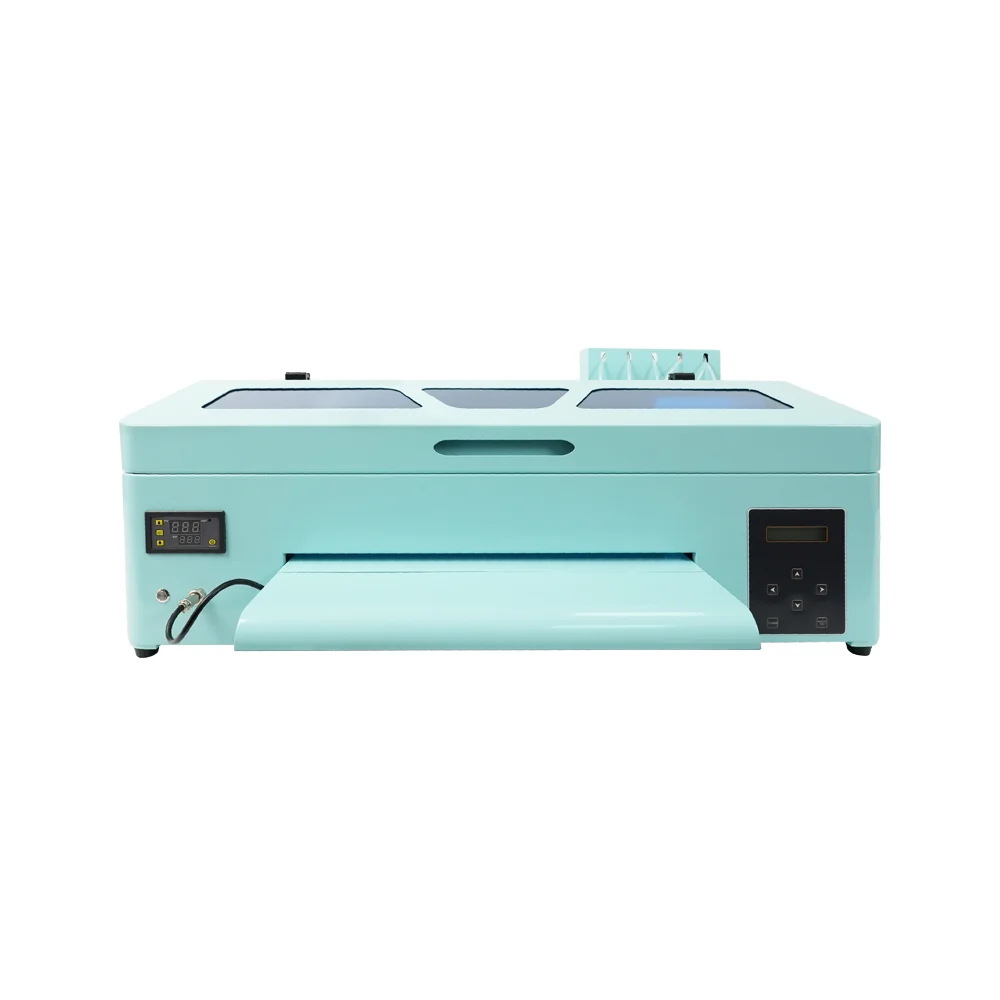
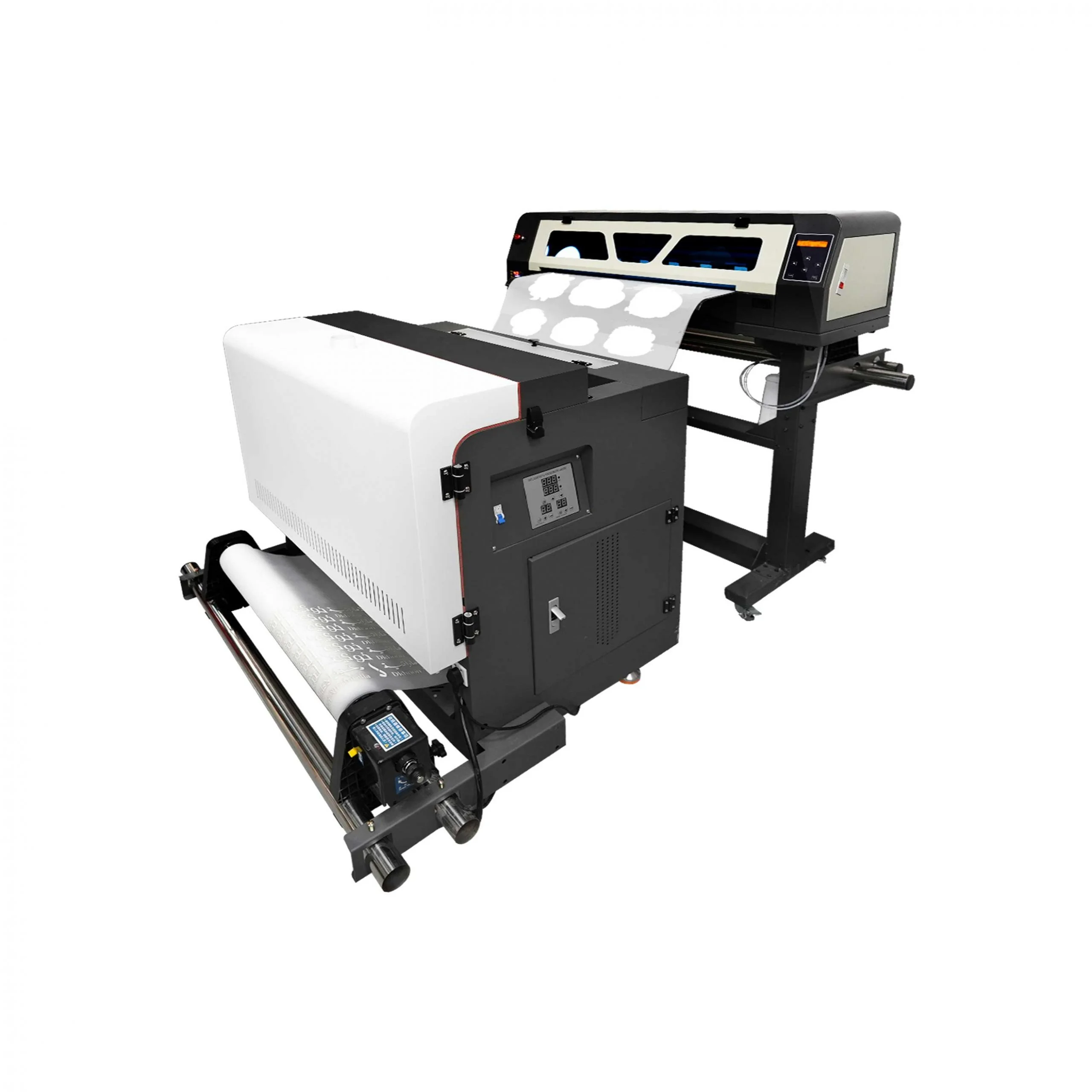
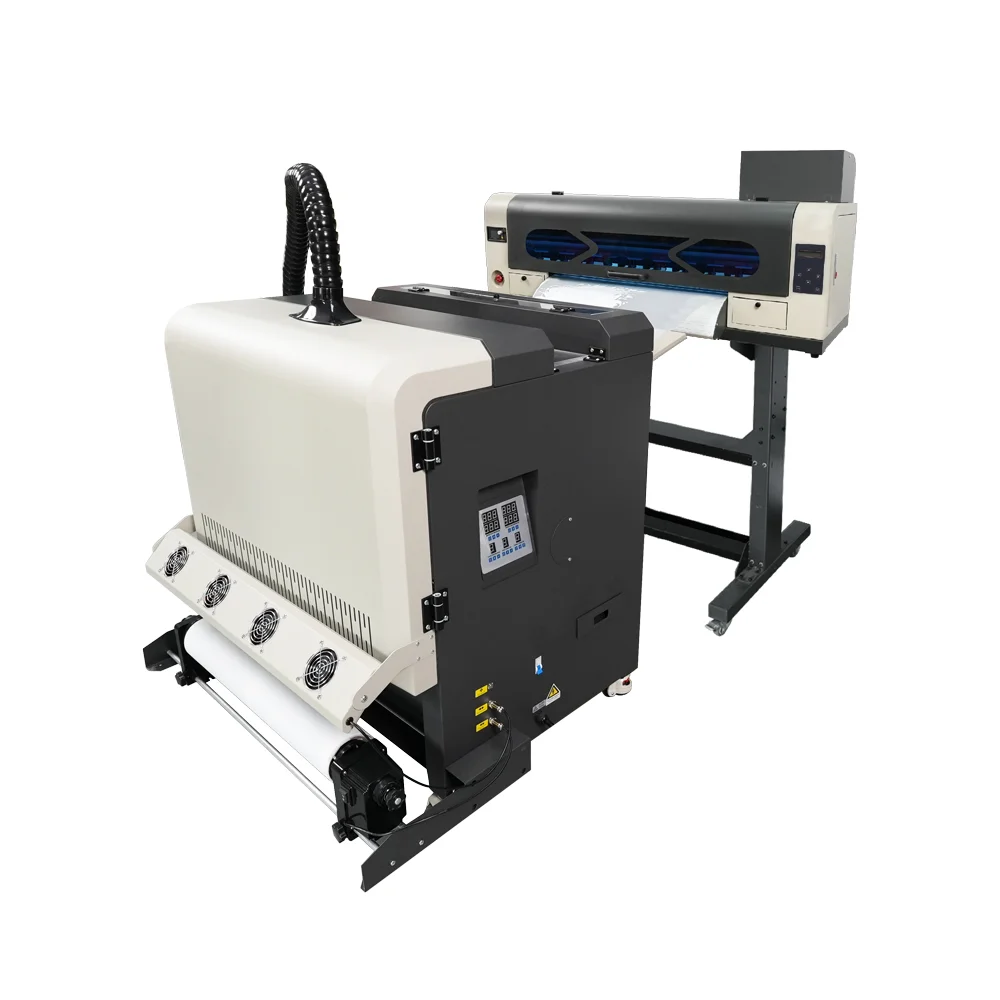
For many beginners, DTF printing is a strong starting point because it supports small batches, full-color artwork, dark garments, mixed fabrics, and personalized orders without screen setup. With an Printer DTF EraSmart, a small business can print designs onto transfer film, apply adhesive powder, cure the transfer, and press it onto T-shirts, hoodies, tote bags, sportswear, uniforms, and more.

This guide explains how to start a T-shirt busin

Why Start a T-Shirt Business with DTF Printing?

A T-shirt business is attractive because it can start small and grow gradually. You can begin with limited designs, test customer demand, sell online, accept custom orders, and expand into hoodies, tote bags, caps, uniforms, sportswear, and brand merchandise.

DTF printing makes this business model more flexible because you do not need large minimum orders. You can produce one shirt, ten shirts, or many personalized designs in one workflow.

DTF is especially useful for:

  • custom T-shirts
  • hoodie
  • tas jinjing
  • seragam
  • pakaian olahraga
  • kaos acara
  • kemeja sekolah
  • family shirts
  • merchandise influencer
  • local business apparel
  • print-on-demand orders
  • personalized name and number designs

If you are still comparing DTF with other apparel printing methods, EraSmart’s guide on DTF vs DTG vs Sablon vs HTV is a useful starting point. It explains how DTF fits different order sizes, fabric types, cost structures, and business models.

Step 1: Choose a Clear T-Shirt Business Niche

The first mistake many beginners make is trying to sell “custom T-shirts for everyone.” That sounds flexible, but it usually makes marketing harder.

A niche helps you answer three important questions:

  1. Who are you selling to?
  2. What kind of designs do they want?
  3. Why should they buy from you instead of another seller?

Good T-shirt business niches include:

  • pet owner shirts
  • gym and fitness shirts
  • school and graduation shirts
  • kaos reuni keluarga
  • small business uniforms
  • local city shirts
  • pakaian tim olahraga
  • event and festival shirts
  • faith-based apparel
  • teacher shirts
  • kids birthday shirts
  • desain pakaian jalanan
  • outdoor and camping shirts
  • holiday and seasonal shirts
  • personalized name and number shirts

A good niche should have real buyers, repeat demand, design potential, and enough profit margin. For example, a “custom event shirt” business may receive group orders, while a “funny pet owner shirt” brand may work well on Etsy or Shopify.

Step 2: Decide Your Business Model

Before buying equipment or designing products, decide how you want to sell.

There are several common T-shirt business models:

Business ModelTerbaik UntukKeuntungan Utama
Custom local ordersSchools, teams, families, eventsGood for repeat local customers
Online niche brandShopify, Etsy, social mediaBuilds long-term brand value
Print-on-demand styleLow inventory, many designsGood for testing ideas
B2B uniforms and merchCompanies, cafes, clubs, teamsHigher order value
DTF transfer sellingSell transfers to crafters and shopsCan scale beyond finished shirts
Seasonal dropsHolidays, events, sports, trendsFast campaigns and limited editions

DTF printing works well for all these models because it supports flexible designs and short runs.

If your business will mainly sell finished T-shirts, you need blanks, printing equipment, packaging, and marketing. If you want to sell DTF transfers, you need strong print quality, reliable film, powder, curing, and customer education on pressing.

Step 3: Research Your Audience and Product Demand

A T-shirt business should not start from random designs. It should start from customer demand.

Research your target buyers by looking at:

  • Etsy best-selling shirt categories
  • TikTok and Instagram trends
  • local event calendars
  • school and sports team needs
  • small business uniform demand
  • Google Trends
  • Facebook groups
  • Reddit communities
  • competitor stores
  • seasonal holidays
  • local city or tourism themes

Do not copy other sellers’ artwork. Instead, study what customers are buying and create your own original designs.

Look for patterns:

  • Are buyers asking for personalization?
  • Are they buying matching family shirts?
  • Are they ordering bulk event shirts?
  • Do they prefer funny quotes or premium graphics?
  • Are dark shirts popular in your niche?
  • Are buyers willing to pay more for hoodies or bundles?

This research helps you avoid wasting time on designs nobody wants.

Step 4: Create Original T-Shirt Designs

Design is the core of your T-shirt business. But you do not need to be a world-class illustrator to start. You need designs that match your audience and print well.

Good T-shirt designs usually have:

  • clear message
  • readable typography
  • strong visual contrast
  • suitable print size
  • original artwork
  • good color balance
  • clean file quality
  • niche relevance

Avoid using copyrighted artwork, trademarked phrases, celebrity images, brand logos, sports team logos, movie characters, or official event graphics without permission. Legal problems can destroy a small business quickly.

For DTF printing, artwork quality matters because the printer cannot fix a poor file. Use high-resolution PNG files with transparent backgrounds or vector files when possible. Keep small text readable and avoid overly thin lines if the shirt will be washed often.

Step 5: Choose the Right T-Shirt Printing Method

There are many ways to print T-shirts:

  • Pencetakan DTF
  • Pencetakan Layar
  • Pencetakan DTG
  • heat transfer vinyl
  • sublimasi
  • embroidery
  • transfer paper

Each method has strengths and limitations.

For beginners and small businesses, DTF printing is often attractive because it supports full-color designs, small batches, dark garments, cotton, polyester, blends, and personalized orders.

A simple comparison:

Printing MethodTerbaik UntukBatasan Utama
Pencetakan DTFSmall batches, full color, dark garments, mixed fabricsNeeds white ink maintenance and workflow control
SablonLarge bulk orders with simple designsSetup cost is higher for small orders
Pencetakan DTGCotton shirts and detailed printsPretreatment and fabric limitations
HTVSimple names, numbers, and vinyl graphicsNot ideal for complex full-color designs
SublimasiPolyester and light-colored garmentsNot suitable for cotton or dark shirts

If your business wants flexibility, DTF is usually a strong starting point. EraSmart’s Printer DTF category includes compact A4 models, A3 startup systems, A3 MAX production options, powder-shaker workflows, and A1 wide-format systems for different business stages.

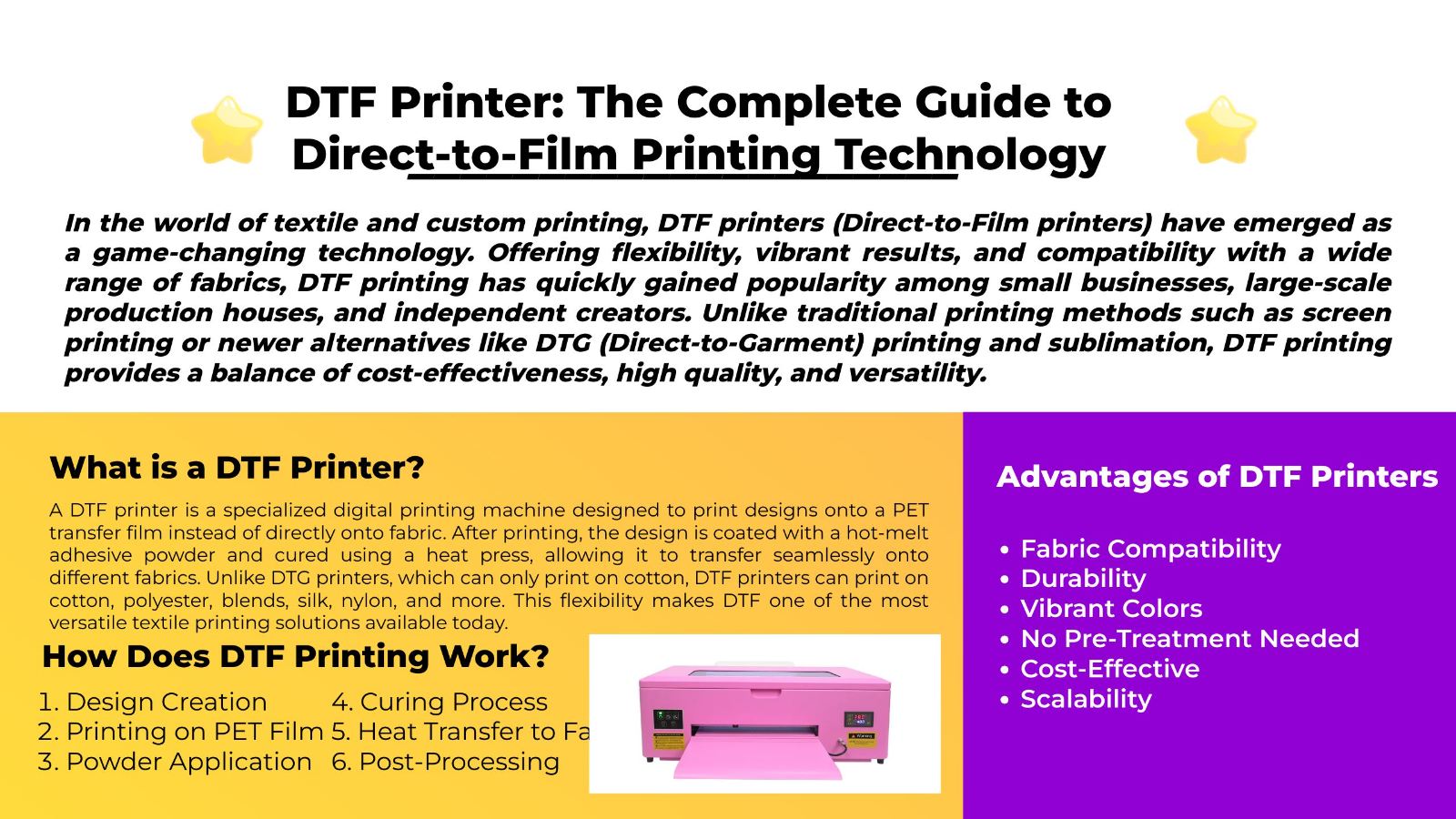
Step 6: Understand the DTF Printing Workflow

DTF printing is not only about the printer. It is a complete production workflow.

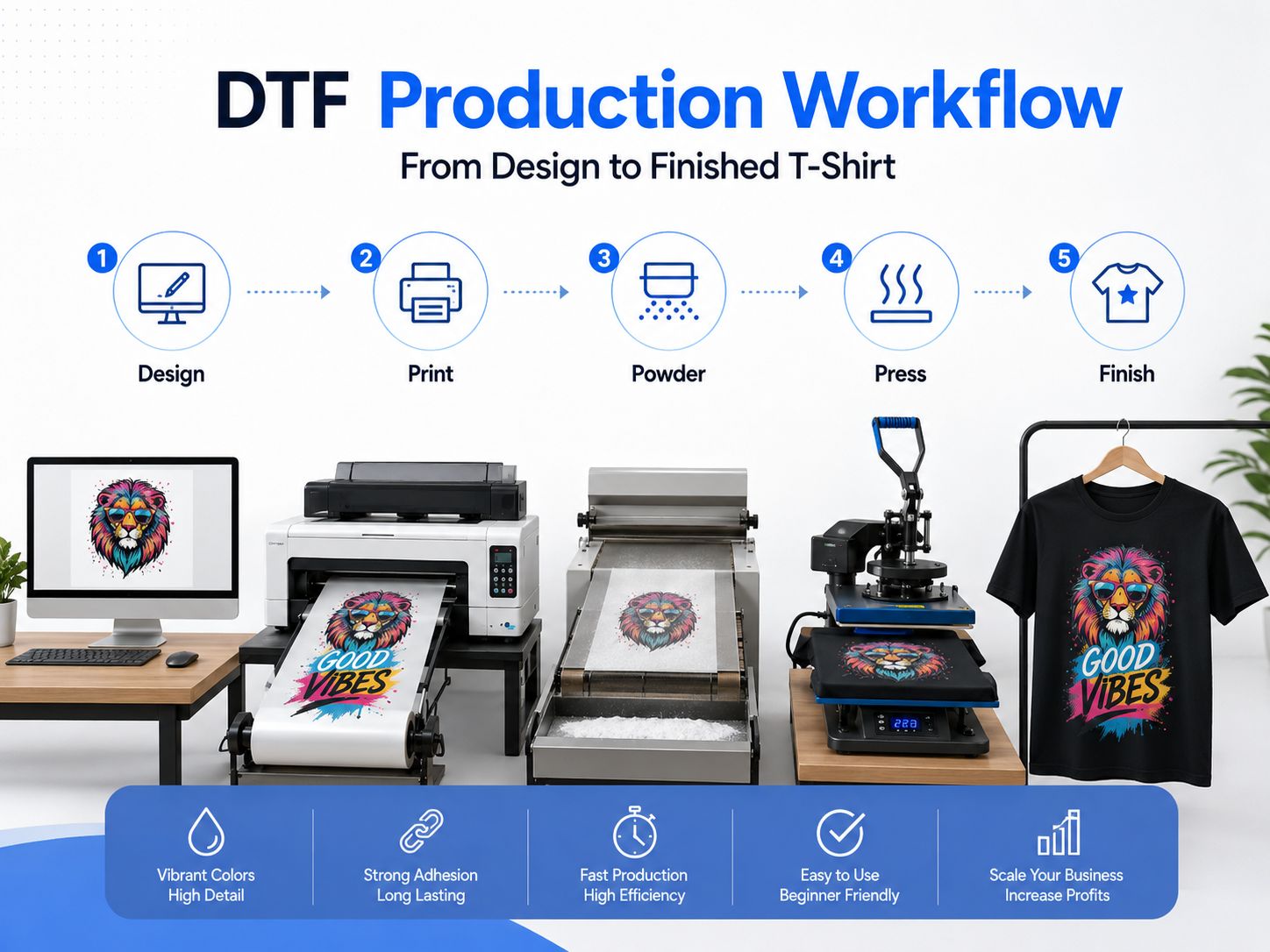
Alur kerja DTF yang umum meliputi:

  1. Siapkan karya seninya
  2. Set up the file in RIP software
  3. Print CMYK and white ink onto PET film
  4. Oleskan bubuk perekat lelehan panas
  5. Sembuhkan bedak
  6. Heat press the transfer onto the shirt
  7. Kupas filmnya
  8. Selesai tekan jika diperlukan
  9. Check the finished garment

EraSmart Alur Kerja Produksi DTF explains this process in detail. It is important because every step affects the next one. Poor artwork affects print quality. Poor powdering affects adhesion. Poor curing affects durability. Poor pressing affects wash performance.

A good T-shirt business is built on stable workflow, not only on creative designs.

Step 7: Choose the Right EraSmart DTF Printer

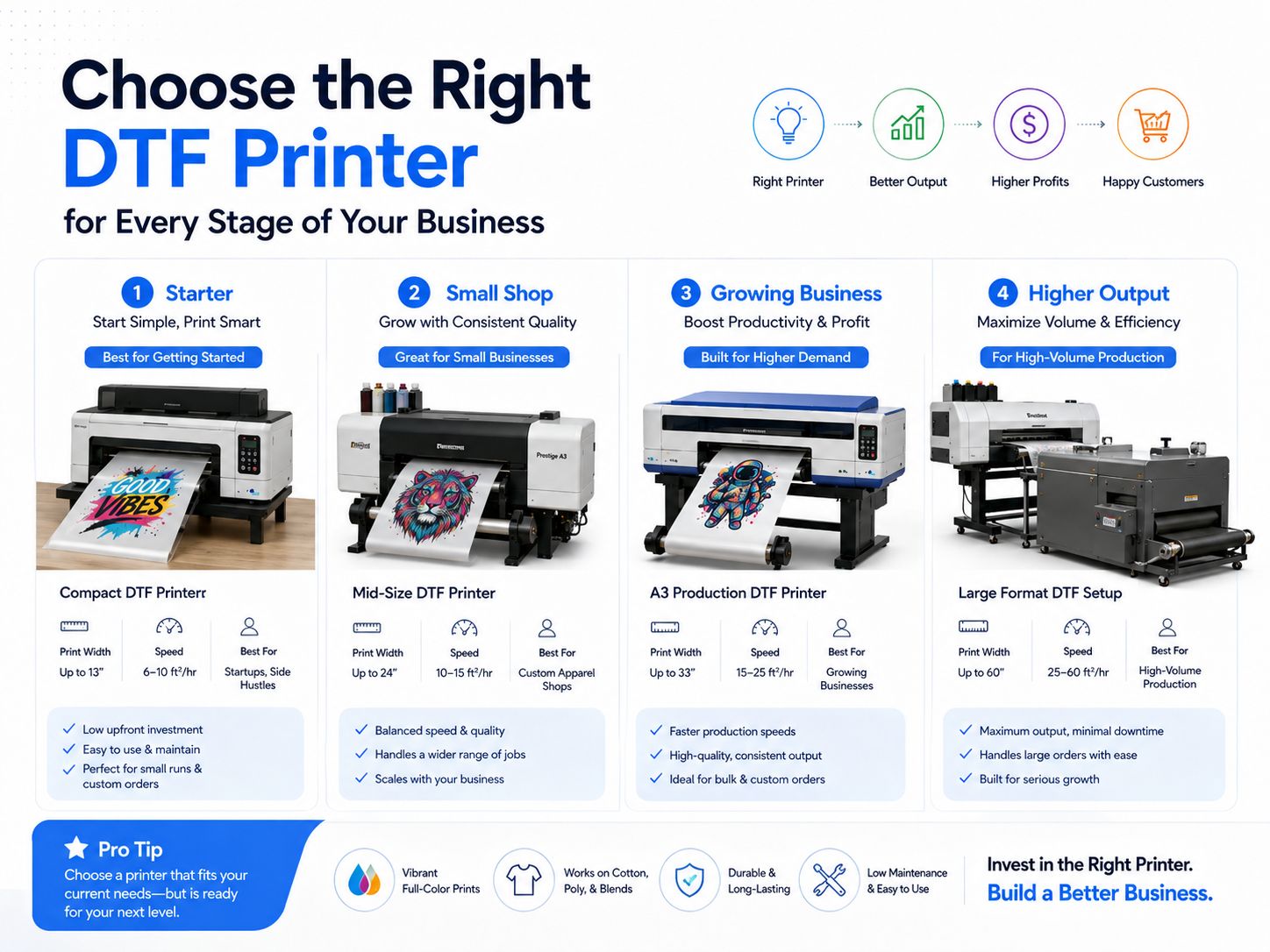
The right DTF printer depends on your business stage, order volume, workspace, and growth plan.

Do not buy only by price. A printer that is too small may limit your output. A printer that is too large may increase your investment before you have enough orders.

A practical buying path looks like this:

Tahap BisnisRecommended Direction
Testing designs and learning productionA4 DTF Printer
Small online shop or home studioA4L / L1800 / A3 DTF Printer
Regular custom T-shirt productionA3 MAX XP600
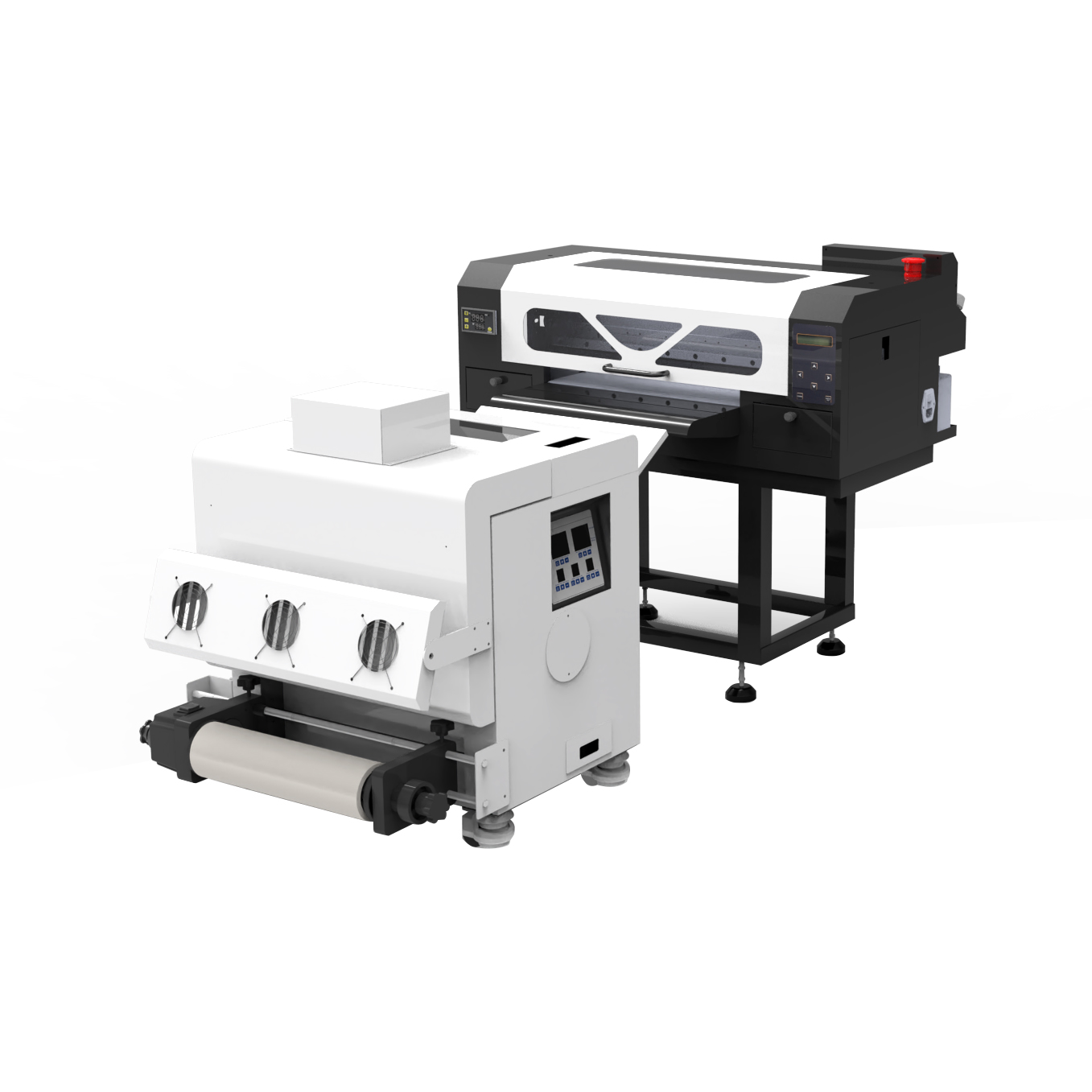
Growing order volumeA3 MAX dengan Pengocok Serbuk
Transfer selling or higher daily outputPencetak DTF A1

For beginners, compact models can be useful for testing designs, learning workflow, and starting with lower risk. For growing businesses, A3 and A3 MAX systems provide more practical print width and production flexibility. For shops with daily orders, a powder shaker can reduce manual labor and improve consistency.

Before making a purchase decision, read EraSmart’s Cara Memilih Printer DTF Dan Daftar Periksa Pembelian Printer DTF. These guides help you compare print width, printhead type, white ink system, software, maintenance, consumables, training, and upgrade path.

Step 8: Prepare the Equipment and Supplies You Need

A T-shirt business needs more than a printer.

Basic DTF startup equipment may include:

  • Printer DTF
  • Tinta DTF
  • Film transfer hewan peliharaan
  • bubuk perekat lelehan panas
  • curing oven or powder shaker/dryer
  • tekan panas
  • Perangkat lunak RIP
  • computer
  • blank garments
  • finishing sheets
  • perlengkapan kebersihan
  • maintenance tools
  • packaging materials
  • worktable and storage

Your consumables must work together. Ink, film, powder, and pressing settings all affect durability and final appearance.

EraSmart Panduan Bahan Habis Pakai DTF is useful for understanding how ink, transfer film, adhesive powder, cleaning solution, and maintenance materials work together in production.

Step 9: Source Good Blank T-Shirts

The blank shirt affects customer satisfaction. A great print on a poor-quality shirt still feels like a poor product.

When choosing blanks, consider:

  • fabric composition
  • weight
  • softness
  • fit
  • shrinkage
  • color options
  • size range
  • supplier stability
  • price
  • customer expectations

Start with a small range of reliable blanks instead of offering too many options. For example:

  • one basic cotton T-shirt
  • one premium soft T-shirt
  • one hoodie
  • one tote bag
  • one sportswear option

This keeps inventory manageable and makes product photos easier.

DTF works across many fabrics, but every blank should still be tested before selling. Wash testing, stretch testing, and feel testing help avoid customer complaints.

Step 10: Calculate Your Startup Costs

Startup cost depends on your equipment, workspace, blank inventory, design tools, marketing, and order volume.

Common cost categories include:

  • printer investment
  • tekan panas
  • curing equipment
  • tinta
  • film
  • powder
  • blank shirts
  • kemasan
  • website or marketplace fees
  • design software
  • product photography
  • shipping supplies
  • maintenance supplies
  • marketing budget
  • replacement parts
  • training time

A simple startup cost formula:

Startup Cost = Equipment + Consumables + Blank Inventory + Packaging + Store Setup + Marketing + Maintenance Reserve

Do not spend all your budget on the printer alone. Keep money for blanks, test prints, marketing, packaging, and early mistakes.

Step 11: Price Your T-Shirts Correctly

Many beginners underprice their shirts because they only calculate blank shirt cost and ink. That is not enough.

Your price should include:

  • biaya garmen kosong
  • Biaya tinta DTF
  • transfer film cost
  • biaya bubuk
  • tenaga kerja
  • waktu desain
  • waktu tekan panas
  • tingkat limbah
  • kemasan
  • transaction fees
  • shipping materials
  • biaya pemasaran
  • penyusutan peralatan
  • margin keuntungan

A simple pricing formula:

Selling Price = Total Product Cost + Labor + Overhead + Profit

For custom shirts, personalization should increase the price. A shirt with a custom name, number, and design is not the same as a basic blank shirt with a simple print.

Possible product ladder:

Jenis ProdukStrategi Penetapan Harga
Basic graphic T-shirtProduk masuk
Personalized name shirtMargin lebih tinggi
HoodieNilai tiket lebih tinggi
Group event shirtsDiskon kuantitas
Business uniform shirtsHarga paket B2B
DTF transfers onlyLower shipping, scalable option
Matching family setHarga paket

Do not compete only on being cheap. Compete on design, speed, personalization, quality, service, and niche relevance.

Step 12: Build Your Online Store or Sales Channel

You need a place to sell. The right platform depends on your business model.

Common sales channels include:

  • Shopify
  • WooCommerce
  • Etsy
  • Amazon
  • TikTok Shop
  • Instagram
  • Facebook Marketplace
  • local community groups
  • your own website
  • offline events
  • school and business networks

For beginners, Etsy or social media can help test demand. For long-term brand building, your own Shopify or WooCommerce store gives more control.

Your product pages should include:

  • clear product title
  • strong product images
  • size chart
  • garment material
  • print method
  • care instructions
  • customization options
  • shipping time
  • return policy
  • product mockups and real photos
  • FAQ section

Product photos matter. Buyers want to see the shirt on a model, on a hanger, folded, close-up, and in real use.

Step 13: Create Product Photos and Mockups

Good photos can make a small T-shirt brand look professional.

Create:

  • front shirt image
  • close-up print image
  • lifestyle image
  • model photo
  • folded shirt photo
  • packaging photo
  • color options
  • size chart graphic
  • customization example
  • short production video

Do not rely only on flat digital mockups. Real photos build trust, especially for custom apparel.

Use short videos to show:

  • DTF printer output
  • powder application
  • heat press process
  • peeling film
  • finished shirt stretch
  • wash result
  • packaging process

This kind of content works well on TikTok, Instagram Reels, YouTube Shorts, Facebook, and product pages.

Step 14: Launch with a Small Product Collection

Do not launch with 100 random designs. Start with a focused collection.

A good launch might include:

  • 5–10 strong designs
  • 2–3 shirt colors
  • 1 hoodie option
  • 1 tote bag option
  • 1 personalization option
  • 1 bundle offer

Misalnya:

Pet Lover Launch Collection

  • 8 dog-themed T-shirts
  • custom pet name option
  • matching tote bag
  • hoodie upgrade
  • bundle discount

Or:

Local Business Uniform Collection

  • logo T-shirts
  • staff hoodies
  • kaos acara
  • bulk order package
  • fast reorder option

A focused launch makes marketing easier and helps you learn what buyers actually want.

Step 15: Market Your T-Shirt Business

Marketing is where many T-shirt businesses fail. A good printer does not automatically bring customers.

Useful marketing channels include:

  • TikTok short videos
  • Reel Instagram
  • Pinterest pins
  • Facebook groups
  • Etsy SEO
  • Google search content
  • local business outreach
  • email marketing
  • influencer samples
  • school and event partnerships
  • pop-up markets
  • YouTube process videos

Content ideas:

  • “How your custom shirt is made”
  • “Name and number shirt order”
  • “Small business merch idea”
  • “Before and after heat press”
  • “Packing today’s custom orders”
  • “New design drop”
  • “Best shirt ideas for family reunion”
  • “Custom shirts for local businesses”

DTF printing is visual, so show the process. The more customers understand the production, the more they trust the product.

Step 16: Offer Custom Orders and B2B Packages

Custom orders are often more profitable than generic shirts.

Offer services such as:

  • custom birthday shirts
  • kaos reuni keluarga
  • kaos acara sekolah
  • sports team shirts
  • business staff shirts
  • bar and restaurant uniforms
  • church group shirts
  • club and organization shirts
  • bachelor and wedding party shirts
  • local event shirts

B2B customers are especially valuable because they may reorder. A café, gym, school, or local business may need staff shirts, event shirts, tote bags, and seasonal merch.

Create simple packages:

PackageTerbaik Untuk
Starter Pack10–20 shirts for small teams
Event Pack30–100 shirts for events
Business Packstaff shirts + logo hoodie + tote bag
Creator Merch PackT-shirts + hoodies + transfers
School Packclass shirts + sportswear + teacher shirts

Packages make buying easier and increase order value.

Step 17: Control Quality Before Scaling

Before scaling, your workflow must be stable.

Check:

  • artwork quality
  • akurasi warna
  • opasitas tinta putih
  • cakupan bubuk
  • curing result
  • heat press settings
  • metode kupas
  • stretch performance
  • ketahanan cuci
  • nuansa tangan
  • packaging quality
  • order accuracy

EraSmart Panduan Perawatan Printer DTF is important because DTF quality depends on daily operation. White ink circulation, nozzle checks, cleaning, and proper shutdown procedures help reduce downtime and failed prints.

Quality control protects your brand. A single bad batch can create refunds, negative reviews, and lost repeat customers.

Step 18: Scale with Better Workflow

Once orders increase, the bottleneck may no longer be design. It may be powdering, curing, pressing, packaging, or customer service.

Signs you need to upgrade workflow:

  • daily orders are increasing
  • manual powdering takes too much time
  • prints are inconsistent
  • curing becomes a bottleneck
  • you need to print more gang sheets
  • you want to sell transfers
  • customers need faster turnaround
  • labor cost is rising

At this stage, consider:

  • A3 MAX DTF printer
  • powder shaker and dryer
  • larger heat press
  • better worktable layout
  • order management system
  • batch production schedule
  • pre-made transfer inventory
  • improved packaging process

EraSmart Panduan Pengocok dan Pengering Bubuk DTF explains when automated powdering and drying can improve consistency and productivity.

Common Mistakes When Starting a T-Shirt Business

Mistake 1: Choosing Too Broad a Market

Trying to sell to everyone makes your brand weak. Choose a clear niche first.

Mistake 2: Copying Designs

Copying artwork, logos, slogans, characters, or sports marks can create legal problems. Build original designs.

Mistake 3: Buying Equipment Without a Product Plan

Do not buy a printer before knowing what you want to sell, who will buy it, and how many orders you expect.

Mistake 4: Underpricing Products

Cheap pricing can destroy profit. Include labor, waste, packaging, fees, marketing, and maintenance.

Mistake 5: Ignoring Maintenance

DTF printers need routine care, especially white ink systems. Maintenance is part of the business, not an optional task.

Mistake 6: Using Poor Blanks

Low-quality shirts lead to unhappy customers even if the print looks good.

Mistake 7: Scaling Too Fast

Do not buy too much inventory or too large a printer before demand is proven.

Mistake 8: Not Testing Wash Durability

Always test new blanks, films, powders, and press settings before selling.

Best EraSmart DTF Printer Direction for a T-Shirt Startup

For most beginners, the best printer is the one that matches current demand and allows future growth.

A simple recommendation:

  • A4 DTF Printer: best for learning, testing designs, and small custom orders
  • A4L / L1800 / A3 DTF Printer: best for small online shops and regular custom orders
  • A3 MAX XP600: best for growing T-shirt businesses with steady daily demand
  • A3 MAX dengan Pengocok Serbuk: best for higher workflow efficiency and more consistent output
  • Pencetak DTF A1: best for transfer production and higher-volume apparel businesses

You can compare available options on EraSmart’s Printer DTF halaman kategori.

Final Answer: Is a T-Shirt Business Worth Starting with DTF Printing?

Yes, a T-shirt business is worth starting if you choose a clear niche, control your costs, create original designs, test demand, and build a stable production workflow.

DTF printing is especially suitable for beginners and small businesses because it supports full-color designs, dark garments, mixed fabrics, small batches, personalized orders, and fast product testing.

But success does not come from the printer alone. You need:

  • a focused niche
  • quality designs
  • reliable blanks
  • correct pricing
  • stable DTF workflow
  • product photos
  • marketing channels
  • customer service
  • maintenance discipline
  • a plan to scale

When these pieces work together, DTF printing can become a practical foundation for a profitable custom T-shirt business.

Ready to start your T-shirt business with DTF printing? Explore EraSmart’s Printer DTF lineup and choose the right machine for your business stage.

Whether you are testing your first designs, launching an online T-shirt store, producing custom local orders, or scaling into higher-volume apparel production, EraSmart can help you choose the right DTF printer, consumables, heat press workflow, powder shaker, and upgrade path for your custom apparel business.


Mungkin kamu juga suka

  • Printer Erasmart

    printer UV
    Printer DTF
    Printer DTG
    Mesin Press Panas
    Printer iklan

  • Alat printer

    Oven dtf
    Pers panas
    Mesin ukiran
    Transfer panas mug
    Mesin laminasi

  • Barang habis pakai

    Tinta cetak
    Kasing ponsel
    Produk kaca
    Cairan pembersih
    Kapas

  • Hubungi kami

    Whatsapp : +8618566233796
    WeChat : +8618566233796
    Mobile : +8618566233796
    Web :www.erasmart.com
    Toko:www.erasmartmall.com

  • Permintaan Penawaran

    Cukup berikan beberapa detail dan kami akan membantu Anda mendapatkan kutipan cepat!