Producător de imprimantă cu jet de cerneală cu dimensiuni mici

Imprimarea DTF vs. Imprimarea prin sublimare: Care este mai bună pentru afacerea dvs.?
31 ianuarie 2026 Blog
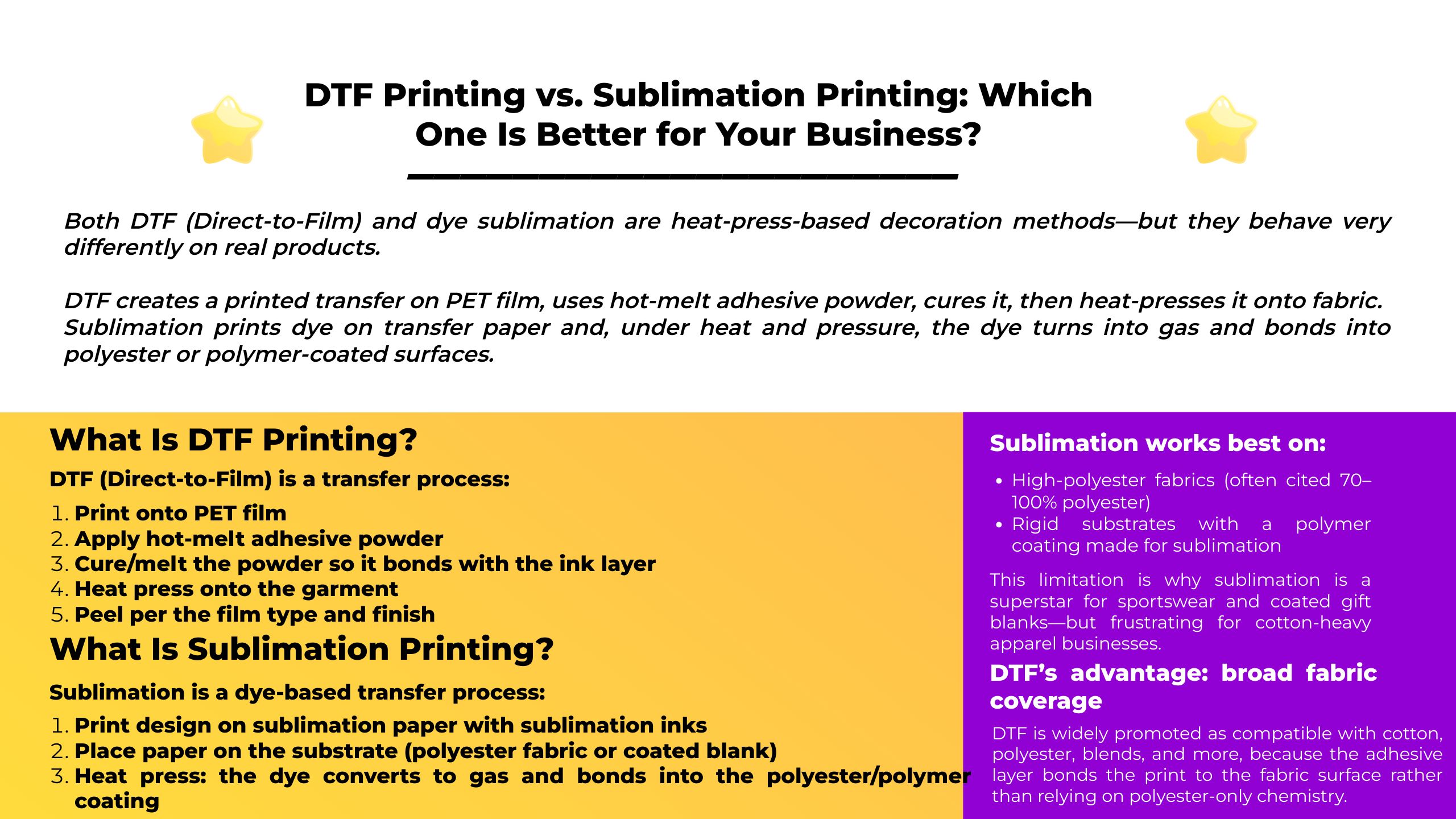
ambele DTF (Direct-to-Film) şi sublimarea vopselei sunt metode de decorare pe bază de presare la căldură, dar se comportă foarte diferit pe produsele reale.
- DTF creează un transfer tipărit pe Film PET, foloseste pulbere adeziva topita la cald, îl întărește, apoi îl presează la căldură pe material.
- Sublimare imprimă colorant pe hârtie de transfer și, sub căldură și presiune, colorantul se transformă în gaz și se leagă în suprafețe acoperite cu poliester sau polimer.
Comparație rapidă: DTF vs sublimare (dintr-o privire)
| Categorie | Imprimare DTF | Tipărirea sublimului |
|---|---|---|
| Idee de bază | Film de transfer + strat adeziv presat pe material | Vopseaua se transformă în gaz și se leagă în strat de poliester/polimer |
| Funcționează cel mai bine | Bumbac, poliester, amestecuri (foarte flexibile) | Țesătură din poliester și semifabricate acoperite cu polimer (limitat) |
| Hainele închise la culoare | Opțiune puternică (poate imprima cu alb) | În general, nu este ideal (colorantul este translucid; cel mai bine pentru culori deschise) |
| Simțiți pe țesătură | Senzație de „strat de transfer” (poate fi moale când este reglat) | Practic fără senzație - cerneala devine parte a țesăturii |
| Modul durabilitate | Se așează deasupra; depinde de presare + întărire adeziv | Încorporat în material; nu se crăpă/ nu se dezlipește ca amprentele de suprafață |
| Produse tipice | Tricouri, hanorace, îmbrăcăminte de lucru, țesături mixte | Îmbrăcăminte sport, modele din poliester, căni/farfurioare/panouri acoperite |
| Echipament suplimentar | Pudrare + întărire (sau agitator/cuptor) + presa de căldură | Imprimantă de sublimare + hârtie + presă termică (plus spații acoperite) |
| Cea mai bună potrivire pentru afaceri | Magazine de îmbrăcăminte personalizate cu tipuri variate de îmbrăcăminte | Îmbrăcăminte axată pe poliester + spate cadou acoperite + modele cu acoperire completă |
Marele separator este materiale: sublimarea necesită în mod fundamental chimie poliester/polimer, în timp ce DTF este construit pentru a se transfera pe un set mult mai larg de țesături.
Ce este imprimarea DTF?
DTF (Direct-to-Film) este un proces de transfer:
- Imprimați pe Film PET
- Aplicați pulbere adeziva topita la cald
- Întărire/topire pulberea astfel încât să se lege cu stratul de cerneală
- Apăsați la căldură pe îmbrăcăminte
- Curățați după tipul de film și finisați
Acest flux de lucru „film + pudră + întărire + presă” este explicat în multe ghiduri pas cu pas și este motivul pentru care DTF este popular pentru magazinele de confecții care au nevoie de flexibilitate.
De ce aveți nevoie de obicei pentru DTF
- Imprimantă DTF (adesea CMYK + alb)
- Film de transfer de animale de companie
- Pulbere topită la cald + metoda de întărire (sistem cuptor/uscător/shaker)
- Presă de căldură
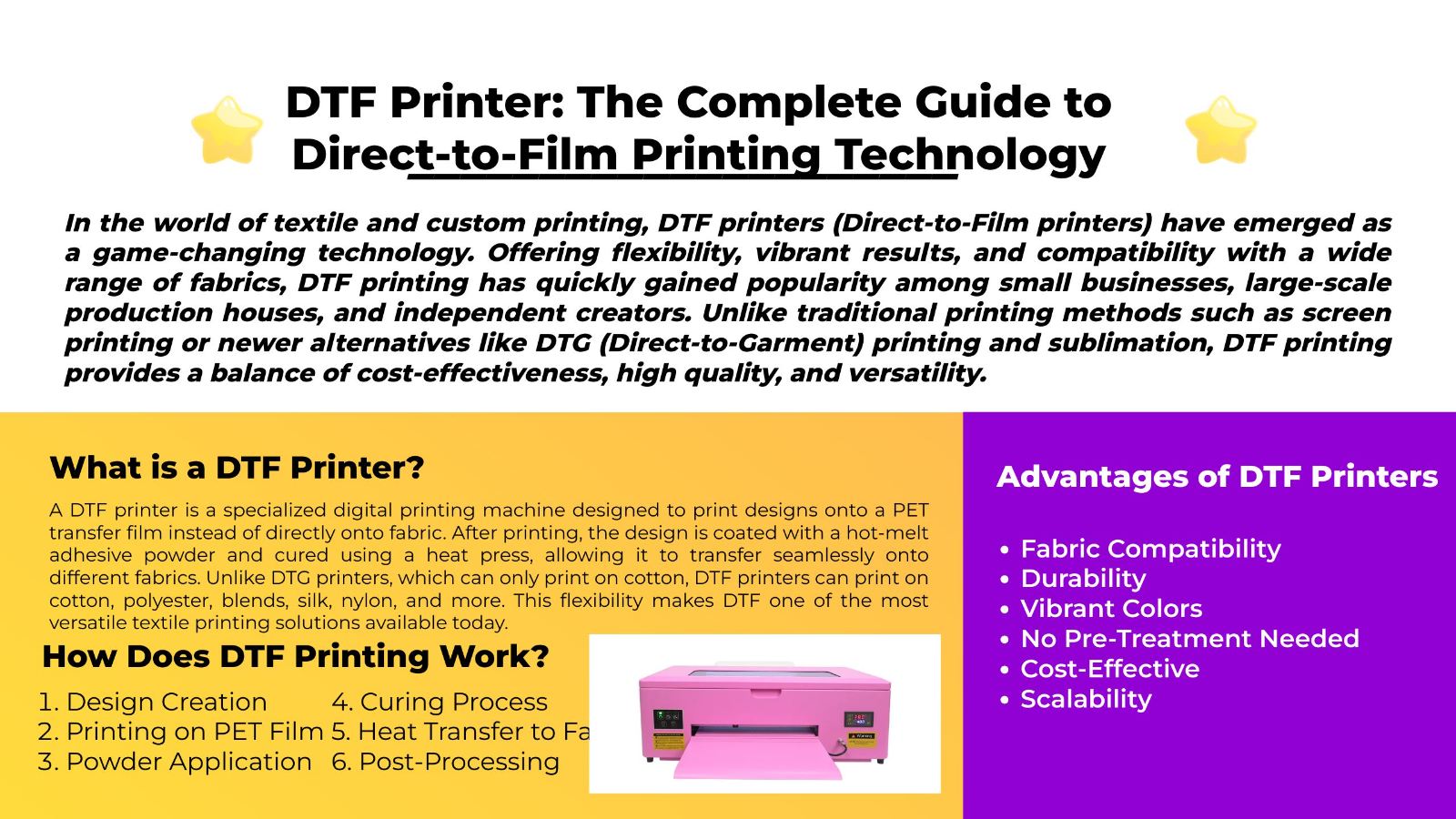
Mai multe despre imprimanta DTF: Imprimantă DTF: Ghidul complet pentru tehnologia de imprimare directă la film
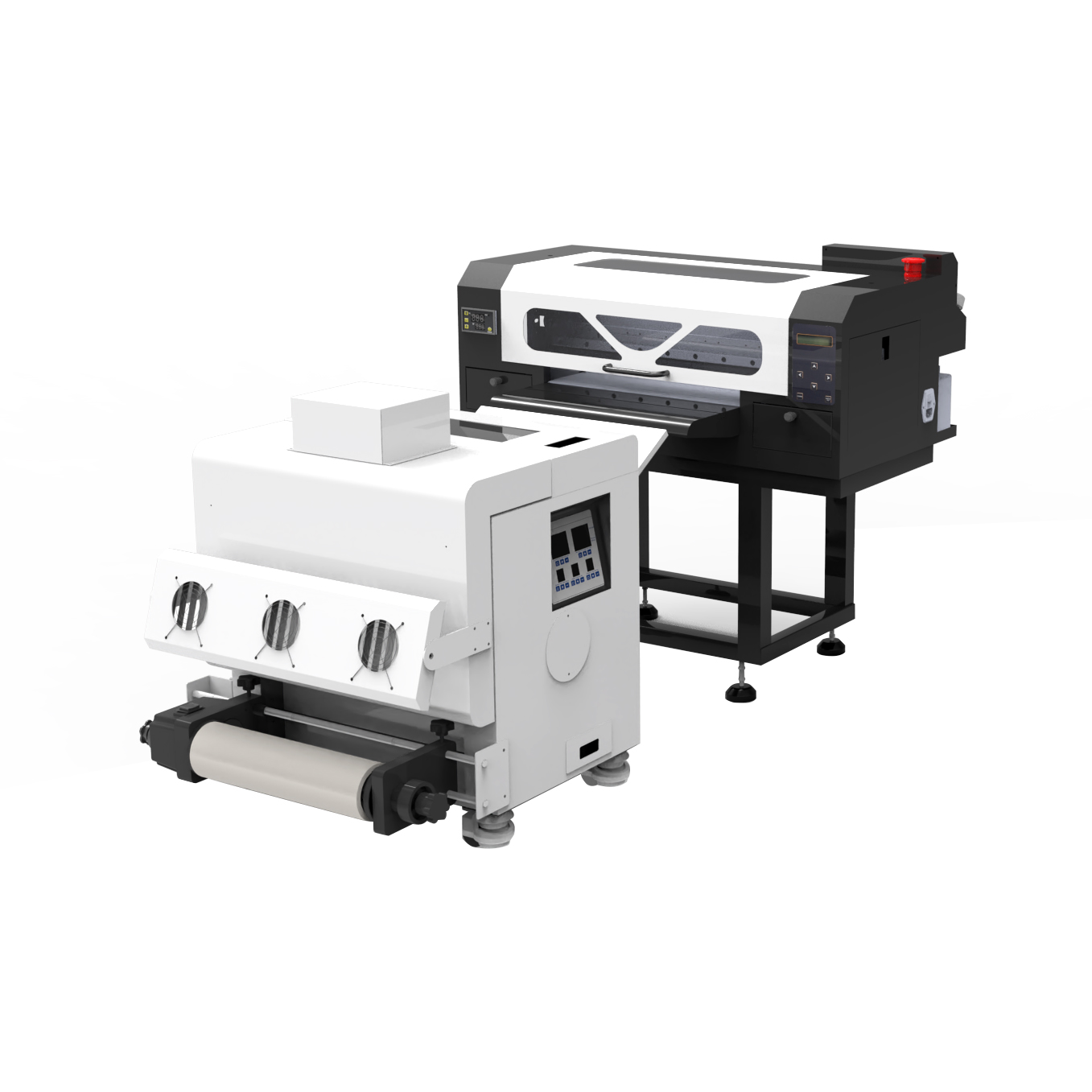
O soluție pregătită pentru producție, concepută pentru magazinele care au nevoie de un randament mai mare și un flux de lucru mai automatizat.
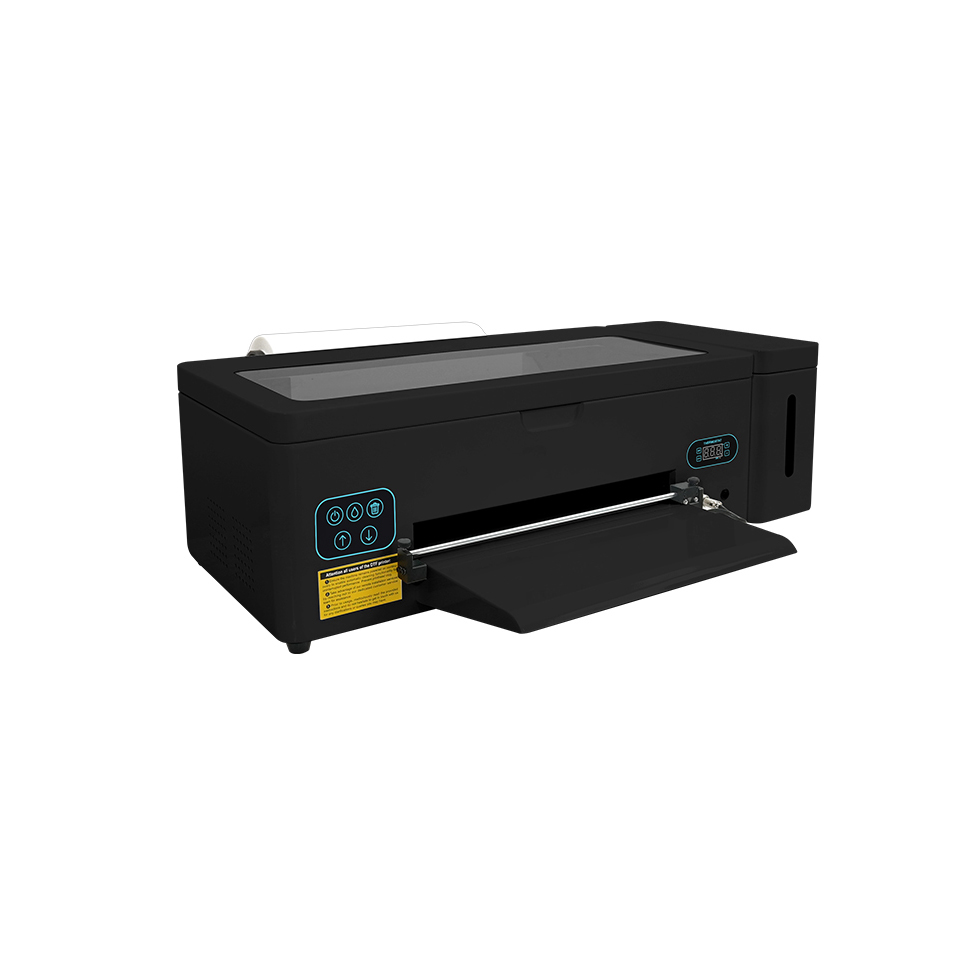
O alegere practică pentru startup-uri și studiouri mici care doresc rezultate fiabile, fără a investi excesiv.
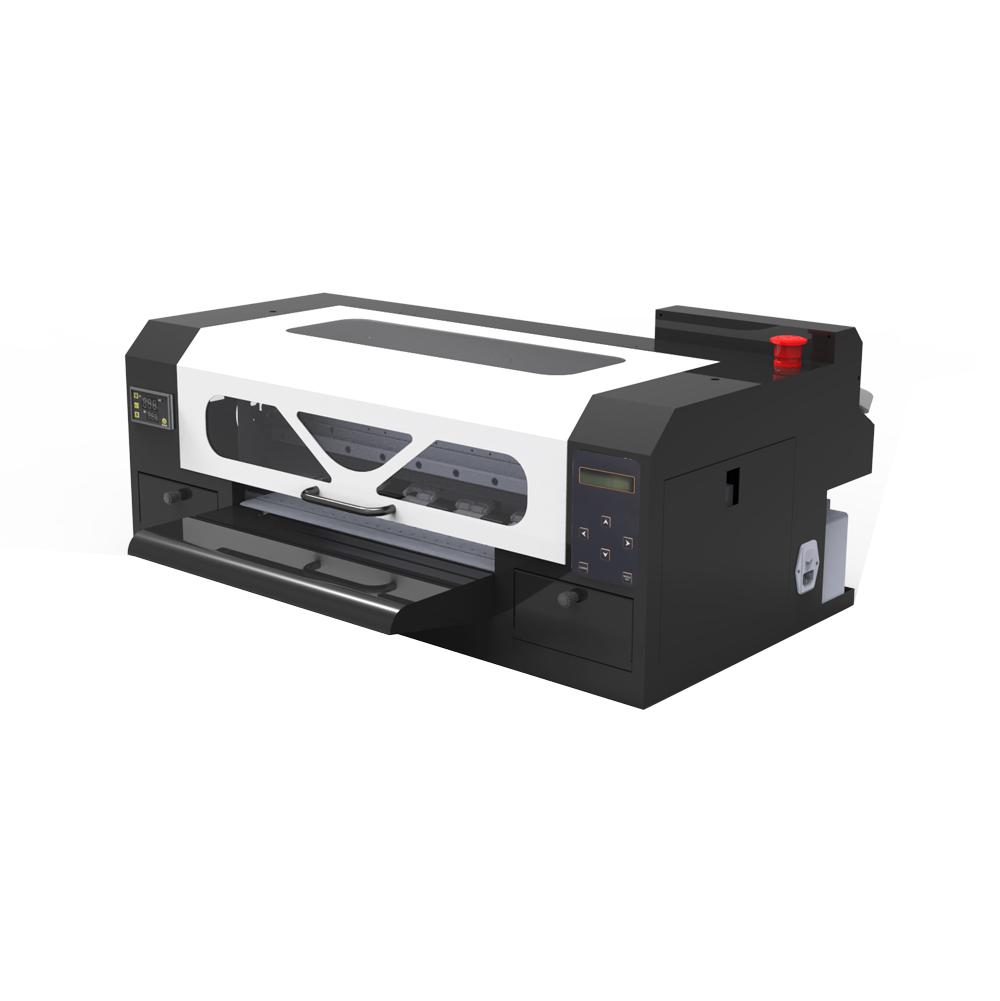
Performanță echilibrată pentru imprimerii care au nevoie de viteză + ieșire stabilă într-o amprentă A3.
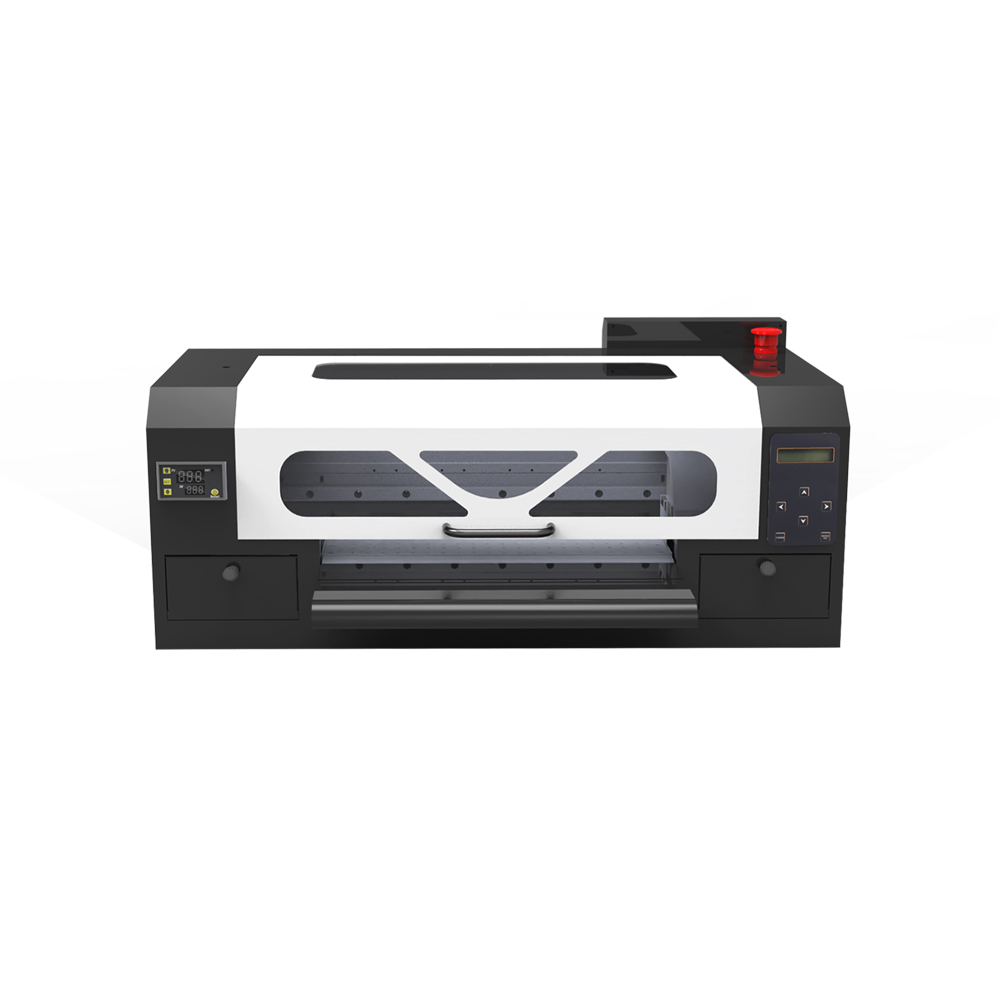
Conceput pentru utilizatorii care acordă prioritate detaliilor fine, degradeurilor netede și senzației de imprimare premium.
Un model A3 de încredere pentru o producție zilnică constantă, popular pentru rutinele de producție pentru întreprinderile mici.
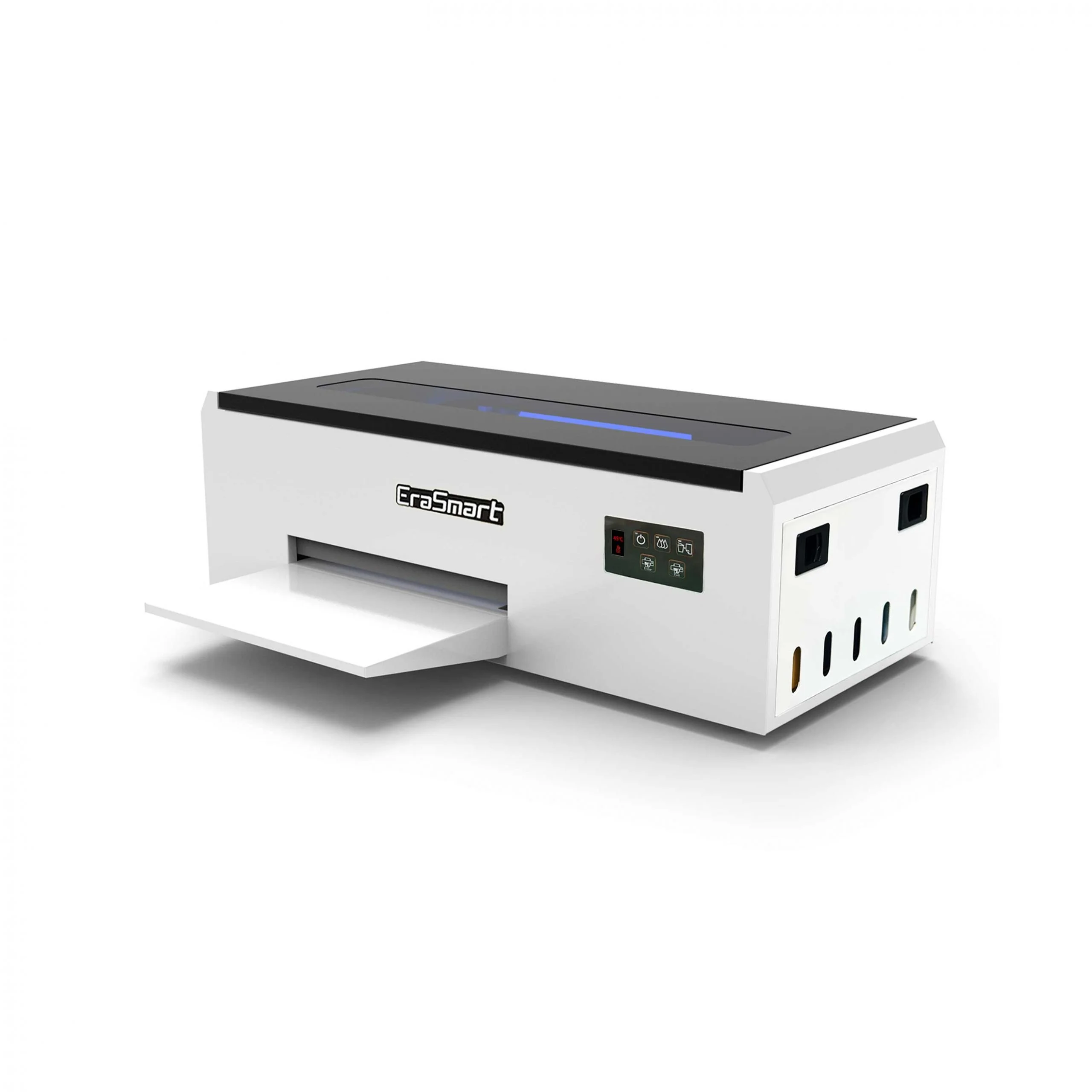
Model de intrare compact Perfect pentru startup-uri și producție de loturi mici.
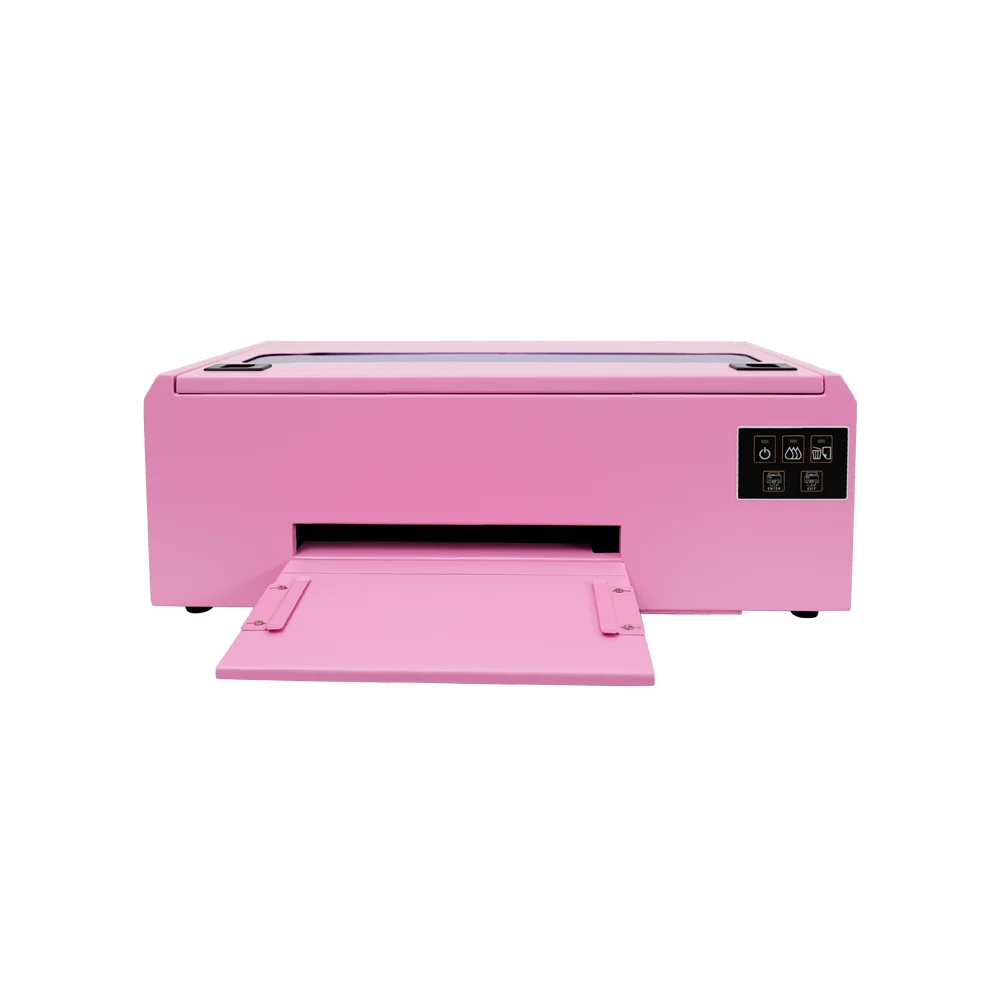
Model A4 îmbunătățit cu o eficiență îmbunătățită de cerneală pentru producția zilnică la scară mică.
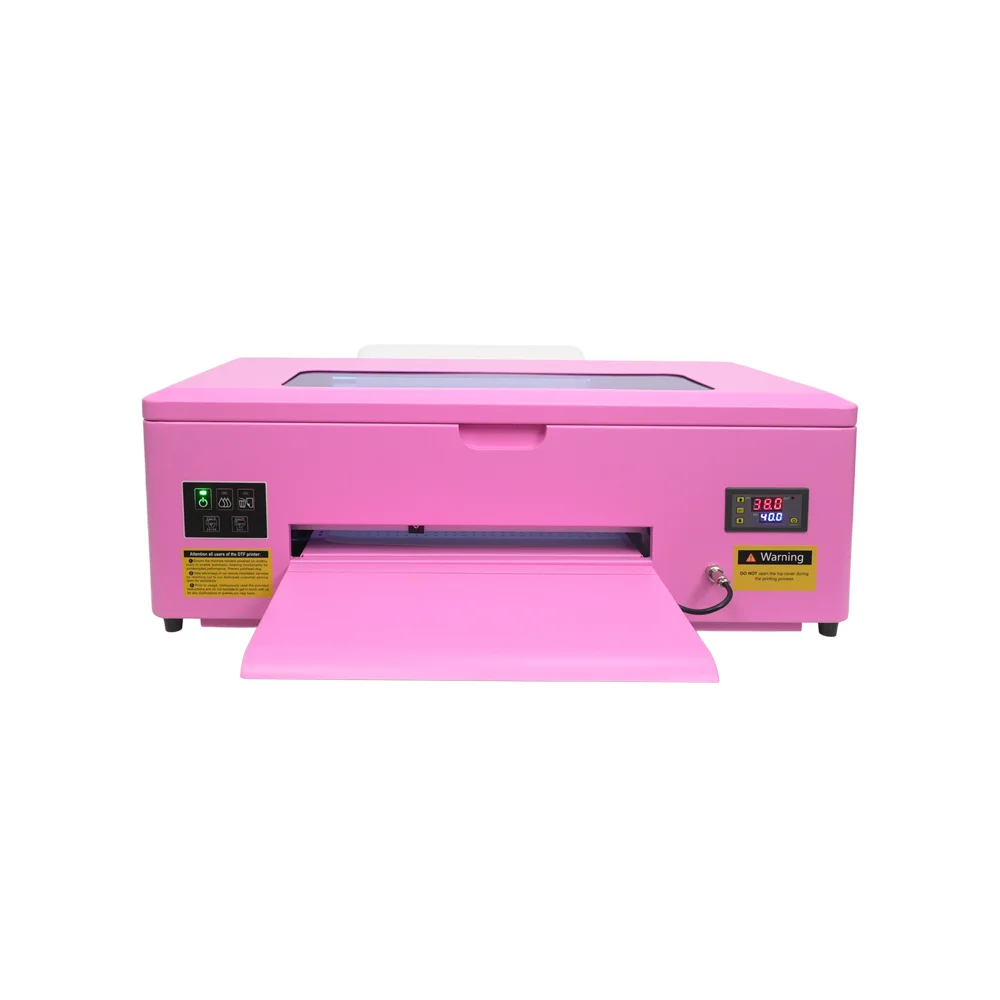
A3 Format imprimantă cu placă de bază fiabilă R1390 pentru producție medie.
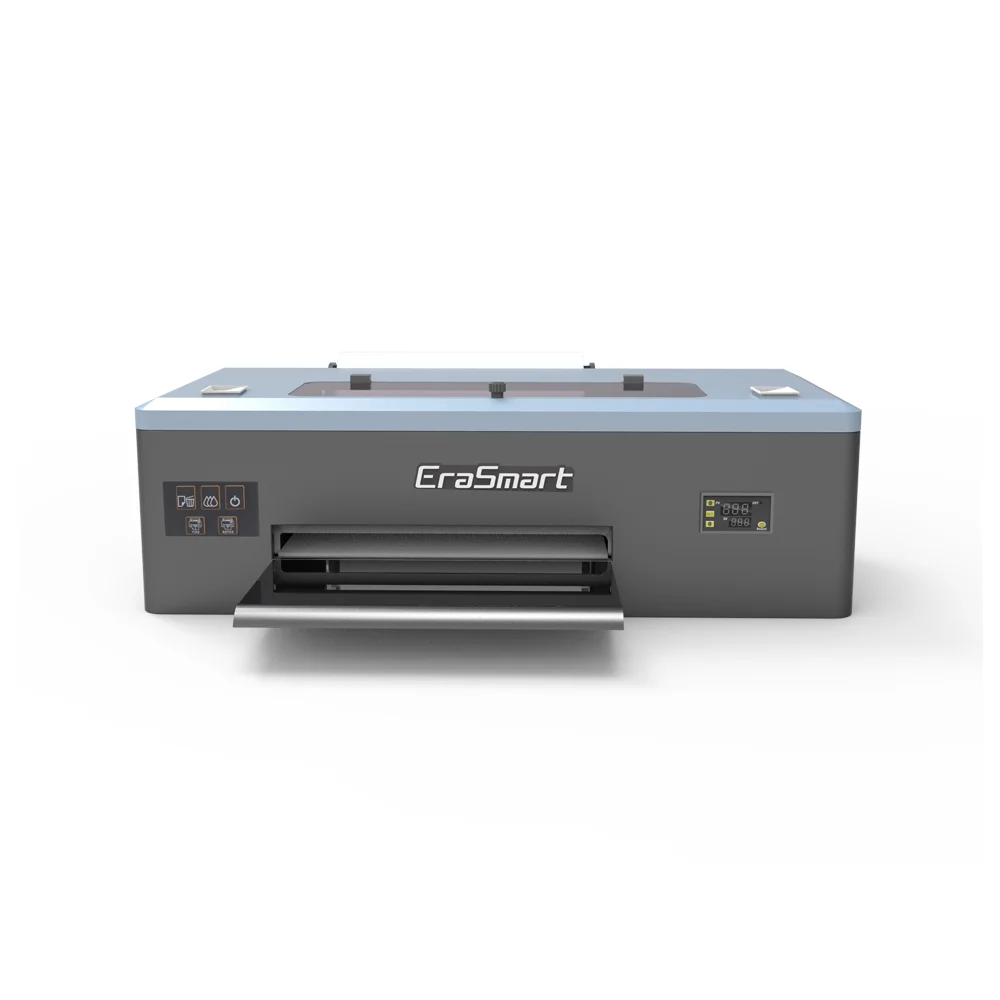
Model standard A3 cu rezervoare de cerneală de 250 ml pentru o funcționare zilnică constantă.
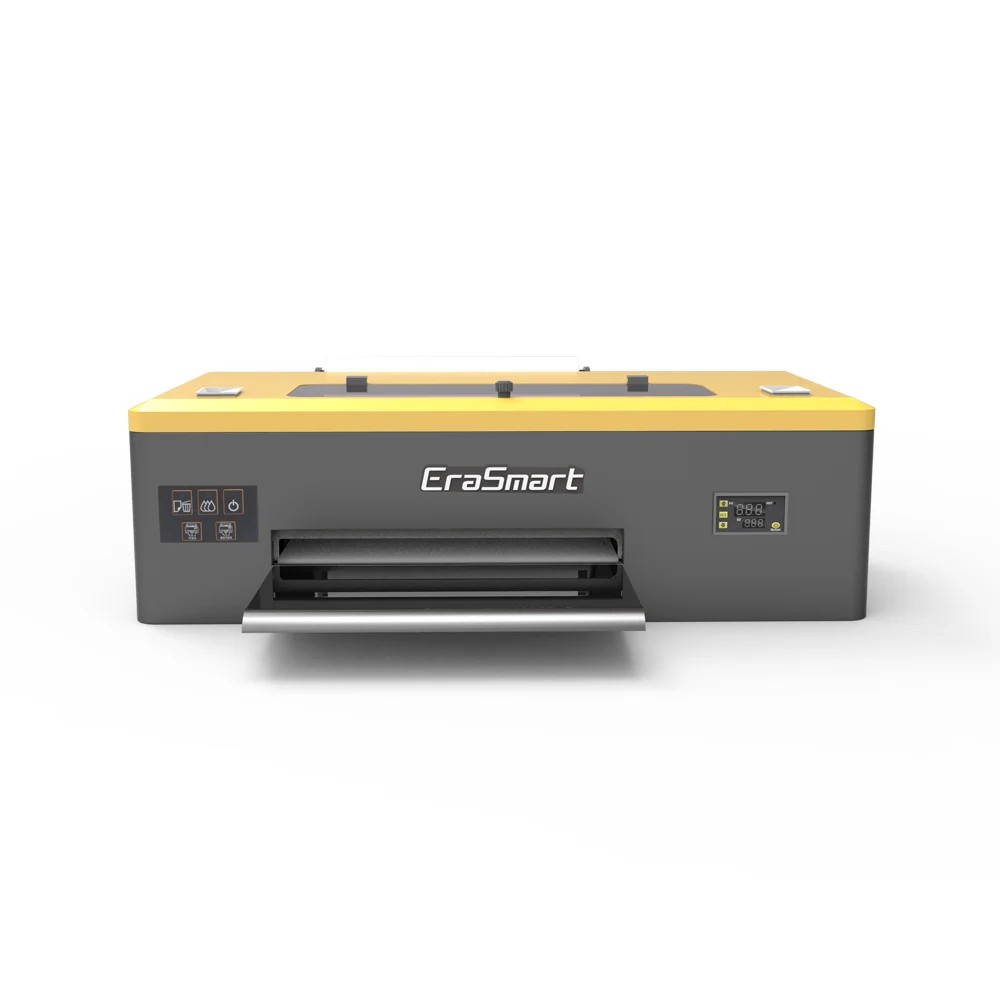
L1800 Model de cap de imprimare care oferă o reproducere superioară a culorilor pentru modele detaliate.
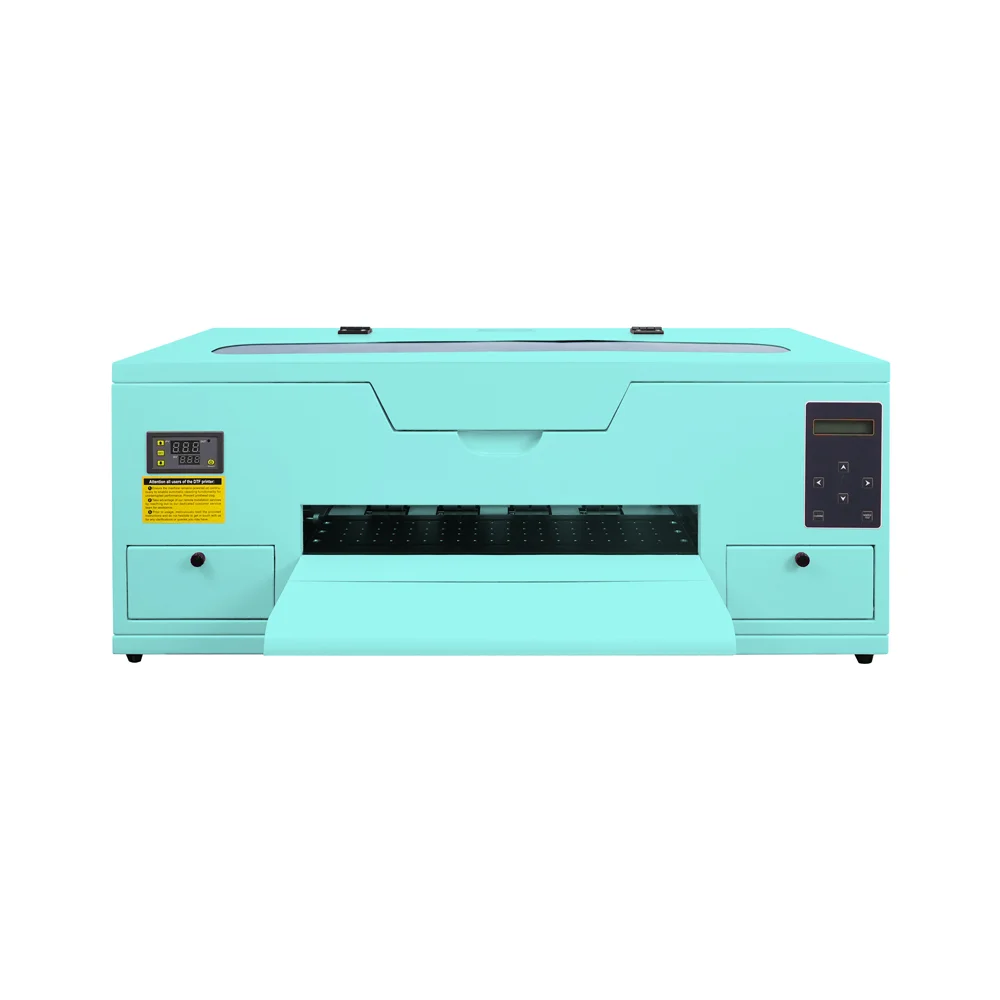
Seria A3 Max cu cap de imprimare XP600 pentru o viteză și eficiență crescută.
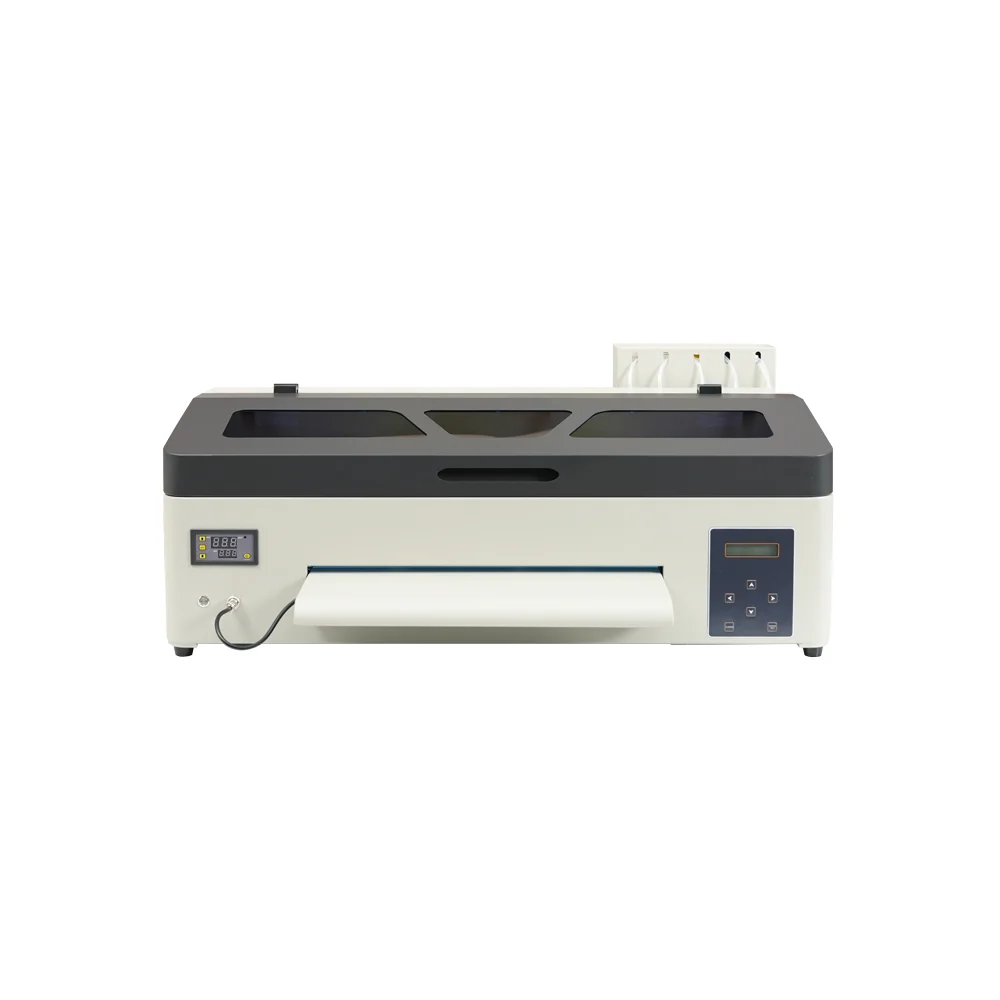
A3 MAX DTF Imprimantă
Model A3 de înaltă performanță cu cap de imprimare DX7 pentru rezultate profesionale.
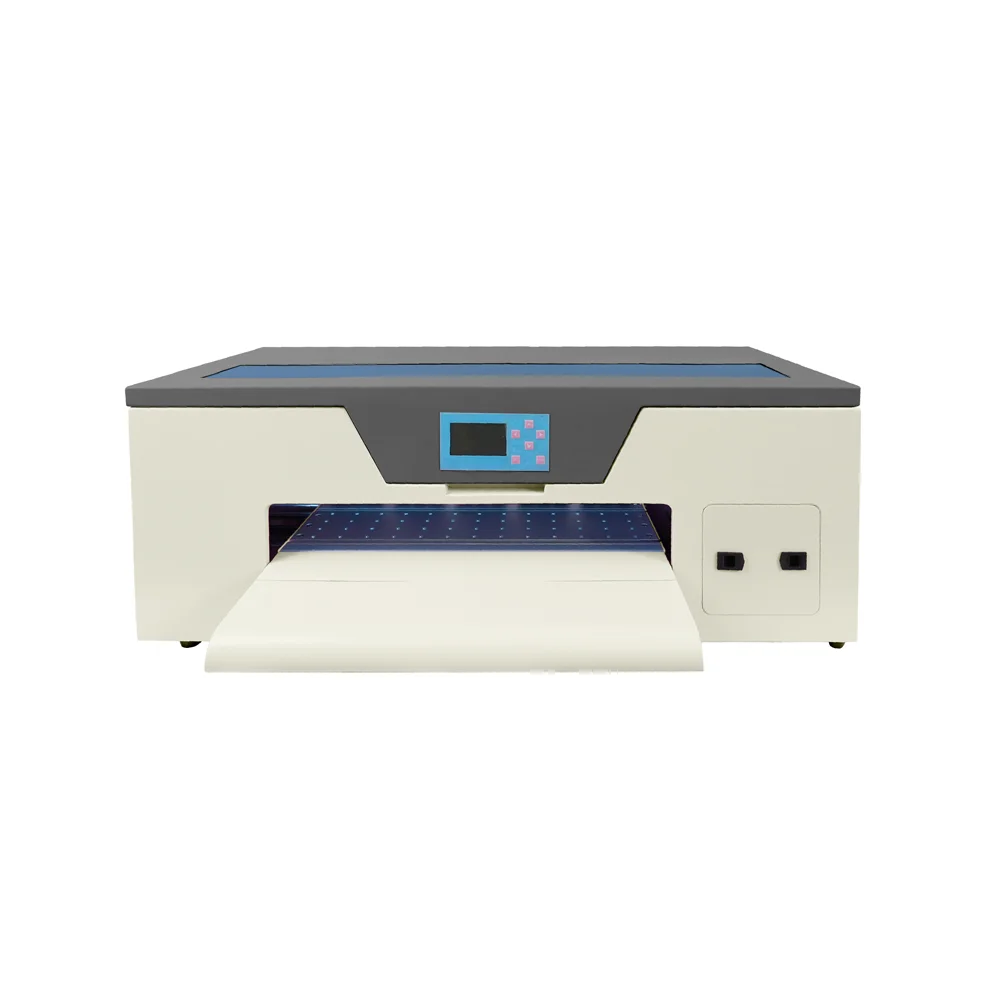
Model A3 de înaltă performanță cu cap de imprimare XP600 pentru rezultate profesionale.
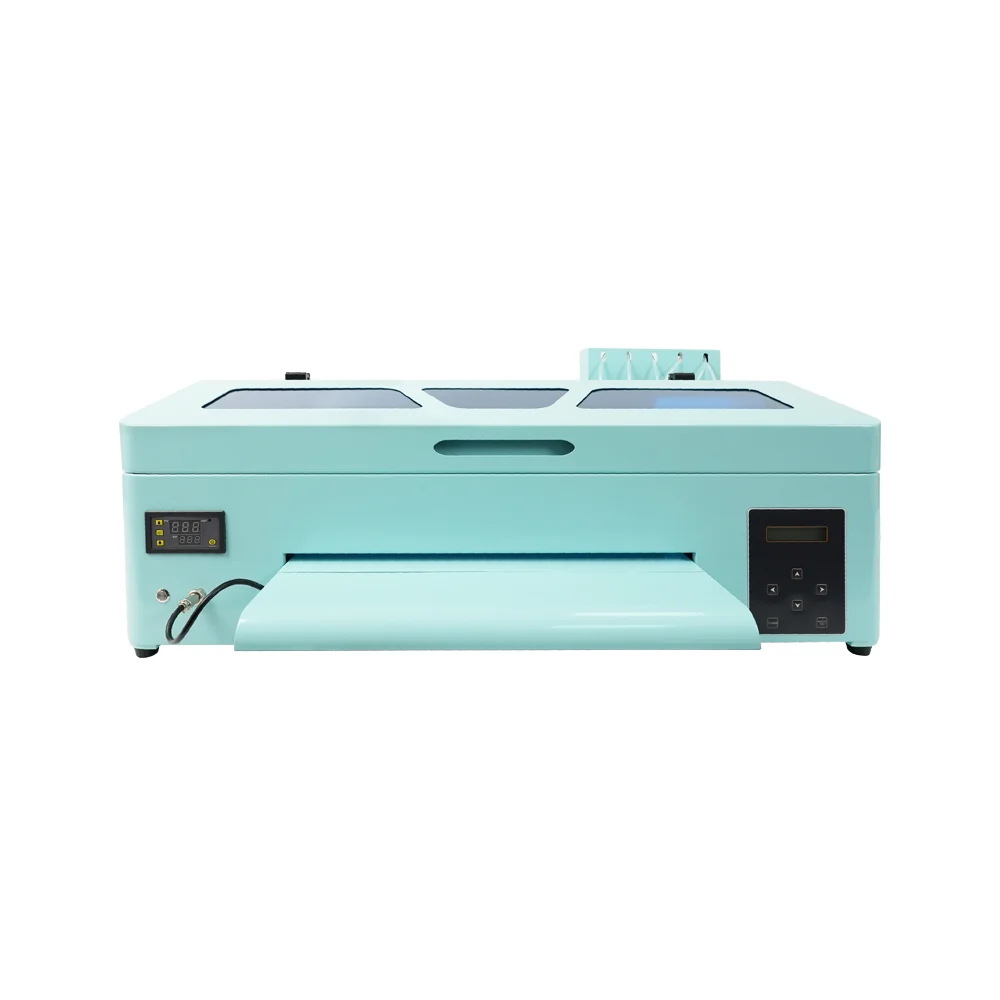
Imprimantă profesională cu imprimare dublă A3 pentru producția cu volum mare.
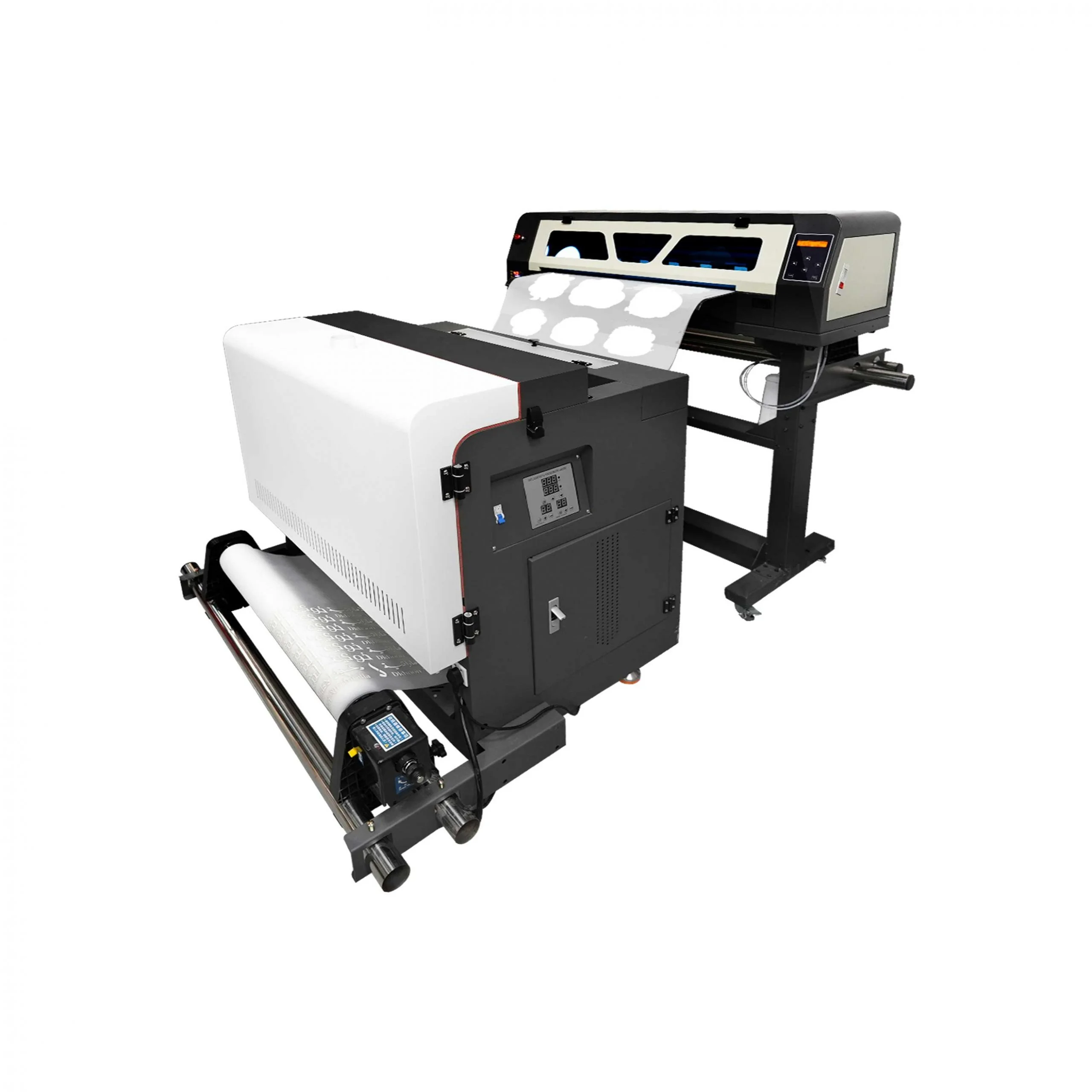
Imprimantă industrială cu format larg cu capete dual XP600 (lățime de 620 mm).
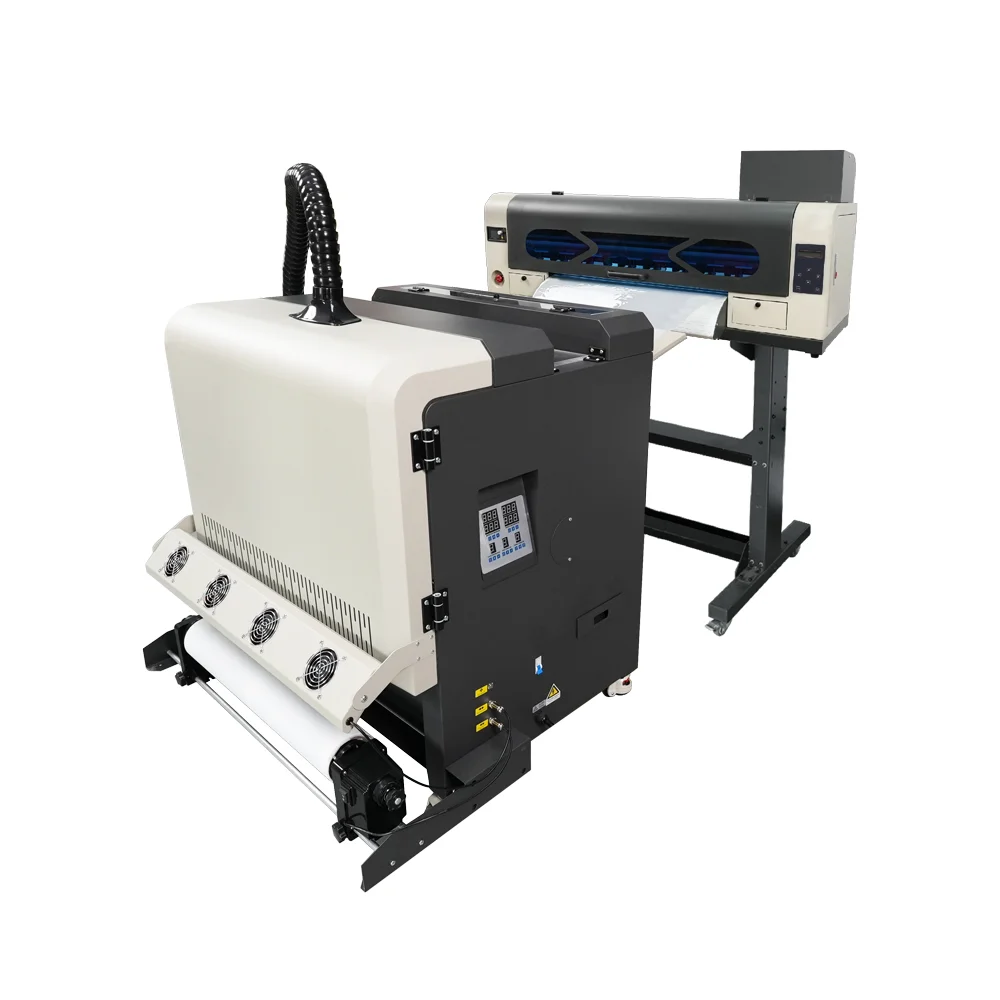
Model industrial de mare viteză cu capete duble I1600 (10 ㎡/H de ieșire).
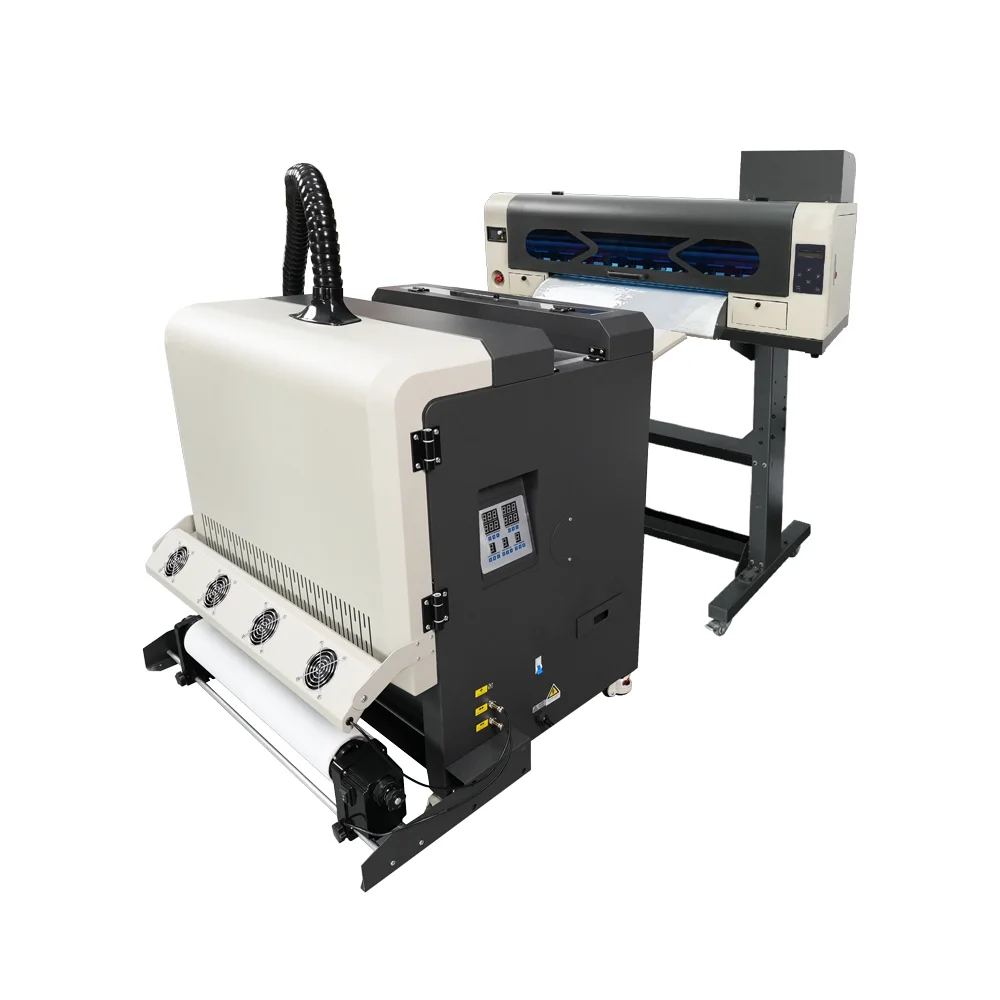
Imprimantă industrială premium cu capete duale I3200 pentru o productivitate maximă.
Ce este imprimarea prin sublimare?
Sublimarea este un proces de transfer pe bază de colorant:
- Imprimare design activat hârtie de sublimare cu cerneluri de sublimare
- Așezați hârtie pe suport (țesătură de poliester sau semifabricat acoperit)
- Presă de căldură: colorantul se transformă în gaz și se leagă de stratul de poliester/polimer
Multe explicații descriu sublimarea care are loc în jurul intervalului tipic de presare termică (deseori citat în jur 350–400°F) unde colorantul trece și pătrunde pe suprafețele poliester/polimer.
Ce ai nevoie de obicei pentru sublimare
- Configurare imprimantă/cerneală pentru sublimare
- Hârtie de sublimare
- Presă de căldură
- Îmbrăcăminte din poliester sau acoperit cu polimer semifabricate (căni, plăci, panouri metalice acoperite etc.)
Compatibilitatea materialelor: factorul de decizie #1
Limita dură a sublimării: articole acoperite cu poliester sau polimer
Sublimarea funcționează cel mai bine pe:
- Țesături cu înaltă poliester (deseori citat 70–100% poliester)
- Substraturi rigide cu un strat de polimer făcut pentru sublimare
Această limitare este motivul pentru care sublimarea este un superstar pentru articolele de îmbrăcăminte sport și pentru cadouri acoperite, dar frustrantă pentru companiile de îmbrăcăminte grele de bumbac.
Avantajul DTF: acoperire largă a materialului
DTF este promovat pe scară largă ca fiind compatibil cu bumbac, poliester, amestecuri și multe altele, deoarece stratul adeziv leagă imprimarea de suprafața țesăturii, mai degrabă decât să se bazeze pe chimie numai din poliester.
Dacă magazinul dvs. imprimă „orice aduce clientul” (tricouri din bumbac, hanorace, amestecuri, uniforme), DTF încadrează de obicei mai multe comenzi fără a schimba strategia goală.
Îmbrăcăminte ușoară vs întunecată: de ce diferă rezultatele
- Vopseaua de sublimare este translucida, așa că strălucește alb/poliester deschis și se luptă cu articolele de îmbrăcăminte întunecate, cu excepția cazului în care introduci soluții speciale (cum ar fi straturi de vinil de sublimare).
- DTF poate face față hainelor închise la culoare deoarece fluxurile de lucru DTF includ de obicei cerneală albă și un strat de transfer opac. (Acesta este un avantaj practic cheie pentru îmbrăcămintea personalizată.)
Senzație de imprimare și durabilitate
Sublimare: „fără senzație” și fără crăpare/peeling
Deoarece colorantul de sublimare devine parte a suprafeței de poliester/polimer, imprimarea este adesea descrisă ca încorporat, ceea ce înseamnă că nu se va crăpa/decoji ca un strat de suprafață.
DTF: un strat de transfer de suprafață (dar poate fi foarte durabil)
Imprimeurile DTF se așează deasupra țesăturii ca un strat lipit. Durabilitatea depinde în mare măsură de:
- acoperire adecvată cu pudra
- întărire adecvată
- timpul/temperatura/presiunea corectă a presei termice
Când este reglat corect, DTF este poziționat ca durabil și rezistent, dar rămâne un „strat de transfer”, nu un colorant încorporat.
Zona de imprimare și stil de design
Sublimarea excelează la acoperire completă și la aspectul total
Sublimarea este utilizată pe scară largă pentru modele cu suprafețe mari - în special modele și îmbrăcăminte peste tot - deoarece procesul poate acoperi zone extinse de țesătură din poliester atunci când este configurat corect.
DTF excelează la logo-uri, imprimeuri pe piept și personalizare multi-SKU
DTF este excelent pentru:
- logo-uri din partea stângă a pieptului
- grafică frontală în dimensiunea presei dvs
- comutare rapidă între modele fără ecrane
Echipamente, flux de lucru și complexitate magazin
Complexitatea fluxului de lucru DTF (mai multe părți mobile)
DTF adaugă pași: pudrare + întărire înainte de presarea la cald. Asta poate însemna mai multe echipamente și mai mult control al procesului.
Complexitatea fluxului de lucru al sublimării (mai simplu, dar spațiile contează)
Sublimarea este adesea mai simplă din punct de vedere operațional (hârtie de imprimare → apăsare), dar te obligă să:
- inventarul de articole de îmbrăcăminte din poliester sau
- inventar semifabricat acoperit cu polimer
Considerații privind costurile (bugetarea reală)
Costurile variază foarte mult în funcție de marcă și scară, dar structura costurilor este de obicei:
Găleți de costuri DTF
- Imprimantă (adesea cu capacitate de cerneală albă)
- Film PET + pulbere topibilă la cald
- Soluție de întărire (cuptor/shaker) + presă termică
Găleți de cost pentru sublimare
- Configurare cerneală pentru sublimare + hârtie
- Presă de căldură
- Îmbrăcăminte din poliester sau semifabricate acoperite cu polimer
O realitate comercială comună: echipamentele de sublimare pot fi mai ușor/mai ieftine pentru început, dar semifabricatele de sublimare (îmbrăcăminte din polietilenă, articole acoperite) vă pot modela marjele și strategia de produs.
Realitatea de întreținere
- DTF deseori include cerneală albă, ceea ce înseamnă, în general, mai multă rutină (verificări duze, curățare, control al umidității) plus menaj pentru pulbere/întărire.
- Sublimare de obicei evită cerneala albă, iar multe magazine consideră că este mai simplu de zi cu zi - din nou, atâta timp cât rămân în substraturi de poliester/acoperite.
Siguranță și ventilație
DTF: acordați atenție prafului de pulbere și emisiilor de întărire
Discuțiile IAQ industriale notează că DTF poate produce praf, fum și vapori în timpul tipăririi și întăririi și recomandăm o ventilație/filtrare adecvată.
Unele documente de siguranță pentru pulberea topită la cald recomandă protecție respiratorie atunci când nivelurile de praf din aer sunt ridicate.
Sublimare: aerisiti in timpul presarii termice
Sublimarea presupune încălzirea coloranților; recomandă mai multe ghiduri de siguranță ventilatie buna în timpul presarii pentru a reduce expunerea la vapori/vapori.
Cele mai bune cazuri de utilizare (pentru ce este „realizată” fiecare metodă)
Alegeți DTF dacă vindeți:
- Tricouri și hanorace din bumbac
- Comenzi de țesături mixte (bumbac/poliester/amestecuri)
- Îmbrăcăminte întunecată și o varietate largă de blank furnizate de client
- Logo-ul și tricourile grafice cu răspuns rapid
Alegeți Sublimare dacă vindeți:
- Îmbrăcăminte sportivă din poliester și îmbrăcăminte de performanță
- Modele peste tot și modele foto-grele pe poliester
- Cadouri acoperite cu polimer (căni, panouri metalice acoperite, plăci etc.)
O strategie comună este „DTF pentru flexibilitatea îmbrăcămintei + sublimare pentru cadouri din poliester/blank” în loc să forțezi o singură metodă să facă totul.
Ghid de decizie (reguli simple care funcționează)
Alege DTF dacă oricare dintre acestea este adevărată:
- Clienții tăi doresc bumbac sau întuneric cămăși
- Aveți nevoie de o metodă care să acopere cea mai largă gamă de îmbrăcăminte
- Doriți un transfer pe care îl puteți aplica la cerere
Alege Sublimare dacă oricare dintre acestea este adevărată:
- Te vei concentra asupra poliester/haine usoare
- Vrei imprimeuri „fără senzație” și look-uri peste tot
- Intenționați să vindeți o mulțime semifabricate acoperite cu polimer
Întrebări frecvente: DTF vs sublimare
Se poate imprima prin sublimare pe bumbac?
Nu este bine în sensul tradițional - sublimarea este în primul rând pentru suprafețe acoperite cu poliester/polimer. Există soluții (straturi speciale de vinil), dar schimbă senzația produsului și fluxul de lucru.
DTF poate imprima pe poliester?
Da — DTF este utilizat în mod obișnuit pe poliester și amestecuri, dar parametrii de presare și tipul de îmbrăcăminte contează în continuare pentru cele mai bune rezultate.
Care este mai bine pentru cămășile închise la culoare?
DTF este de obicei câștigătorul clar, deoarece sublimarea este cea mai bună pe poliester ușor datorită transparenței vopselei.
Care durează mai mult?
Sublimarea este adesea considerată extrem de durabilă, deoarece colorantul este încorporat în substrat, în timp ce durabilitatea DTF depinde de întărirea și presarea corectă a pulberii.
Care este mai bun pentru căni și bunuri dure?
Sublimarea este excelentă pentru acoperit cu polimer semifabricate dure. DTF este în principal un sistem de transfer al țesăturii.
Cu ce este mai ușor de început?
Mulți începători consideră sublimarea mai simplă (printare → apăsare), dar numai dacă sunt de acord cu liniile de produse numai din poliester/acoperite. DTF are mai multe etape (pulbere/cură), dar acoperă mult mai multe tipuri de îmbrăcăminte.
Concluzie
- DTF este „cea mai flexibilă opțiune de transfer de îmbrăcăminte” - excelentă pentru comenzile din bumbac, articole de îmbrăcăminte închise la culoare și țesături mixte.
- Sublimare este „poliesterul + semifabricate acoperite” – cel mai bun pentru imprimeuri vii, încorporate, fără senzație pe produse din poliester ușor și acoperite cu polimer.
S-ar putea să vă placă
Poate fi tu ca și tu

Imprimantă Erasmart
imprimantă UV
Imprimantă DTF
Imprimantă DTG
Mașină de presă de căldură
Imprimantă publicitară
Instrumente pentru imprimantă
Cuptor DTF
Presă fierbinte
Mașină de sculptură
Transfer de căldură cu cană
Mașină de laminare
Consumabile
Cerneală tipografică
Carcasă pentru telefonul mobil
Produs de sticlă
Curățarea lichidului
Tampon de bumbac
Contactaţi-ne
WhatsApp : +8618566233796
WeChat : +8618566233796
Mobile : +8618566233796
Web:www.erasmart.com
Magazin:www.erasmartmall.com
Copyright 2020 © Erasmart. | Sitemap
WhatsApp-ne
Solicitați o ofertă
Oferiți doar câteva detalii și vă vom ajuta să obțineți citate rapide!