ผู้ผลิตเครื่องพิมพ์อิงค์เจ็ทขนาดเล็ก

การโอน DTF กับการระเหิด: ไหนดีกว่าสำหรับสตูดิโอพิมพ์แบบกำหนดเองขนาดเล็ก
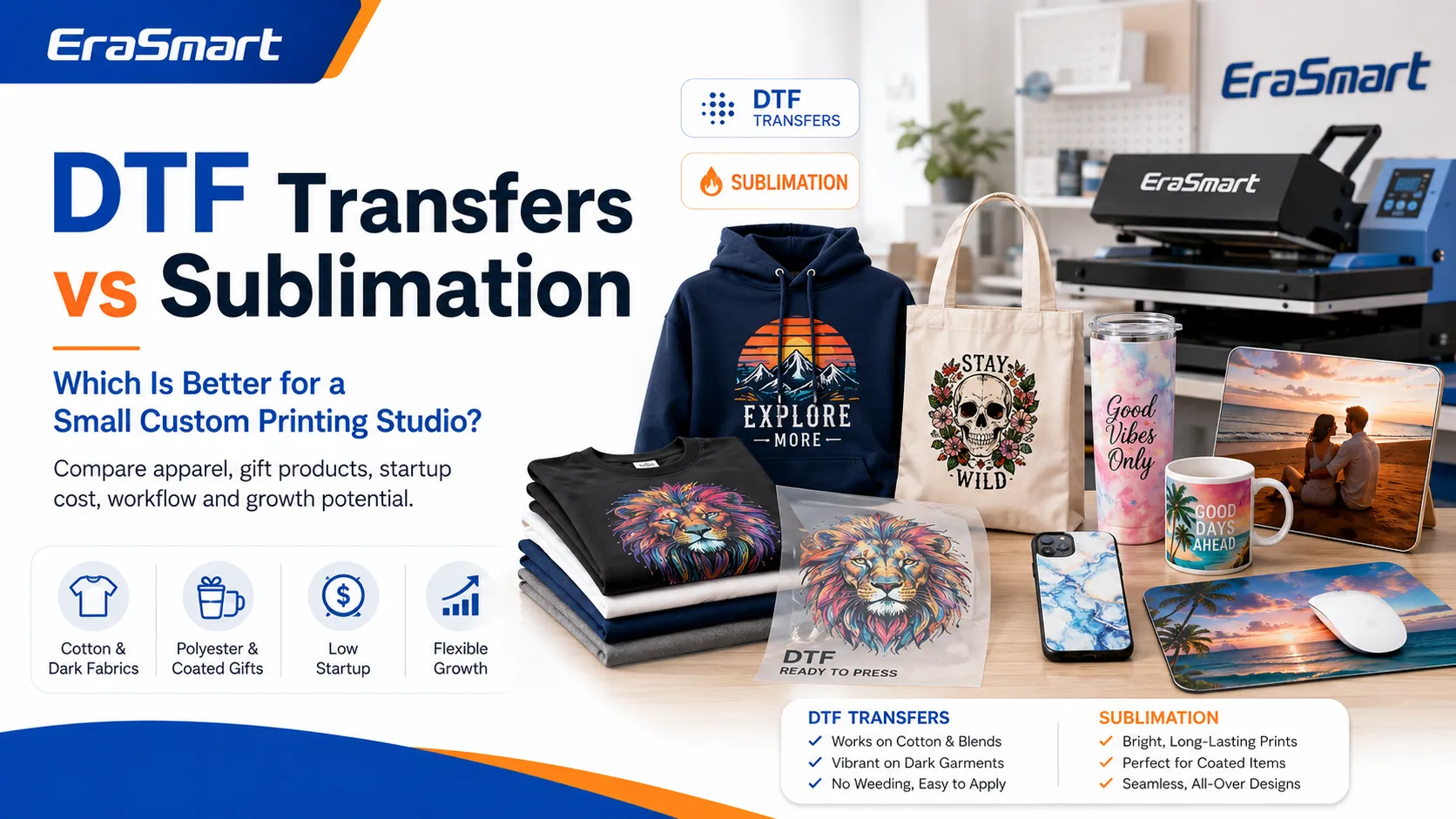
การโอน DTF แบบพร้อมกดคืออะไร?
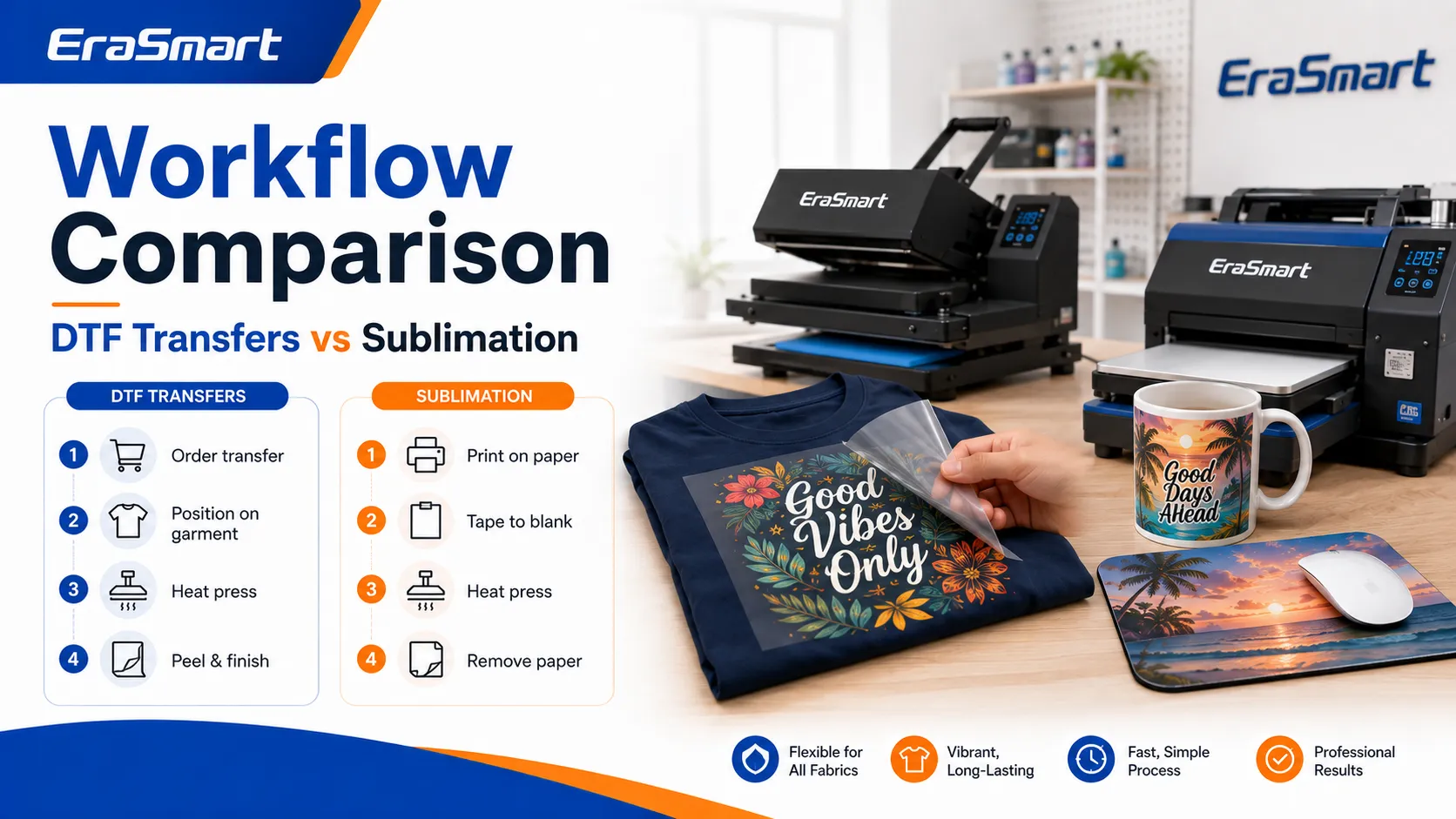
การถ่ายโอน DTF ผลิตโดยการพิมพ์หมึกสีและหมึกสีขาวที่อยู่ด้านล่างลงบนแผ่นฟิล์ม PET ผงกาวร้อนละลายจะถูกทาและบ่มก่อนที่จะกดลงบนผ้า
เมื่อคุณซื้อการโอนเงินแบบพร้อมพิมพ์ ซัพพลายเออร์จะจัดการ:
- การพิมพ์สี
- การพิมพ์ด้วยหมึกสีขาว
- การใช้ผง
- การบ่มด้วยผง
- การเตรียมฟิล์ม
สตูดิโอของคุณต้องการเพียง:
- เตรียมเสื้อผ้า.
- วางตำแหน่งการถ่ายโอน
- ใช้ความร้อนและแรงกด
- ลอกฟิล์มพาหะออก
- เสร็จสิ้นการกดขั้นสุดท้ายเมื่อจำเป็น
- ตรวจสอบและบรรจุสินค้า.
รุ่นนี้ช่วยให้คุณเริ่มต้นธุรกิจเครื่องแต่งกาย DTF ได้โดยไม่ต้องซื้อเครื่องพิมพ์ทันที
คำแนะนำของ EraSmart เกี่ยวกับ เริ่มต้นธุรกิจ DTF โดยไม่ต้องใช้เครื่องพิมพ์ DTF อธิบายขั้นตอนการทำงานที่ลงทุนต่ำนี้โดยละเอียดยิ่งขึ้น
แต่ละกระบวนการสามารถพิมพ์วัสดุใดได้บ้าง
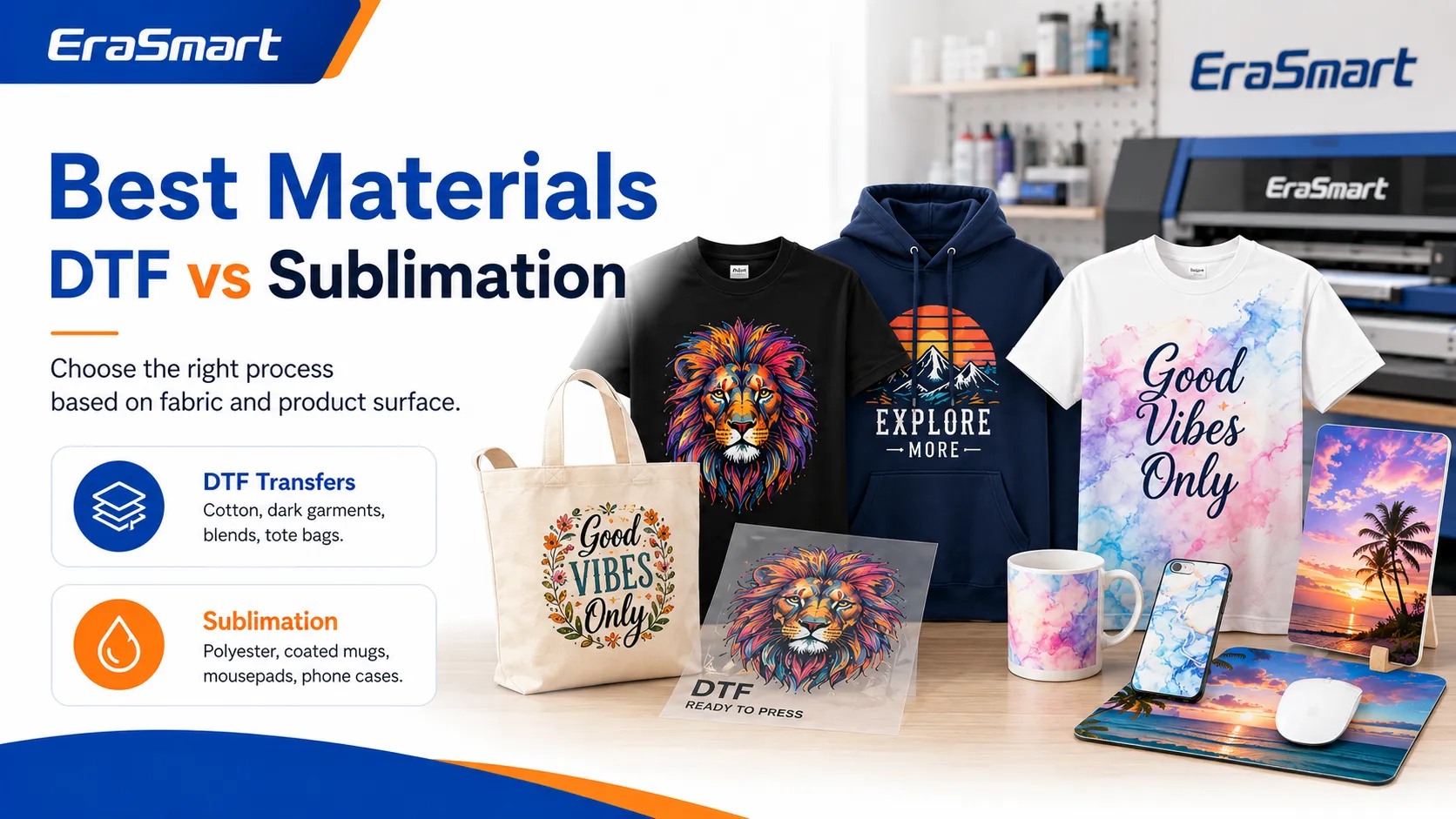
ความเข้ากันได้ของวัสดุควรเป็นปัจจัยแรกในการตัดสินใจของคุณ
วัสดุที่เหมาะสำหรับการถ่ายโอน DTF
โดยทั่วไปการโอน DTF สามารถใช้กับ:
- ฝ้าย
- โพลีเอสเตอร์
- ผ้าฝ้ายผสมโพลีเอสเตอร์
- ผ้าใบ
- ผ้าเดนิม
- ขนแกะ
- ผ้าประสิทธิภาพ
- เสื้อผ้าบางเบา
- เสื้อผ้าสีเข้ม
สิ่งนี้ทำให้ DTF เป็นตัวเลือกที่ใช้งานได้จริงสำหรับสตูดิโอที่เน้นเครื่องแต่งกาย
จะมีประโยชน์อย่างยิ่งเมื่อลูกค้าขอเสื้อผ้าสีดำ กรมท่า แดง หรือสีเข้มอื่นๆ เนื่องจากด้านล่างของหมึกสีขาวช่วยให้มองเห็นดีไซน์ได้
วัสดุที่เหมาะสำหรับการระเหิด
การระเหิดทำงานได้ดีที่สุดกับ:
- เครื่องแต่งกายโพลีเอสเตอร์สีขาว
- เครื่องแต่งกายโพลีเอสเตอร์สีอ่อน
- แก้วเคลือบโพลีเมอร์
- แก้วน้ำเคลือบ
- แผ่นรองเมาส์ระเหิด
- แผงภาพถ่ายเคลือบโลหะ
- เคสโทรศัพท์ระเหิด
- พวงกุญแจเคลือบ
- ปลอกหมอนอิงโพลีเอสเตอร์
- เครื่องประดับ MDF พร้อมการเคลือบระเหิด
- กระเบื้องเซรามิคพร้อมสารเคลือบที่เข้ากันได้
การระเหิดไม่ได้ออกแบบมาสำหรับเสื้อเชิ้ตผ้าฝ้ายธรรมดาหรือผลิตภัณฑ์ที่ไม่เคลือบผิว
ผลิตภัณฑ์จะต้องมีโพลีเอสเตอร์เพียงพอหรือมีการเคลือบโพลีเมอร์ที่เหมาะสมเพื่อยึดสีย้อม
คุณสามารถขายผลิตภัณฑ์ใดบ้างด้วยการโอน DTF
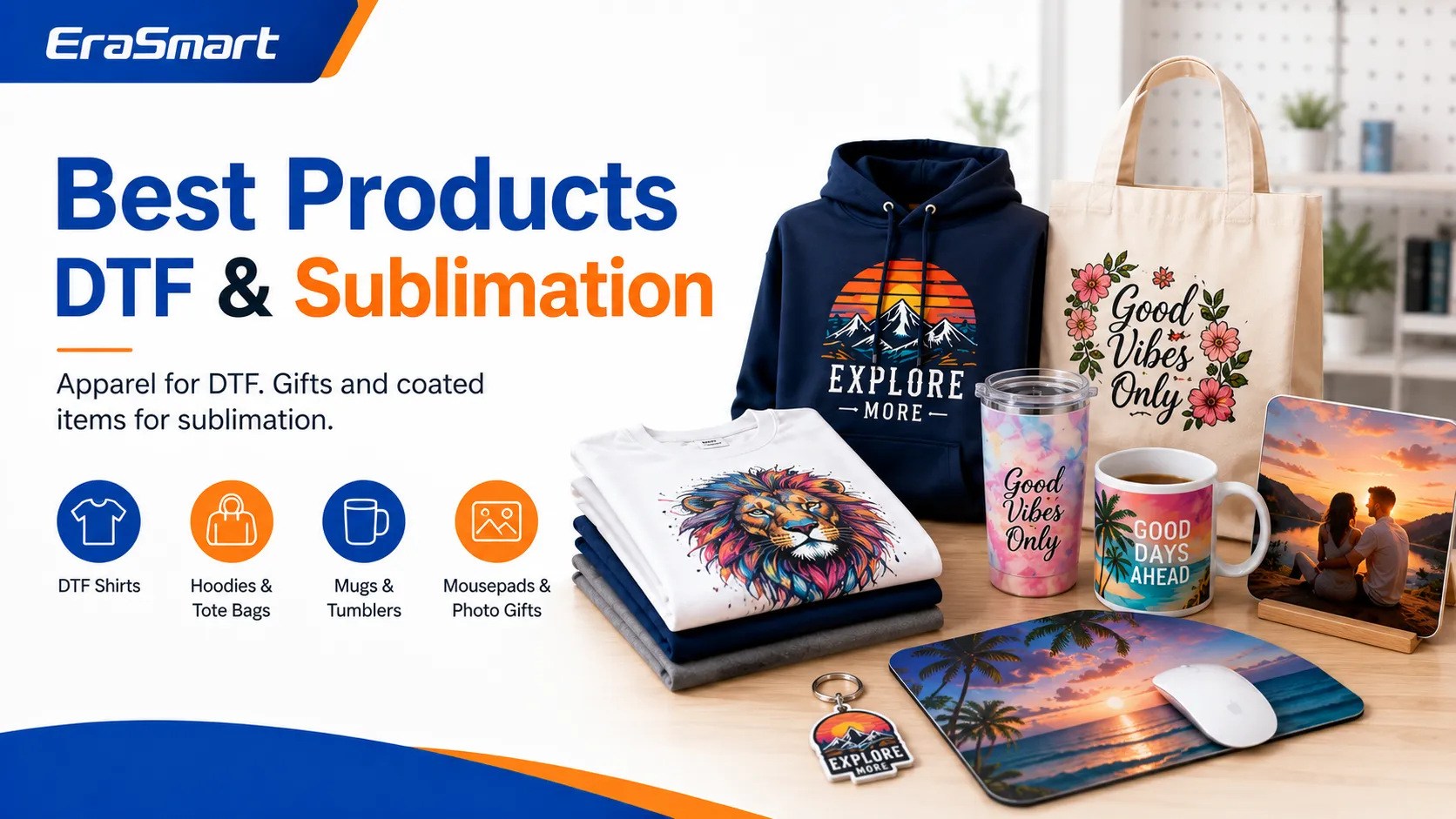
การโอน DTF ใช้สำหรับผลิตภัณฑ์ผ้าและเครื่องแต่งกายเป็นหลัก
ตัวเลือกยอดนิยม ได้แก่ :
- เสื้อยืดสั่งทำพิเศษ
- เสื้อฮู้ด
- เสื้อสเวตเตอร์
- ชุดทำงาน
- เครื่องแบบ
- กระเป๋าผ้า
- ผ้ากันเปื้อน
- ชุดกีฬา
- เสื้อโรงเรียน
- เครื่องแต่งกายงานอีเว้นท์
- สินค้าของสโมสร
- เสื้อรวมญาติ
- สินค้าแบรนด์เสื้อผ้าขนาดเล็ก
คำสั่งซื้อธุรกิจและเครื่องแบบ
DTF เหมาะสำหรับ:
- เสื้อพนักงานร้านอาหาร
- ทำความสะอาดชุดยูนิฟอร์มบริษัท
- เครื่องแต่งกายของผู้รับเหมา
- สินค้ายิม
- เครื่องแบบซาลอน
- เสื้อทีมจัดส่ง
- เสื้อผ้างานส่งเสริมการขาย
ลูกค้าเหล่านี้อาจส่งคำสั่งซื้อซ้ำ ซึ่งทำให้มีคุณค่าสำหรับสตูดิโอขนาดเล็ก
แบรนด์เสื้อผ้าขนาดเล็ก
DTF ยังเหมาะสำหรับแบรนด์ที่ต้องการ:
- ปริมาณขั้นต่ำที่ต่ำ
- การเปลี่ยนแปลงการออกแบบบ่อยครั้ง
- เสื้อผ้าหลายสี
- การดำเนินการผลิตระยะสั้น
- การสุ่มตัวอย่างก่อนการผลิตขนาดใหญ่
หากเครื่องแต่งกายเป็นทิศทางธุรกิจหลักของคุณ โปรดอ่านคู่มือของ EraSmart ใน วิธีเริ่มต้นธุรกิจเสื้อยืดด้วยการพิมพ์ DTF-
กระบวนการใดที่ทำให้การพิมพ์นุ่มนวลขึ้น?
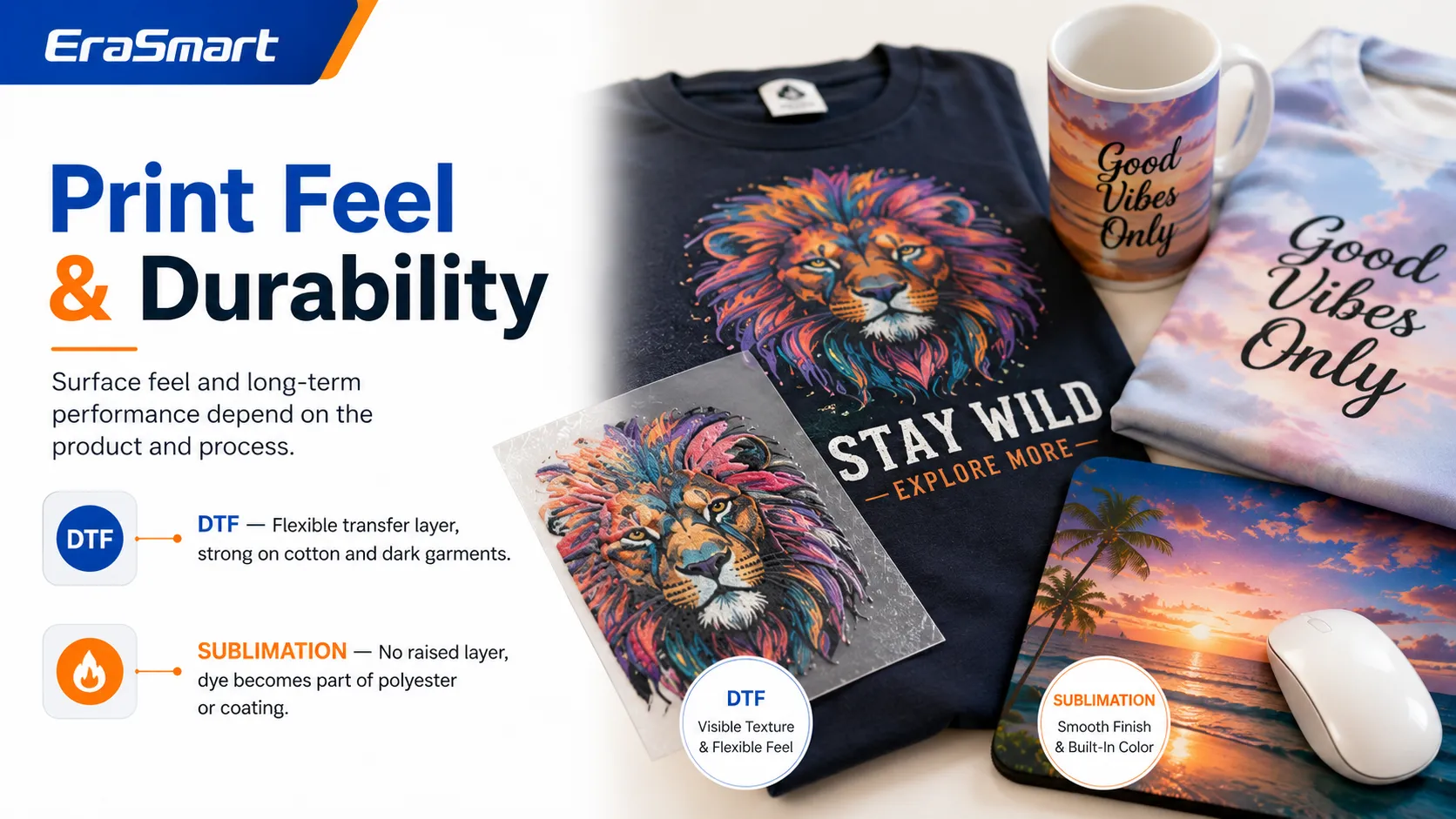
โดยปกติแล้วการระเหิดจะให้ผลลัพธ์ที่นุ่มนวลที่สุด
สัมผัสพื้นผิว DTF
ดีไซน์ DTF สร้างชั้นพิมพ์ลายบางๆ ที่ด้านบนของเสื้อผ้า
ความรู้สึกขึ้นอยู่กับ:
- ขนาดการออกแบบ
- ครอบคลุมหมึก
- ผงกาว
- คุณภาพการถ่ายโอน
- เงื่อนไขการกดดัน
- ผ้า
- กดจบ.
โลโก้ขนาดเล็กอาจให้ความรู้สึกเบาและยืดหยุ่นได้ การออกแบบขนาดใหญ่ที่มีการครอบคลุมหมึกจำนวนมากอาจรู้สึกสังเกตเห็นได้ชัดเจนยิ่งขึ้น
ความรู้สึกพื้นผิวระเหิด
สีระเหิดเข้าสู่เส้นใยโพลีเอสเตอร์หรือสารเคลือบ
ไม่มีฟิล์มถ่ายโอนแยกเหลืออยู่บนผ้า
สำหรับเครื่องแต่งกายโพลีเอสเตอร์ พื้นที่พิมพ์มักจะให้ความรู้สึกเกือบจะเหมือนกับผ้าที่ไม่ได้พิมพ์
หากความรู้สึกที่นุ่มนวลที่สุดที่เป็นไปได้ถือเป็นสิ่งสำคัญ การระเหิดก็มีข้อได้เปรียบ—เฉพาะเมื่อผลิตภัณฑ์เข้ากันได้เท่านั้น
DTF Transfer Studio ต้องการอุปกรณ์อะไรบ้าง
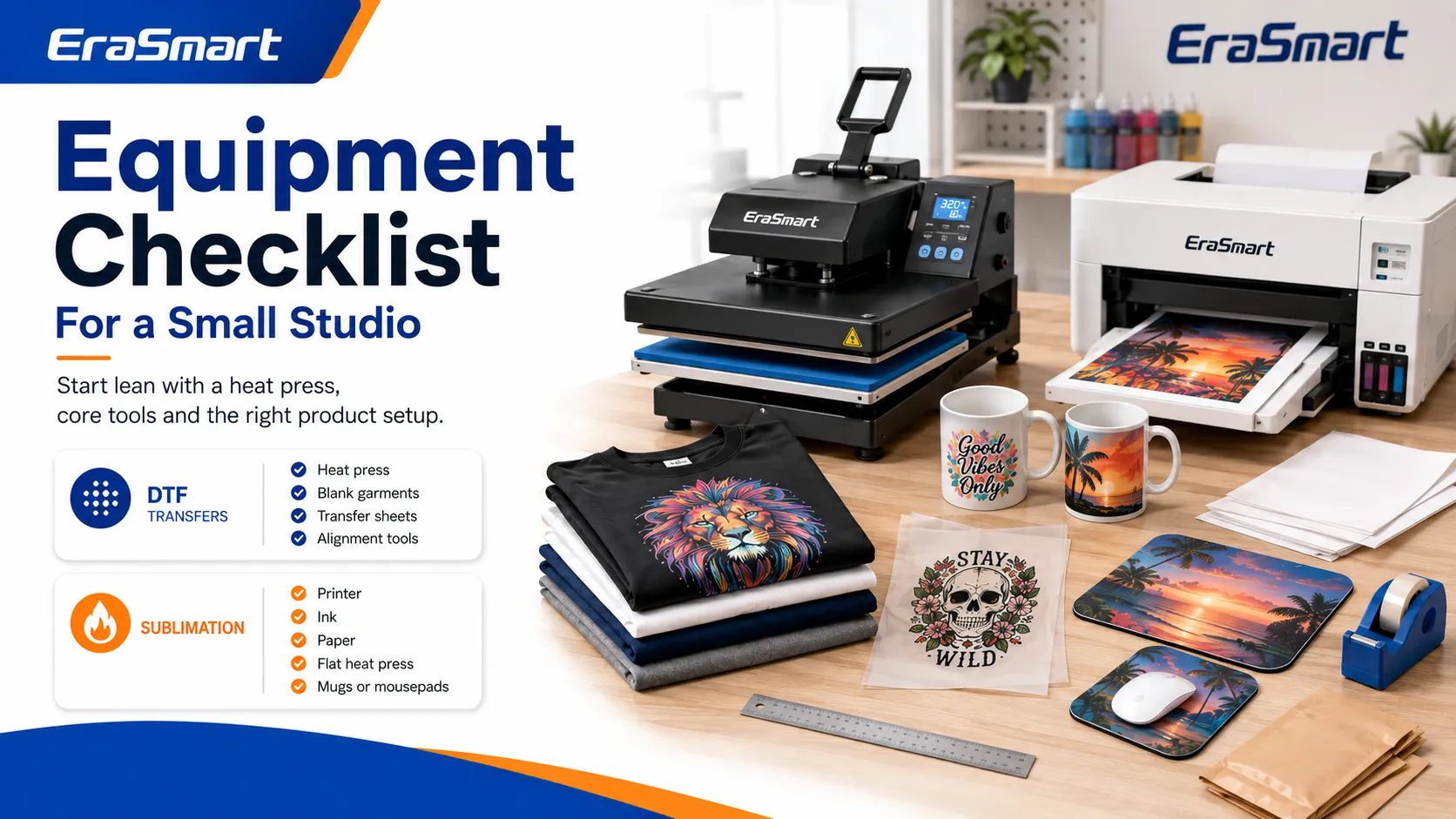
หากคุณจ้างบุคคลภายนอกในการโอน รายการอุปกรณ์ของคุณจะค่อนข้างสั้น
อุปกรณ์ถ่ายโอน DTF ที่จำเป็น
คุณต้องการ:
- เครื่องกดความร้อนแบบแบน
- คอมพิวเตอร์
- ซอฟต์แวร์การออกแบบ
- ไม้บรรทัดจัดตำแหน่งเสื้อผ้า
- กรรไกร
- แผ่นรองตัด
- ลูกกลิ้งผ้าสำลี
- เทปทนความร้อน
- กระดาษ parchment หรือกระดาษตกแต่ง
- หมอนกดความร้อน
- เสื้อผ้าเปล่า
- พร้อมกดโอน
- วัสดุบรรจุภัณฑ์
ในตอนแรกคุณไม่จำเป็นต้อง:
- เครื่องพิมพ์ DTF
- หมึก DTF
- สินค้าคงคลังฟิล์ม PET
- ผงกาว
- เครื่องปั่นผง
- เตาบ่ม
- ซอฟต์แวร์ RIP
- อุปกรณ์ทำความสะอาดเครื่องพิมพ์
นี่คือเหตุผลว่าทำไมการโอน DTF จากภายนอกจึงน่าสนใจสำหรับผู้เริ่มต้น
กระบวนการใดมีต้นทุนการเริ่มต้นต่ำกว่า?
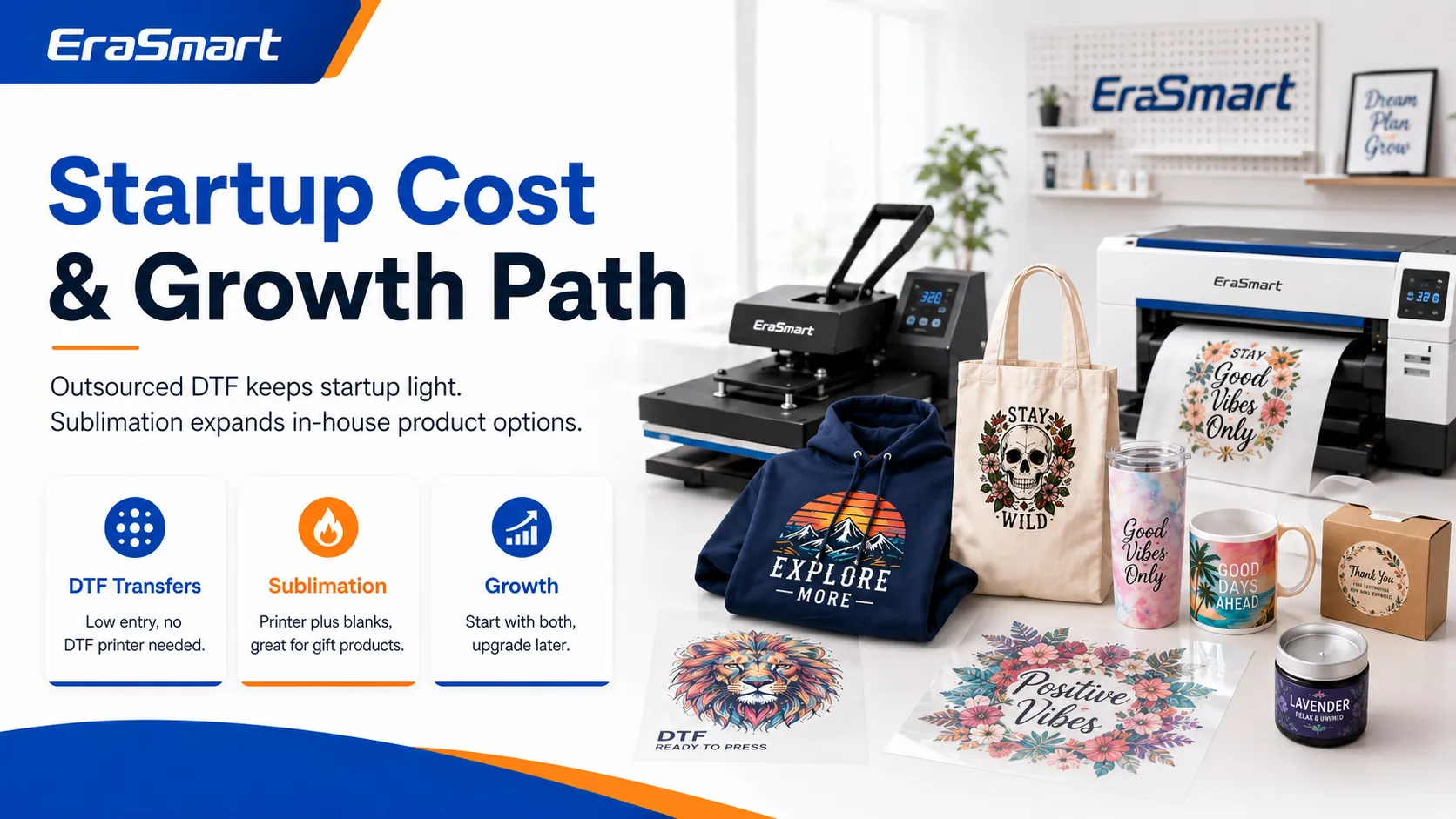
คำตอบขึ้นอยู่กับว่าคุณจ้างบุคคลภายนอกในการโอน DTF หรือไม่
ค่าใช้จ่ายในการเริ่มต้นด้วยการโอน DTF จากภายนอก
ต้นทุนหลักคือ:
- กดความร้อน
- เสื้อผ้าเปล่า
- คำสั่งโอน
- เครื่องมือพื้นฐาน
- บรรจุภัณฑ์
- ซอฟต์แวร์การออกแบบ
คุณไม่จำเป็นต้องมีเครื่องพิมพ์ในตอนเริ่มต้น
ซึ่งจะทำให้การถ่ายโอน DTF พร้อมพิมพ์เป็นหนึ่งในวิธีการที่มีต้นทุนต่ำที่สุดในการเข้าสู่การพิมพ์เครื่องแต่งกายตามสั่ง
ค่าใช้จ่ายในการเริ่มต้นการระเหิด
ต้นทุนหลักคือ:
- เครื่องพิมพ์ระเหิด
- หมึก
- กระดาษ
- กดความร้อน
- ช่องว่าง
- เทป
- บรรจุภัณฑ์
การระเหิดต้องใช้เครื่องพิมพ์ แต่ระบบระดับเริ่มต้นยังสามารถเข้าถึงได้ค่อนข้างมาก
การเปรียบเทียบการเริ่มต้นใช้งานจริง
| รายการเริ่มต้น | DTF จากภายนอก | การระเหิด |
|---|---|---|
| เครื่องพิมพ์ | ไม่จำเป็น | ที่จำเป็น |
| เครื่องกดความร้อนแบบแบน | ที่จำเป็น | ที่จำเป็น |
| สำนักพิมพ์พิเศษ | ไม่จำเป็น | จำเป็นสำหรับผลิตภัณฑ์บางอย่าง |
| หมึกและกระดาษ | ไม่จำเป็น | ที่จำเป็น |
| สินค้าคงคลังว่างเปล่า | ที่จำเป็น | ที่จำเป็น |
| อุปกรณ์บำรุงรักษา | น้อยที่สุด | ปานกลาง |
| การพึ่งพาซัพพลายเออร์ | สูงกว่า | ด้านล่างสำหรับกระดาษพิมพ์ |
| ความซับซ้อนของเวิร์กโฟลว์เริ่มต้น | ต่ำ | ต่ำถึงปานกลาง |
หากคุณเป็นเจ้าของเครื่องรีดร้อนอยู่แล้ว การโอน DTF จากภายนอกอาจเป็นวิธีที่เร็วและแพงที่สุดในการเริ่มขายเครื่องแต่งกาย
การโอน DTF กับการระเหิด: ไหนดีกว่ากัน?

ไม่มีกระบวนการใดจะดีไปกว่านี้สำหรับทุกสตูดิโอ
การโอน DTF จะดีกว่าเมื่อธุรกิจของคุณมุ่งเน้นไปที่:
- เครื่องแต่งกายผ้าฝ้าย
- เสื้อผ้าสีเข้ม
- เสื้อฮู้ด
- เครื่องแบบ
- กระเป๋าผ้า
- เสื้อผ้าที่กำหนดเอง
- เสื้อผ้าแบรนด์เล็กๆ
การระเหิดจะดีกว่าเมื่อธุรกิจของคุณมุ่งเน้นไปที่:
- แก้วน้ำ
- แก้วน้ำ
- แผ่นรองเมาส์
- ภาพสินค้า
- เคสโทรศัพท์
- ของขวัญเคลือบ
- เครื่องแต่งกายโพลีเอสเตอร์
สำหรับสตูดิโอพิมพ์แบบกำหนดเองขนาดเล็ก โมเดลธุรกิจที่แข็งแกร่งที่สุดอาจรวมทั้งสองอย่างเข้าด้วยกัน
การถ่ายโอน DTF พร้อมกดช่วยให้คุณสามารถเปิดตัวเครื่องแต่งกายโดยไม่ต้องใช้เครื่องพิมพ์ DTF การระเหิดช่วยให้คุณมีวิธีการพิมพ์ภายในบริษัทสำหรับของขวัญส่วนบุคคลและผลิตภัณฑ์โพลีเอสเตอร์
เมื่อรวมกันแล้วจะมอบแค็ตตาล็อกที่กว้างขึ้น โอกาสในการรวมกลุ่มที่มากขึ้น และการพึ่งพาหมวดหมู่ผลิตภัณฑ์เดียวน้อยลง
อาจเป็นเช่นเดียวกับคุณด้วย

ลิขสิทธิ์ 2020 © Erasmart - แผนผังไซต์