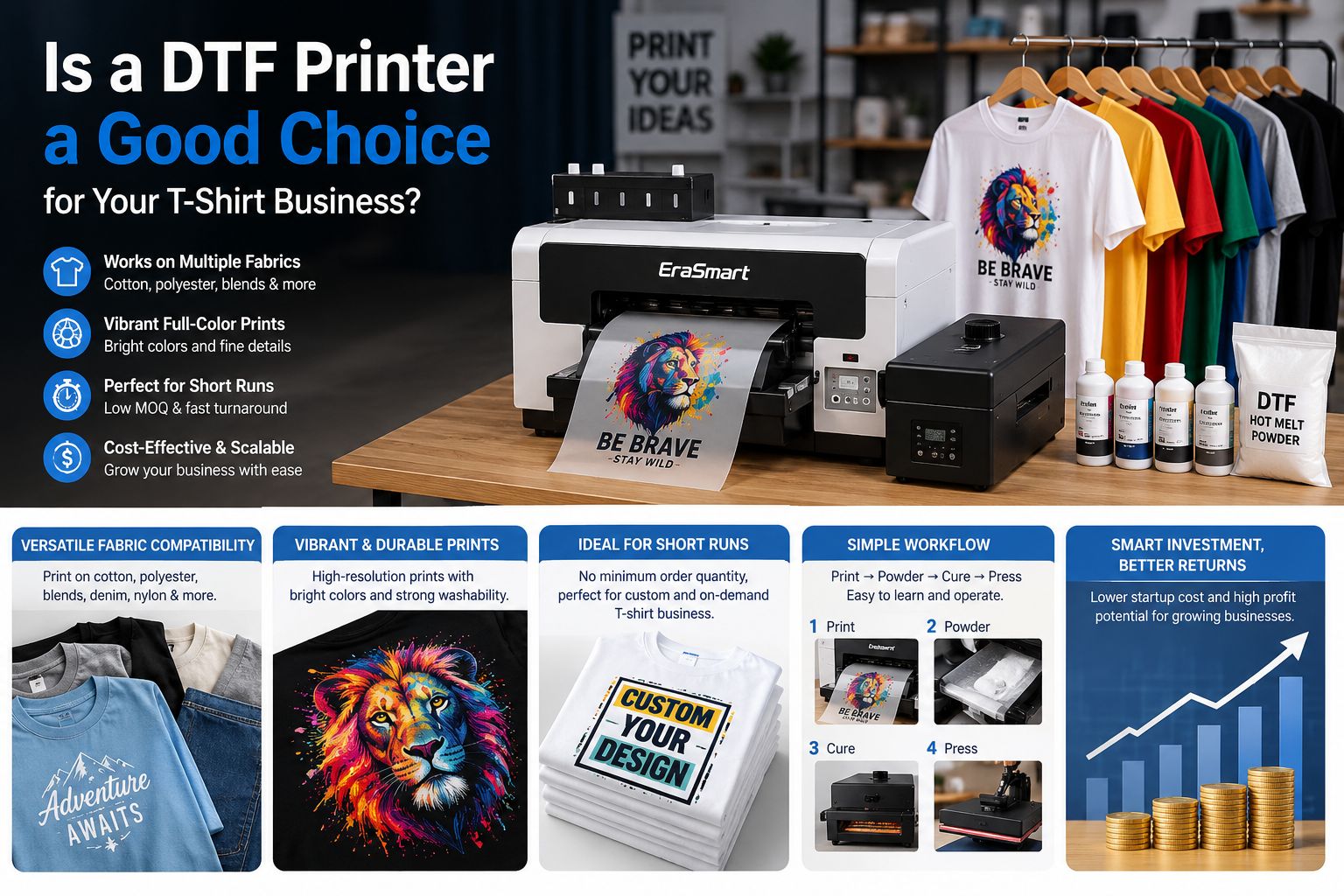
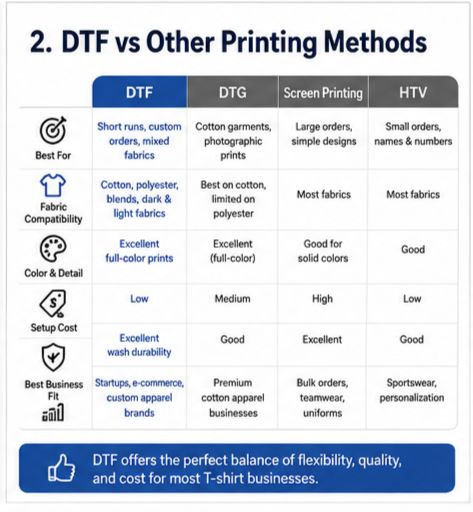
A DTF printer can be an excellent choice for a T-shirt business, but only if your business model matches what DTF does best. For many modern apparel businesses, DTF is attractive because it handles low minimums, short runs, mixed garment types, dark shirts, and full-color artwork more comfortably than many older decoration workflows.EraSmart’s own comparison guide positions DTFas the most balanced option when a shop needs flexibility across one-piece orders, mixed fabrics, fast-turnaround custom jobs, and frequent design changes.
At the same time, DTF is not automatically the best answer for every T-shirt business. If your production is heavily focused on large repeat orders with the same artwork, screen printing may still be the stronger workflow. If your product direction is very cotton-led and your brand cares most about a direct-on-garment print feel, DTG can still make sense. The right answer depends on what kinds of orders your business needs to say yes to every day.
The Real Question Is Not “Is DTF Good?” but “Is DTF Right for My Order Mix?”
For a T-shirt business, the best printing method is the one that matches your real commercial workload. DTF usually becomes a strong option when your orders are small or mixed, your garments include cotton, polyester, and blends, your artwork is often full-color, and your customers expect quick turnaround. EraSmart’s guide is very clear on this point: DTF is strongest when the business has to handle one-offs, short runs, dark garments, sportswear names and numbers, and mixed-fabric order flow without heavy setup friction.
That makes DTF especially practical for startup apparel brands, local print shops, online custom sellers, schoolwear suppliers, event merch businesses, and studios that need to handle many different job types rather than one narrow production pattern.
Why DTF Often Makes Sense for a T-Shirt Business
1. It handles mixed fabrics better than many small businesses expect
One of DTF’s biggest commercial advantages is that it works well in mixed-fabric workflows. EraSmart’s comparison guide specifically highlights cotton, polyester, and blends as one of DTF’s strongest business advantages, while Roland’s official BY-20 workflow page also presents DTF transfers as suitable for cotton, polyester, denim, nylon, rayon, and more. For a T-shirt business that cannot predict exactly what blanks customers will choose, that flexibility matters.
2. It is strong for short runs and full-color artwork
DTF is usually more comfortable than screen printing when the order size is small and the artwork changes often. EraSmart’s guide describes DTF as strong for low MOQ, one-piece orders, short runs, gradients, detailed graphics, and fast-turnaround custom work. That is exactly why DTF has become so relevant for modern T-shirt businesses selling personalized graphics, seasonal drops, test designs, or e-commerce-driven custom jobs.
3. It works well on dark garments
Dark shirts are one of the most common realities in the T-shirt business, and they are also one of the reasons many shops move toward DTF. EraSmart’s guide explicitly lists dark garments as one of DTF’s strongest fit areas, while also noting that DTG becomes more process-sensitive when dark garments, white ink, and polyester enter the workflow. For many businesses, this is the practical turning point that makes DTF feel easier to scale commercially.
When DTF May Not Be the Best Choice
DTF is not the perfect answer in every situation. If your T-shirt business is built around large repeat orders with the same design, screen printing can still be more efficient because setup time is spread across higher volume. If your brand is built around cotton-first garments and you specifically want a direct-to-garment print story, DTG may still be the better fit. EraSmart’s comparison page lays out this distinction clearly: DTF is usually the flexible answer, DTG is more cotton-oriented, and screen printing is strongest when repeat volume justifies setup work.
You should also avoid treating DTF as “just buying a printer.” EraSmart’s workflow guide makes an important point here: a strong DTF business is built on workflow, not only on the printer itself. Design, RIP setup, print consistency, powdering, drying, transfer, and QC all affect the final result. A good printer helps, but unstable workflow between stages is where most real production problems appear.
What Equipment Do You Actually Need?
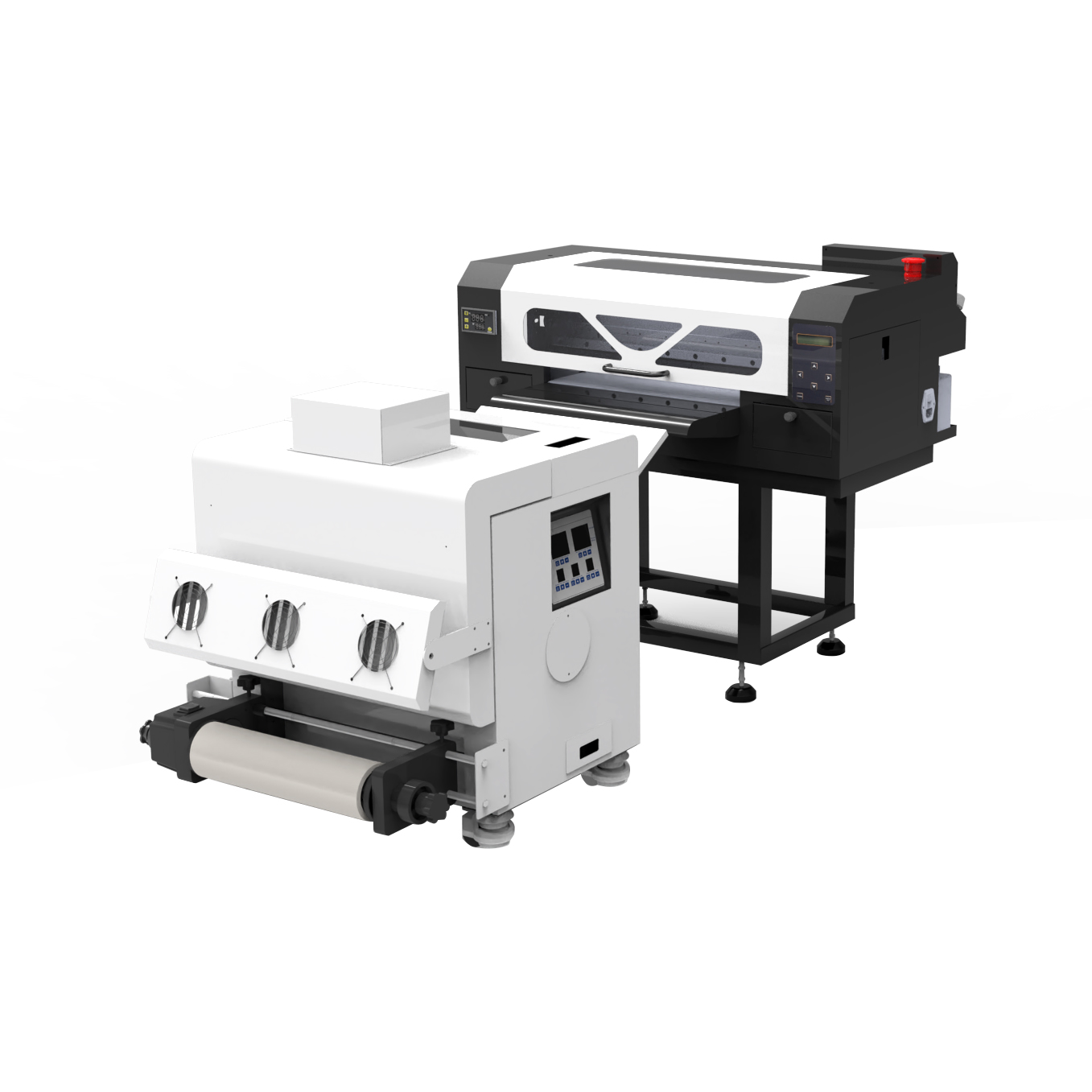
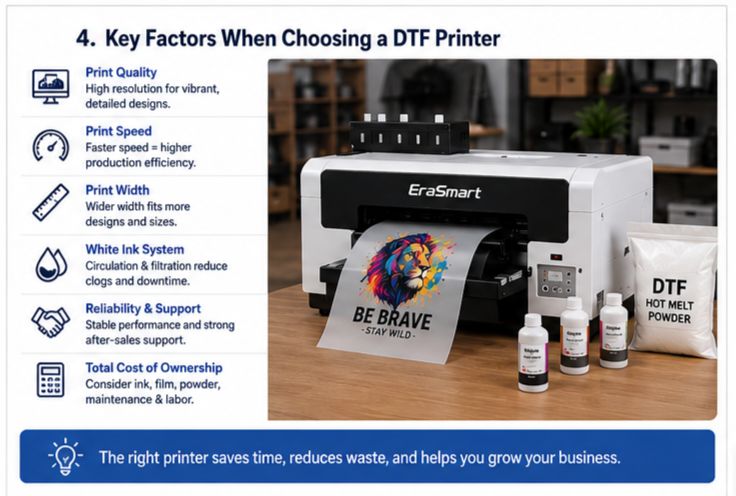
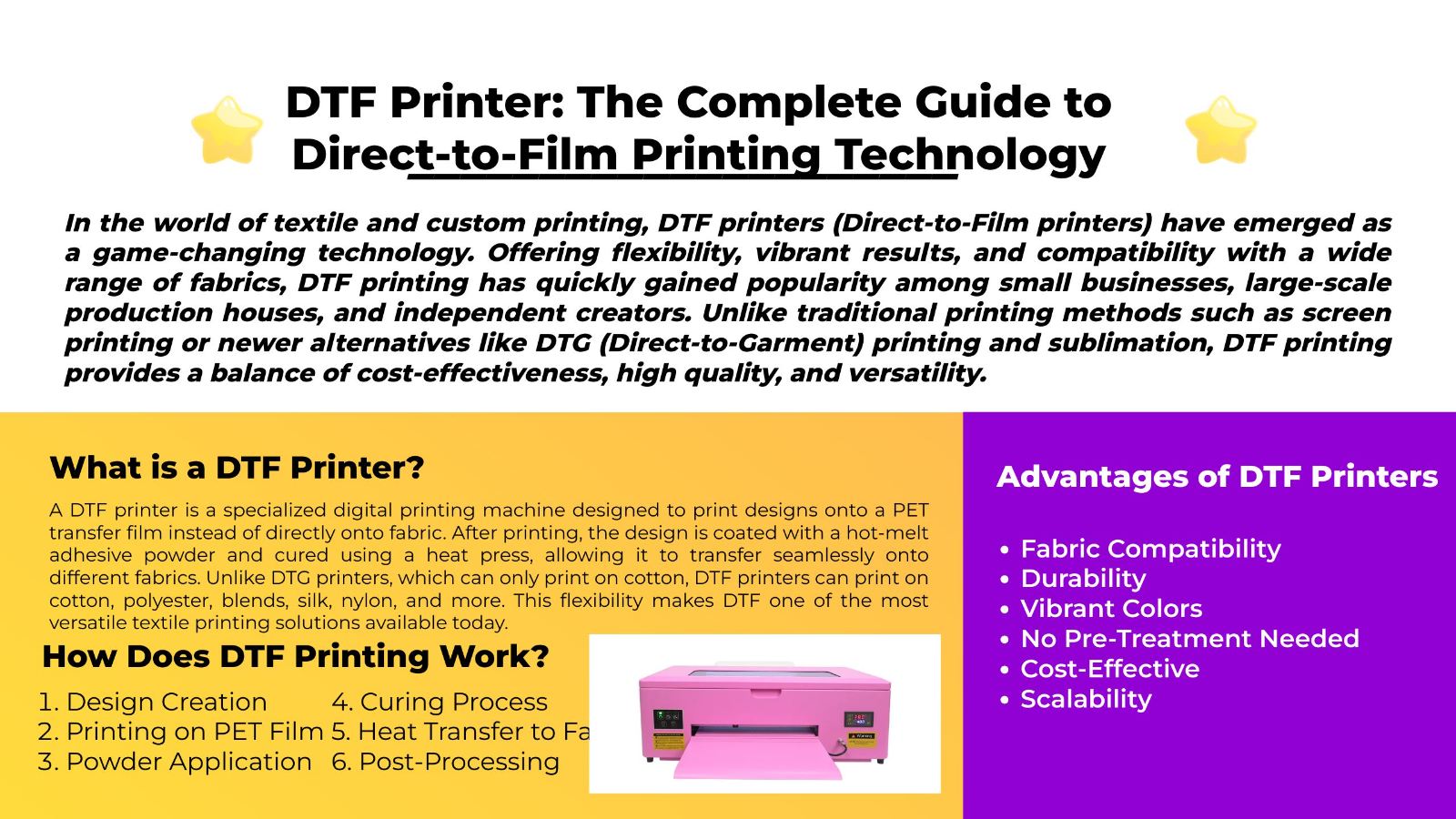
A real DTF T-shirt workflow includes more than the printer. EraSmart’s workflow guide summarizes the production line as design, print, powder, cure, and press. Roland’s official DTF workflow shows essentially the same four-step operating logic: print to film, apply powder, melt the powder under heat, then heat press to the garment. That means a real startup plan should account for the printer, film, ink, powder, curing method, and heat press rather than focusing only on printer price.
Which EraSmart DTF Printer Fits a T-Shirt Business Best?
The right EraSmart printer depends on your production stage.
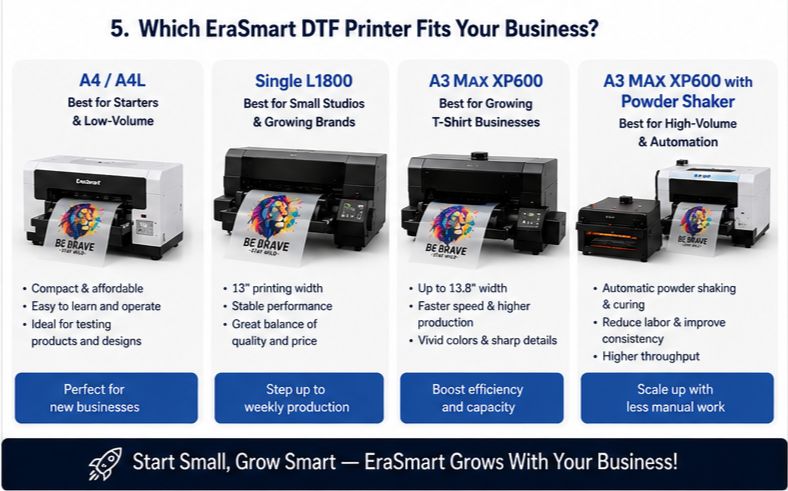
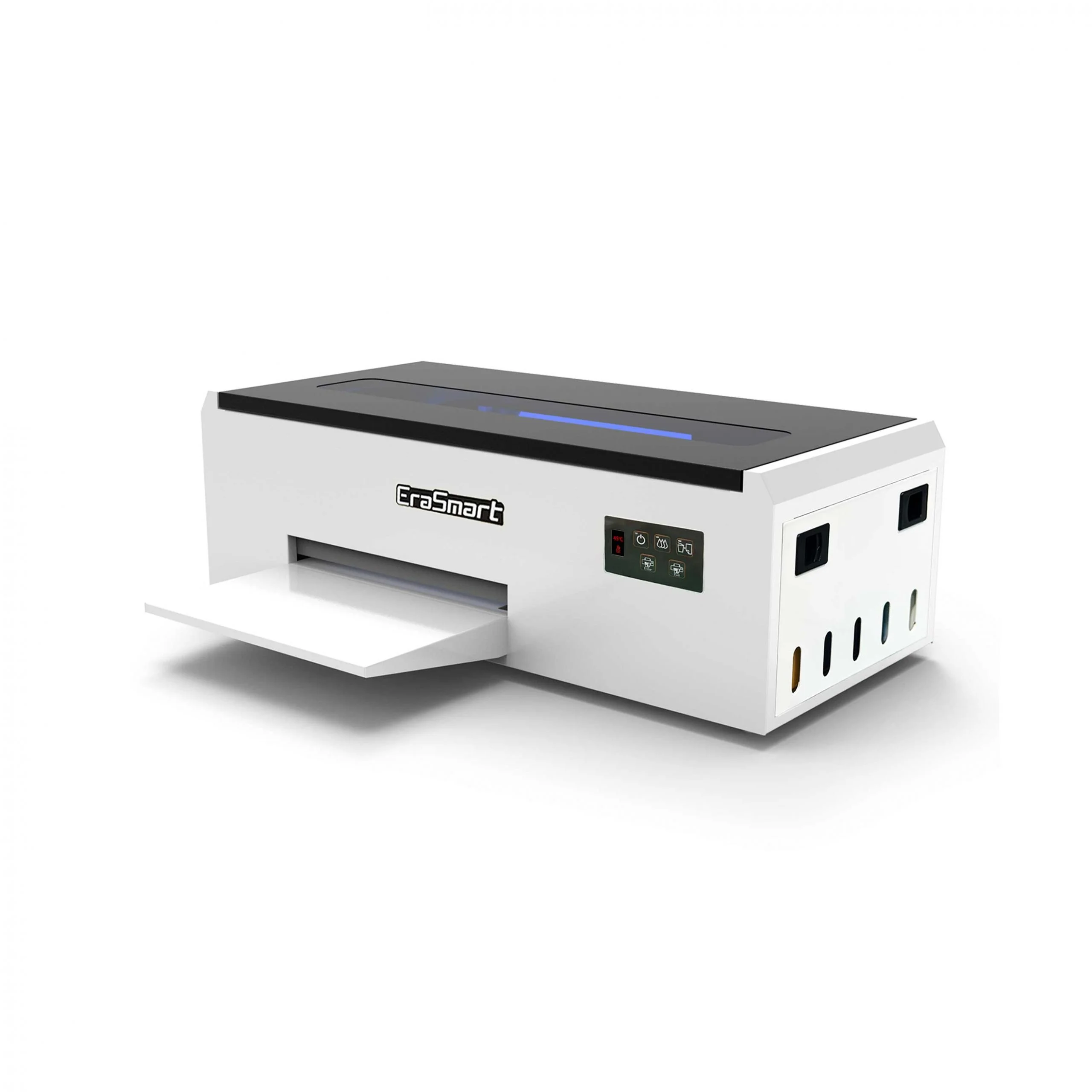
For first-stage sellers, home studios, and low-volume custom work, EraSmart positions itsเครื่องพิมพ์ A4 DTFas a compact entry-level model for startups and small-batch production, while theA4Lis positioned as an enhanced A4 model for daily small-scale production. These are the right types of machines when you are still testing products, learning workflow, and controlling startup cost.
For businesses already moving into weekly T-shirt production, theSingle L1800sits in a more practical commercial position. EraSmart describes it as a practical choice for startups and small studios that want reliable output without over-investing. That makes it a better fit when your business is beyond pure testing and needs a more usable day-to-day production rhythm.
For growing T-shirt shops, theA3 MAX เดี่ยว XP600is positioned by EraSmart as balanced performance in an A3 footprint, and theA3 MAX XP600 with Powder Shaker Machineis positioned as a more production-ready solution for higher throughput and automation. On the category page, EraSmart lists A3 Max and A3 Pro options with wider print widths and higher output than the smaller A4 class, which makes them better suited for regular commercial work.
So, Is a DTF Printer a Good Choice for Your T-Shirt Business?
Yes —if your T-shirt business needs flexibility more than specialization-
DTF is usually a strong choice when you need to handle short runs, mixed fabrics, full-color graphics, dark garments, personalized jobs, and fast changes in design. It becomes even more attractive when you are a startup, a custom print studio, an e-commerce seller, or a local business that needs to say yes to many different order types. That is the commercial logic behind EraSmart’s own DTF-vs-DTG comparison and its workflow-first guide structure.
But if your business is mostly repeat bulk printing or very cotton-specific direct-garment work, DTF may not always be the strongest primary method. The smarter buying decision is to match the machine and workflow to your real production pattern. In practice, that means choosing a compact EraSmart A4 setup for startup testing, an L1800-class machine for early business growth, or an A3 MAX / shaker workflow once production consistency and labor efficiency start to matter more.
If you are building a T-shirt business and want a setup that matches your current order volume, fabric mix, and growth stage, start by comparing EraSmart’s DTF printer range and then map that choice against your real workflow — not just your budget. The better your workflow fit, the better your long-term output, uptime, and margin.