Preguntas frecuentes
¿Qué es la tinta UV?
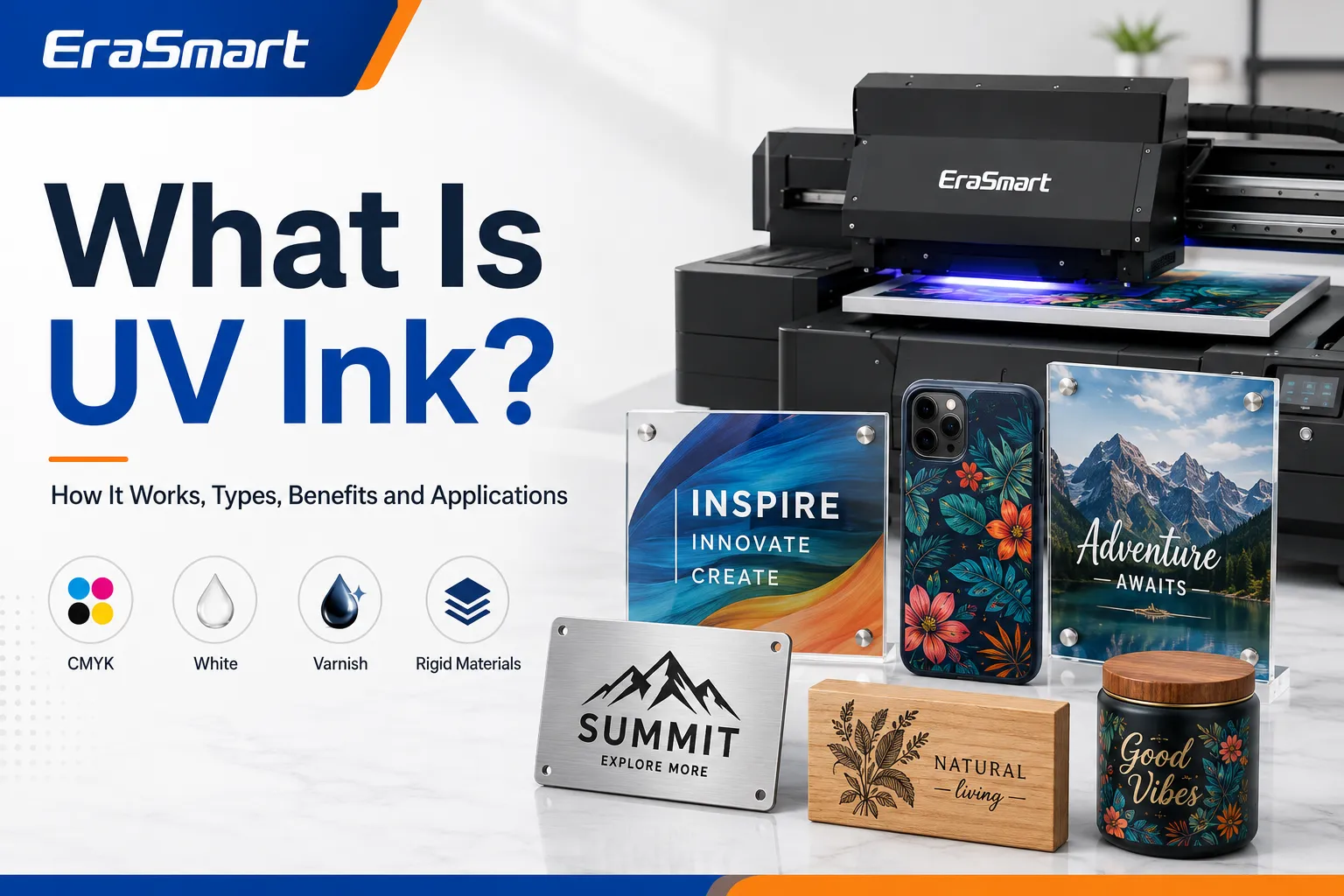
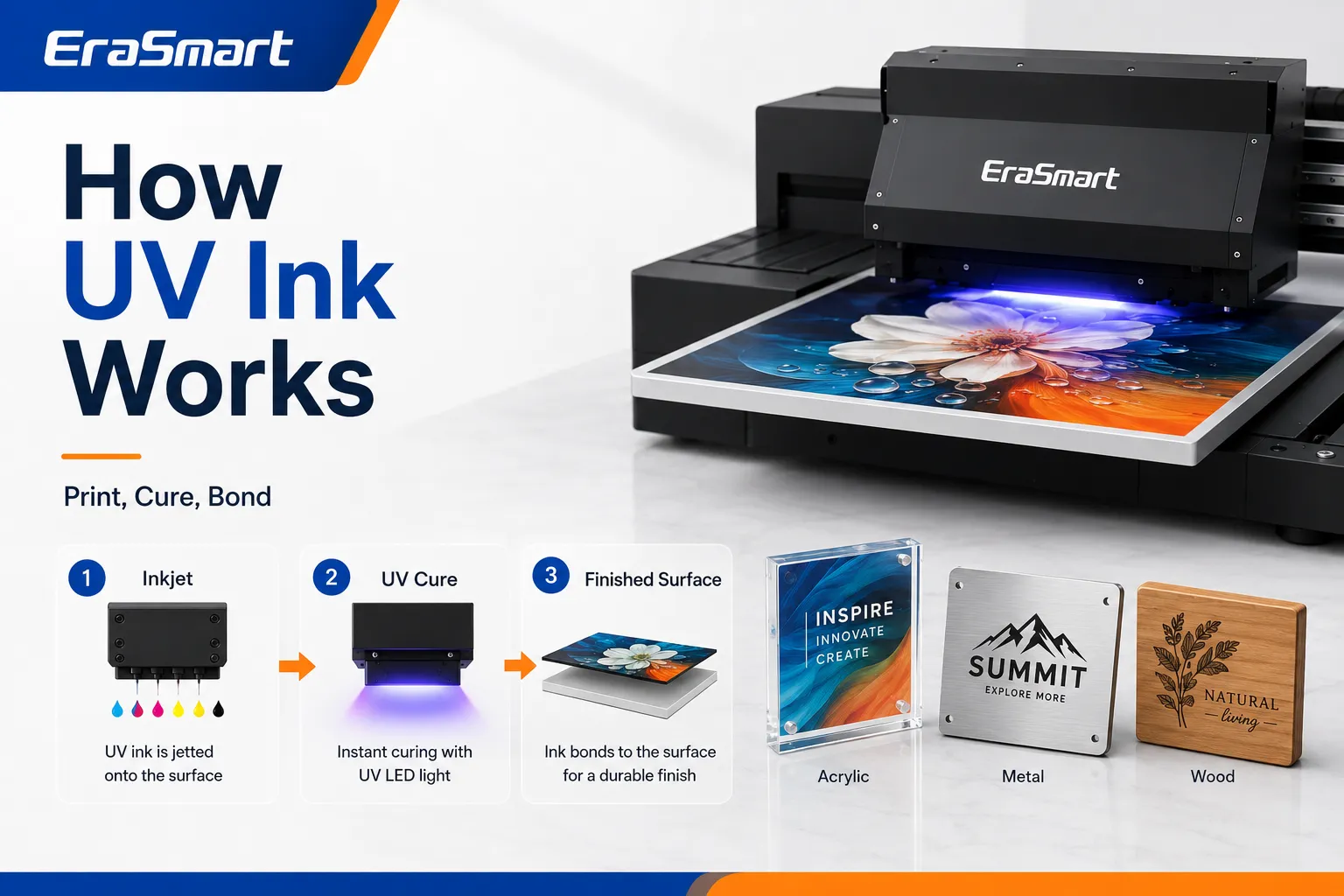
La tinta UV es una tinta de impresión especializada que cura cuando se expone a la luz ultravioleta dentro de una impresora UV compatible.
¿Cómo se cura la tinta UV?
Las lámparas LED UV de la impresora exponen la tinta recién impresa a energía ultravioleta, iniciando una reacción que la convierte en una capa impresa fija.
¿La tinta UV se seca instantáneamente?
La tinta UV normalmente se cura rápidamente durante la impresión. El curado completo aún depende de la formulación de la tinta, la lámpara UV, el modo de impresión y el espesor de la capa.
¿Puede la tinta UV imprimir sobre vidrio?
Sí, pero algunos productos de vidrio pueden requerir limpieza, imprimación u otro tratamiento previo para lograr una adhesión confiable.
¿Puede la tinta UV imprimir sobre plástico?
La tinta UV puede imprimir sobre muchos plásticos, pero las formulaciones plásticas varían. El producto exacto debe probarse antes de la producción.
¿Puede la tinta UV imprimir sobre metal?
Sí. El metal debe limpiarse para eliminar aceite, polvo, huellas dactilares y contaminación de la superficie antes de imprimir.
¿La tinta UV es resistente al agua?
Una impresión UV curada adecuadamente puede proporcionar una buena resistencia al agua durante el uso normal. El rendimiento aún depende del sustrato, la adherencia y el entorno previsto.
¿Se puede utilizar tinta UV en una impresora de inyección de tinta normal?
No. La tinta UV requiere un sistema de tinta, un cabezal de impresión y un hardware de curado UV compatibles.
¿La impresión UV requiere una prensa térmica?
No. La tinta UV se cura con luz ultravioleta en lugar de transferirse con calor.
¿Se puede imprimir con tinta UV en camisetas?
Por lo general, no se recomienda la tinta UV para ropa elástica estándar. Normalmente, DTF o DTG son más adecuados.
¿Para qué se utiliza la tinta UV blanca?
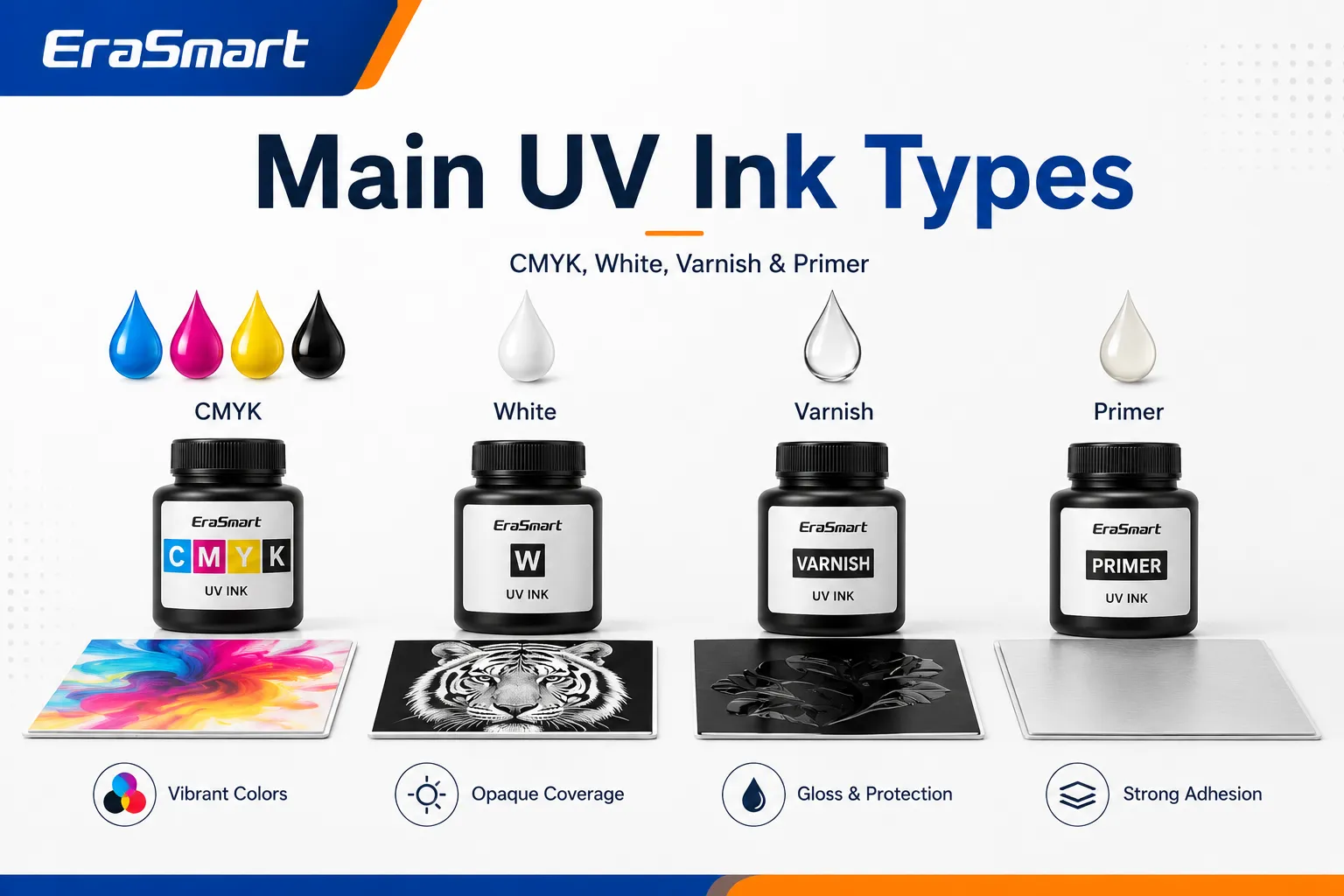
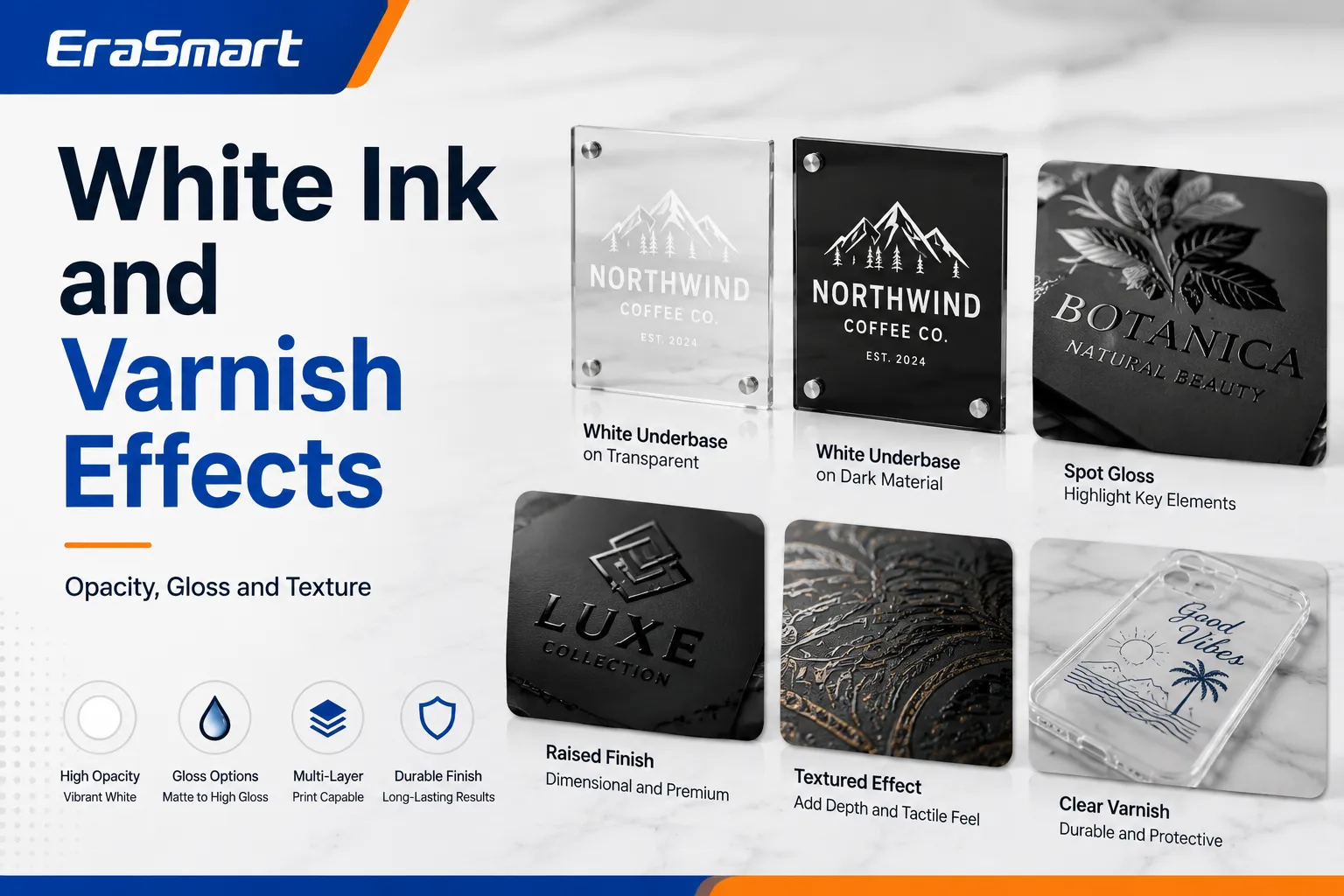
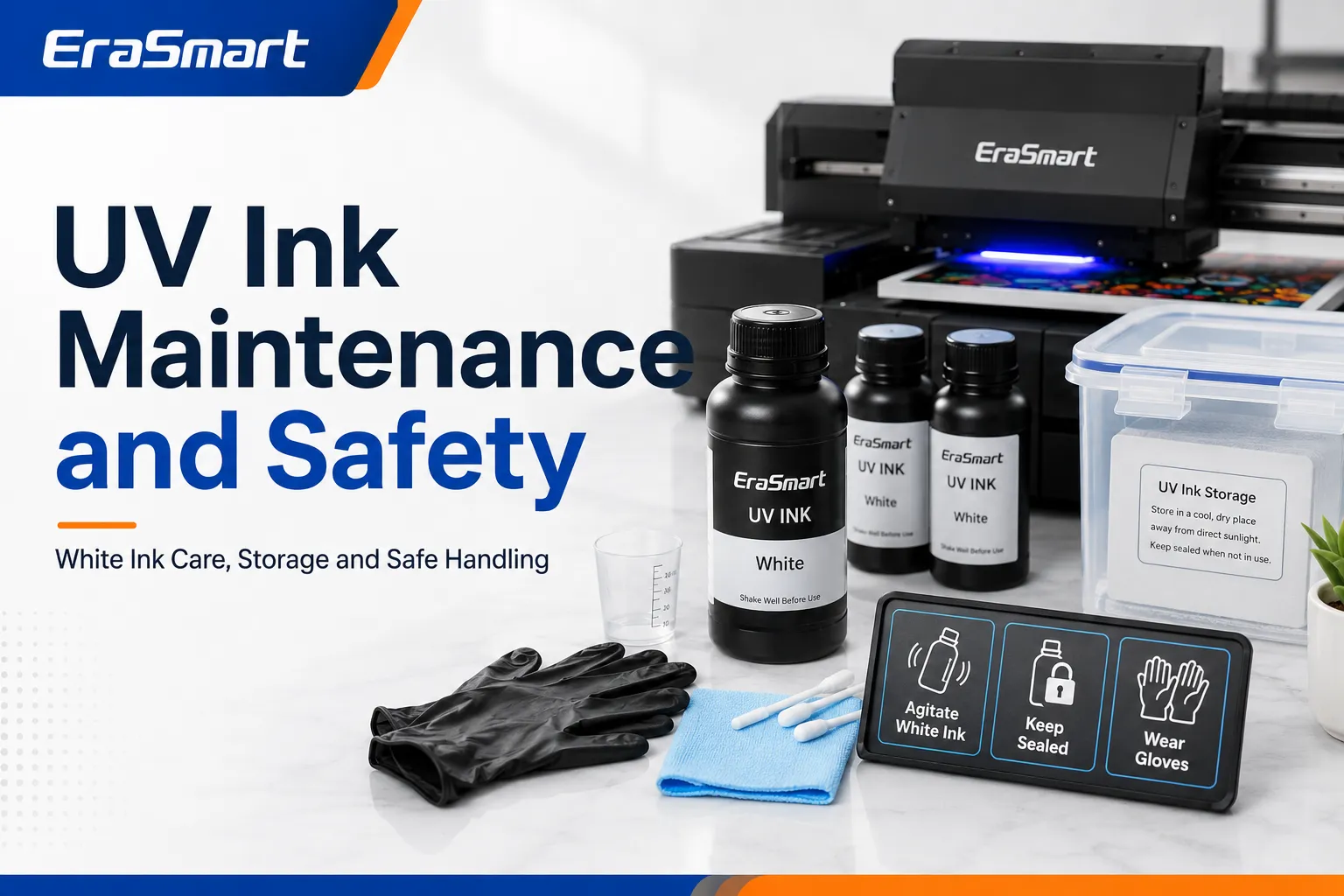
La tinta UV blanca se utiliza como base, capa de respaldo o gráfico blanco independiente sobre materiales transparentes, oscuros y de colores.
¿Qué es la tinta de barniz UV?
El barniz UV es un canal de tinta transparente que se utiliza para crear efectos de brillo, relieve y textura.
¿La tinta UV requiere imprimación?
Algunos materiales se imprimen bien sin imprimación. El vidrio, el metal y ciertos plásticos pueden requerir imprimación o tratamiento previo.
¿Por qué la tinta UV blanca necesita circulación?
La tinta blanca contiene pigmentos densos que pueden sedimentarse durante los períodos de inactividad. La circulación y el mantenimiento ayudan a mantener el pigmento distribuido y reducen el riesgo de obstrucción.