
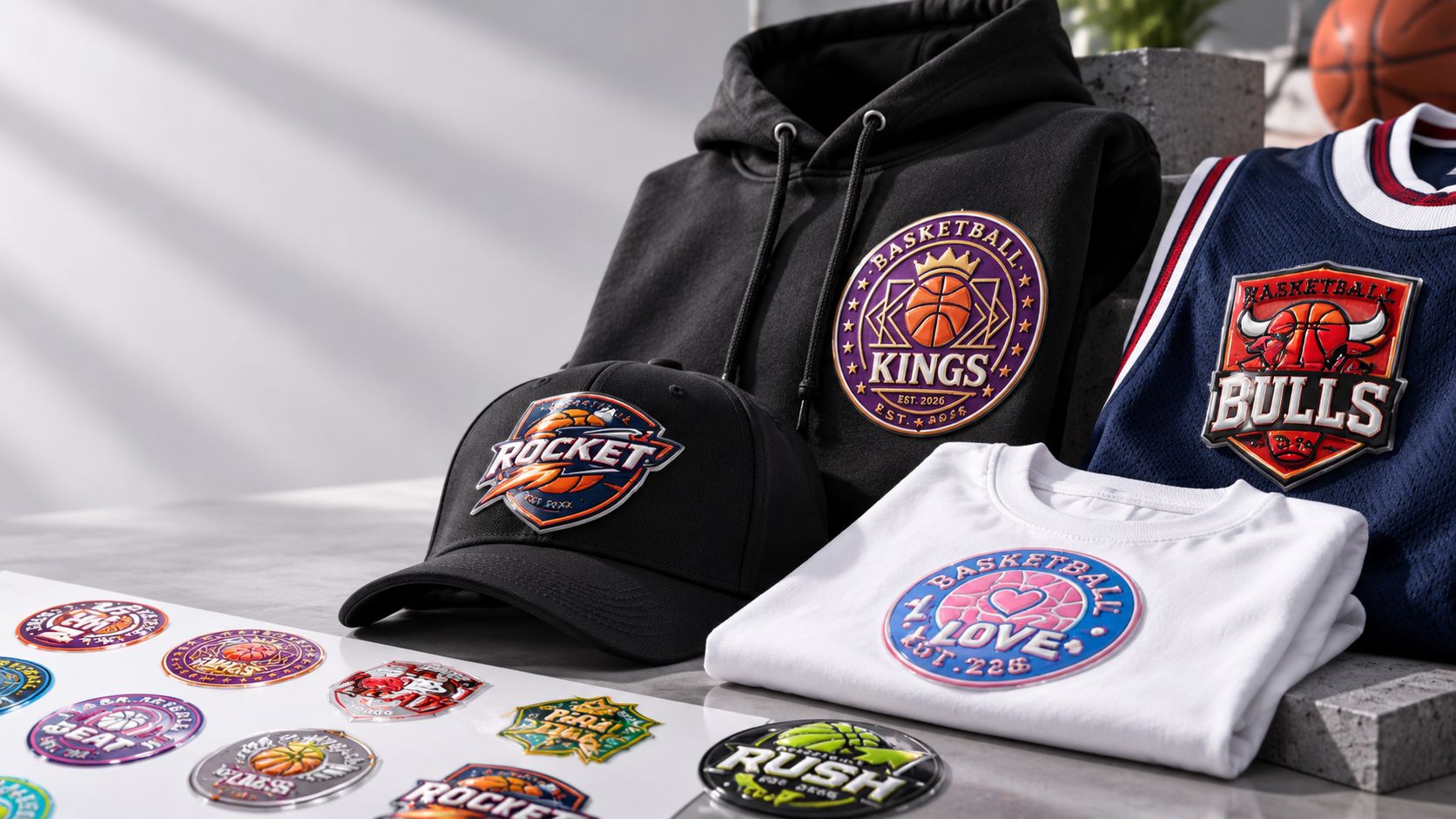
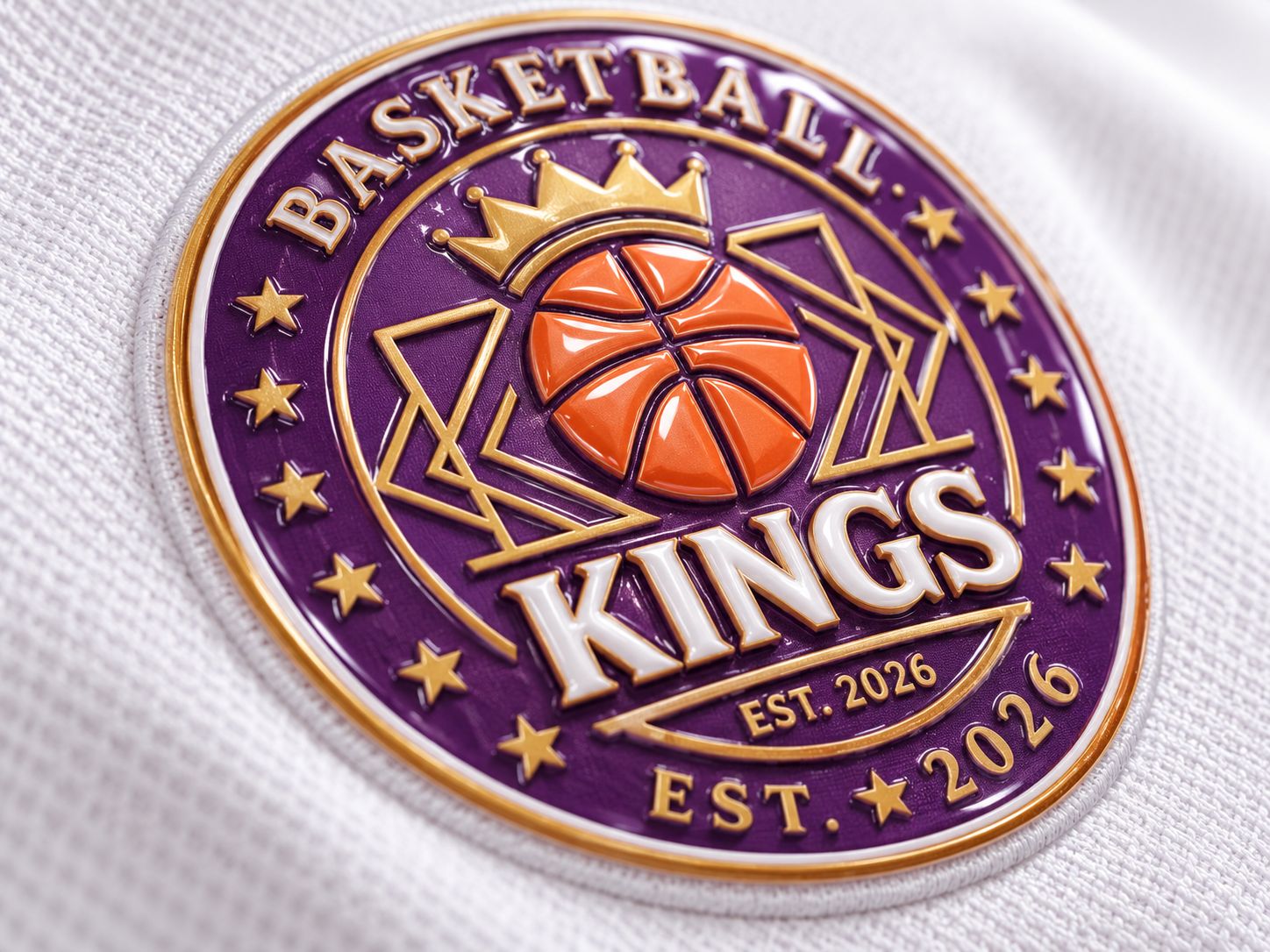
What Is a 3D Raised Logo?
A 3D raised logo is a flexible textile decoration with real physical thickness rather than a conventional flat printed surface.
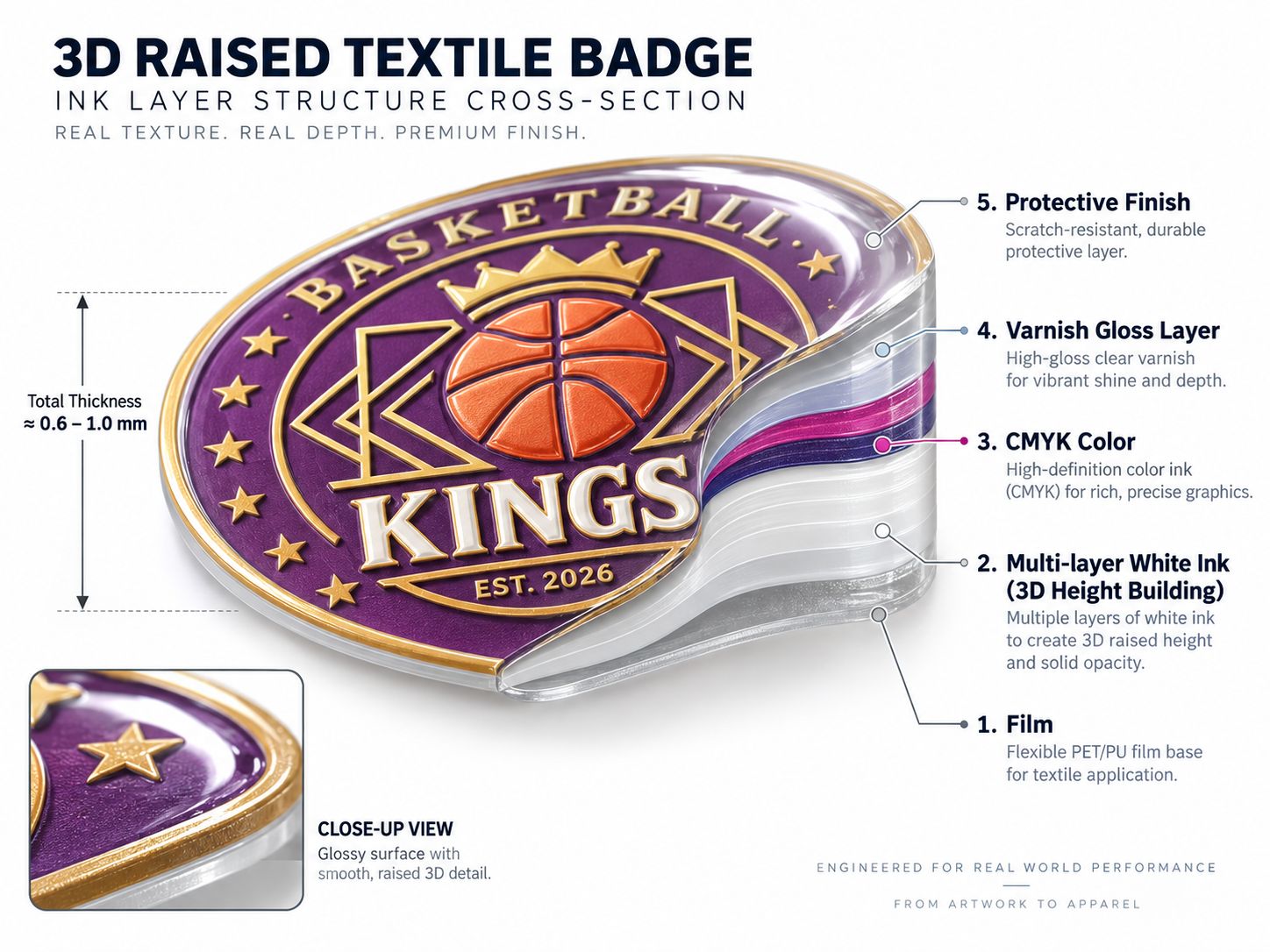
In this process, repeated layers of high-build flexible white UV ink create approximately 0.3–1.2 mm of physical relief. Flexible CMYK UV ink then prints the visible artwork, while varnish adds gloss, surface definition and color protection.
The completed badge has a noticeable embossed surface and a soft, silicone-like tactile feel while retaining the flexibility required for garments that bend, stretch and undergo normal washing.
Repeated high-build white layers create real physical thickness and visible embossed detail.
Dedicated flexible UV ink and TPU materials are designed for textile movement instead of rigid hard surfaces.
The TPU hot-melt adhesive system bonds the finished badge to compatible garment fibers during heat pressing.
Raised lettering, outlines and logos create a clearly noticeable touch-and-feel effect.
How 3D Raised Logo Printing Works
The complete process combines flexible UV printing, controlled UV curing, contour cutting and TPU heat transfer.
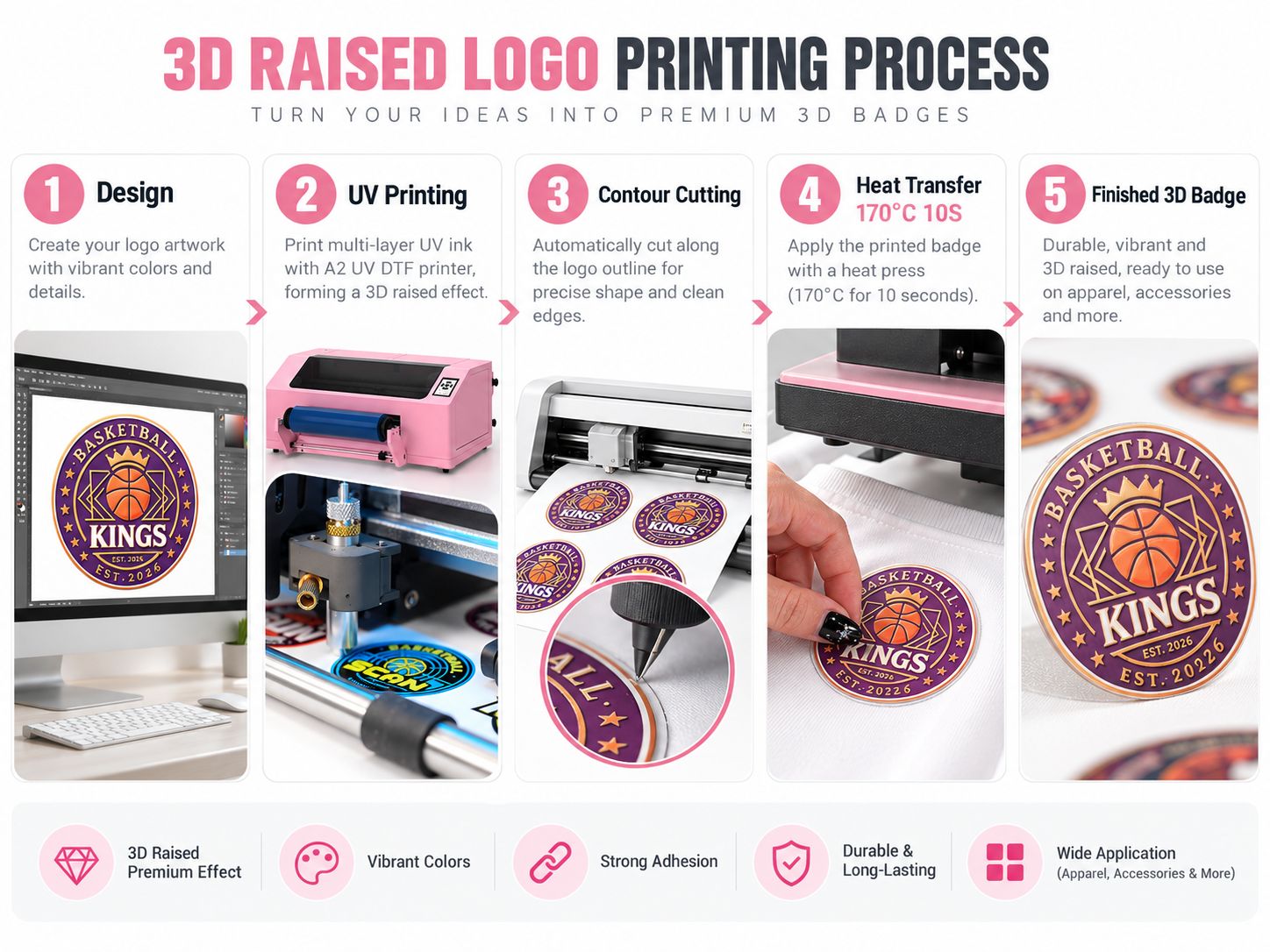
Prepare Design
Define the visible artwork, raised white structure, varnish areas and final contour-cut path.
Build & UV Print
Repeatedly build flexible white layers, then print CMYK color and varnish with controlled LED-UV curing.
Contour Cut
Use registration marks and a vision contour cutter to cut precisely around the finished badge.
Heat Transfer
Heat press the TPU-backed badge onto compatible textiles, typically around 150–165°C for 10–15 seconds.
Crystal Label vs 3D Raised Logo
Both applications can be produced on a compatible A2 UV DTF printer platform, but they are not the same product. They use different inks, different films, different transfer mechanisms and are designed for different substrates.
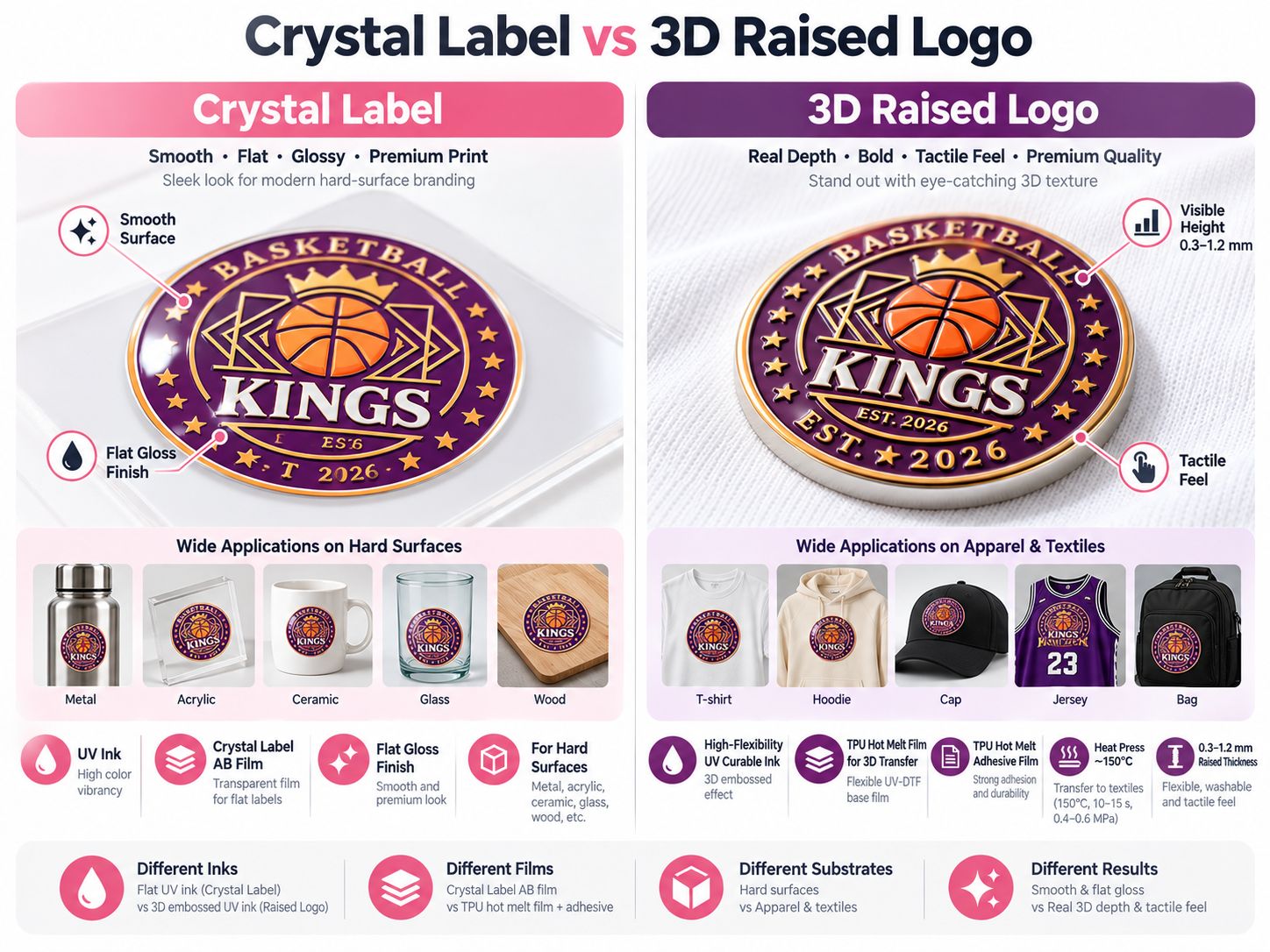
Crystal Label Hard-Surface Application
- Ink: standard UV curable ink for vivid color and glossy decorative output.
- Film: Crystal Label A/B Film transfer system.
- Substrates: metal, acrylic, ceramic, glass, wood and other compatible hard surfaces.
- Transfer: pressure / cold-transfer style application rather than garment heat pressing.
- Finish: smooth, relatively flat and glossy decorative surface.
3D Raised Logo Textile Application
- Ink: High-Flexibility UV Curable Ink for Textile / 3D Embossed UV Ink.
- Base Film: TPU Hot Melt Film for 3D Transfer / Flexible UV-DTF Base Film.
- Adhesive: TPU Hot Melt Adhesive Film for heat bonding to textile fibers.
- Substrates: T-shirts, hoodies, jerseys, caps and other compatible textile products.
- Finish: approximately 0.3–1.2 mm raised thickness with a flexible, washable and tactile surface.
| Comparison | Crystal Label | 3D Raised Logo |
|---|---|---|
| Ink System | Standard UV curable ink | High-flexibility / 3D embossed UV ink |
| Film | Crystal Label A/B Film | Flexible UV-DTF / TPU hot-melt transfer film |
| Adhesive System | A/B transfer system | TPU hot-melt adhesive layer |
| Target Substrate | Metal, acrylic, ceramic, glass, wood and other compatible hard surfaces | Apparel, fabric and compatible textile products |
| Transfer Method | Pressure / cold transfer | Heat press |
| Surface Result | Smooth, flat and glossy | 0.3–1.2 mm raised, flexible and tactile |
| Primary Performance Requirement | Color, gloss and adhesion to hard surfaces | Flexibility, bend resistance, wash resistance and textile adhesion |
Ink and Film Are the Core of the 3D Textile Workflow
A 3D raised logo cannot be treated as an ordinary crystal label that is simply transferred onto fabric. The flexible ink and TPU transfer system are fundamental to the finished product.
Flexible UV Ink System
TPU Transfer System
Why TPU Matters
TPU provides the flexibility and heat-transfer behavior needed for apparel decoration. Under suitable heat and pressure, the hot-melt adhesive layer bonds the printed 3D badge to the textile while allowing the finished decoration to bend with the garment and withstand normal washing conditions.
White Builds the Height. Flexible CMYK Adds Color. Varnish Finishes the Surface.
The three ink functions must be controlled independently. This is one of the key differences between a professional 3D raised-logo configuration and a basic flat-print workflow.
High-Build Flexible White Ink
Repeated layers of high-solids flexible white UV ink form the physical foundation and build approximately 0.3–1.2 mm of raised thickness.
High-Flexibility UV Color Ink
Flexible CMYK UV ink prints the visible logo artwork over the raised white structure while retaining the flexibility required for textile transfer and repeated garment bending.
Varnish / Clear Protective Layer
Clear varnish enhances gloss, strengthens surface definition and helps lock the visible color while preserving the raised 3D appearance.
What a Printer Needs for High-Build 3D Textile Printing
Changing from crystal-label production to a flexible 3D textile workflow requires more than replacing the film. Stable high-build printing also places additional requirements on ink-channel control, UV curing and white-ink circulation.
Independent White + CMYK + Varnish Channels
The ink system must independently control high-build white ink, flexible CMYK and varnish so that structural height, visible color and surface finishing can be managed separately.
Adjustable LED-UV Curing
Linear UV-energy adjustment helps manage thick flexible ink layers. Staged pin curing can stabilize each layer before final deeper curing, reducing the risk of surface wrinkling, internal under-curing and layer separation.
White-Ink Stirring & Circulation
High-build flexible white ink contains a high concentration of titanium dioxide and resin solids. Active stirring and timed peristaltic-pump circulation help reduce pigment sedimentation and nozzle clogging.
Why Controlled Curing Matters
With thick flexible UV ink buildup, curing only the surface too aggressively can leave the inner ink insufficiently cured. A controlled curing strategy helps stabilize the layer during printing and then fully cure the complete structure before cutting and transfer.
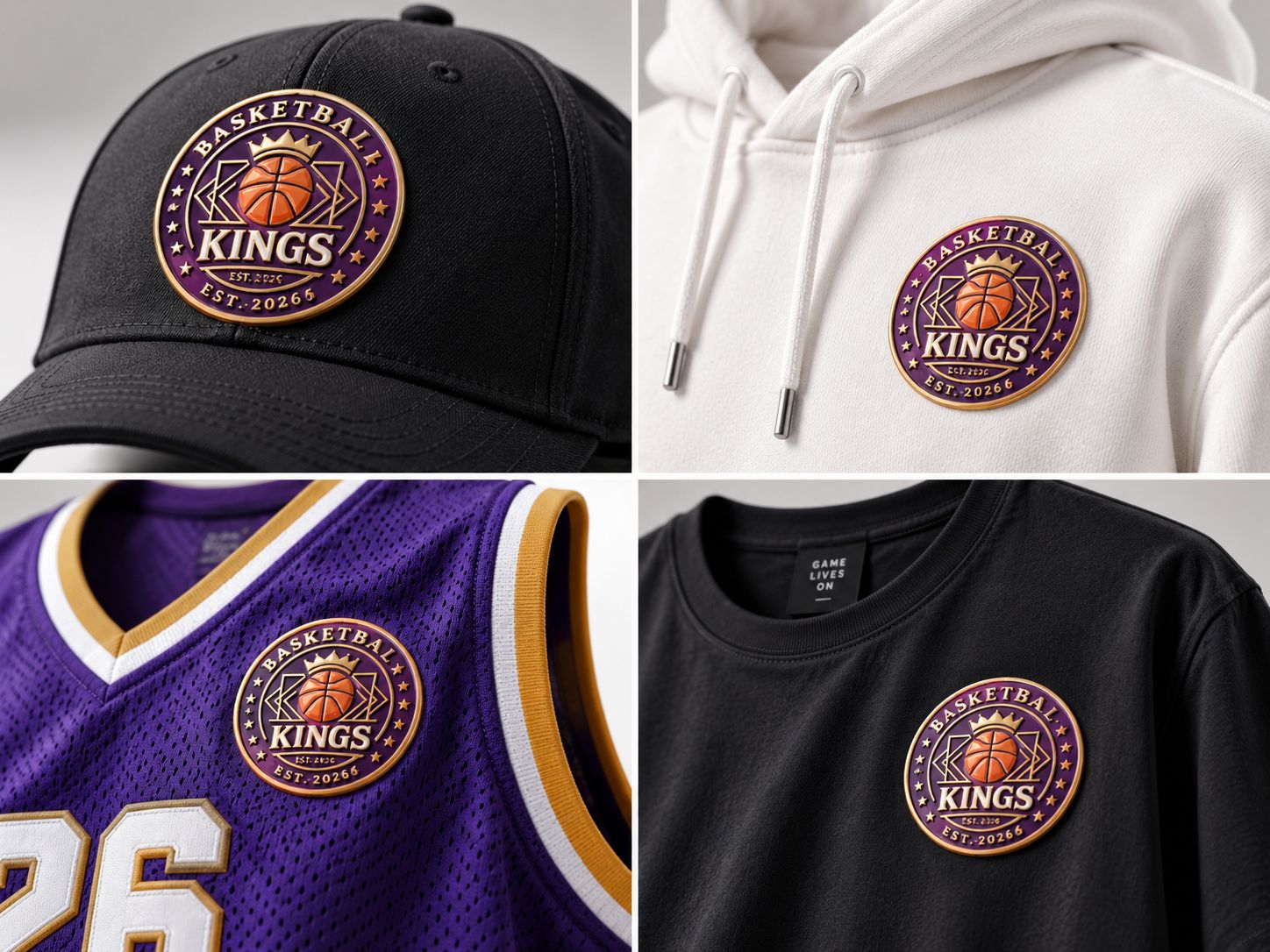
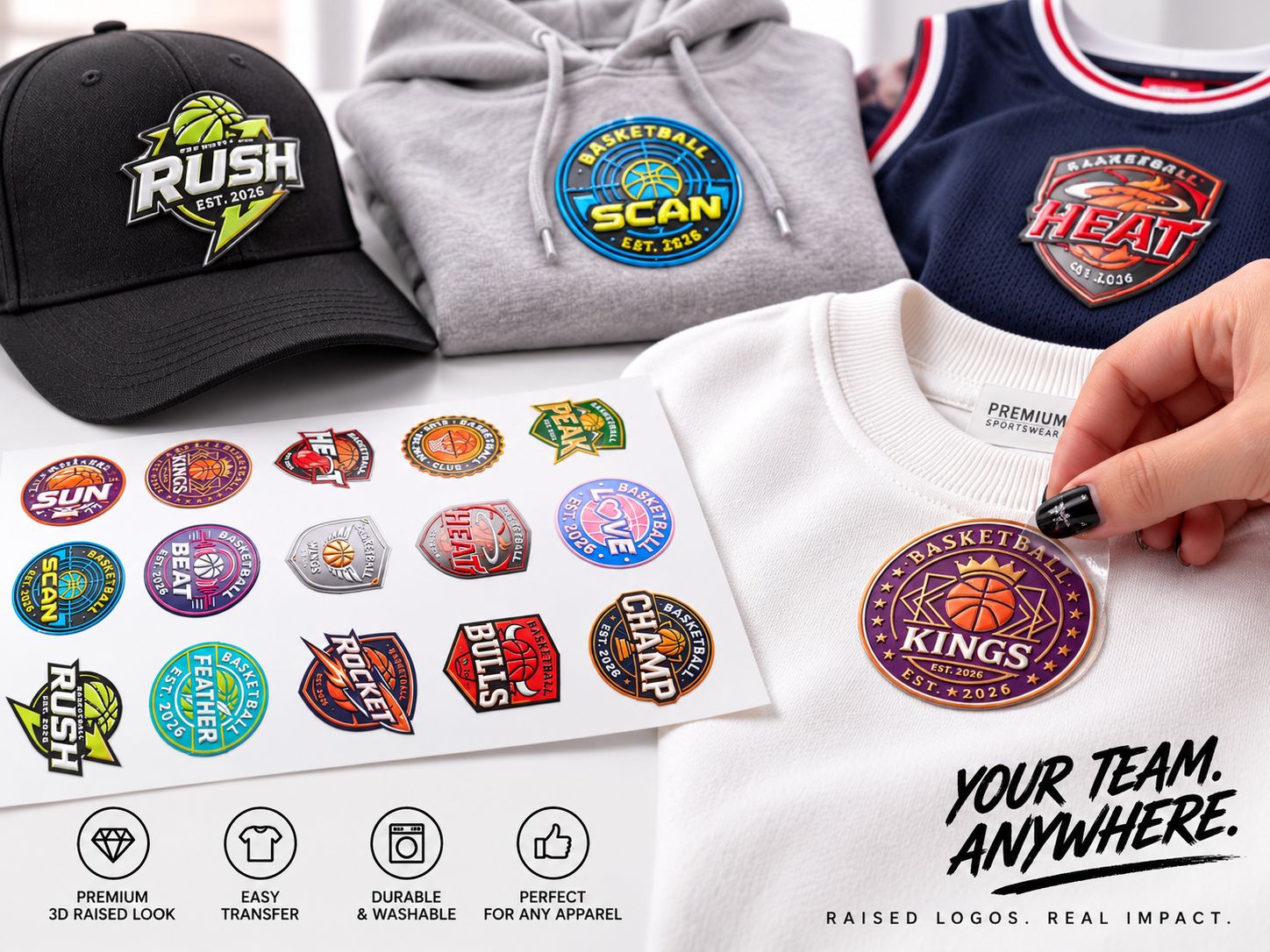
Designed for Apparel, Sportswear and Fashion Branding
The combination of flexibility, wash resistance and real raised height makes the process particularly useful for premium textile branding.
Heat-Press the Finished Badge onto the Garment
After printing, UV curing and contour cutting, the finished 3D badge is positioned on the garment and transferred using the TPU hot-melt adhesive system.
Typical reference conditions for this application are:
Final settings must be verified using the actual TPU film, adhesive system, garment material, badge thickness and heat-press equipment before batch production.
Built for Real Textile Use
The finished 3D badge must combine visual height with the flexibility and durability required for garments.
Flexible & Bend Resistant
The dedicated flexible ink and TPU system helps the badge move with the garment rather than behaving like a rigid hard-surface UV print.
Wash Resistant
Correct ink curing, TPU bonding and heat-transfer conditions help the finished badge withstand normal garment washing.
Silicone-Like Tactile Feel
The 0.3–1.2 mm raised structure produces a noticeable embossed surface with a premium soft-touch, dimensional appearance.
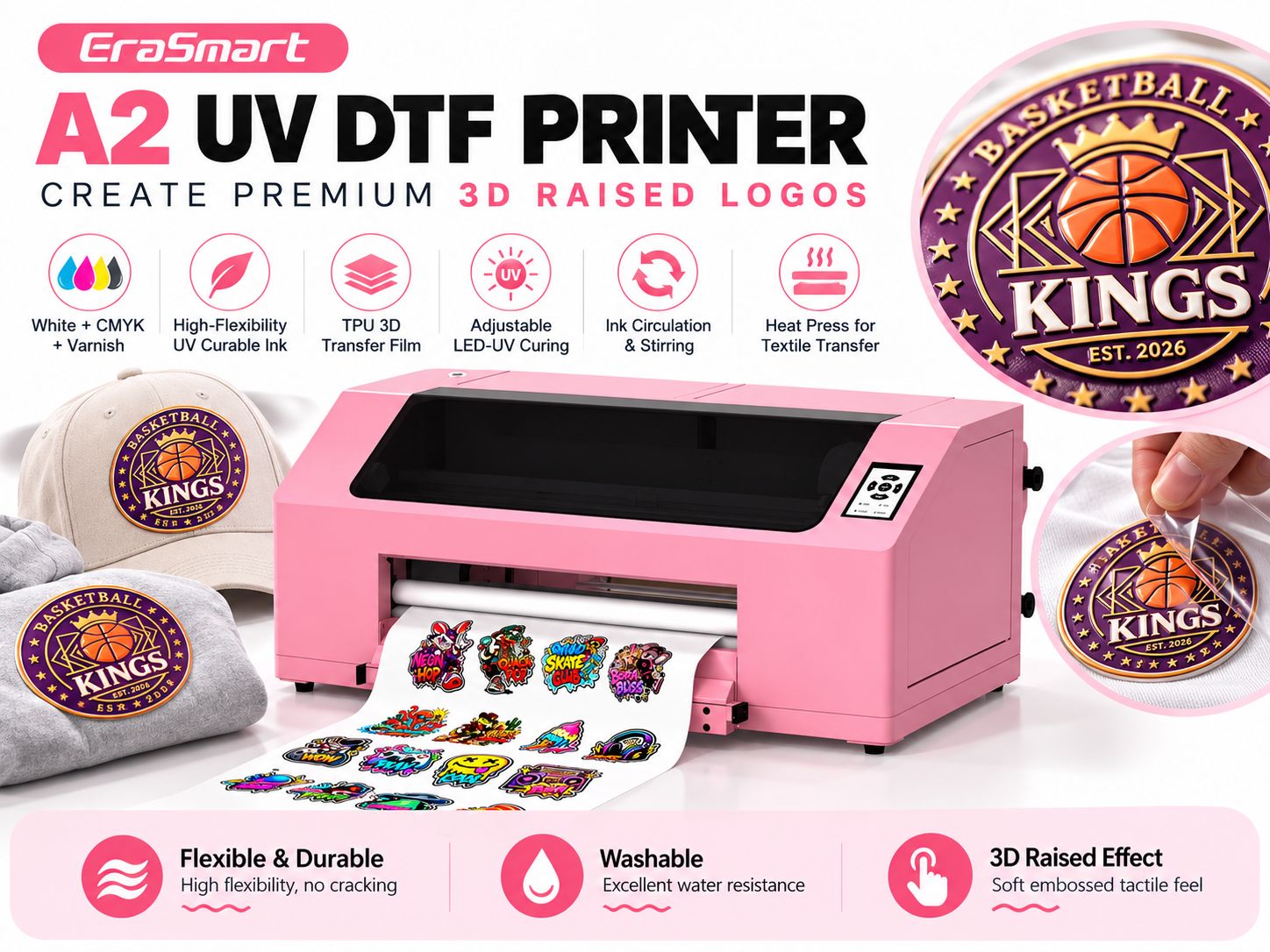
EraSmart A2 UV DTF Printer for 3D Raised Logo Production
The EraSmart A2 platform can be configured for flexible 3D raised-logo production when paired with the correct high-flexibility UV ink, TPU transfer system, independent ink-channel configuration and controlled curing workflow.
High-Build White Output
Supports repeated structural white ink printing required to create the raised 3D foundation.
Independent Color & Varnish Control
Flexible CMYK and varnish are controlled separately from the structural white layer for accurate visual and surface finishing.
From Printing to Apparel Transfer
Combine flexible UV printing, controlled curing, vision contour cutting and TPU heat transfer into one textile-decoration workflow.
Available A2 UV DTF Printer Configurations
Different printhead configurations can be selected according to production requirements and the final consumable system.
| Configuration | Printer Platform | Application |
|---|---|---|
| Single Angled I3200HD | A2 UV DTF Printer | Flexible 3D raised-logo and compatible UV DTF workflows |
| Single Angled DX7 | A2 UV DTF Printer | Flexible 3D raised-logo and compatible UV DTF workflows |
| Dual XP600 | A2 UV DTF Printer | Flexible 3D raised-logo and compatible UV DTF workflows |
The suitable printhead, ink-channel setup, UV curing profile and consumable system should be selected according to the final production requirement.
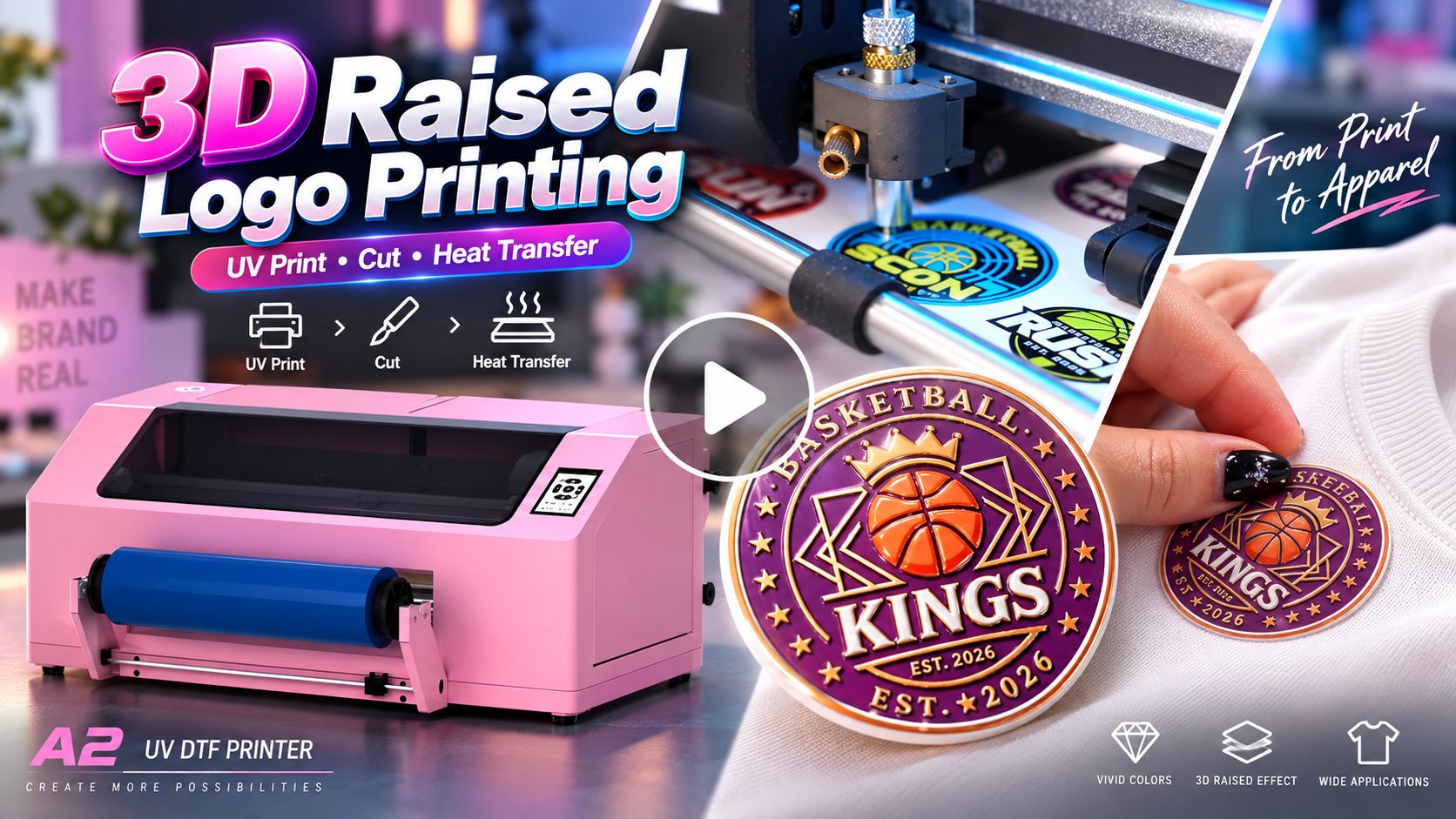
See the 3D Raised Logo Workflow in Action
Watch the workflow from high-build UV printing and contour cutting through to final TPU heat transfer on apparel.
3D Raised Logo Printing FAQ
Common technical questions about flexible UV embossed-logo production.
Is a 3D raised logo the same as a UV DTF crystal label?
No. A crystal label normally uses standard UV ink and Crystal Label A/B Film for compatible hard surfaces such as metal, acrylic, ceramic, glass and wood. A 3D raised textile logo uses high-flexibility UV ink together with a flexible TPU transfer and hot-melt adhesive system for apparel.
What ink is required for 3D raised apparel logos?
The workflow requires a flexible 3D UV ink system, including high-build flexible white ink, high-flexibility CMYK UV ink and varnish. These inks have different mechanical requirements from standard rigid-substrate UV ink.
How is the 0.3–1.2 mm raised height created?
Repeated high-build white ink passes create the physical structural thickness. Flexible CMYK then prints the visible artwork and varnish creates the final gloss and surface definition.
What film is used?
The textile workflow uses a compatible TPU Hot Melt Film for 3D Transfer or Flexible UV-DTF Base Film together with a TPU hot-melt adhesive layer. It should not be treated as the same A/B film system used for standard crystal labels.
Why does the printer need adjustable LED-UV curing?
Thick flexible UV ink layers need controlled curing. If the surface is cured too aggressively while the internal layer remains insufficiently cured, wrinkling or layer separation may occur. Controlled pin curing followed by final complete curing helps stabilize the structure.
Why is white-ink circulation important?
High-build flexible white UV ink contains a high concentration of titanium dioxide and resin solids. Active stirring and timed circulation help prevent pigment settling, density inconsistency and printhead clogging.
What are the typical heat-transfer settings?
Typical reference conditions are approximately 150–165°C for 10–15 seconds at around 0.4–0.6 MPa. Final settings must be tested with the actual film, garment, badge thickness and heat-press equipment.
Can the finished 3D badge be washed?
The flexible ink and TPU transfer system is designed for apparel applications and can provide wash resistance when the correct printing, UV curing and heat-transfer process is used. Production samples should still be wash tested before bulk manufacturing.
Which materials can use a 3D raised logo?
Typical applications include T-shirts, hoodies, sweatshirts, sports jerseys, caps, bags and other compatible textile products.
Can the same A2 printer produce crystal labels and 3D raised logos?
The same compatible printer platform may support both workflows, but the consumables and process configuration are different. Crystal labels use standard UV ink and A/B film, while the 3D textile workflow requires flexible UV ink, TPU transfer materials, controlled curing and garment heat pressing.
Build a Complete 3D Raised Logo Printing Solution
Tell EraSmart your garment type, required raised height, production volume and preferred printer configuration. We can help you evaluate the printer, flexible UV ink, TPU transfer materials, curing strategy, contour cutting and heat-transfer workflow.