Small Size Flatbed Inkjet Printer Manufacturer

Operation Guide
 In a standard UV printing workflow, white ink is usually treated as an underbase. Its main job is to block the color of the substrate and provide a clean foundation…
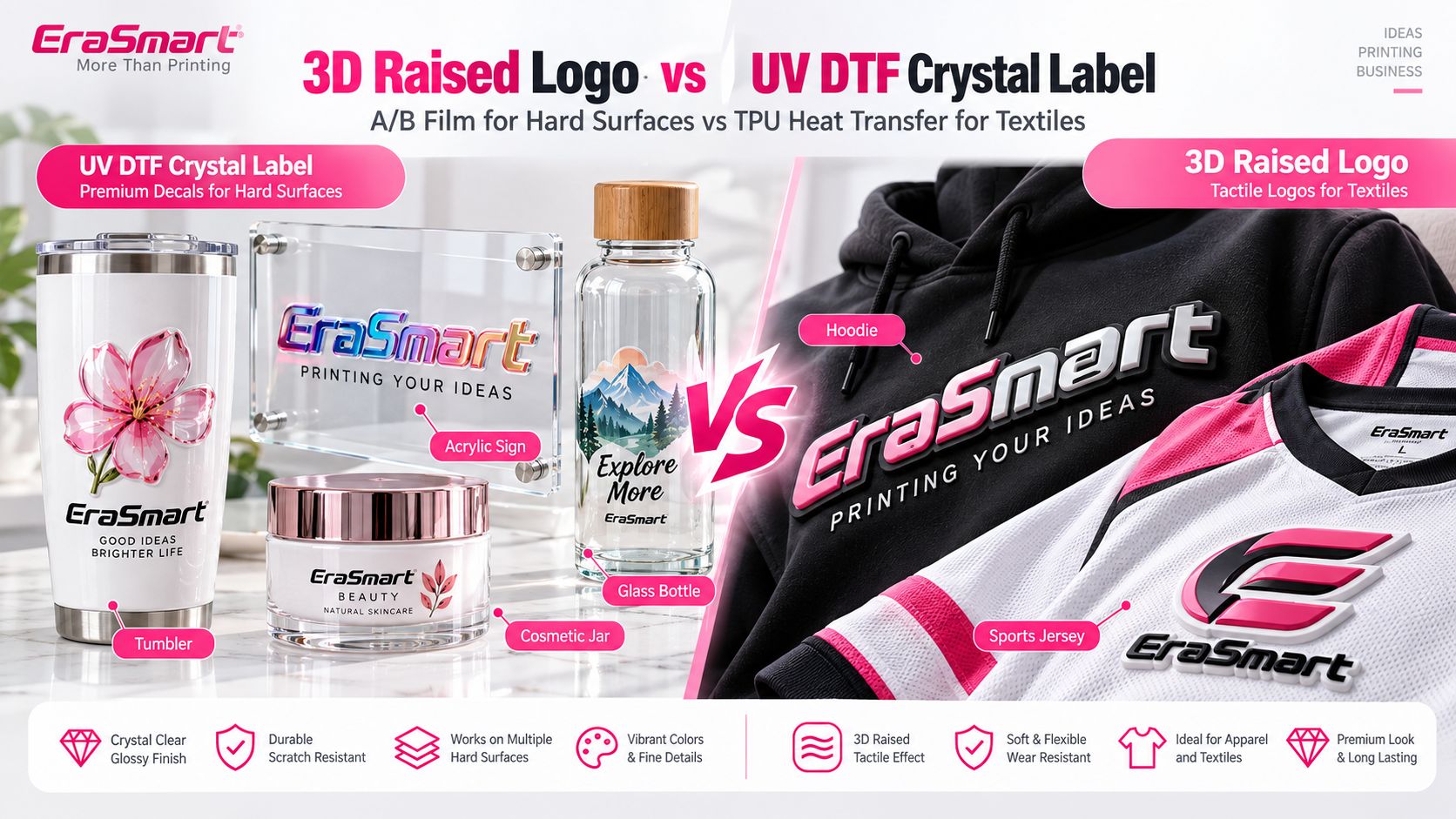 A UV DTF crystal label and a 3D raised apparel logo may be produced from a similar UV printing platform, but they are not the same transfer product. The most…
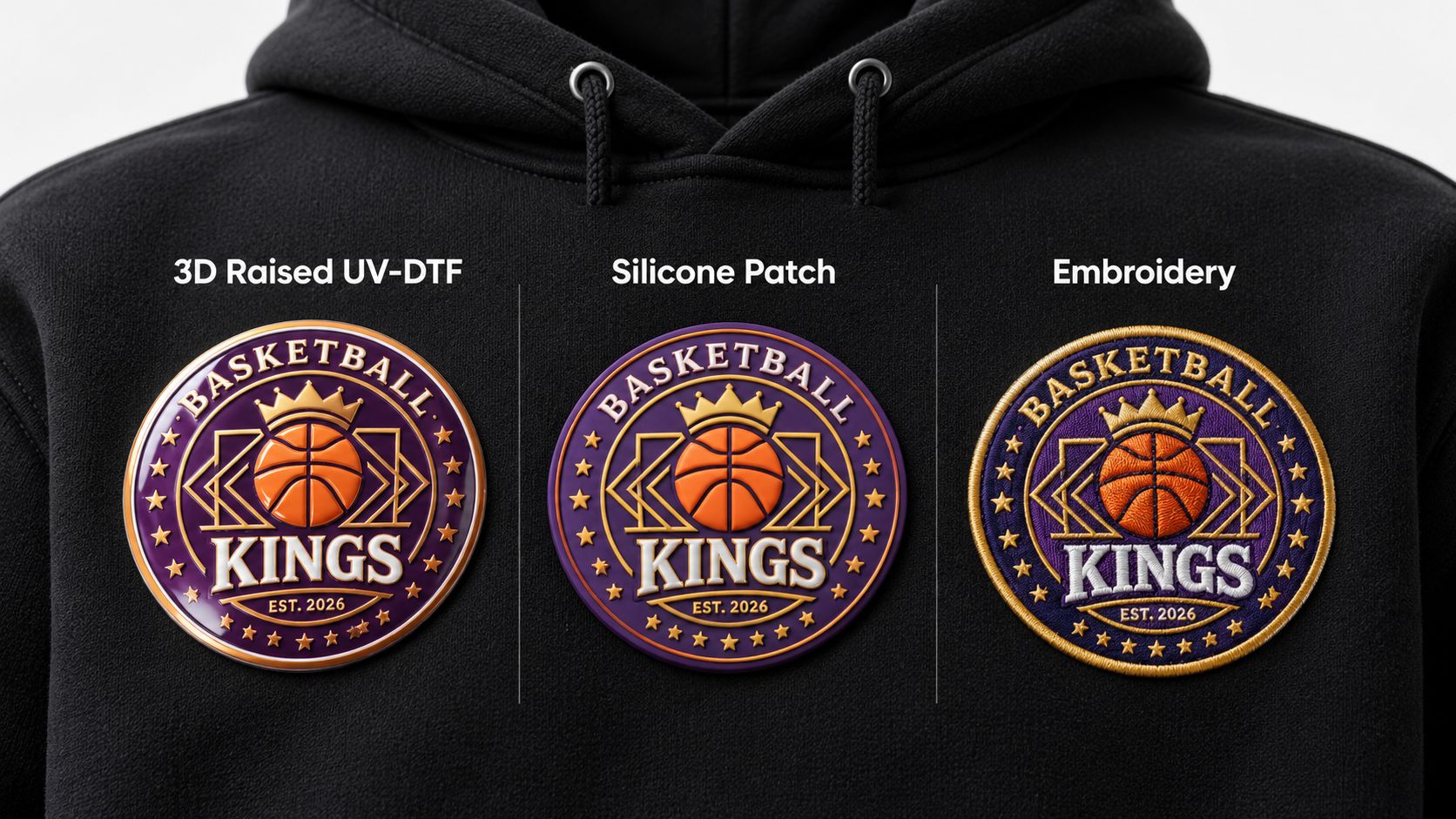 A 3D raised UV-DTF logo, a molded silicone patch and embroidery can all create dimensional branding on clothing, but the three methods are built from completely different materials and production…
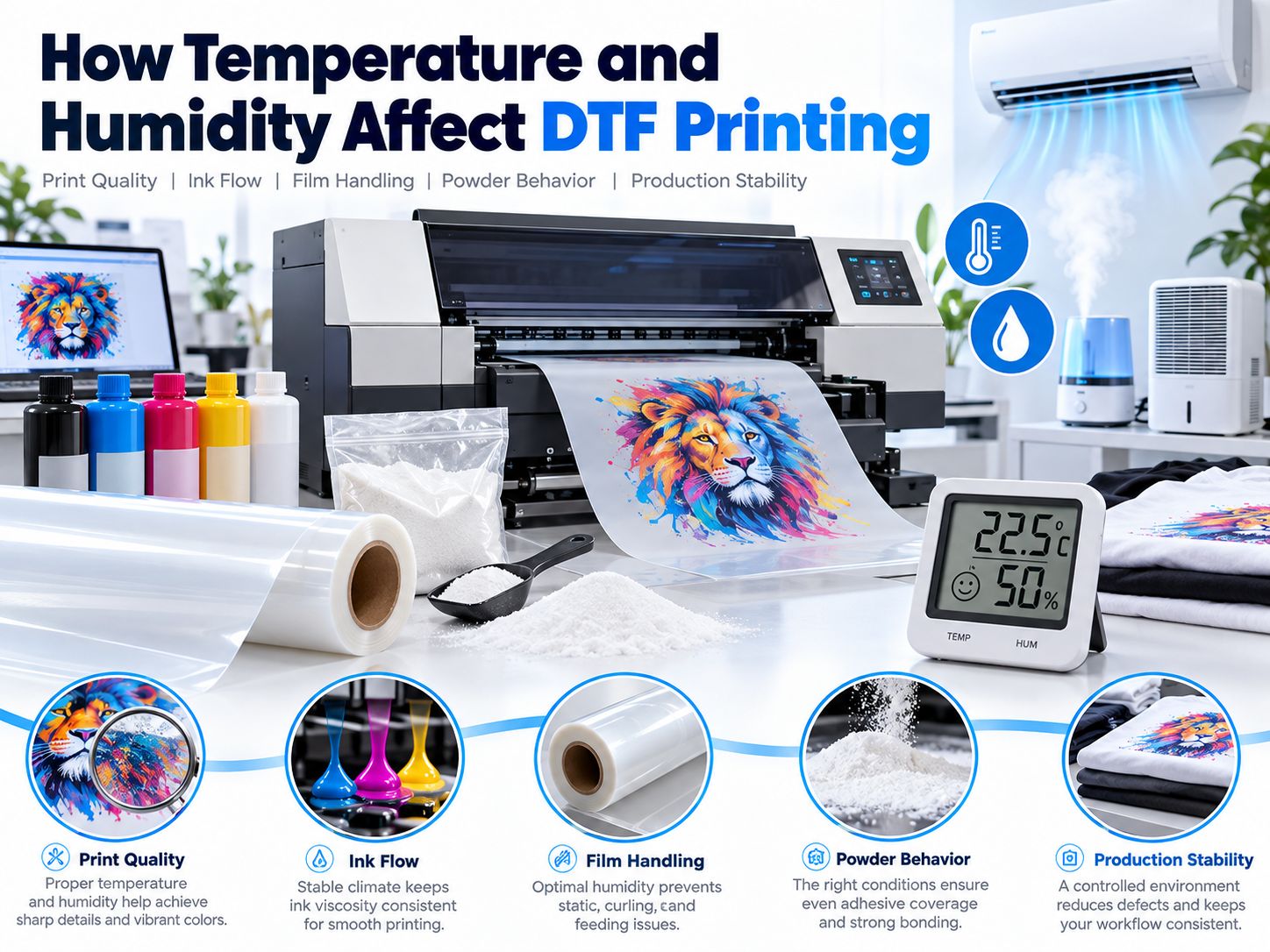 A DTF printer can use the same ink, PET film, powder and RIP settings two days in a row—and still behave differently if the room environment changes. Temperature and relative…
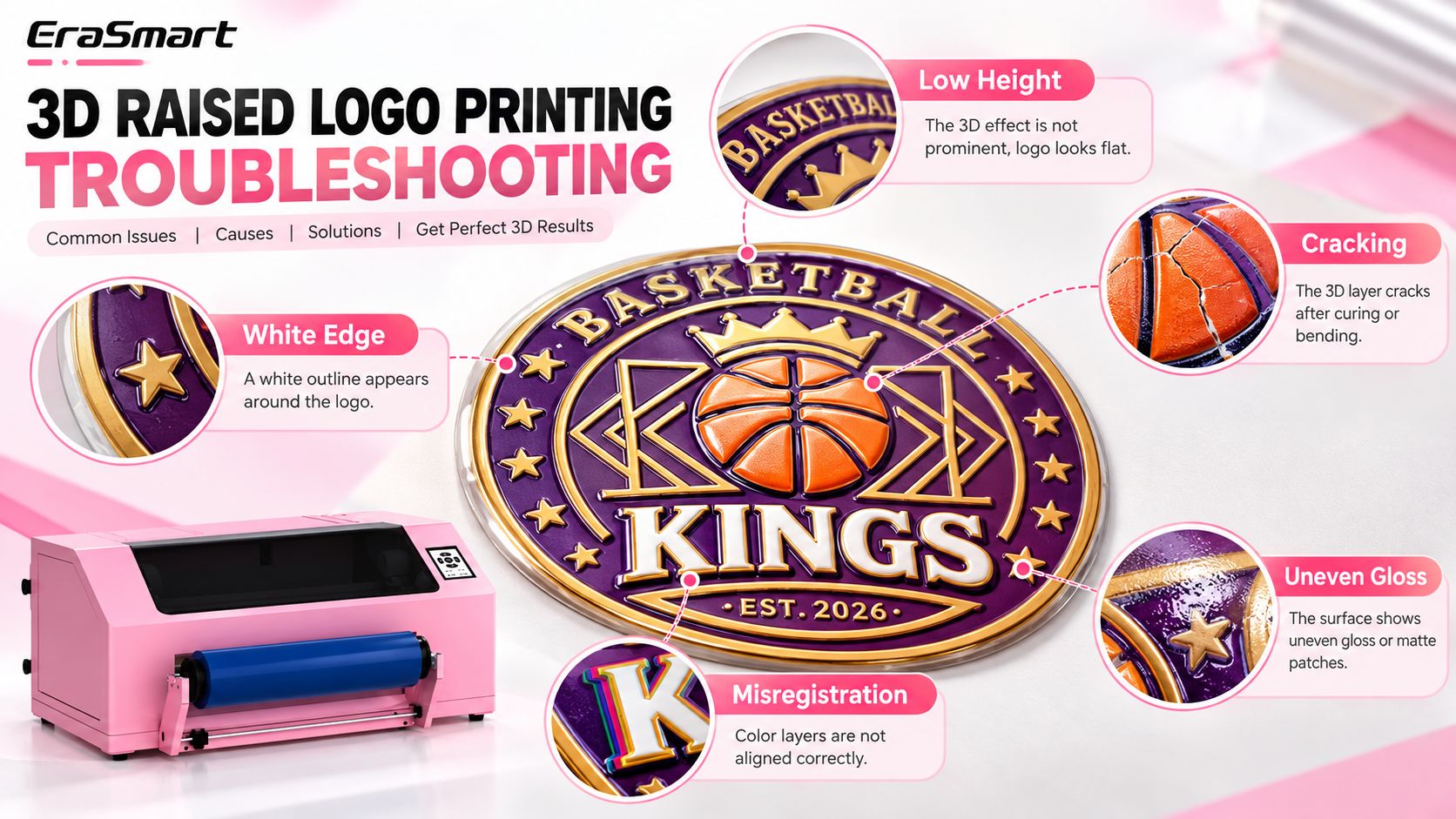 A 3D raised logo can fail before it ever reaches the heat press. The raised effect may be too low. White ink may become weak or inconsistent. CMYK can shift…
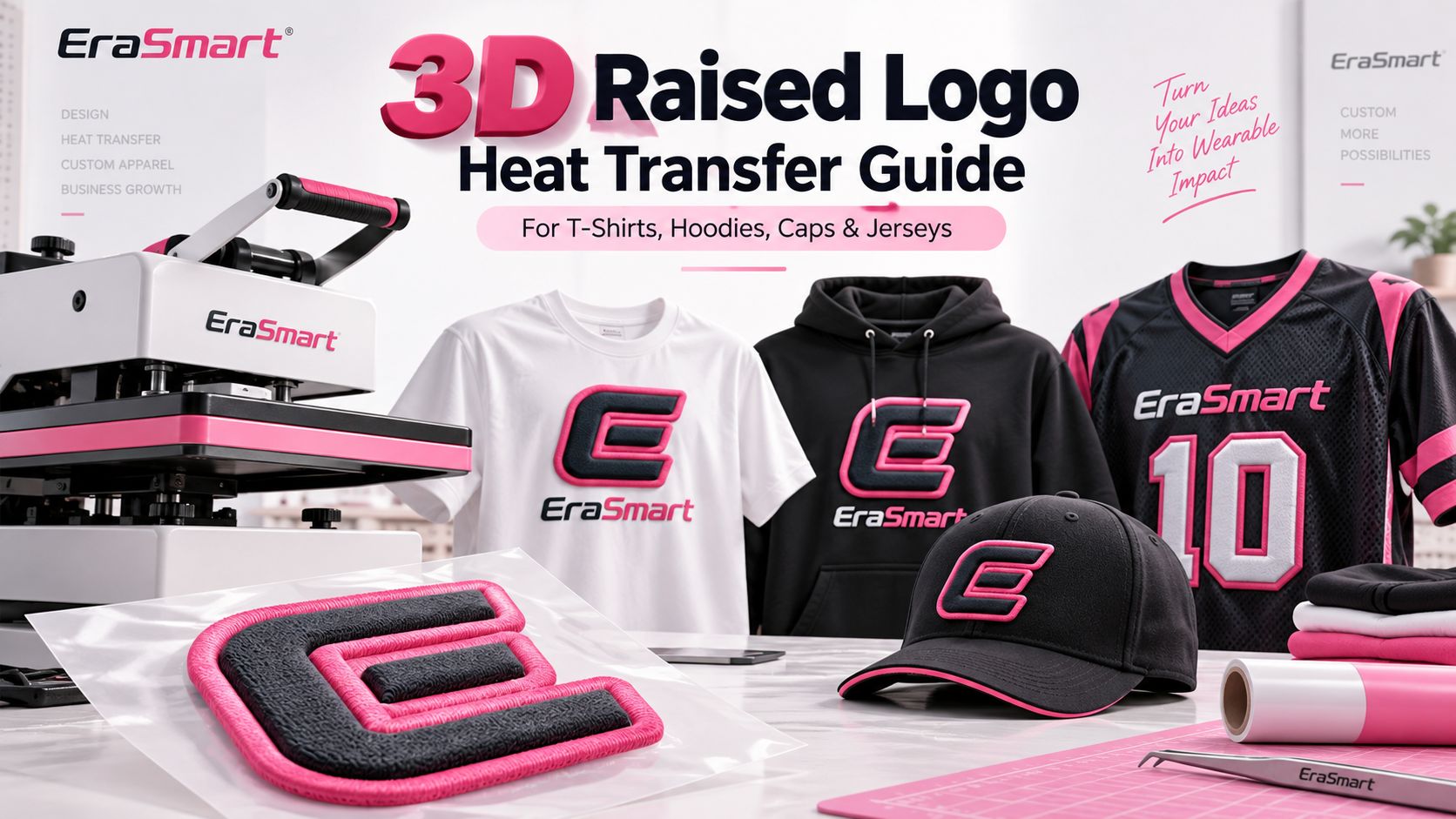 Printing a good 3D raised logo is only half of the job. The finished badge still needs to be bonded to the garment with the correct combination of temperature, time,…
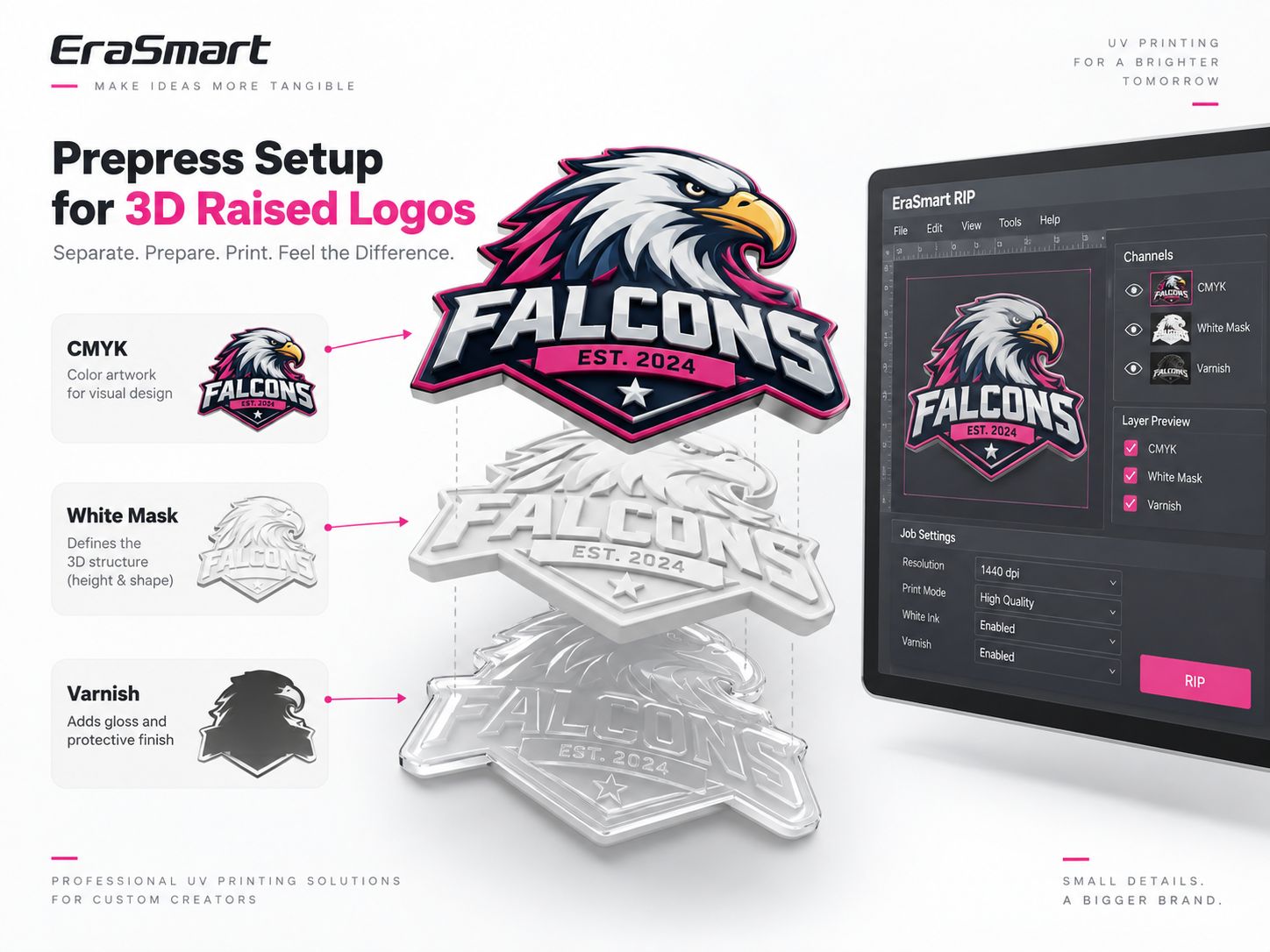 A 3D raised-logo file should not be treated as one flat image. For a professional raised apparel badge, the artwork needs to be separated into several production functions: CMYK →…
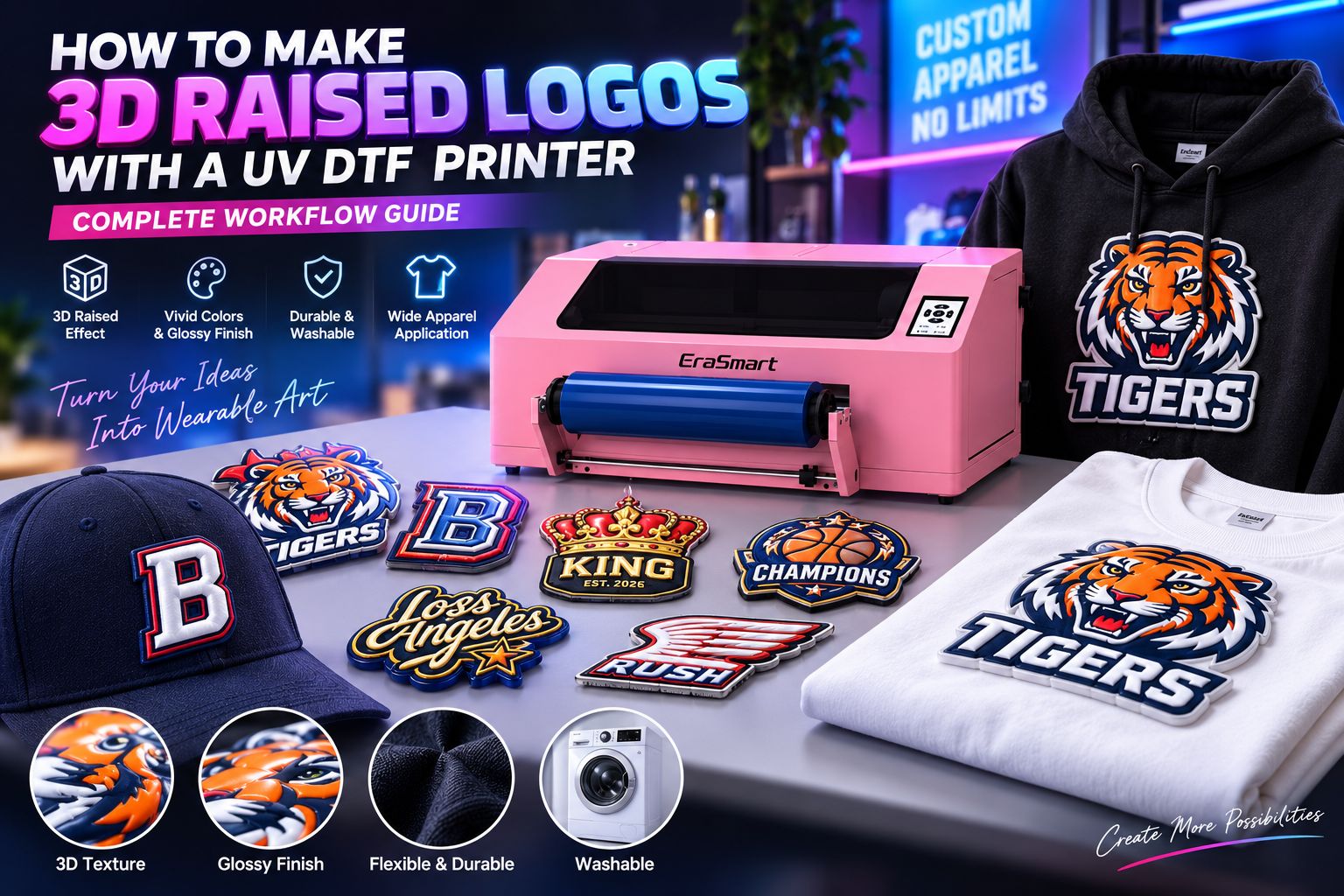
- A 3D raised apparel logo is created by building physical height with repeated white UV ink layers, adding the visible CMYK artwork and varnish finish, contour-cutting the finished badge, and…
 1、unpacking inspection machine 2、Add ink 3、Software installation and printing
 1)unpacking inspection machine video 2) Installation and testing 3)Printing and Testing
 1)How to add the ink and water 2)How to use the software 3)Machine daily maintenance 4) Roller installation
 1)墨水和水的添加方法 2)如何安装软件
Copyright 2020 © EraSmart. | Sitemap