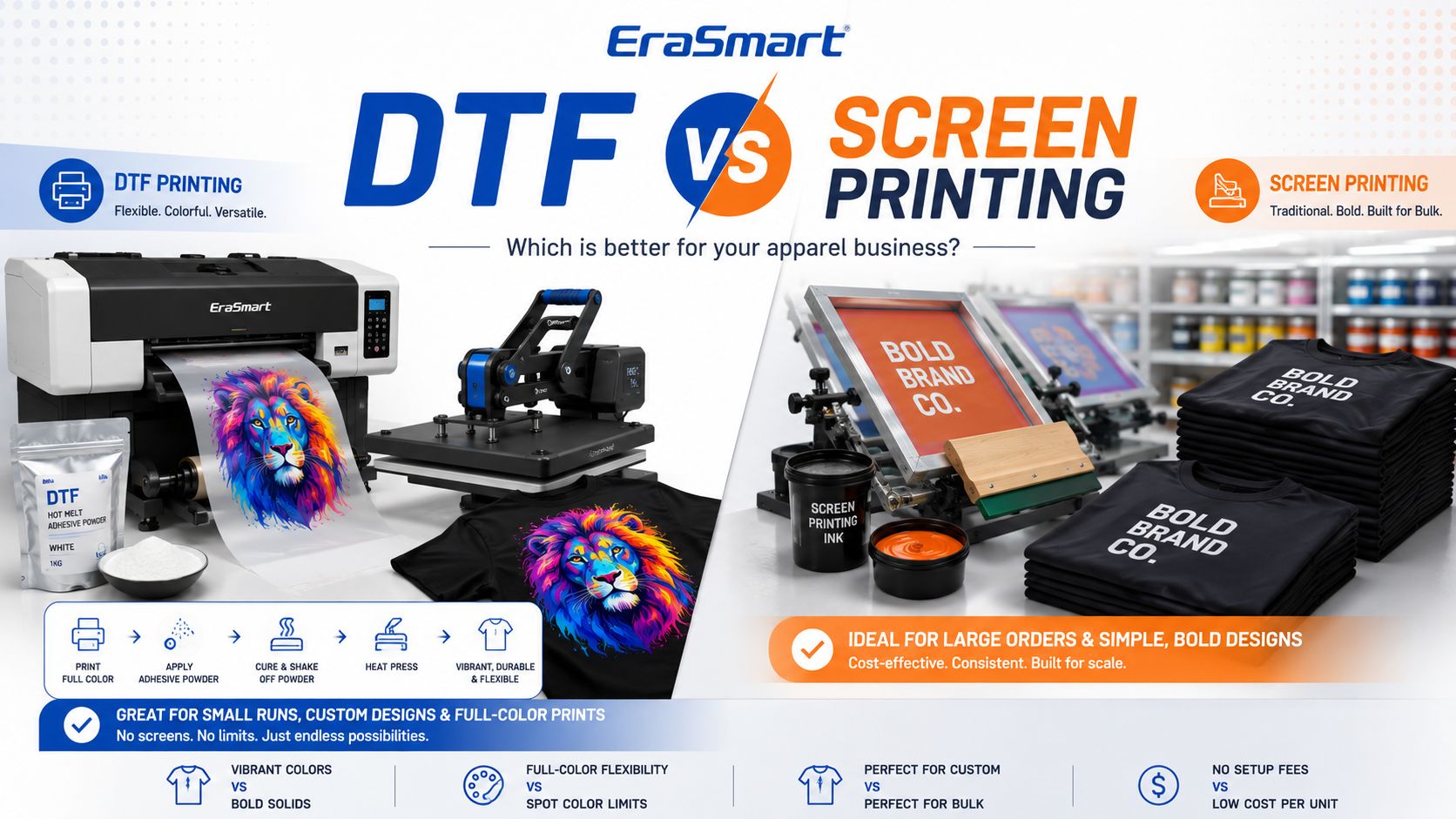
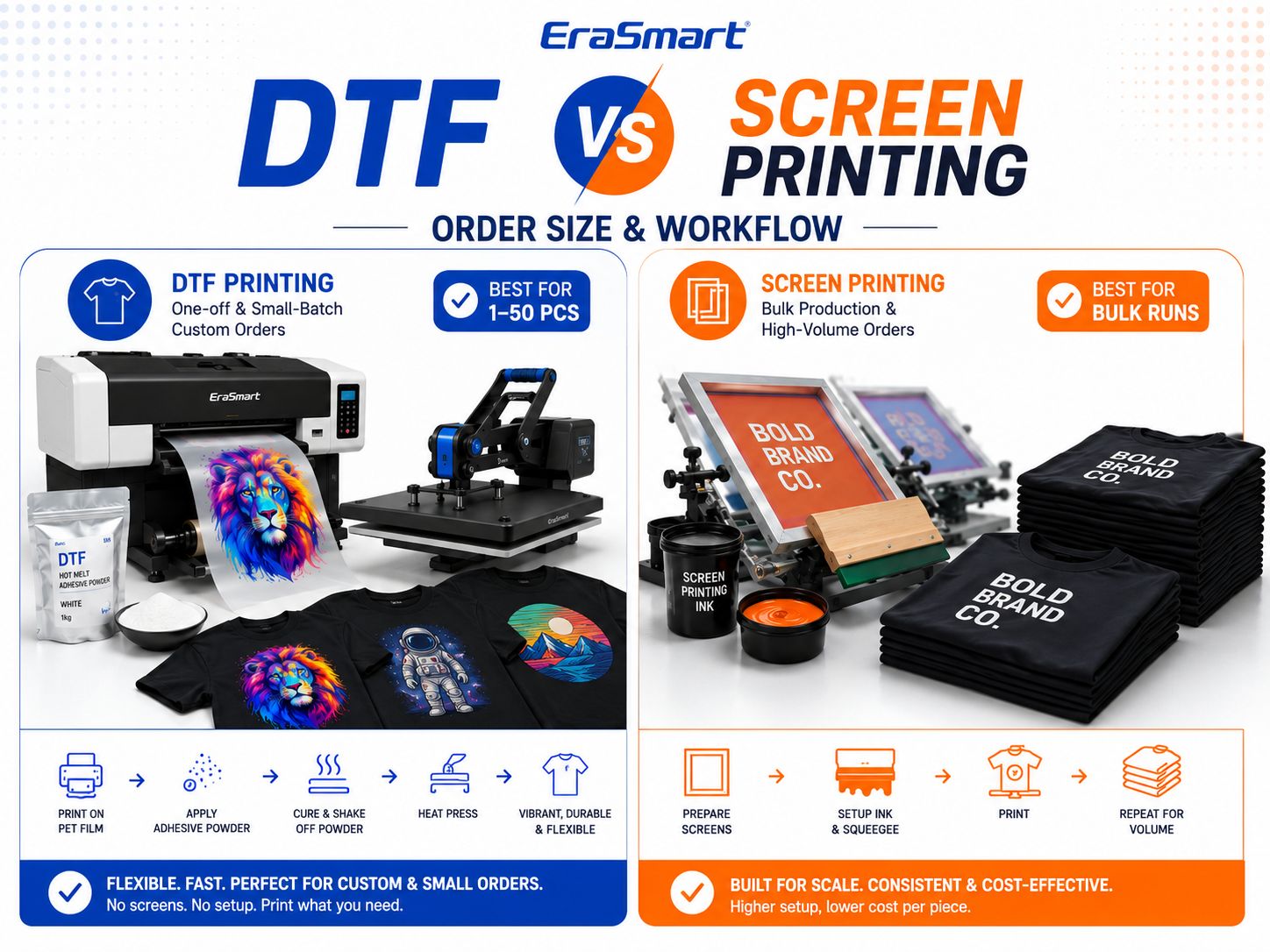
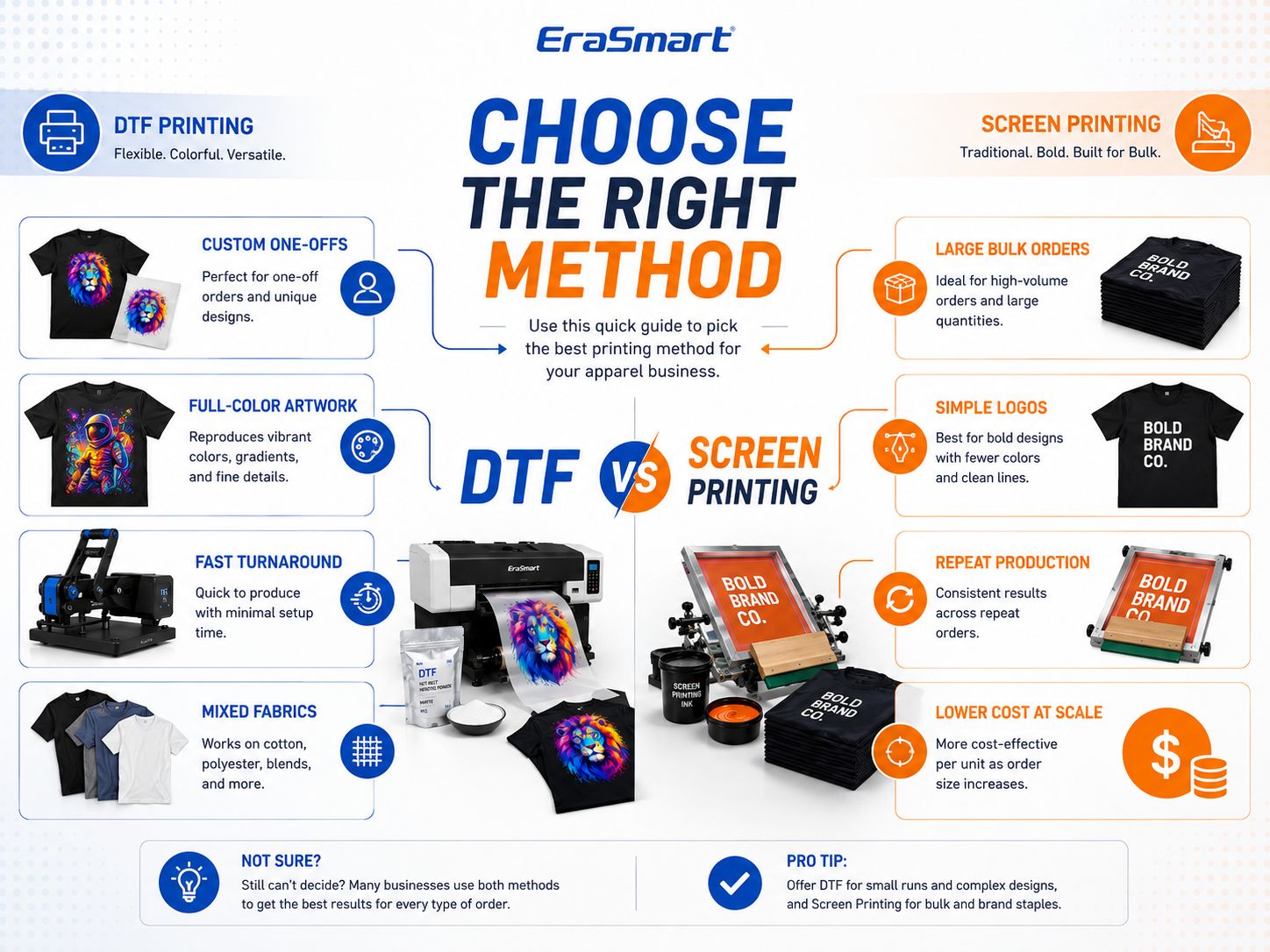
DTF printing and screen printing are both proven methods for custom apparel, but they serve different business needs. Screen printing has been a long-standing choice for bulk T-shirt production, especially when designs are simple, bold, and repeated in large quantities. DTF printing has grown quickly because it is more flexible for small batches, full-color artwork, on-demand orders, dark garments, and mixed fabrics. Current industry comparisons consistently describe DTF as stronger for small runs and complex designs, while screen printing remains stronger for bulk orders and simple artwork.
If you are building a small custom apparel shop, online merch business, event shirt service, or print-on-demand workflow, DTF is often the easier and more scalable starting point. If you mainly produce hundreds or thousands of the same design, screen printing can still be very efficient.
| Business Need | Better Choice |
|---|---|
| One-off custom shirts | DTF Printing |
| Small batch orders | DTF Printing |
| Full-color artwork | DTF Printing |
| Gradients and photo-style graphics | DTF Printing |
| Dark garments | DTF Printing |
| Mixed fabrics such as cotton, polyester, blends | DTF Printing |
| Large bulk orders | Screen Printing |
| Simple logos with few colors | Screen Printing |
| Classic ink feel | Screen Printing |
| Long repeat production runs | Screen Printing |
| Lower unit cost at scale | Screen Printing |
| Startup apparel business | DTF Printing |
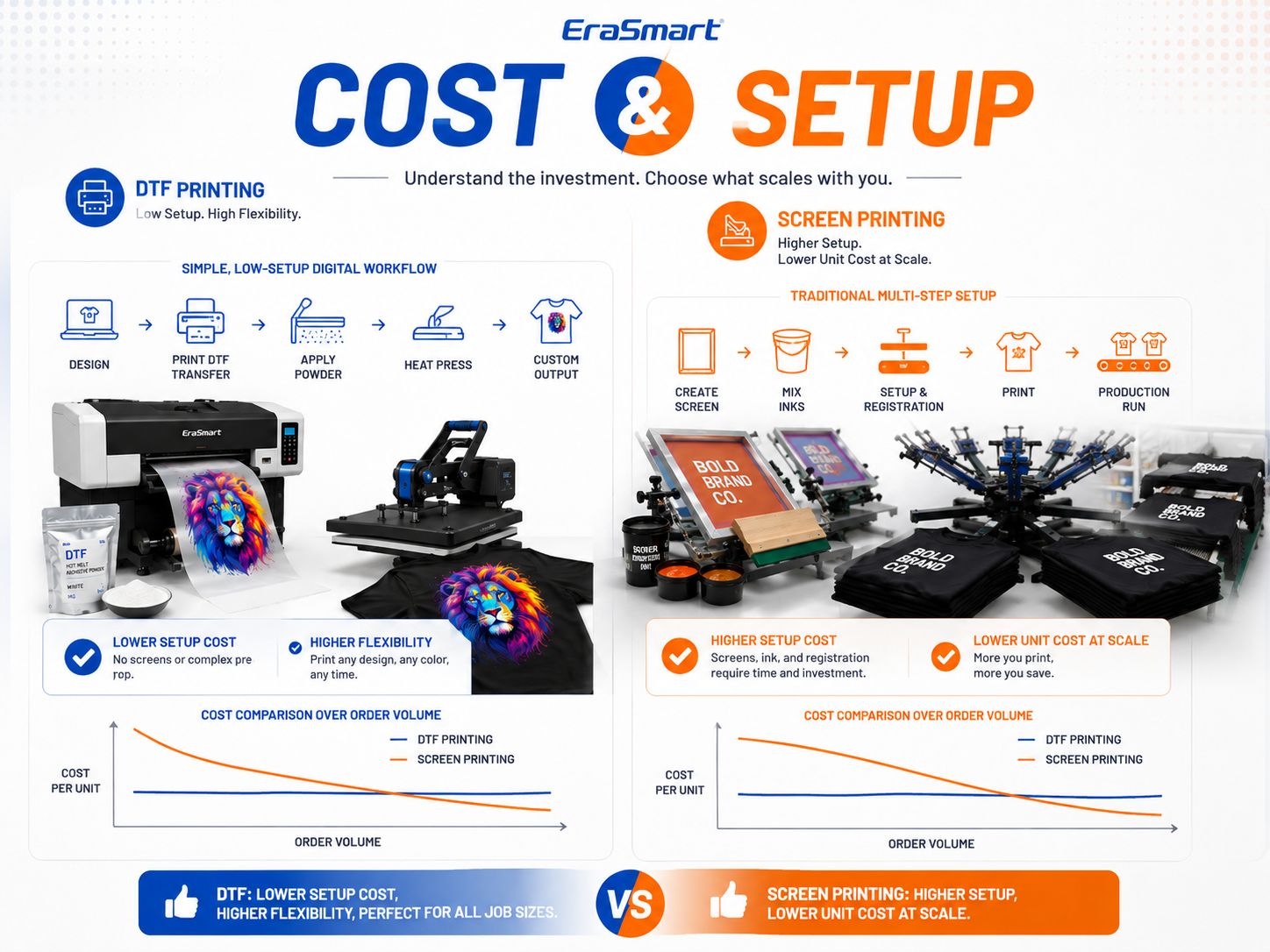
The key difference is simple: DTF reduces setup barriers, while screen printing becomes stronger when production volume is large enough to justify setup work.
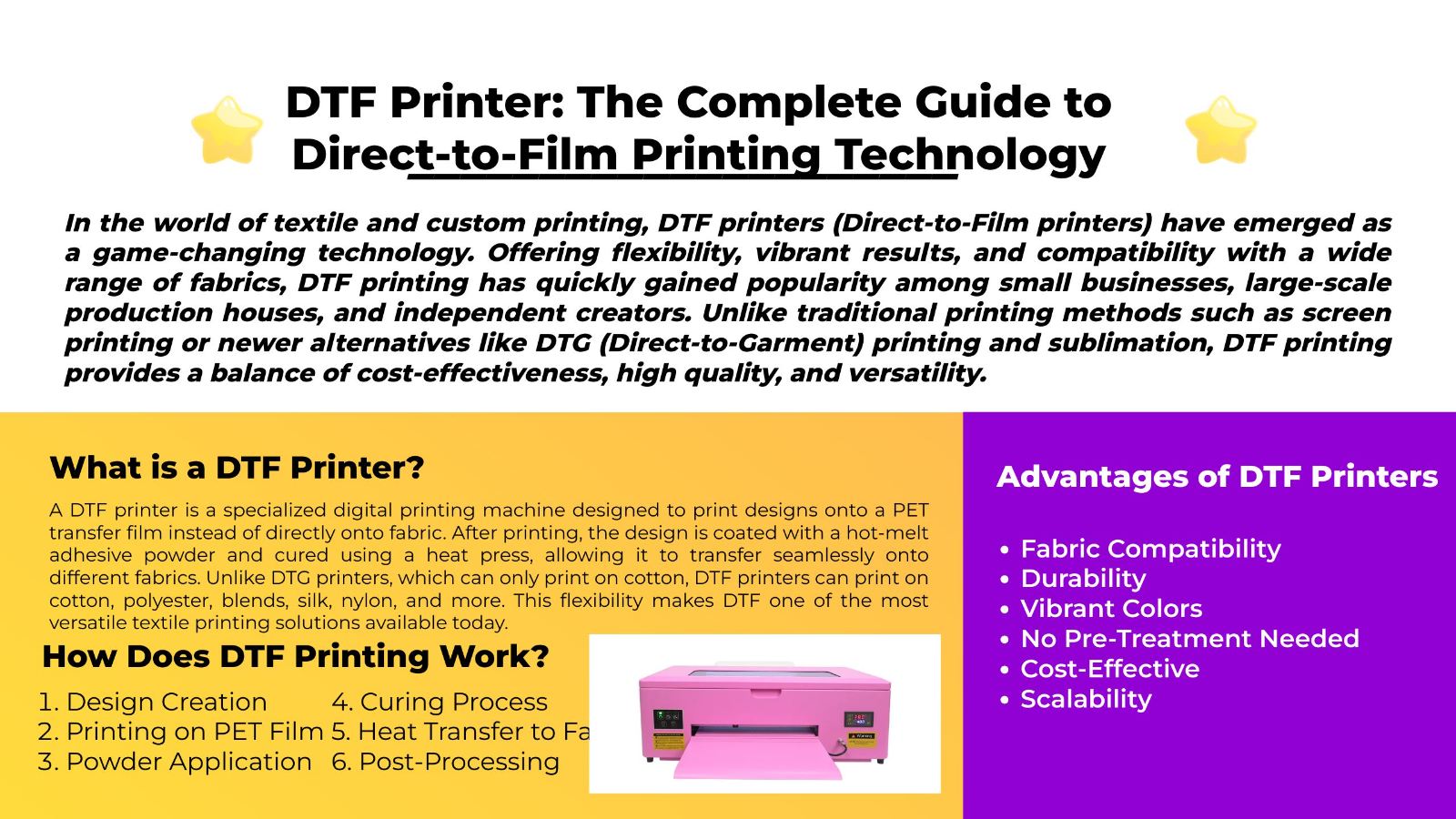
DTF means Direct to Film. The design is printed onto PET transfer film, hot-melt adhesive powder is applied, the powder is cured, and the finished transfer is pressed onto the garment with a heat press. This process allows full-color graphics, detailed artwork, gradients, and short-run customization without preparing separate screens for each color.
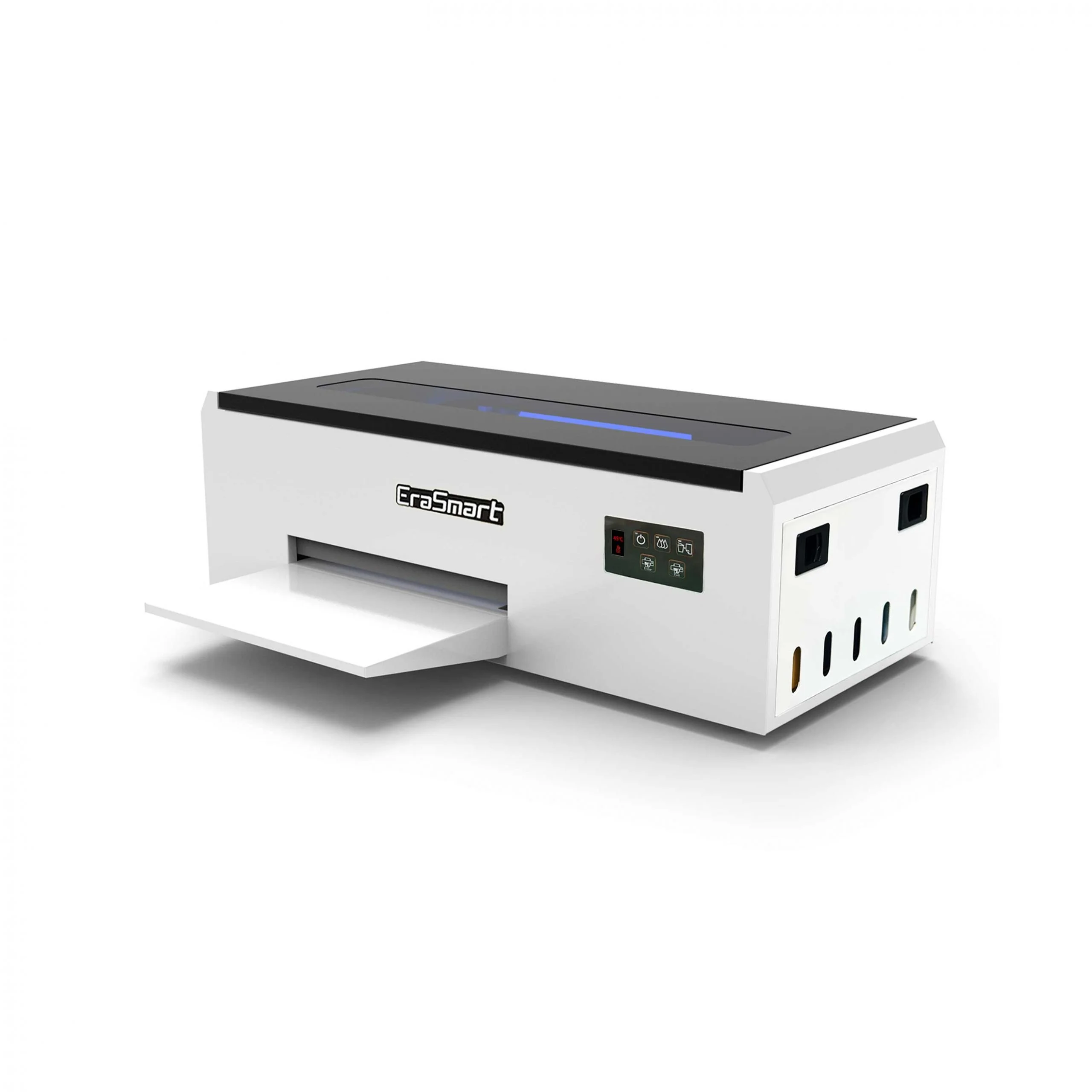
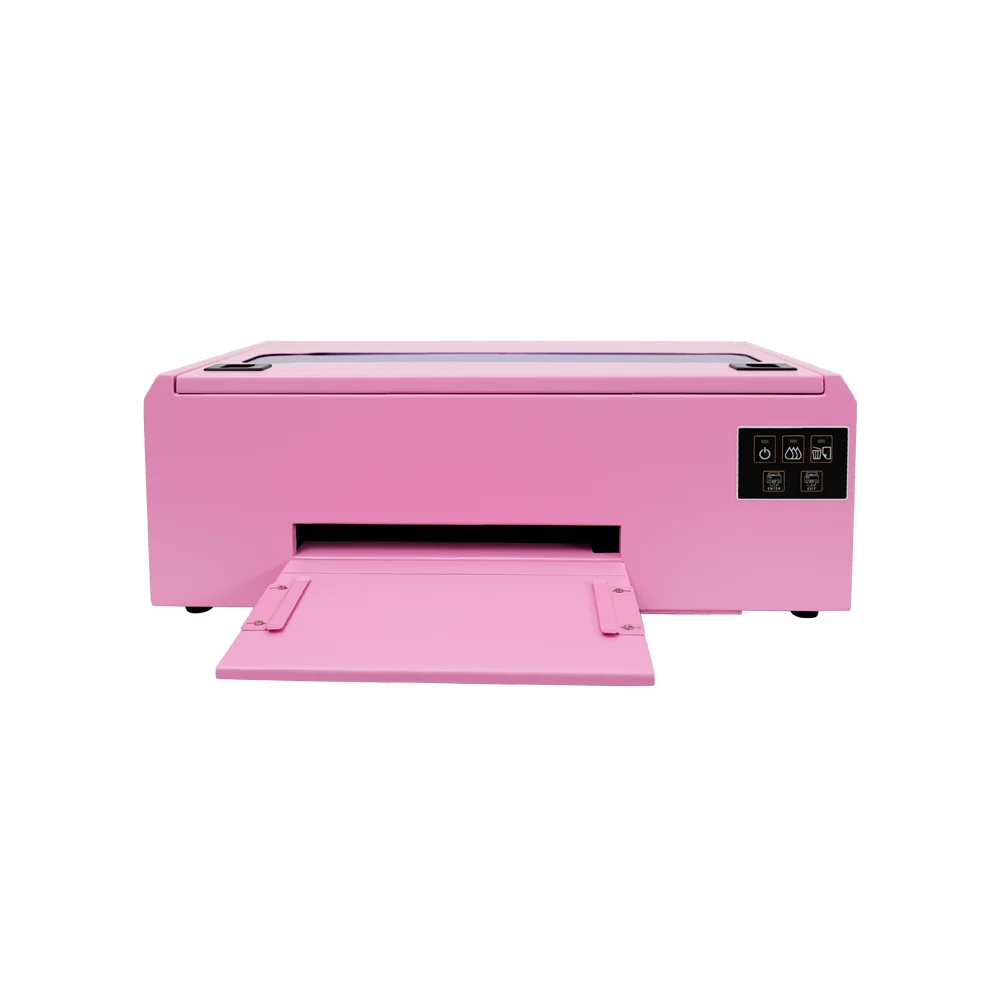
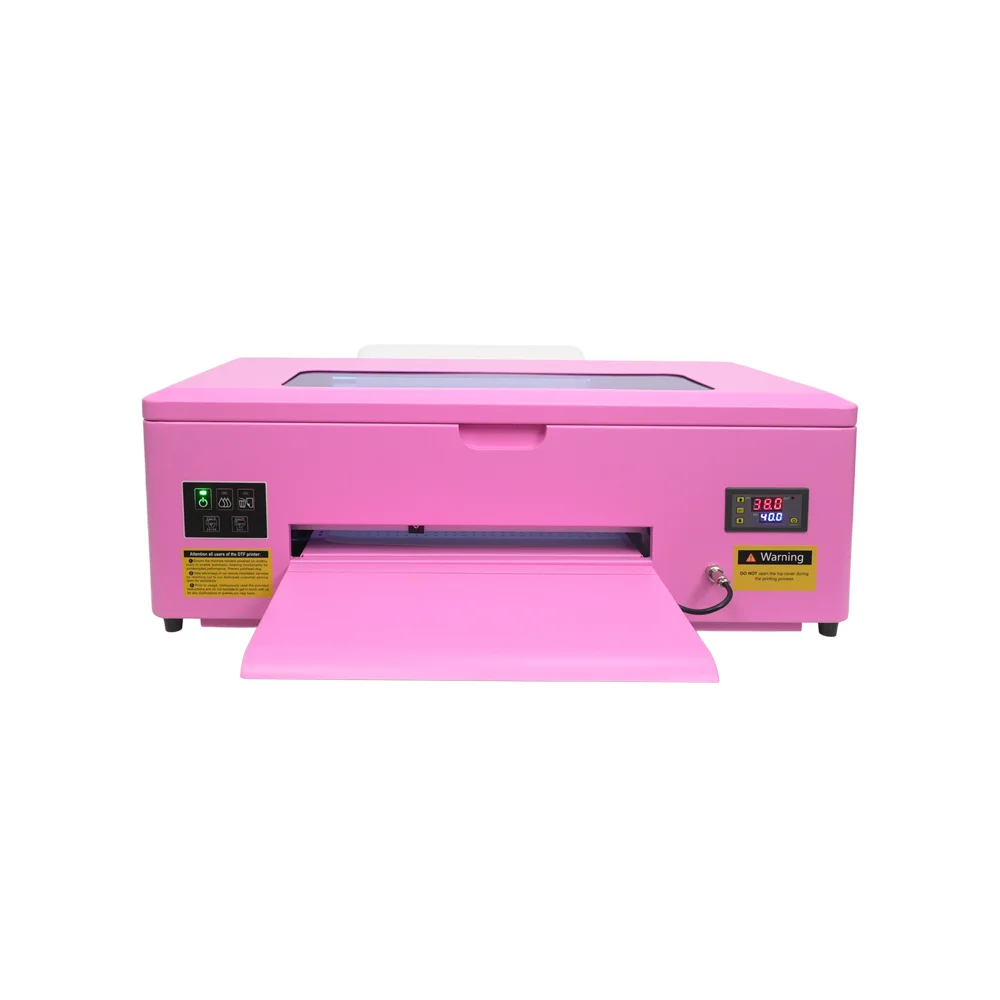
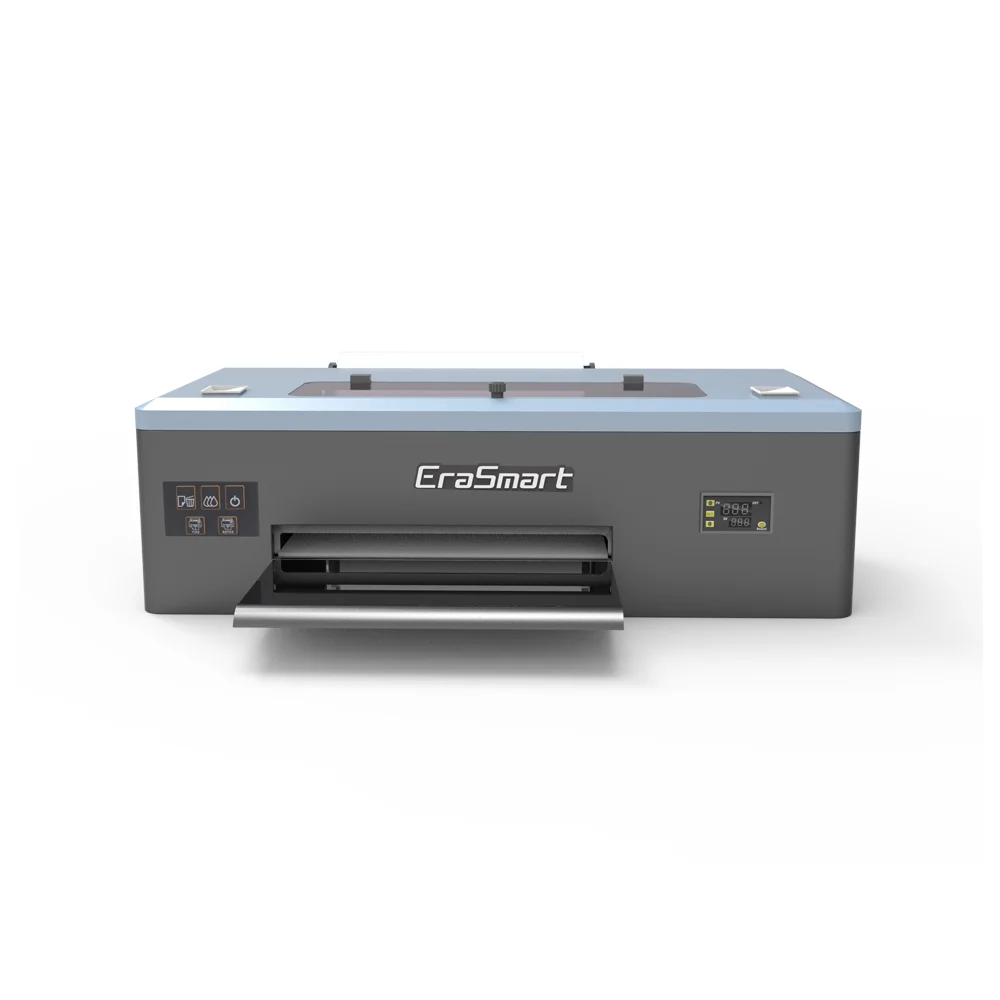
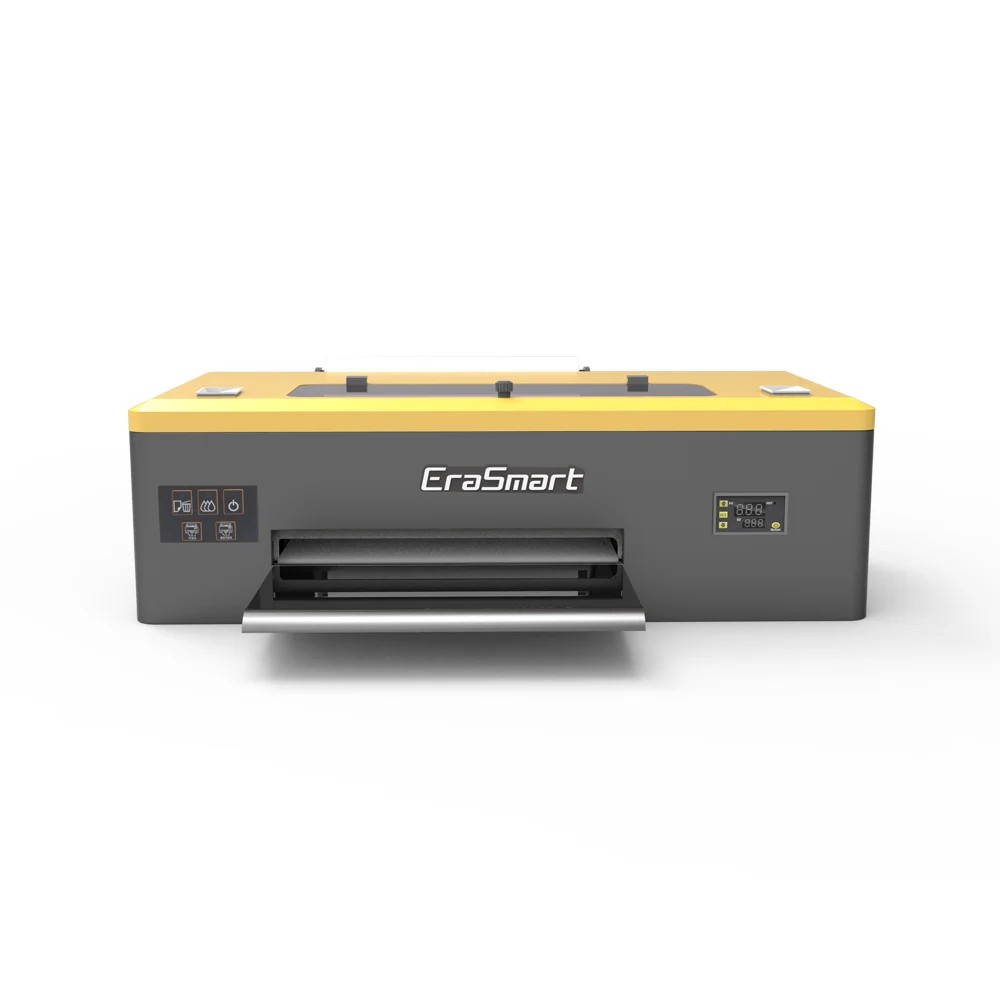
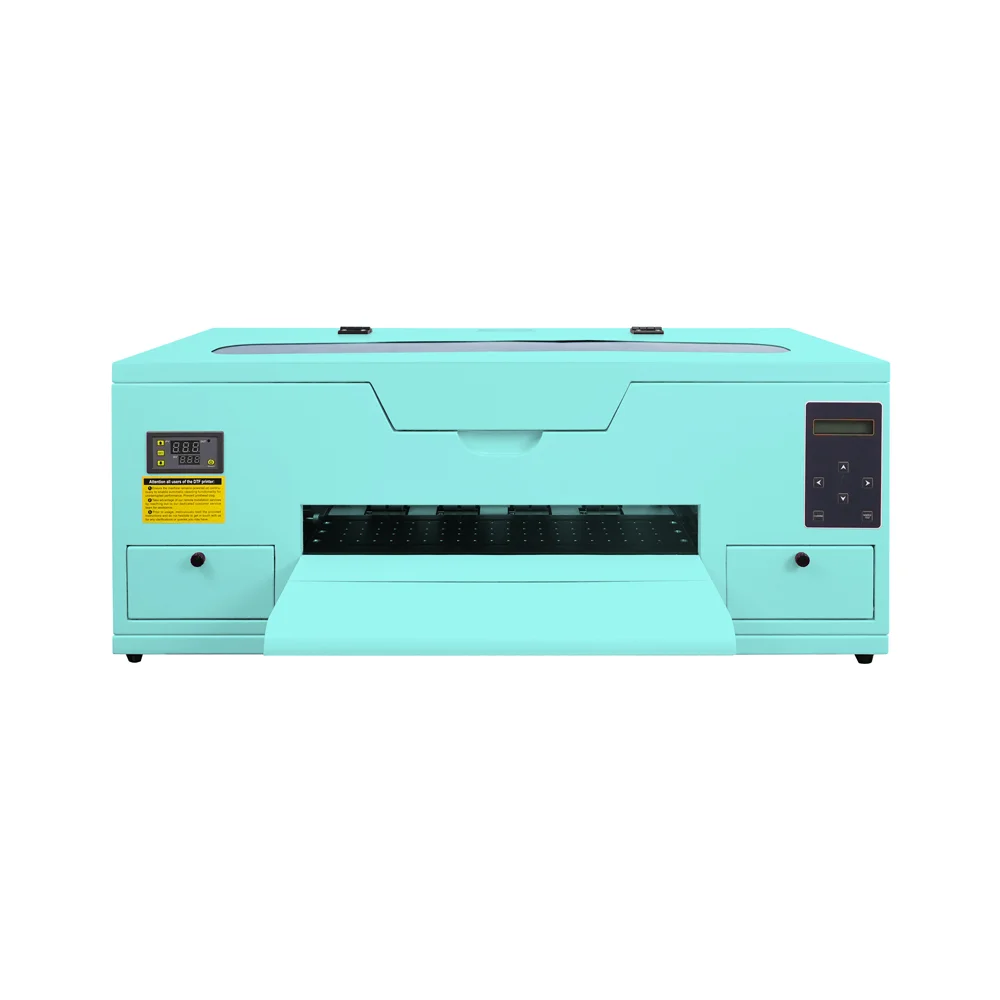
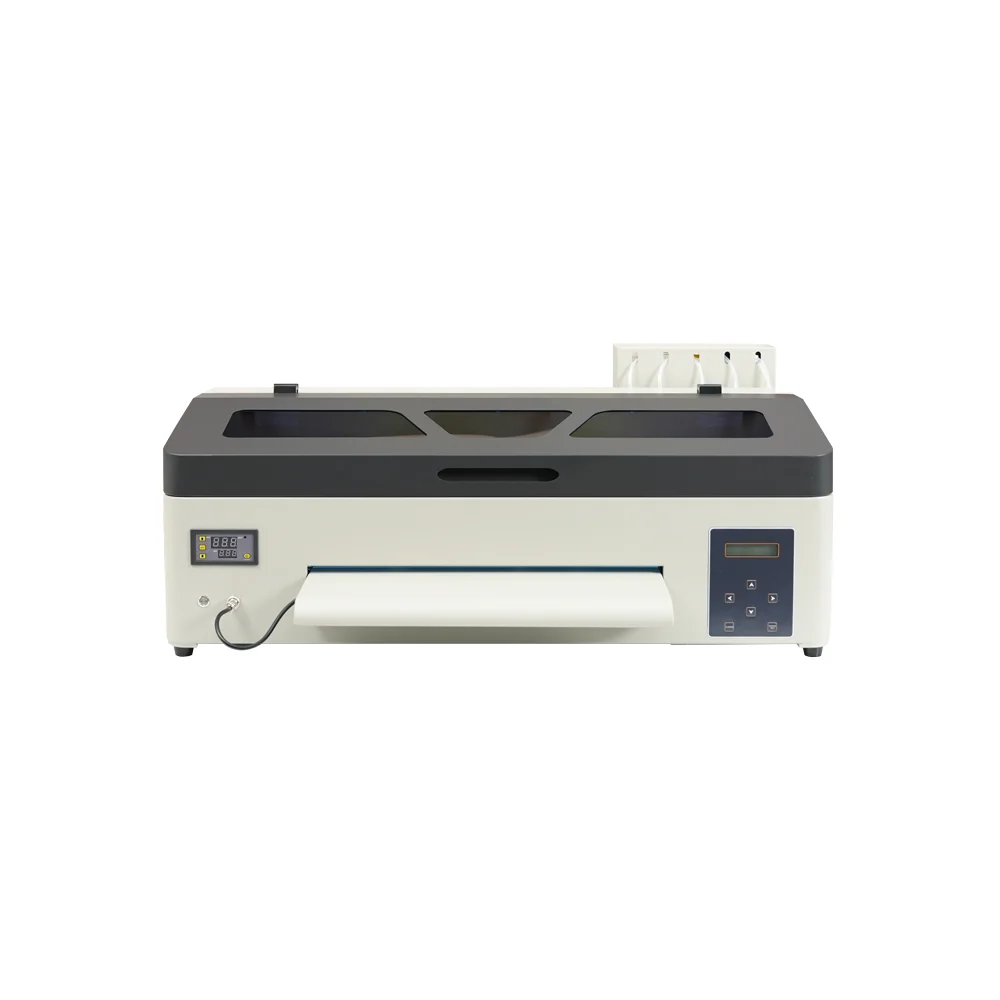
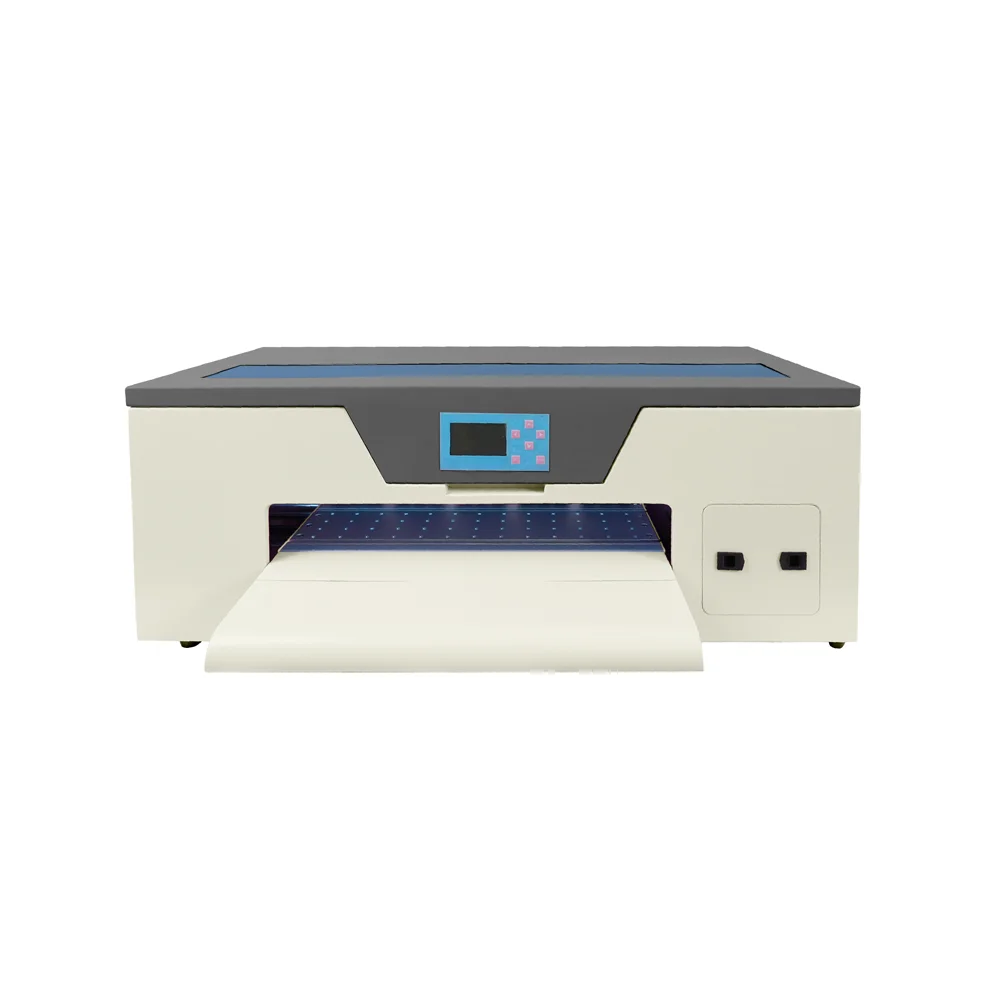
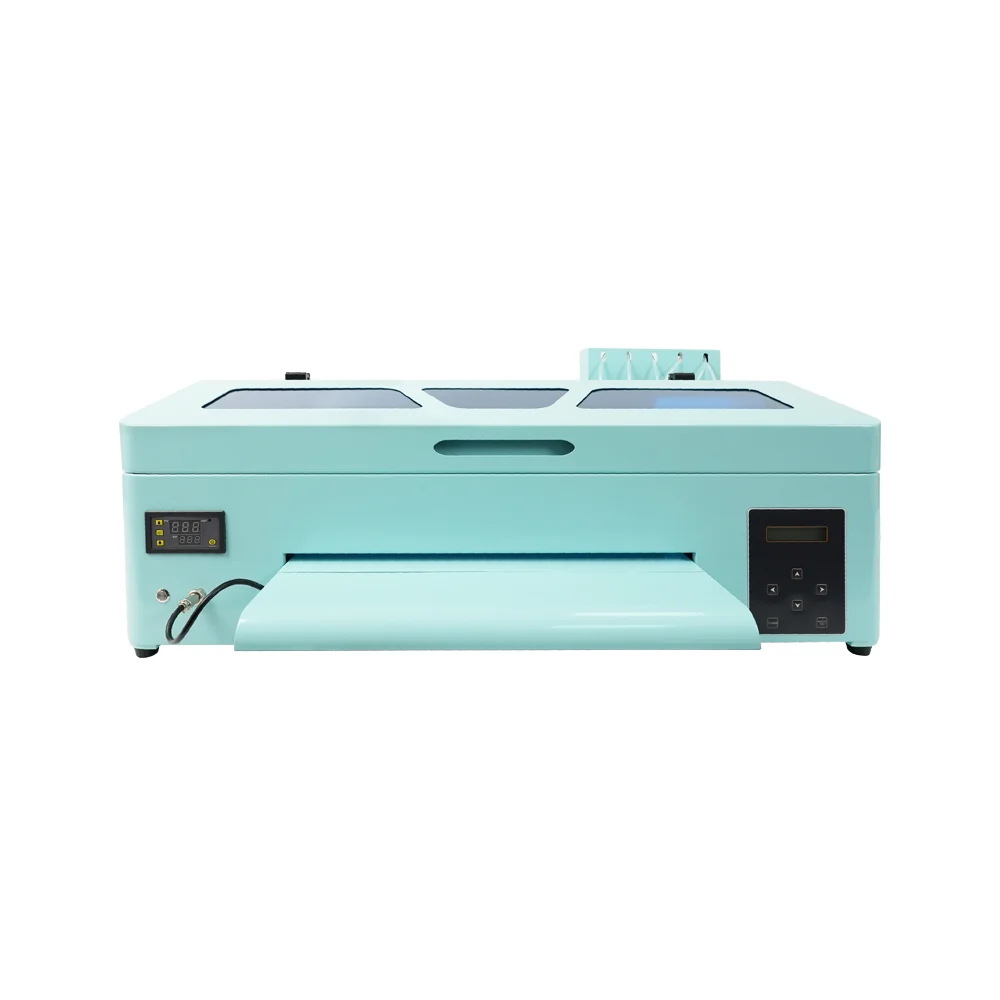
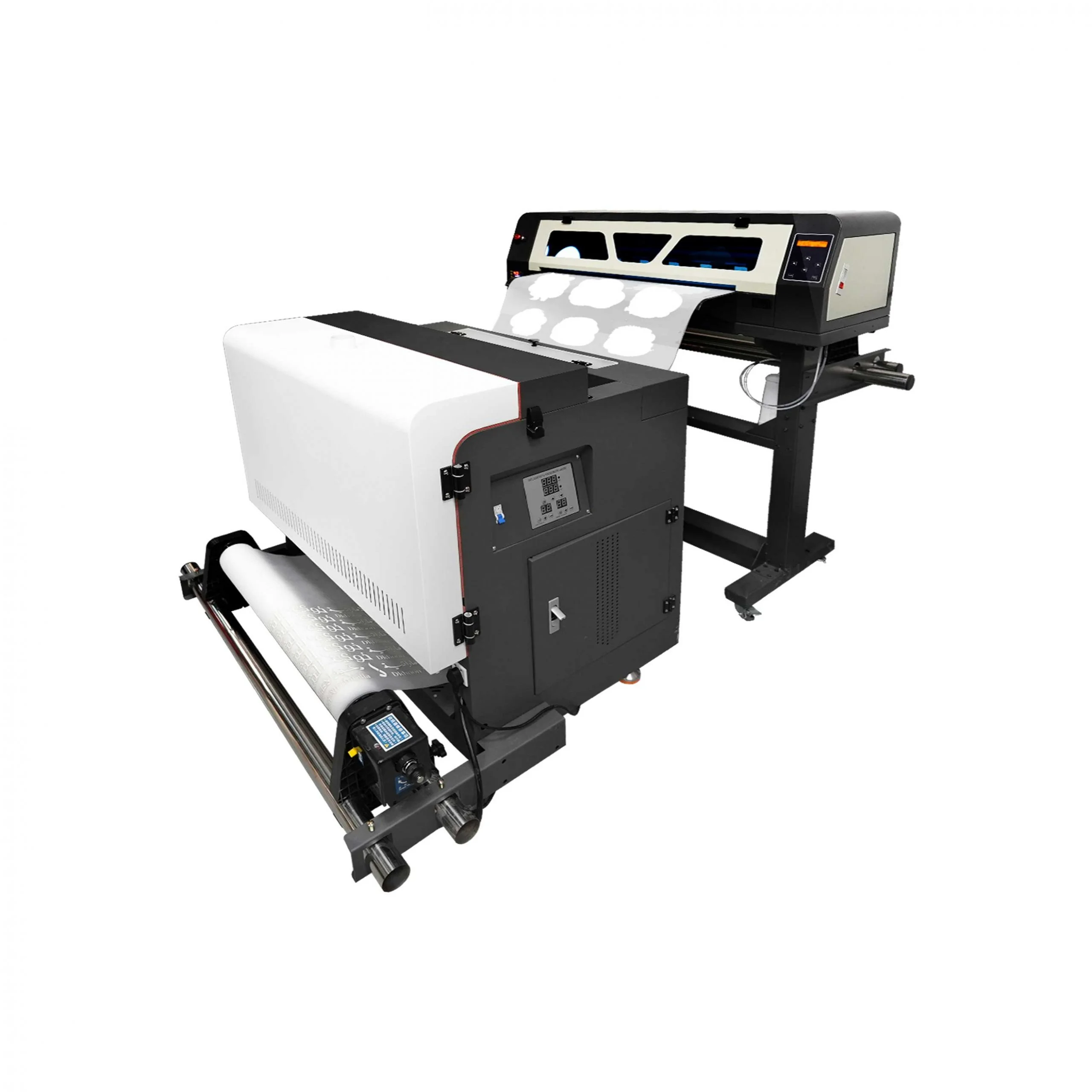
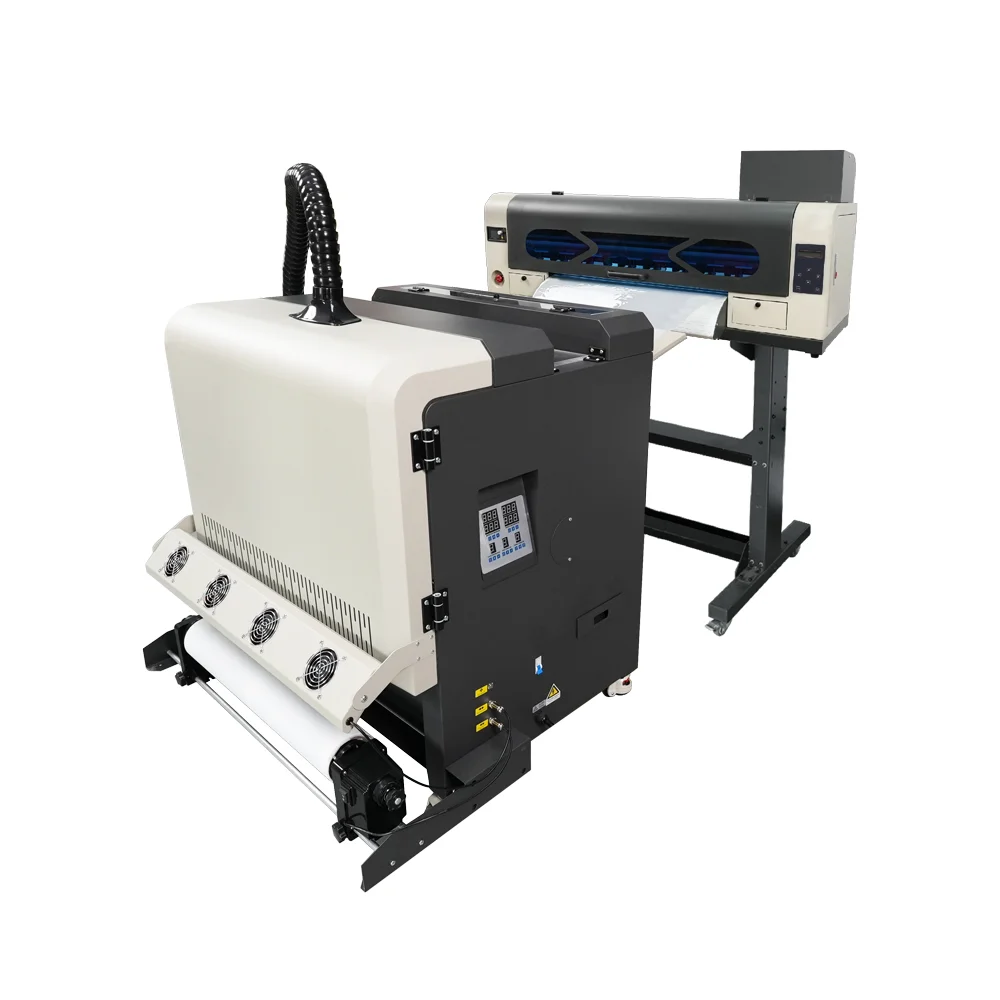
EraSmart DTF printers are designed for cotton, polyester, denim, leather, nylon, blends, and dark-colored garments. The basic workflow is simple: print, add powder, cure, and press. EraSmart’s DTF printer lineup also covers different business stages, including compact A4 models, A3 startup systems, A3 MAX XP600 systems, powder-shaker workflows, and wider A1 production models.
Screen printing uses a mesh screen and stencil to push ink onto fabric. For multi-color designs, each color usually requires a separate screen. This makes screen printing very effective for bold, simple designs in large quantities, but less efficient for short runs, frequent design changes, photo-style graphics, or artwork with many colors.
The strength of screen printing is repeatability. Once the screens are prepared, producing a large number of identical shirts can be efficient. The limitation is setup. Every new design and every color layer adds preparation time, labor, and cost, which is why screen printing is usually most practical for bulk production.
| Factor | DTF Printing | Screen Printing |
|---|---|---|
| Setup | Digital workflow, lower setup barrier | Requires screens, exposure, setup, cleanup |
| Best order size | Small to medium orders, one-offs, POD | Medium to large bulk orders |
| Design complexity | Excellent for full color, gradients, photos | Best for bold designs with fewer colors |
| Color handling | Prints full-color artwork in one workflow | Each color may need a separate screen |
| Fabric compatibility | Cotton, polyester, blends, dark fabrics, specialty materials | Strong on cotton and blends; other fabrics may need special inks |
| Hand feel | Transfer layer sits on fabric surface | Ink can feel more integrated into fabric |
| Durability | Strong when film, powder, curing, and pressing are correct | Very durable, especially for simple bulk designs |
| Cost structure | Better for custom and small batches | Better when setup cost is spread across bulk quantity |
| Business model | Custom apparel, online stores, fast turnaround | Wholesale, teamwear, uniforms, repeat bulk jobs |

DTF printing is easier to start when the business handles many designs, small quantities, or personalized orders. There is no need to burn screens, separate colors, or prepare a new stencil for every artwork. Once the file is ready, the shop can print the transfer, powder it, cure it, and press it onto the garment.
Screen printing has a higher setup burden because each design needs screen preparation, and multi-color artwork increases that setup work. For large batches, this setup cost becomes acceptable because it is spread across many garments. For small orders, the setup can make screen printing less practical. Industry comparisons consistently identify DTF as better for small runs and screen printing as more cost-effective at scale.
EraSmart recommendation:
If your customers often order 1–50 pieces per design, DTF is usually the more practical workflow. If your customers order 300–500+ pieces of the same design, screen printing may still be worth considering.

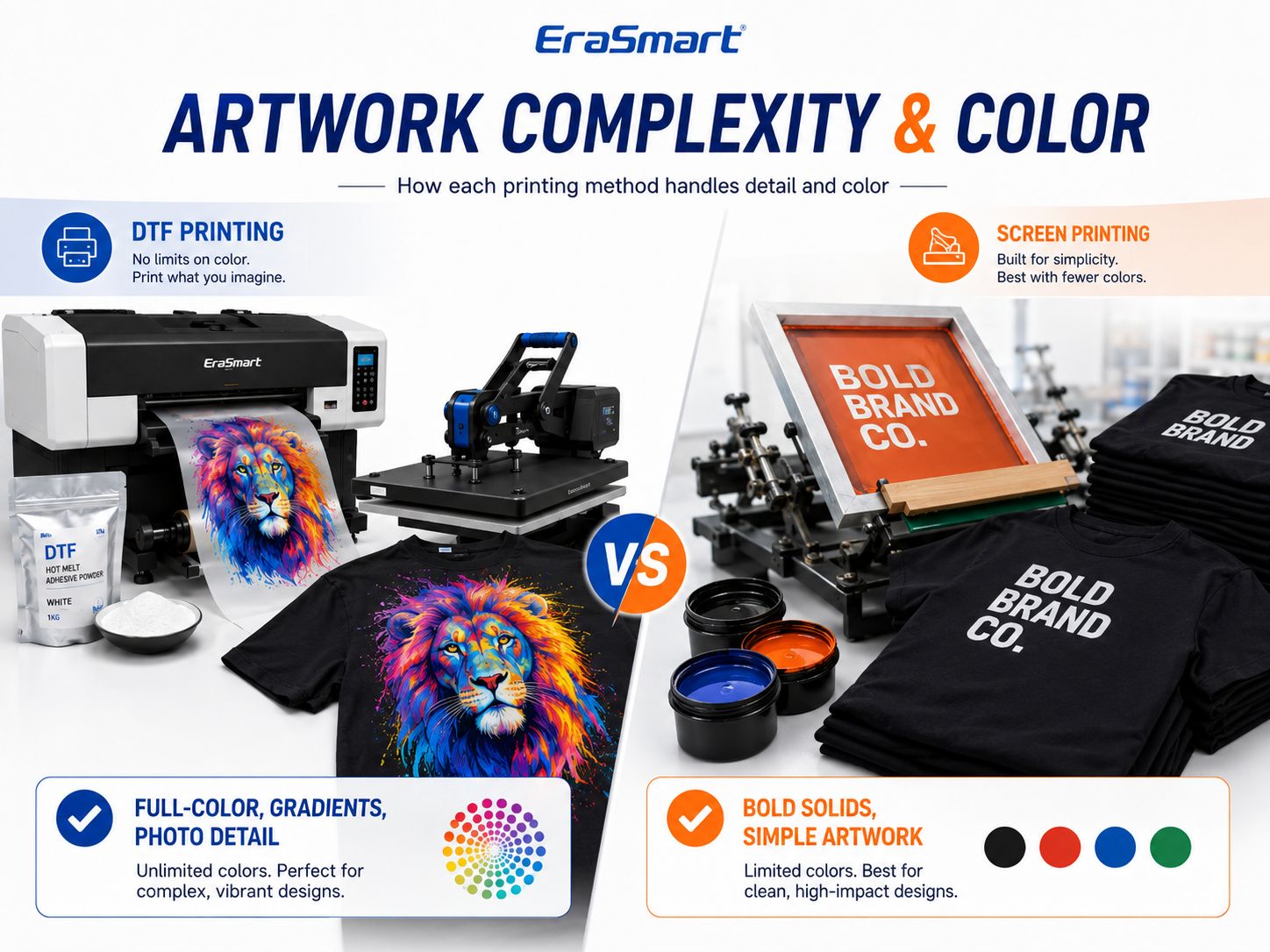
DTF printing is strong for colorful artwork. It handles gradients, full-color graphics, photos, illustrations, shadows, and complex designs without adding separate setup for every color. This makes DTF especially suitable for fashion graphics, event shirts, brand merch, online store designs, and personalized apparel.
Screen printing is excellent for bold graphics, solid colors, and simple logos. However, as the number of colors increases, screen printing becomes more complex because each color may require its own screen. This is why screen printing is more efficient for simple designs than for photo-style or highly detailed artwork.
EraSmart recommendation:
Choose DTF for colorful, detailed, and changing designs. Choose screen printing for simple, repeatable, low-color artwork.

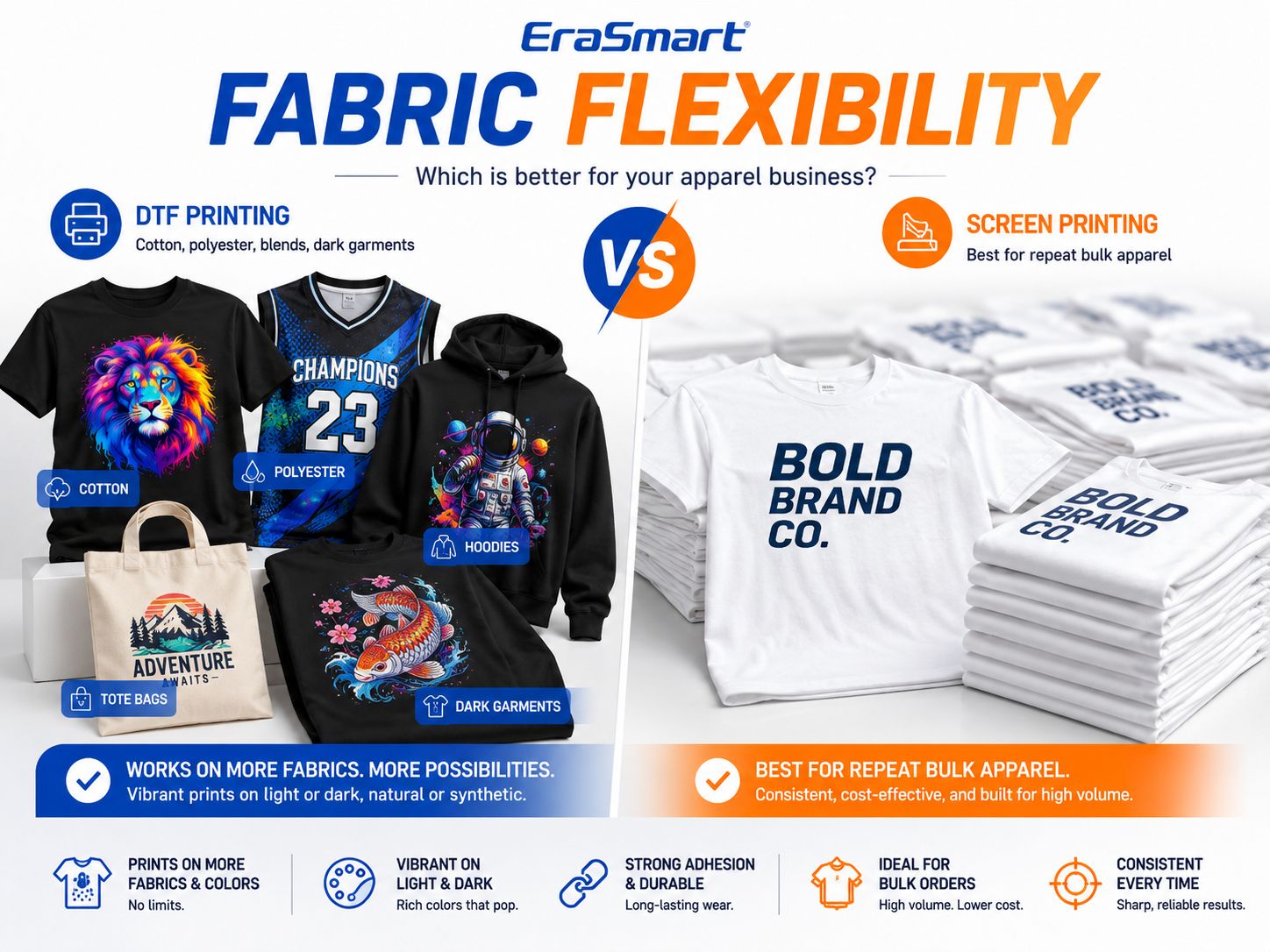
DTF printing works well across many garment types, including cotton, polyester, blends, dark garments, and specialty materials. EraSmart’s DTF printer page specifically positions DTF for cotton, silk, polyester, denim, leather, nylon, blends, and dark-colored garments, which makes it useful for businesses that cannot limit customers to one fabric type.
Screen printing is very strong on cotton and cotton blends. It can also be used on other materials, but ink choice, curing, underbase, and fabric preparation become more important. For a shop that handles many garment types every day, DTF often gives a more flexible production path.
EraSmart recommendation:
If your business prints on mixed fabrics, dark shirts, hoodies, tote bags, sportswear, and specialty apparel, DTF is usually easier to manage. If your business mainly prints cotton T-shirts in bulk, screen printing remains a strong option.
Screen printing can produce a classic garment feel, especially when the ink is properly selected and cured. Depending on the ink system and technique, screen prints can feel integrated into the fabric and remain comfortable for long-term wear.
DTF creates a transfer layer on top of the fabric. On small and medium designs, this can feel smooth and comfortable when the transfer is properly printed, powdered, cured, and pressed. On very large solid designs, DTF may feel heavier than a soft screen print.
EraSmart recommendation:
For large solid chest prints, control artwork coverage and avoid unnecessary heavy ink areas. For logos, colorful graphics, fashion artwork, and medium-size designs, DTF can deliver excellent commercial results.
Both methods can be durable when done correctly. Screen printing is widely known for strong wash durability, especially on large repeat orders with properly cured ink. DTF durability depends heavily on the complete workflow: ink quality, film quality, powder bonding, curing temperature, press time, pressure, and garment compatibility. Industry comparisons generally describe screen printing as very durable, while also recognizing that properly applied DTF transfers can withstand repeated washing.
DTF is usually more cost-effective for short runs because the setup process is simpler. A shop can print one shirt, ten shirts, or multiple designs without creating physical screens for each color. This is why DTF fits online stores, small batch merch, event orders, and personalized apparel.
Screen printing becomes more cost-effective when the order quantity is large. Once screens are prepared, the unit cost can drop significantly as more garments are printed. That is why screen printing is still a strong choice for uniforms, wholesale orders, team shirts, promotional campaigns, and large event merchandise.
EraSmart recommendation:
Use DTF when order variety is high. Use screen printing when order repetition is high.
DTF has faster setup for custom jobs because it avoids screen preparation. This makes it useful when customers need quick turnaround, small batches, or many designs in one order. Screen printing takes longer to prepare, but once the setup is complete, it can be fast for large batches.
EraSmart recommendation:
If your business promises fast turnaround on mixed custom orders, DTF is easier to schedule. If your business produces the same design all day, screen printing may be faster after setup.

Choose DTF printing if your business needs:
one-off custom shirts
small batch apparel orders
full-color artwork
gradients and photo-style graphics
dark garment printing
cotton, polyester, and blended fabric compatibility
quick turnaround
online store fulfillment
event merch
seasonal designs
personalized T-shirts and hoodies
lower setup cost for many designs
DTF is especially suitable for small businesses that want to accept many types of customer orders without forcing large minimum quantities.
Choose screen printing if your business needs:
large bulk orders
simple logos
one-color or few-color designs
repeat production
classic print feel
strong long-term durability
teamwear and uniforms
wholesale apparel
promotional campaigns
large event merchandise
Screen printing is still one of the best methods when the design is simple, the quantity is high, and the customer expects consistent repeat output.

Yes. In fact, many apparel shops can benefit from using both methods. A practical production strategy looks like this:
| Order Type | Recommended Method |
|---|---|
| 1–20 pieces, full-color artwork | DTF |
| 20–100 pieces, many designs | DTF |
| 100+ pieces, complex artwork | DTF or hybrid decision |
| 300+ pieces, simple artwork | Screen printing |
| Repeat corporate logo orders | Screen printing |
| Online custom apparel | DTF |
| Event merch with many names or graphics | DTF |
| Large team order with one bold logo | Screen printing |
The professional approach is not to argue that one method is always better. The professional approach is to choose the method that protects margin, quality, and delivery time for each order.
If you are starting a small apparel business, DTF is usually the better first investment because it gives you more order flexibility. You can accept custom T-shirts, hoodies, tote bags, sportswear, dark garments, colorful graphics, and small batches without forcing customers into high minimum quantities.
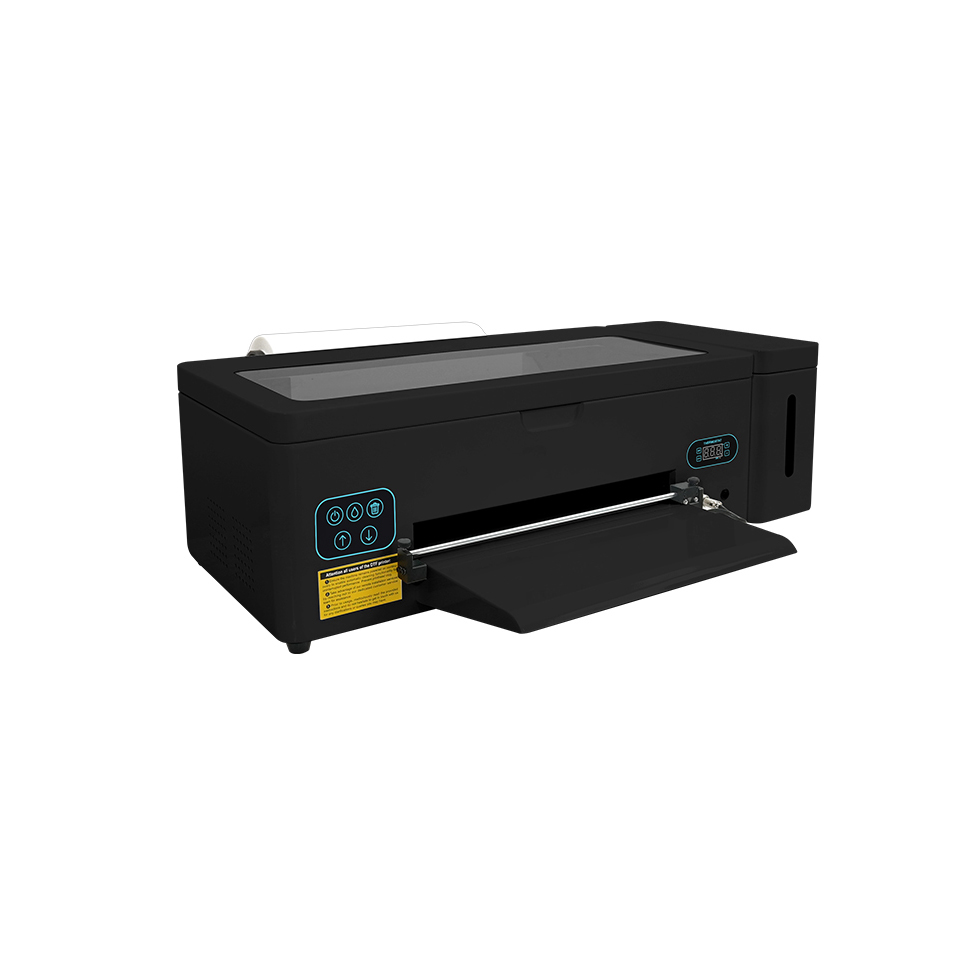
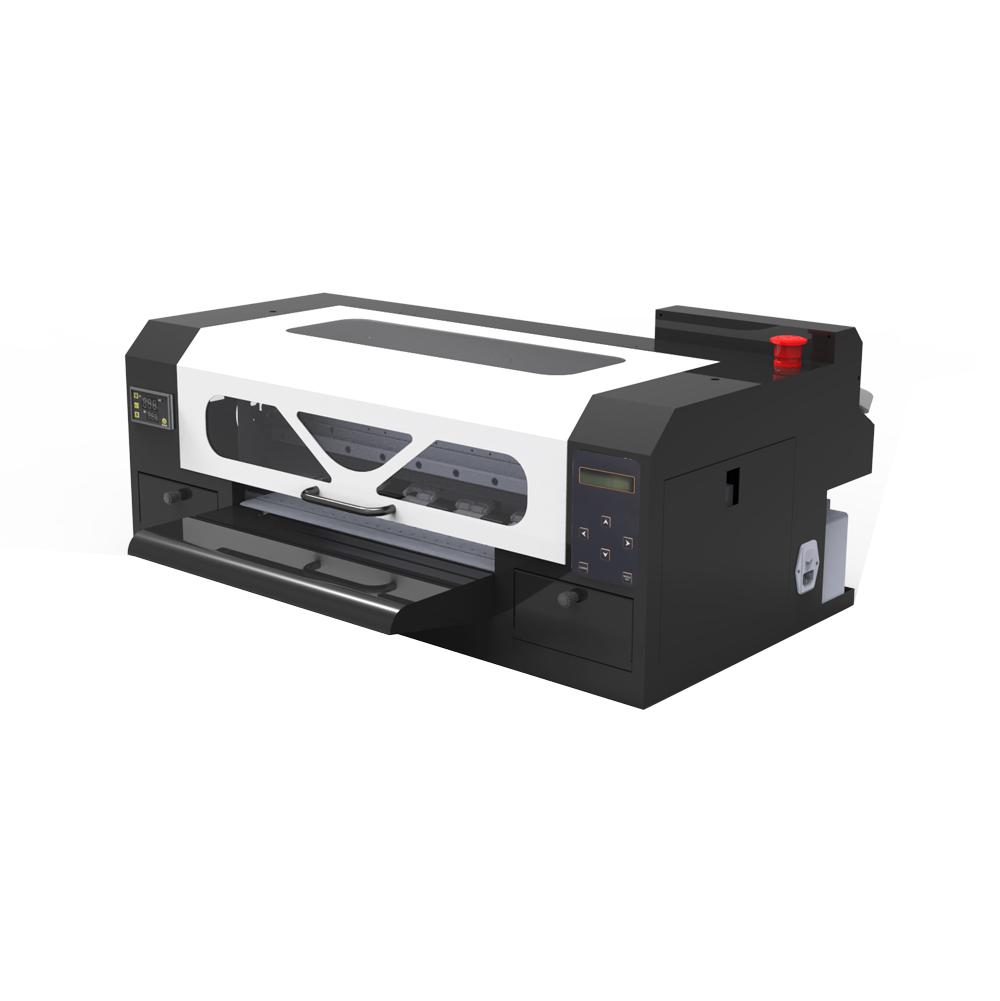
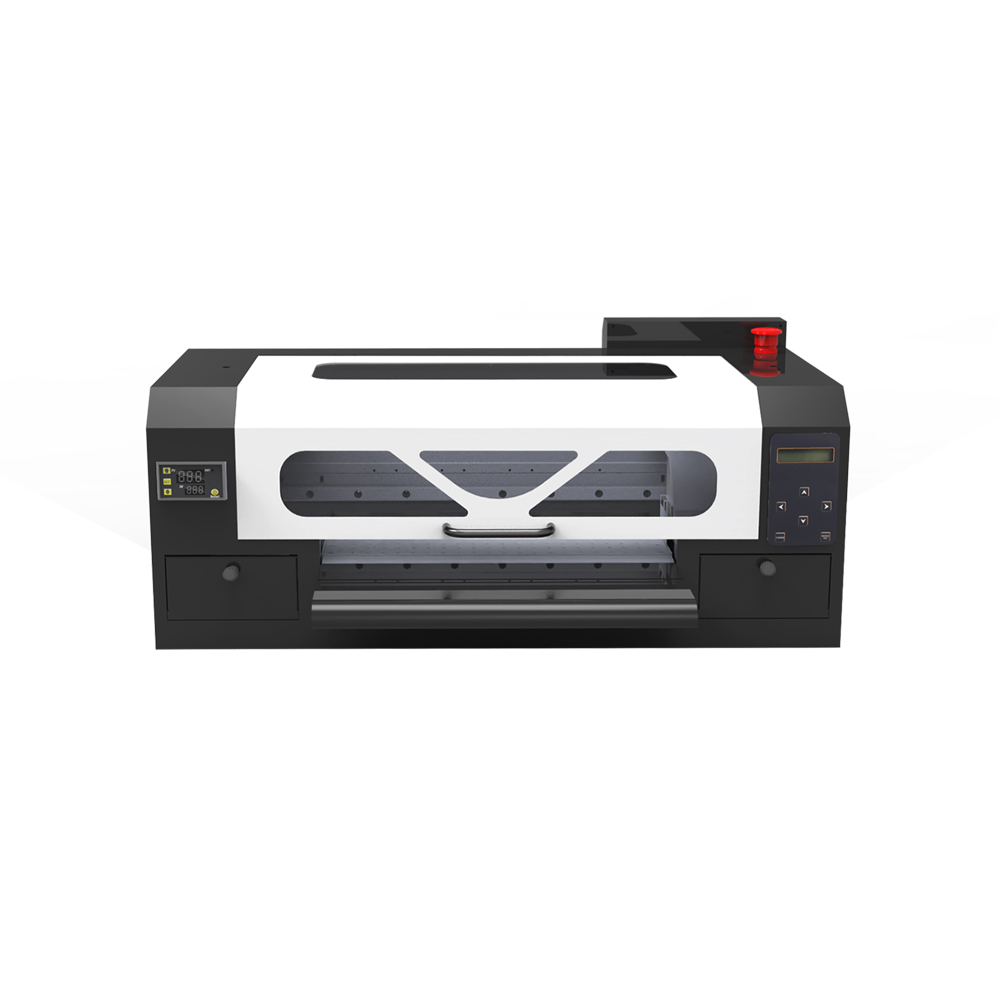
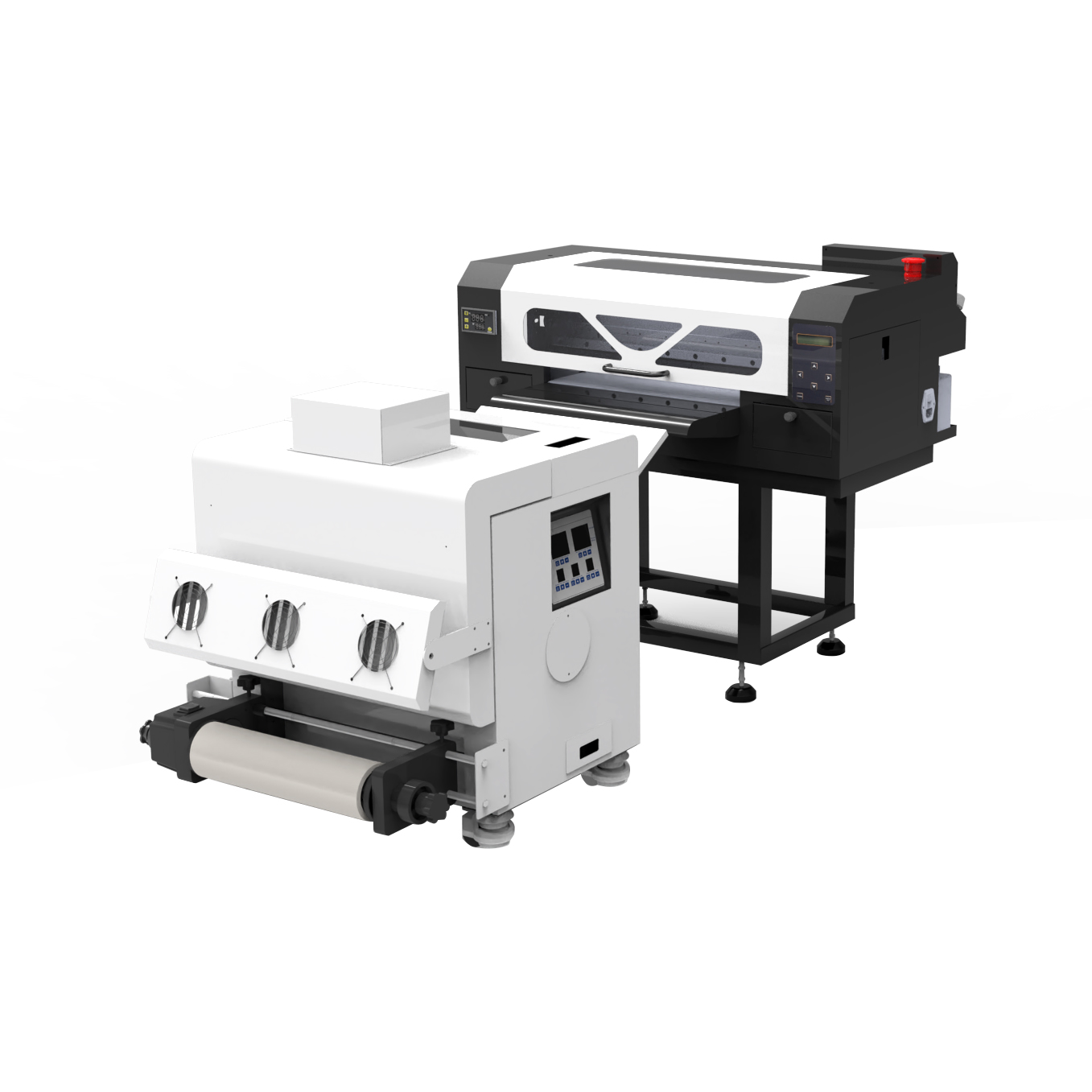
For entry-level users, EraSmart’s A4 and A4L DTF printers are positioned for startups and small-batch production. For growing small shops, the Single L1800 and A3 MAX XP600 systems provide a more practical production width. For higher throughput, the A3 MAX XP600 with powder shaker and A1 production models support more automated and higher-volume workflows.
A good buying path is:
| Business Stage | Suggested EraSmart Direction |
|---|---|
| Testing apparel products | A4 / A4L DTF Printer |
| Small online apparel shop | Single L1800 / A3 DTF Printer |
| Growing custom T-shirt business | A3 MAX XP600 |
| Daily production with more orders | A3 MAX with Powder Shaker |
| High-volume transfer production | A1 DTF Printer |
Related Read: https://www.erasmart.com/guides/how-to-choose-a-dtf-printer/
A production-ready solution designed for shops that need higher throughput and a more automated workflow.
A practical choice for startups and small studios that want reliable output without over-investing.
Balanced performance for print shops that need speed + stable output in an A3 footprint.
Designed for users who prioritize fine detail, smooth gradients, and premium print feel.
A dependable A3 model for steady daily output, popular for small-business production routines.
Compact entry-level model perfect for startups and small batch production.
Enhanced A4 model with improved ink efficiency for daily small-scale production.
A3 format printer with reliable R1390 motherboard for medium production.
Standard A3 model with 250ml ink tanks for consistent daily operation.
L1800 print head model offering superior color reproduction for detailed designs.
A3 Max series with XP600 print head for increased speed and efficiency.
High-performance A3 model with DX7 print head for professional results.
High-performance A3 model with XP600 print head for professional results.
Industrial wide-format printer with dual XP600 heads (620mm width).
Premium industrial printer with dual I3200 heads for maximum productivity.
DTF is better when your business needs flexibility: small batches, colorful artwork, fast turnaround, mixed fabrics, dark garments, and on-demand orders.
Screen printing is better when your business needs scale: large quantities, simple graphics, repeat production, classic ink feel, and low unit cost at volume.
For most new apparel businesses, DTF is the more flexible starting point. For established shops with steady bulk orders, screen printing remains valuable. The best long-term strategy may be to use DTF for custom and small-batch work, and screen printing for large repeat orders.
Need help choosing the right DTF printer for your apparel business? Share your target products, order size, design style, fabric type, and expected daily volume with EraSmart. Our team can help you match the right DTF printer, powder shaker, heat press workflow, consumables, and upgrade path for your business.
uv printer
DTF printer
DTG printer
Heat press machine
Advertising printer
DTF oven
Hot Press
Carving machine
Mug heat transfer
Laminating machine
Printing INK
Cellphone case
Glass product
Cleaning fluid
Cotton swab
WhatsApp:+8618566233796
WeChat: +8618566233796
Mobile: +8618566233796
Web:www.erasmart.com
Shop:www.erasmartmall.com
WhatsApp us
Just provide a few details and we will help you get quick quotes!