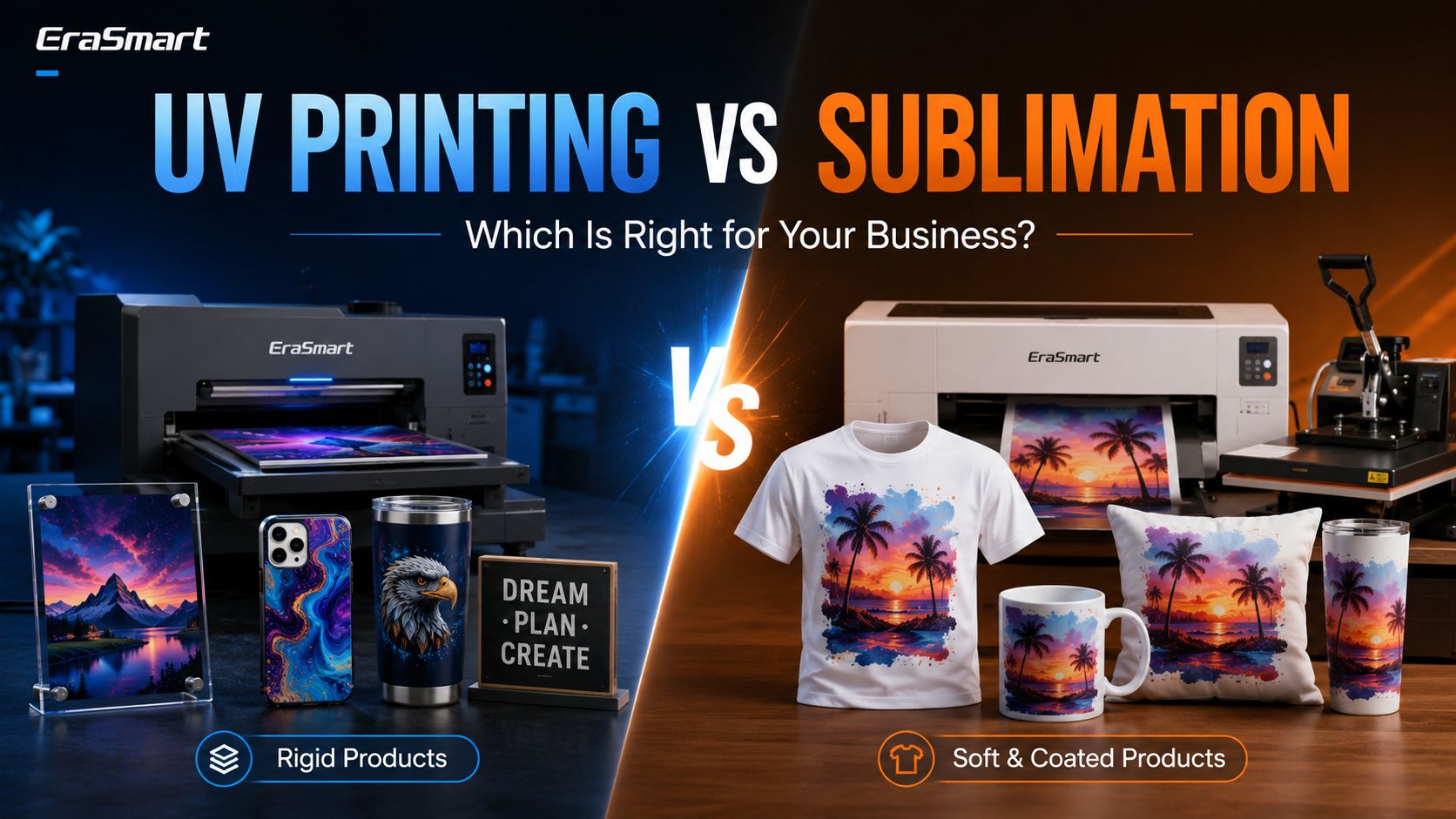
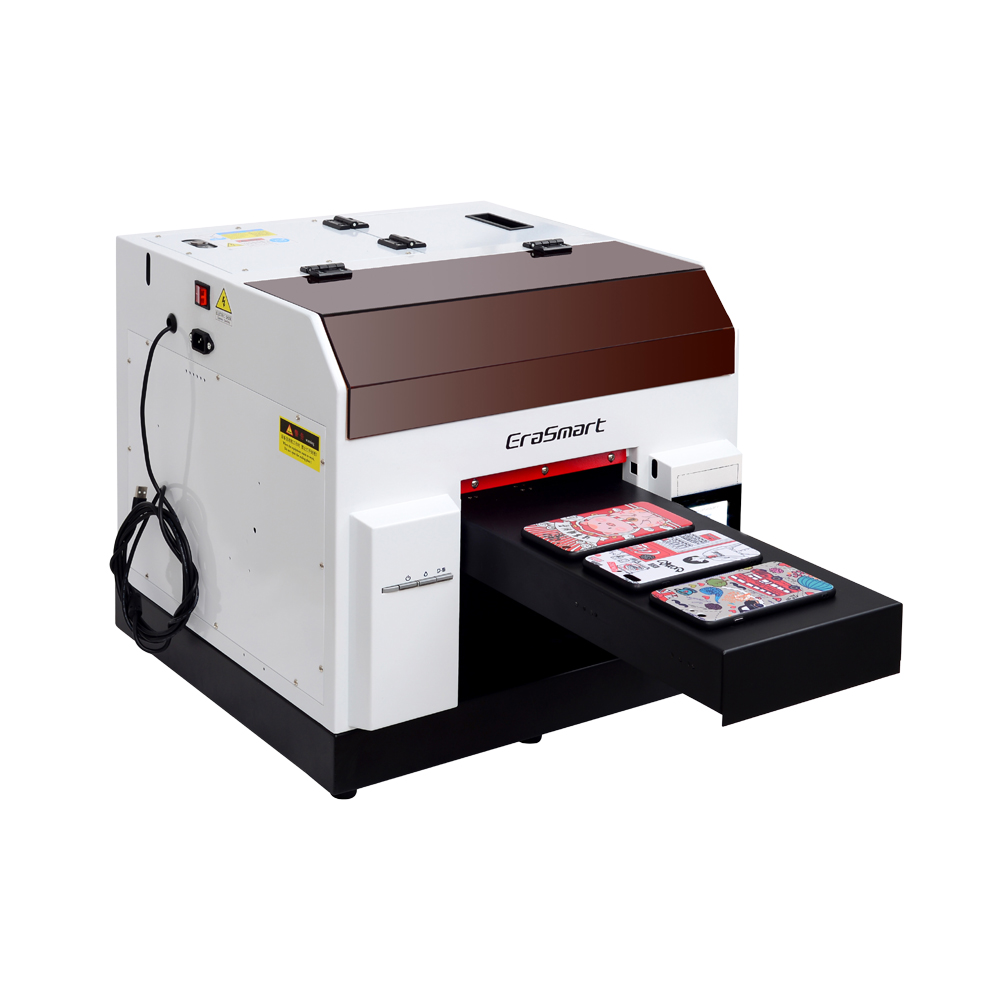
UV printing and sublimation printing are both popular digital decoration methods, but they are built for different business models. UV printing is usually the better choice when you want to print directly on rigid products such as acrylic, glass, metal, wood, plastic, phone cases, signs, and promotional gifts. Sublimation is usually stronger when your business focuses on polyester fabrics, sportswear, soft signage, coated mugs, and polymer-coated blanks.
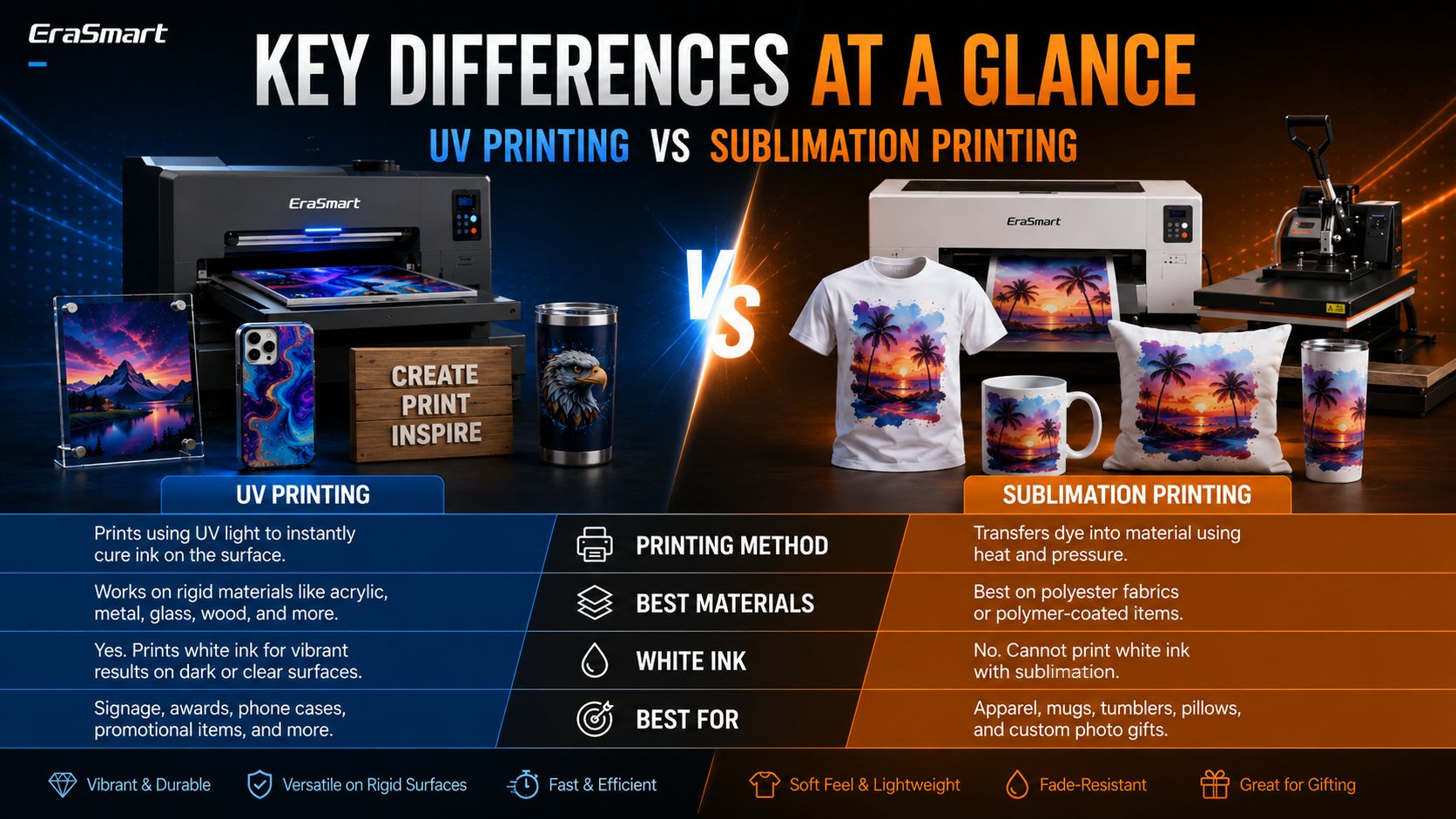
The right choice is not simply about which technology looks more advanced. It depends on your material, product category, order volume, finish requirement, and how much flexibility your business needs. UV printing cures ink instantly with UV light, creating a durable surface layer on the object, while sublimation uses heat and pressure to transfer dye into polyester or polymer-coated materials.
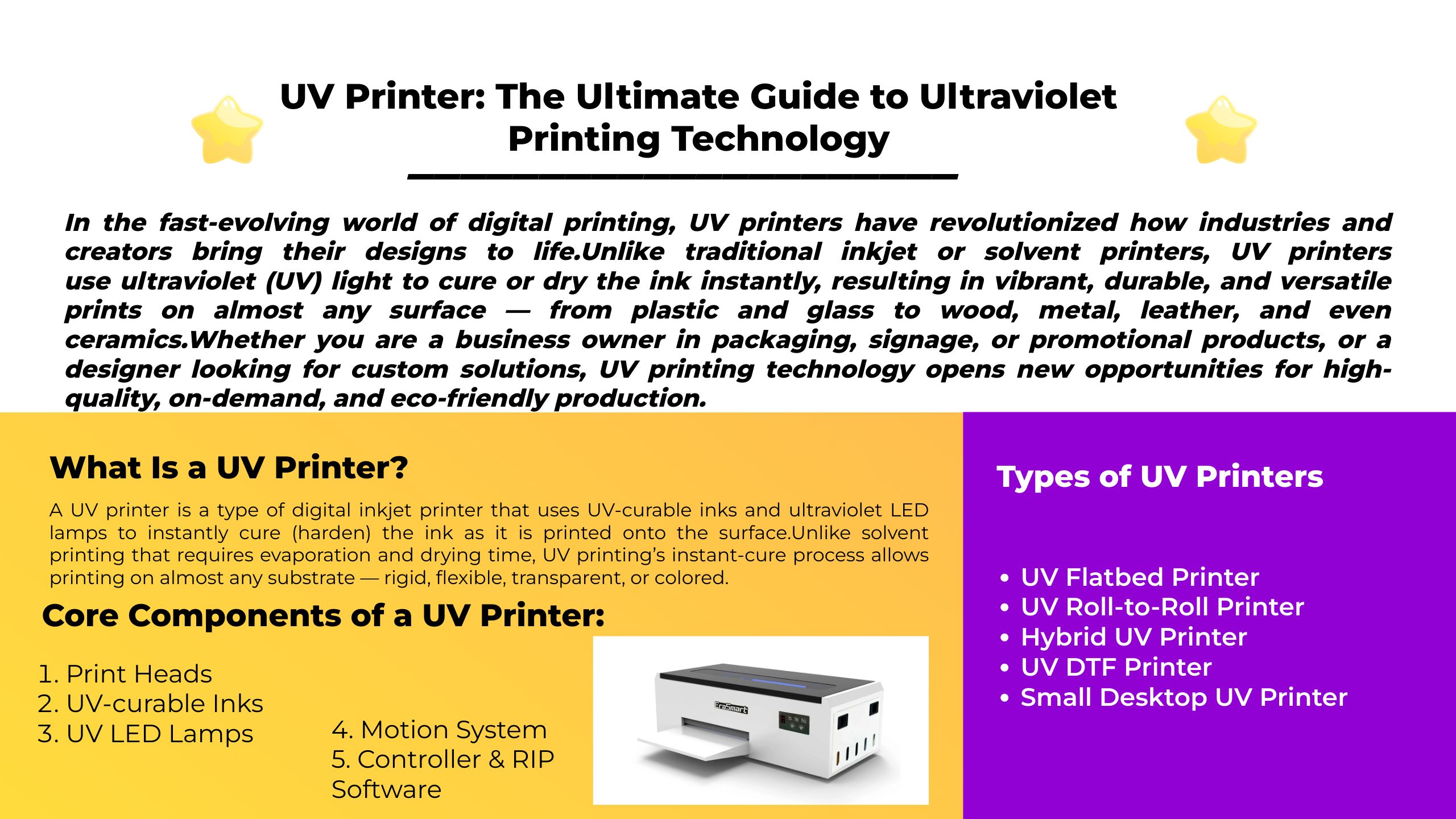
UV printing is a digital printing method that uses UV-curable ink and ultraviolet light. The printer applies ink directly onto the material surface, and UV lamps cure the ink almost immediately. Because the ink dries quickly instead of soaking into the material, UV printing can create sharp details, strong color edges, and durable prints on many hard surfaces.
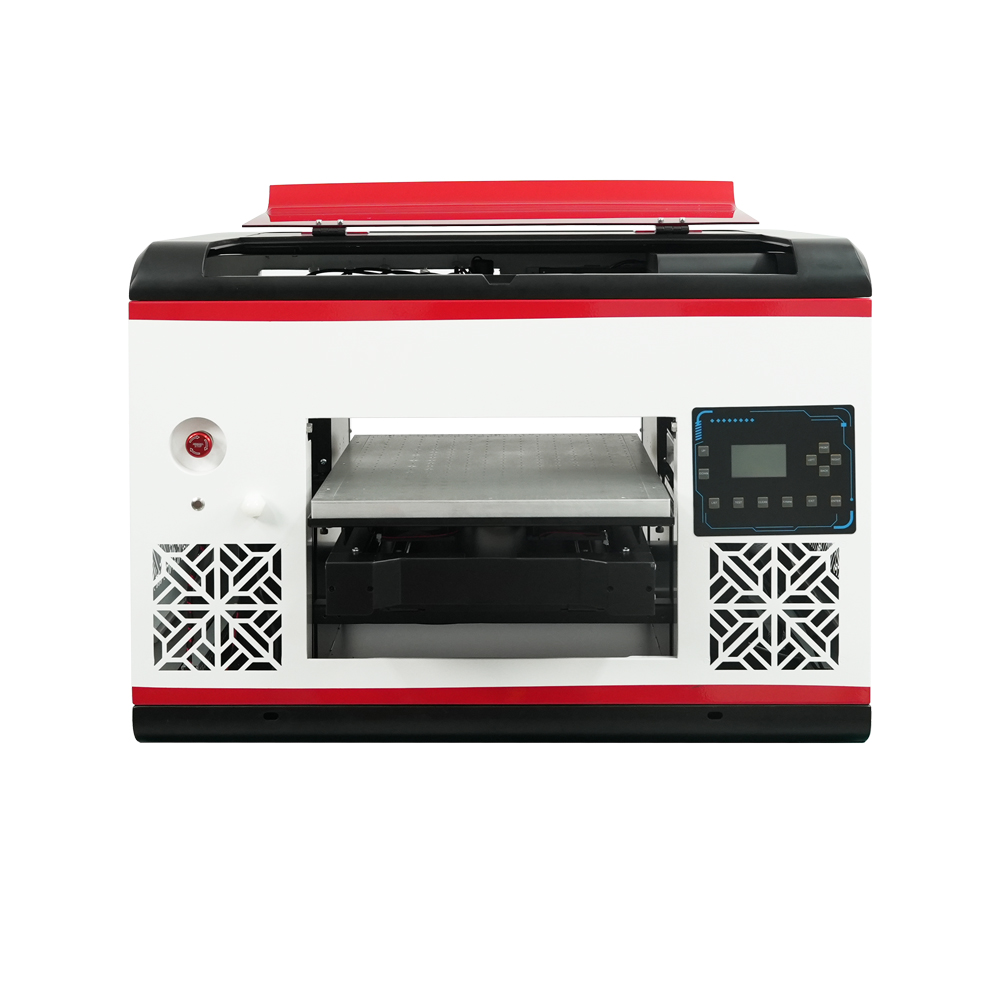
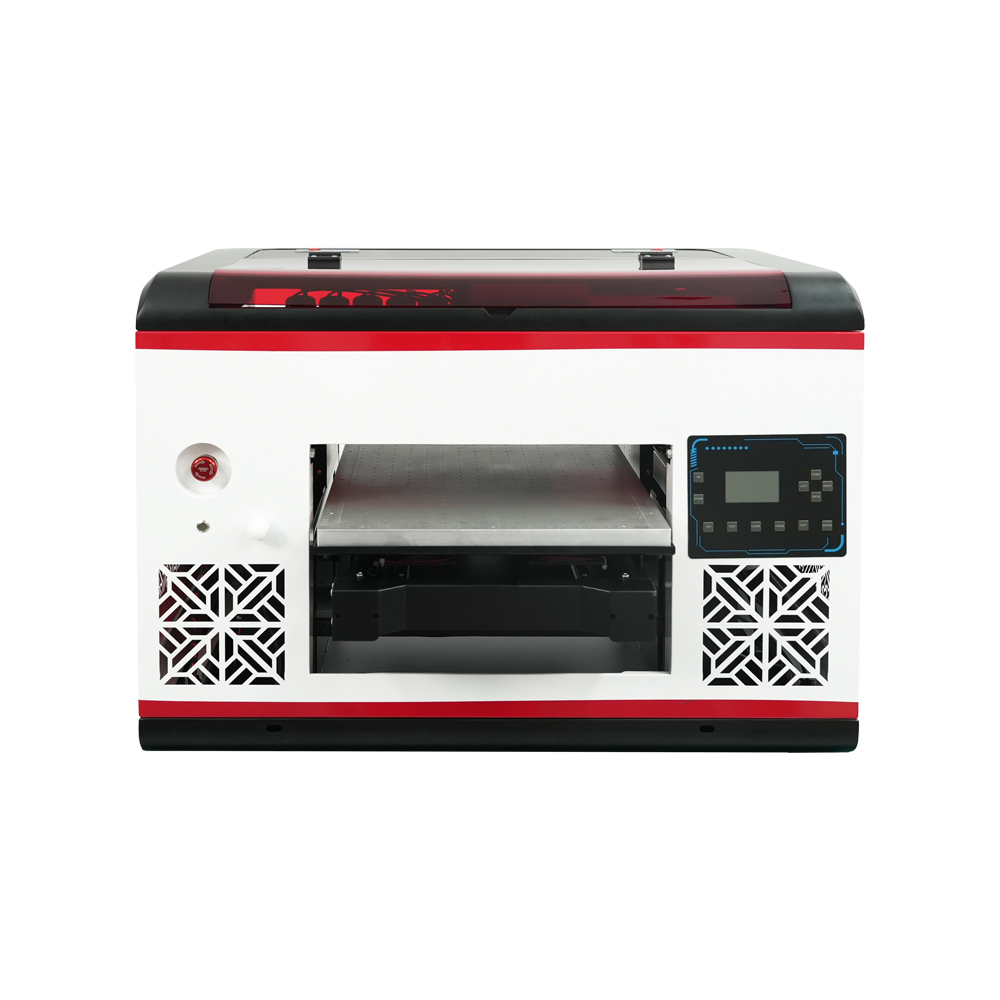
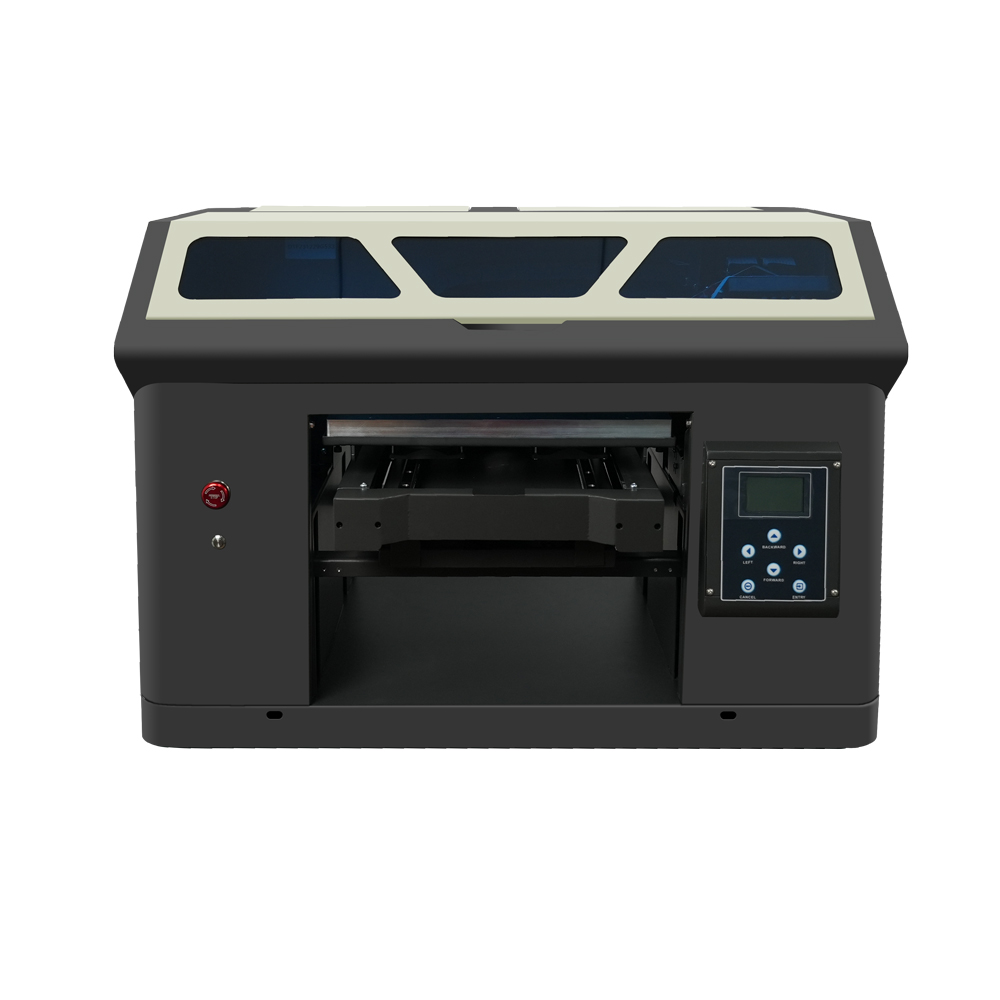
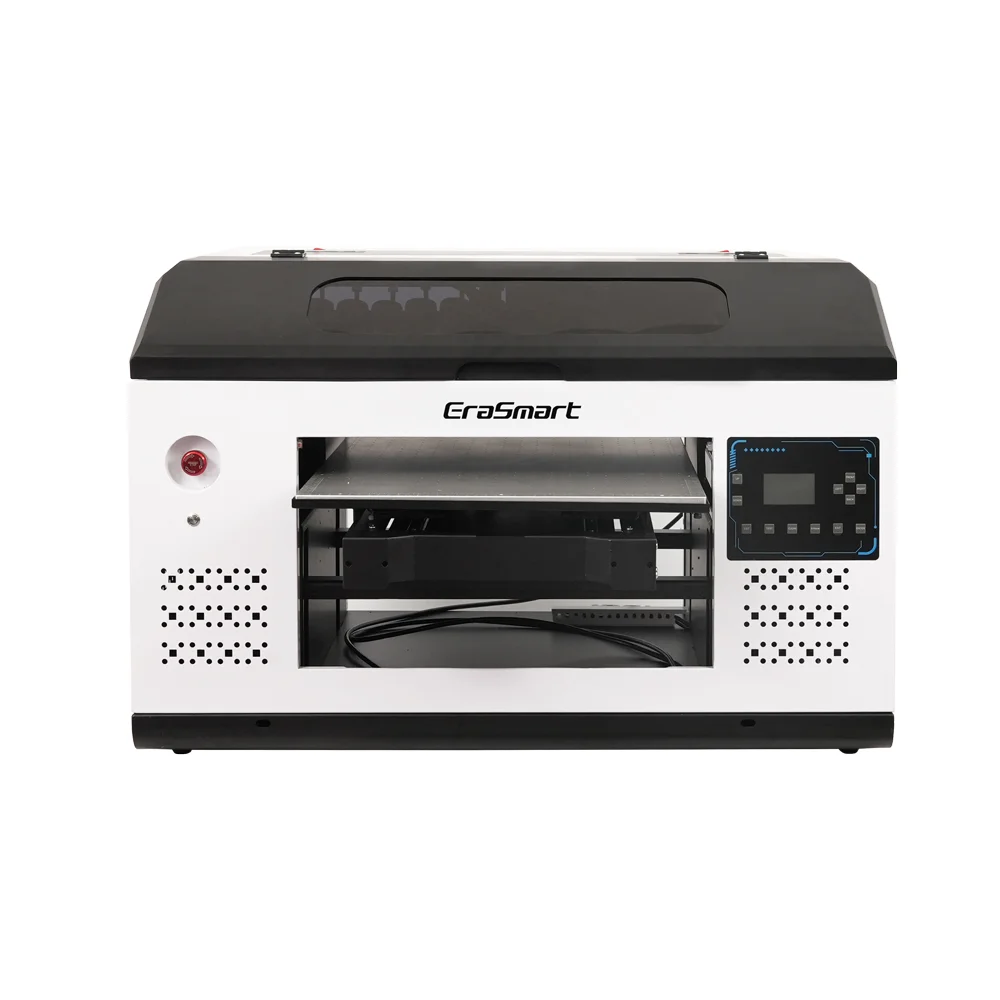
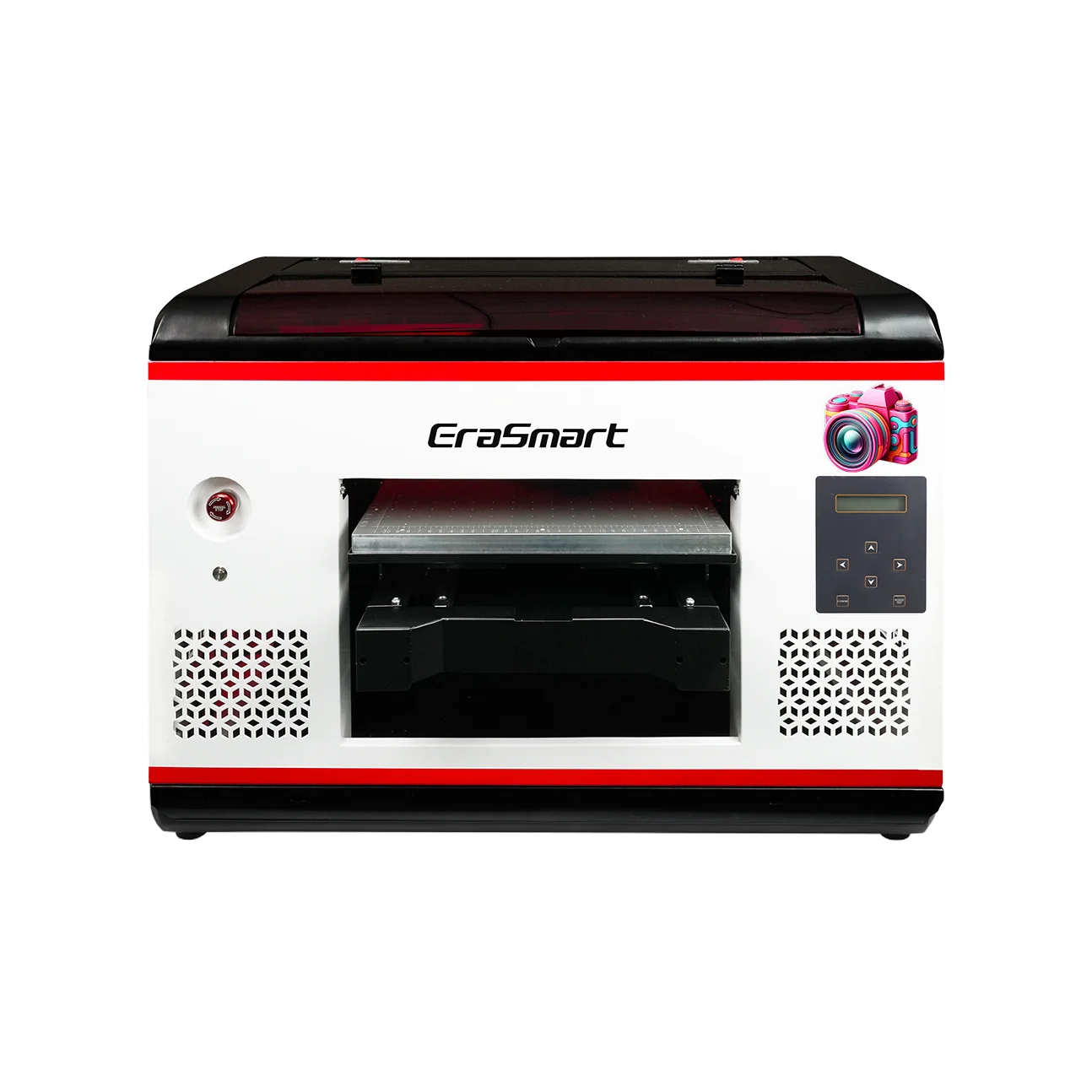
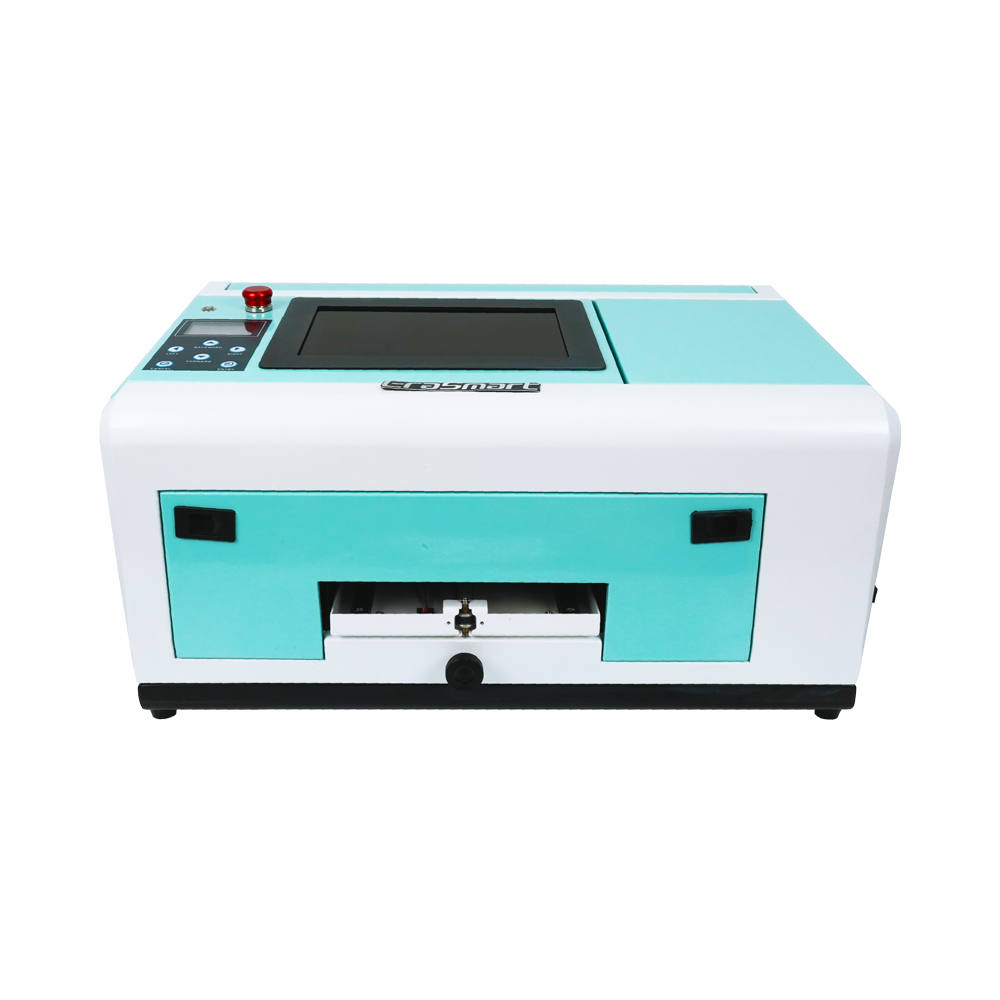
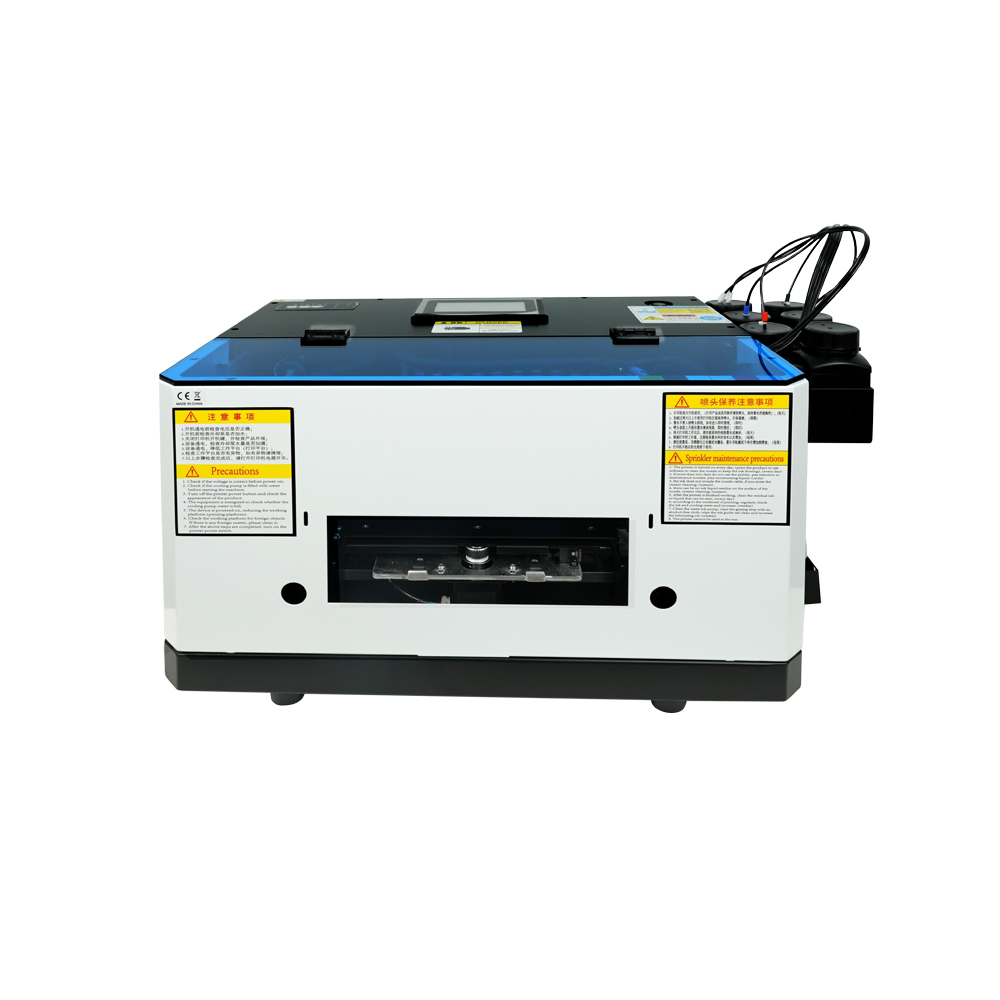
For small businesses, this is a major advantage. A UV flatbed printer can support many product categories from one machine: phone cases, acrylic plaques, wood signs, metal tags, glass panels, ceramic tiles, packaging samples, promotional products, and personalized gifts. EraSmart’s UV printer category includes compact A5/A4 models, A3 MAX, A3 PRO, 3545, A2, and UV DTF options, which makes UV printing suitable for both small studios and broader customization businesses.
ข้อมูลเพิ่มเติมเกี่ยวกับการพิมพ์ยูวี: เครื่องพิมพ์ UV: สุดยอดคู่มือเทคโนโลยีการพิมพ์อัลตราไวโอเลต
Sublimation printing uses heat, pressure, sublimation ink, and transfer paper. During heat pressing, the dye turns into gas and bonds with polyester fabric or polymer-coated surfaces. This makes sublimation very effective for polyester apparel, sportswear, soft signage, coated mugs, photo panels, and coated promotional blanks.
The main limitation is material compatibility. Sublimation does not work well on ordinary cotton, untreated glass, raw metal, natural wood, or uncoated plastic. The material usually needs to be polyester-based or coated for sublimation. This makes sublimation excellent for certain product lines, but less flexible than UV printing if your business wants to sell many types of hard customized products.
| Factor | การพิมพ์ยูวี | การพิมพ์ระเหิด |
|---|---|---|
| Printing method | Direct printing with UV-curable ink | Transfer printing with heat and pressure |
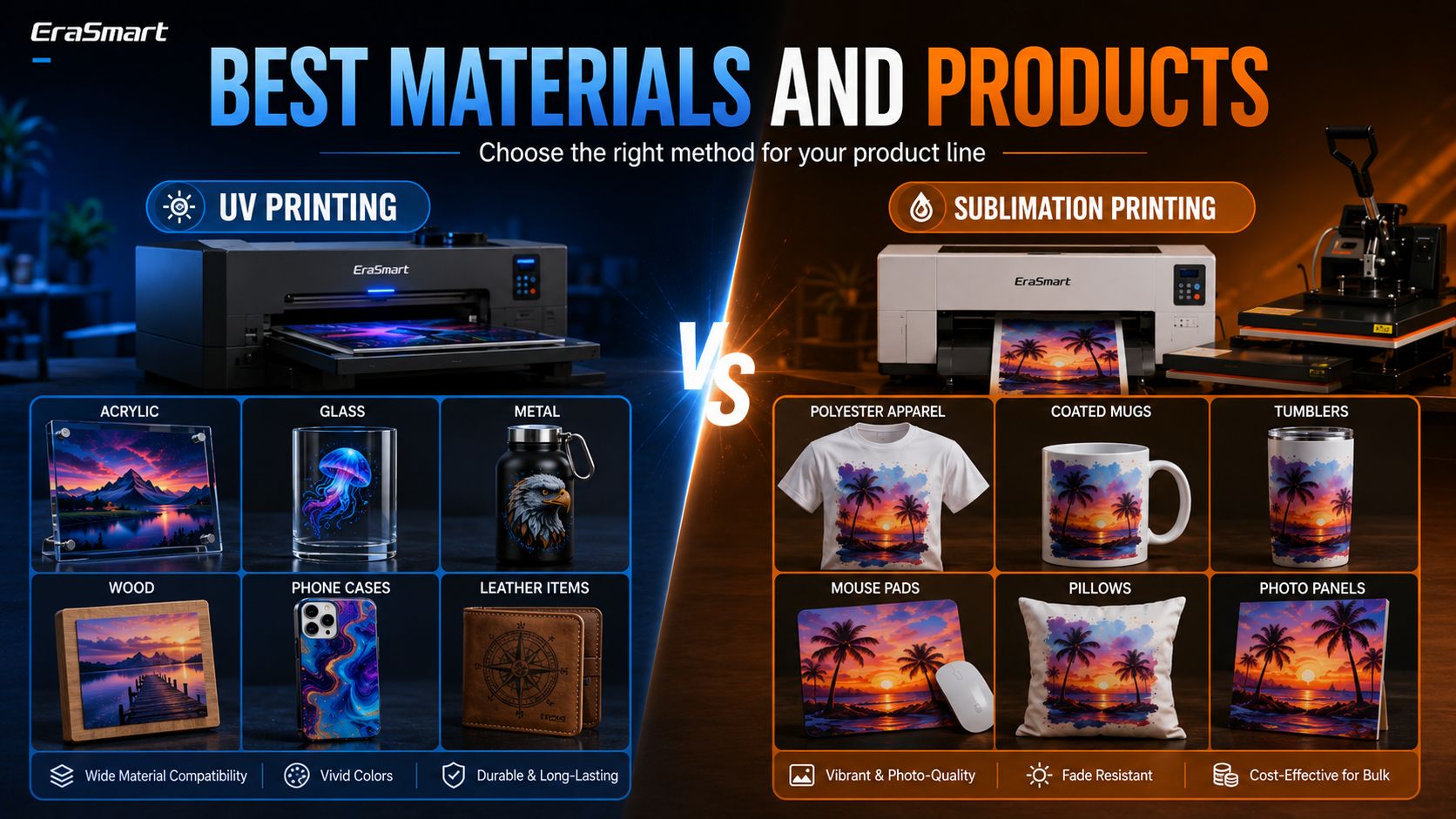
| Best materials | Acrylic, glass, metal, wood, plastic, ceramic, leather, phone cases, signs | Polyester fabric, coated mugs, coated blanks, soft signage |
| Surface requirement | Many rigid surfaces, but some materials may need cleaning or primer | Polyester or polymer-coated surface required |
| White ink | Available for dark, transparent, and colored materials | Not normally used in standard sublimation workflow |
| Varnish / texture | Can support gloss, raised effect, spot coating | Usually smooth and embedded into coated surface |
| เหมาะกับธุรกิจที่สุด | Custom gifts, phone cases, acrylic signs, promotional products, hard goods | Sportswear, polyester apparel, mugs, soft signage, photo gifts |
| ขั้นตอนการทำงาน | Print directly onto product | Print transfer paper, then heat press |
| Product flexibility | Very high | Medium, depending on coated blanks |
| Main limitation | Adhesion and surface preparation must be managed | Material choice is more limited |

Material compatibility is the biggest difference between UV printing and sublimation.
UV printing is more flexible for hard products. It can print on acrylic, glass, metal, wood, plastic, leather, ceramic, and phone cases depending on the printer, ink, fixture, and surface preparation. EraSmart’s material guide also positions UV printing around these common hard-surface categories.
Sublimation is more limited but very strong in its ideal category. If your products are polyester shirts, sports jerseys, soft signage, coated mugs, or sublimation-ready blanks, sublimation can create smooth, vibrant results because the dye becomes part of the coated material rather than sitting on top of the surface.
Simple rule:
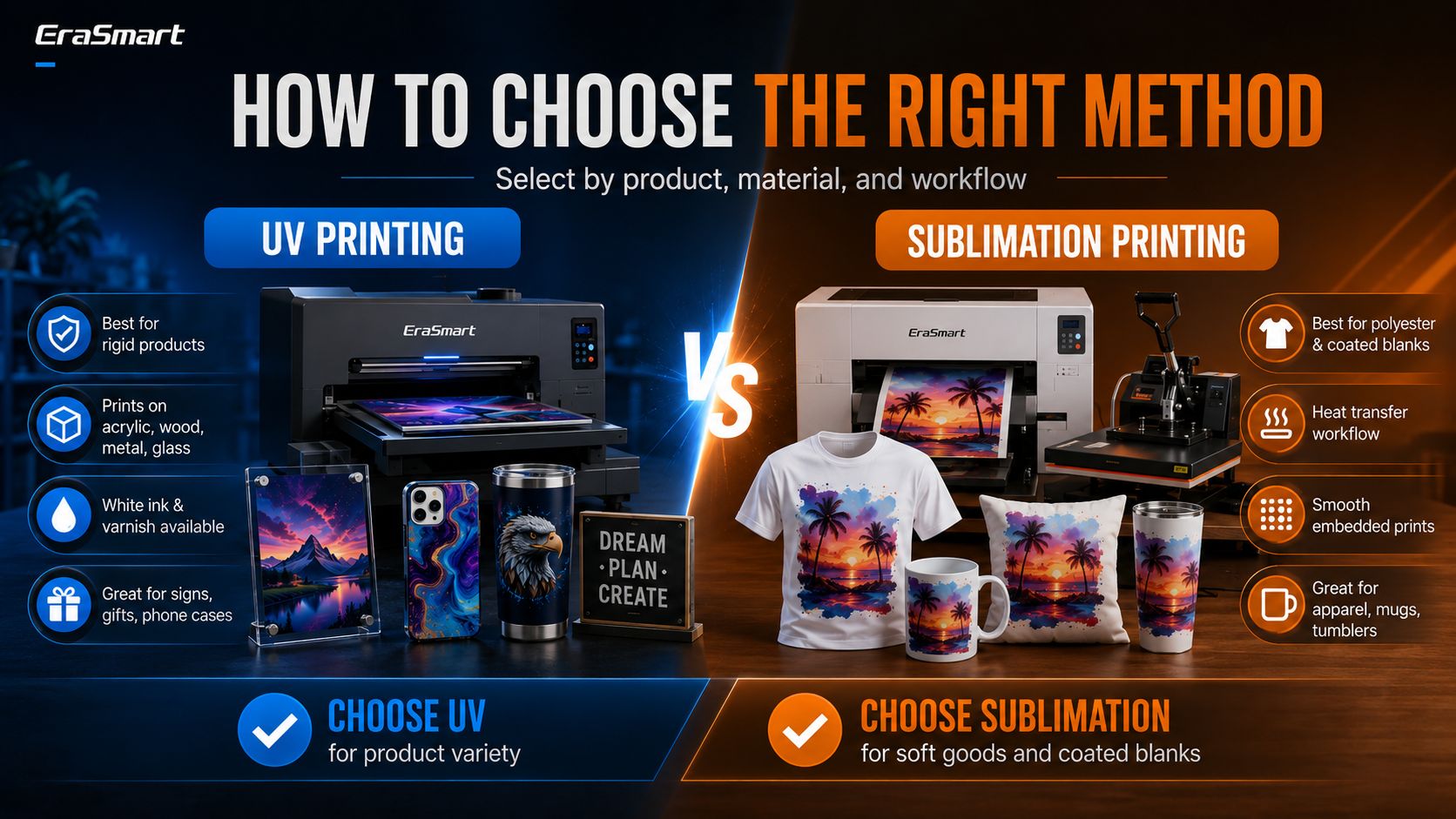
Choose UV printing if your business wants to print on many hard products. Choose sublimation if your business mainly sells polyester or coated sublimation blanks.
UV printing is usually more direct. You place the object on the platform, position the artwork, print, and the UV light cures the ink during printing. For flat hard products, this can be a very efficient workflow because there is no transfer paper stage and no separate heat press stage for most UV flatbed jobs.
Sublimation has more transfer steps. You print the design onto sublimation paper, align it with the blank, apply heat and pressure, then remove the paper after pressing. This workflow is very effective for mugs, polyester fabric, and coated blanks, but it depends heavily on transfer accuracy, heat press settings, and blank quality.
For businesses that want to produce many different hard products in small batches, UV printing often feels more flexible. For businesses producing standardized coated products in repeat batches, sublimation can be efficient and cost-effective.
UV printing has a major advantage when printing on dark, transparent, or colored materials because it can use white ink as an underbase. EraSmart’s UV ink guide explains that CMYK creates the main image, white ink supports dark and transparent materials, and varnish adds gloss, raised effects, and premium finishing.
This matters for products like clear acrylic, glass, dark phone cases, black gift boxes, colored plastic, and metal plates. Without white ink, colors may look weak, transparent, or affected by the background color.
Sublimation normally does not print white ink. It performs best on white or light-colored polyester and coated blanks. If the blank is dark, sublimation is usually not the best method unless the product has a special white printable coating area.
UV printing can create more surface effects. With white ink and varnish, a UV printer can produce glossy highlights, spot coating, raised texture, layered effects, and premium decorative finishes. This is useful for acrylic plaques, luxury packaging samples, branded gifts, nameplates, phone cases, and decorative products.
Sublimation usually creates a smooth embedded print. This is excellent for sportswear, polyester apparel, photo gifts, and coated mugs because the final image feels integrated into the material instead of sitting on the surface.
So the better choice depends on your product positioning. If you want premium hard-surface products with texture and varnish effects, UV printing is stronger. If you want smooth, vibrant polyester or coated products, sublimation is stronger.
For a small customization business, UV printing usually gives a broader product path. One UV printer can support phone cases, acrylic signs, plaques, wood items, glass gifts, metal tags, ceramic tiles, packaging samples, and small promotional products. EraSmart’s phone case printer page also shows this business logic clearly: a dedicated phone case printer fits phone-case-focused retail, while A4 and A3 UV printers fit broader customization businesses.
Sublimation is also a good startup method, but it is usually better when the business has a clear sublimation product direction: mugs, tumblers, polyester shirts, sportswear, photo panels, mouse pads, and coated blanks. It is less flexible if the business later wants to expand into raw acrylic, glass, wood, metal, or non-coated plastic.
Choose UV printing if your business wants to sell:
เคสโทรศัพท์
acrylic signs and plaques
glass and crystal gifts
metal nameplates
wood signs
ceramic tiles
packaging samples
สินค้าส่งเสริมการขาย
small customized gifts
premium items with varnish or raised texture
hard-surface products with short-run customization
UV printing is also a strong choice if your business needs low minimum order quantities, frequent design changes, product variety, and direct-to-object printing. EraSmart’s UV printer range supports small A4 entry setups as well as larger A3 and A2 production directions, so the machine can be selected based on business stage instead of only budget.

Choose sublimation if your business mainly sells:
polyester sportswear
white or light-colored polyester shirts
soft signage
coated mugs
coated tumblers
mouse pads
photo panels
coated ornaments
sublimation-ready gift blanks
Sublimation is especially useful when your product catalog is built around coated blanks and fabric-based products. It can produce vivid color and smooth results on compatible materials, but the material limitation should be considered before building a business around it.
The lower-cost machine is not always the better business choice. You should compare total product range, consumables, fixtures, maintenance, blank availability, labor time, and expected profit per product.
Sublimation needs polyester or polymer-coated materials. UV printing supports more hard surfaces, but some plastics, glass, and metals may need surface cleaning, primer, or adhesion testing. EraSmart notes that different substrates bond differently, and some materials need primer or surface treatment.
If you want to print on transparent, black, colored, or dark products, white ink is important. A UV printer with CMYK only may look cheaper, but it may not support the products your customers actually want.
A machine should match your business direction. If you only want sublimation mugs and sportswear, sublimation may be enough. If you want phone cases, acrylic, wood, glass, metal, and premium gifts, UV printing gives you a broader product path.
For phone cases, UV printing is usually the better long-term option because phone cases come in different colors, materials, shapes, and customization styles. UV printing can print directly onto many phone case surfaces, and UV DTF can also be used for transfer-style hard-surface decoration depending on the product and workflow. EraSmart positions dedicated phone case printers, A4 UV printers, and A3 UV printers for different phone case business stages.
Sublimation can work for phone cases only when the case is sublimation-ready and has a coated printable surface. That makes it useful for specific blank products, but less flexible for a broader phone case customization business.

Sublimation is a strong choice for coated mugs and tumblers because the dye bonds into the coated surface under heat and pressure. It is widely used for photo mugs, promotional cups, and gift products.
UV printing can also be used for cylindrical items when the printer supports rotary fixtures or when UV DTF decals are used. For businesses that want to print not only mugs but also acrylic, glass, metal, packaging, and phone cases, UV or UV DTF may offer a wider growth path.
For polyester sportswear and white polyester shirts, sublimation is usually the better choice. It creates smooth, vibrant prints that integrate into the fabric.
For cotton T-shirts, dark garments, and mixed fabrics, neither UV flatbed nor sublimation is usually the main method. In that case, textile DTF is often a better business choice. EraSmart already separates UV printing, textile DTF, and UV DTF as different workflows for different products.
อ่านจริง: https://www.erasmart.com/uv-dtf-vs-textile-dtf-vs-uv-flatbed/
For most small product-customization businesses, UV printing gives a wider product range and more room to grow. It is suitable for sellers who want to test multiple product categories, handle low-MOQ orders, and build a flexible catalog around hard goods.
Sublimation is better if the business model is already clear and focused on polyester or coated blanks. It can be efficient, affordable, and profitable when the product catalog fits the process.
UV printing and sublimation are not direct replacements for each other. They solve different business problems.
เลือก การพิมพ์ยูวี if you want a flexible custom-product business built around hard surfaces, premium gifts, phone cases, acrylic, wood, glass, metal, signage, and packaging samples.
เลือก การระเหิด if your business focuses on polyester fabric, sportswear, soft signage, mugs, tumblers, and coated gift blanks.
For EraSmart customers, the most practical decision is to start from the product list first. If your product list includes many rigid materials and premium custom gifts, compare EraSmart UV printer models. If your product list is mainly polyester or coated blanks, sublimation may be enough. If your business wants stickers, cup wraps, and hard-surface transfers, UV DTF may also be worth considering.
Need help choosing between UV printing, sublimation, and UV DTF? Share your product list, material type, size range, and expected daily order volume with EraSmart. Our team can help you match the right workflow, whether you need a compact A4 UV printer, an A3 UV flatbed printer, a larger UV production system, or a UV DTF solution for hard-surface transfers.
ค้นพบเครื่องพิมพ์ UV ที่ครอบคลุมของเรา ซึ่งออกแบบมาเพื่อมอบผลลัพธ์ที่ยอดเยี่ยมบนวัสดุที่หลากหลาย ตั้งแต่รุ่น A5 ขนาดกะทัดรัดไปจนถึงเครื่องพิมพ์ A2 หน้ากว้าง ค้นหาโซลูชันที่สมบูรณ์แบบสำหรับธุรกิจของคุณ
รุ่นเริ่มต้นขนาดกะทัดรัดพร้อมหัวพิมพ์ L800 เหมาะสำหรับงานชิ้นเล็กๆ และงานงานอดิเรก (ขนาดการพิมพ์ 120*210 มม.)
หัวพิมพ์ L800 พร้อมขนาดการพิมพ์ 210*290 มม. เหมาะสำหรับธุรกิจขนาดเล็กและของขวัญส่วนบุคคล (ความสูงการพิมพ์ 0-130 มม.)
หัวพิมพ์ DX7 ที่มีขนาดการพิมพ์ 350*450 มม. มีแท่นดูด และ CMYK+WW+VV สำหรับการผลิตปริมาณมาก
หัวพิมพ์ XP600 ที่มีขนาดการพิมพ์ 350*450 มม. ความเร็ว 5 ตร.ม./ชม. เหมาะสำหรับการผลิตขนาดกลางถึงขนาดใหญ่
หัวพิมพ์ XP600 คู่ที่มีความเร็ว 5.5 ตร.ม./ชม., CMYK+WW+VVVVVV เพื่อเพิ่มช่วงสีและผลผลิต
หัวพิมพ์ XP600 คู่ที่มีขนาดการพิมพ์ 350*450 มม. ออกแบบมาสำหรับการผลิตต่อเนื่องในระดับอุตสาหกรรม
เครื่องพิมพ์ขนาดใหญ่ 420*600 มม. พร้อมหัวพิมพ์ XP600 คู่ เหมาะสำหรับงานป้าย แผง และวัสดุขนาดใหญ่
หัวพิมพ์ XP600 คู่พร้อมการเคลือบอัตโนมัติ สำหรับการพิมพ์ฟิล์ม UV DTF โดยเฉพาะ (ความกว้างสูงสุด 350 มม.)
เฉพาะสำหรับเคสโทรศัพท์ (TPV/PVC/ไม้/โลหะ) พร้อมจอแสดงผลขนาด 10 นิ้วและความสูงที่ปรับได้ 0-10 มม.
เครื่องพิมพ์ UV
เครื่องพิมพ์ DTF
เครื่องพิมพ์ DTG
เครื่องกดความร้อน
เครื่องพิมพ์โฆษณา
เตาอบ DTF
กดร้อน
เครื่องแกะสลัก
การถ่ายเทความร้อนของแก้ว
เครื่องเคลือบ
หมึกพิมพ์
เคสโทรศัพท์มือถือ
ผลิตภัณฑ์แก้ว
ทำความสะอาดของเหลว
ผ้าฝ้าย
whatsapp: +8618566233796
WeChat: +8618566233796
มือถือ: +8618566233796
เว็บ:www.erasmart.com
ร้านค้า:www.erasmartmall.com
วอทส์แอพหาเรา
เพียงแค่ให้รายละเอียดเล็กน้อยและเราจะช่วยให้คุณได้รับใบเสนอราคาด่วน!