Small Size Flatbed Inkjet Printer Manufacturer

86-18566233796 [email protected]

Blog DTG Printer vs DTF Printer: What’s the Difference (and Which One Should You Choose)?
DTG Printer vs DTF Printer: What’s the Difference (and Which One Should You Choose)?

January 26, 2026     Blog

If you’re starting (or scaling) a garment printing business, the DTG vs DTF decision impacts everything: what fabrics you can print, how fast you can fulfill orders, your maintenance workload, and your final print feel.
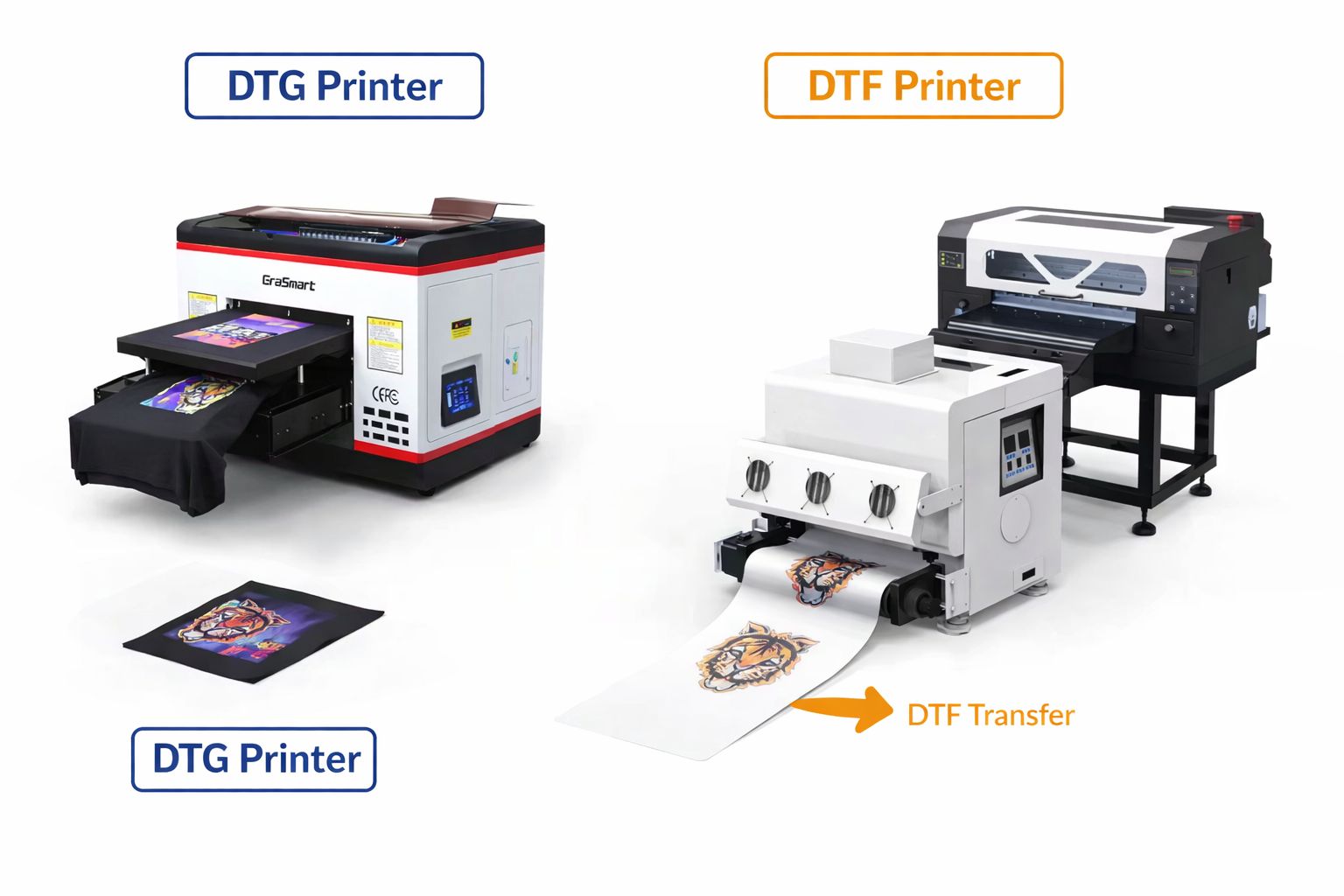
Here’s the simplest way to frame it:

  • DTG (Direct-to-Garment) prints directly on the shirt and typically relies on pretreatment (especially when printing white ink on dark garments).
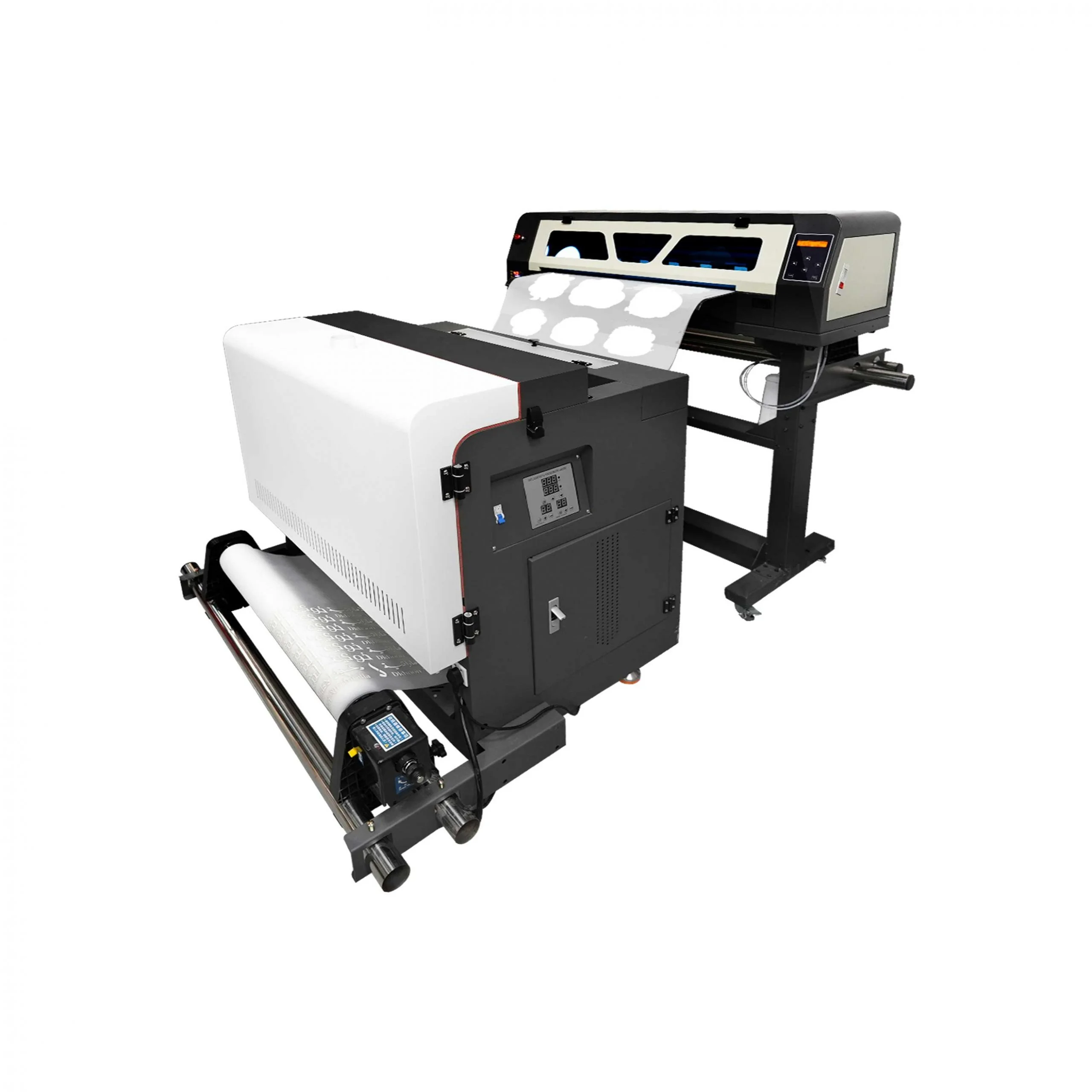
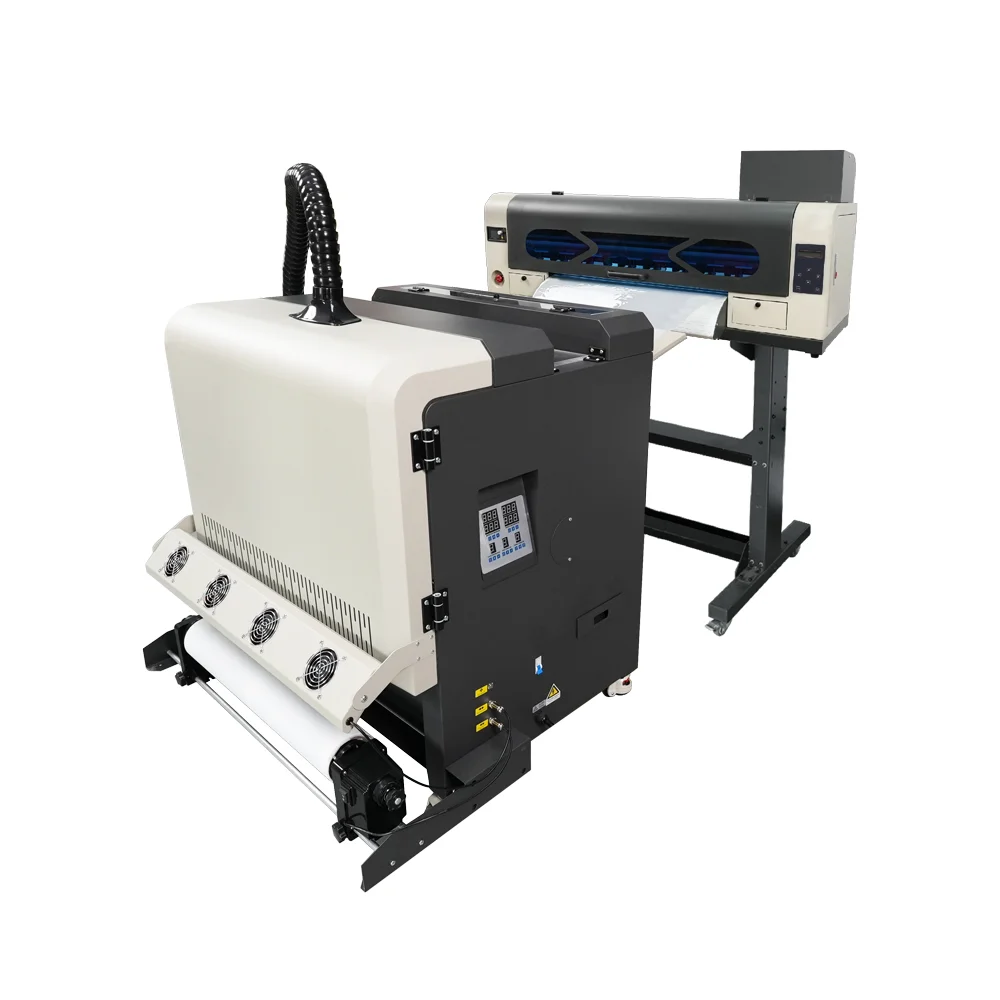
  • DTF (Direct-to-Film) prints on PET film, applies hot-melt powder, cures/melts it, then heat presses the transfer onto the garment.

Both can produce high-quality results—but they win in different scenarios.
DTG vs DTF: Quick Comparison Table

CategoryDTG Printer (Direct-to-Garment)DTF Printer (Direct-to-Film)
Prints onThe garment itselfPET film → then transferred to garment
Key consumablesDTG inks + pretreatment (esp. with white)DTF inks + PET film + hot-melt powder
Required equipmentPrinter + curing (heat press or dryer)Printer + powdering + curing + heat press
Best forPremium cotton tees, soft feel, photo detailBroad fabric range, transfers, batch prep, versatility
Typical learning curvePretreat + white ink managementPowder handling + curing + press consistency

How DTG Printing Works (Workflow)

DTG is an inkjet-style process where ink is printed straight into/onto the fibers. For dark garments, DTG commonly uses a white underbase, and pretreatment helps keep white ink from soaking into the fabric.

Typical DTG steps

  1. Prepare artwork in RIP (including white underbase settings on dark garments)
  2. Pretreat (mainly for white ink / dark shirts) and press-dry/flatten
  3. Print directly on the garment
  4. Cure the ink (heat press or conveyor dryer)

Why pretreat matters: it prevents excessive absorption of white ink and improves opacity/print surface on dark garments.

How DTF Printing Works (Workflow)

DTF creates a transfer first, then bonds it to the garment using heat.

Typical DTF steps

  1. Print design onto PET film
  2. Apply DTF powder to the wet ink
  3. Melt/cure the powder (oven/dryer/heat method)
  4. Heat press the transfer onto the garment
  5. Peel per film type (hot/cold/warm peel depends on film system)

DTF relies on hot-melt powder + curing to form the adhesive layer that bonds during heat pressing.

Fabric Compatibility: Which Prints on More Materials?

DTG fabric sweet spot

DTG is widely favored for cotton garments (especially premium tees) because ink interacts well with the fibers and can feel very soft when dialed in.

DTF fabric advantage

DTF is often positioned as more versatile across cotton, polyester, blends, and more, because the transfer bonds on top of the fabric rather than relying on ink absorption in fibers.

Practical takeaway:
If you expect lots of poly/blends/workwear, DTF usually gives you fewer “fabric compatibility” headaches.

Print Feel & Customer Perception

  • DTG feel: often described as softer on cotton because the ink integrates with the fabric (especially on light garments or well-optimized profiles).
  • DTF feel: commonly slightly thicker or more “transfer-like,” depending on film, powder, and ink load—but can still look very premium when tuned correctly.

If your brand sells “premium soft-hand cotton tees,” DTG tends to match that positioning naturally.

Durability & Wash Performance

Durability depends heavily on process control (curing, pretreat, powder melt, heat press settings). Many comparisons note:

  • DTF can be highly durable when cured and applied correctly.
  • DTG durability is strong, but performance can drop if pretreat/cure is inconsistent—especially on dark garments with white underbase.

Practical takeaway:

  • If you want consistent durability across mixed fabrics → DTF often has the edge.
  • If you control garment type tightly (good cotton) and perfect pretreat/cure → DTG can be excellent.

Equipment & Operating Complexity

DTG setup checklist

  • DTG printer
  • Pretreat workflow (manual or machine)
  • Heat press or conveyor dryer for curing

DTF setup checklist

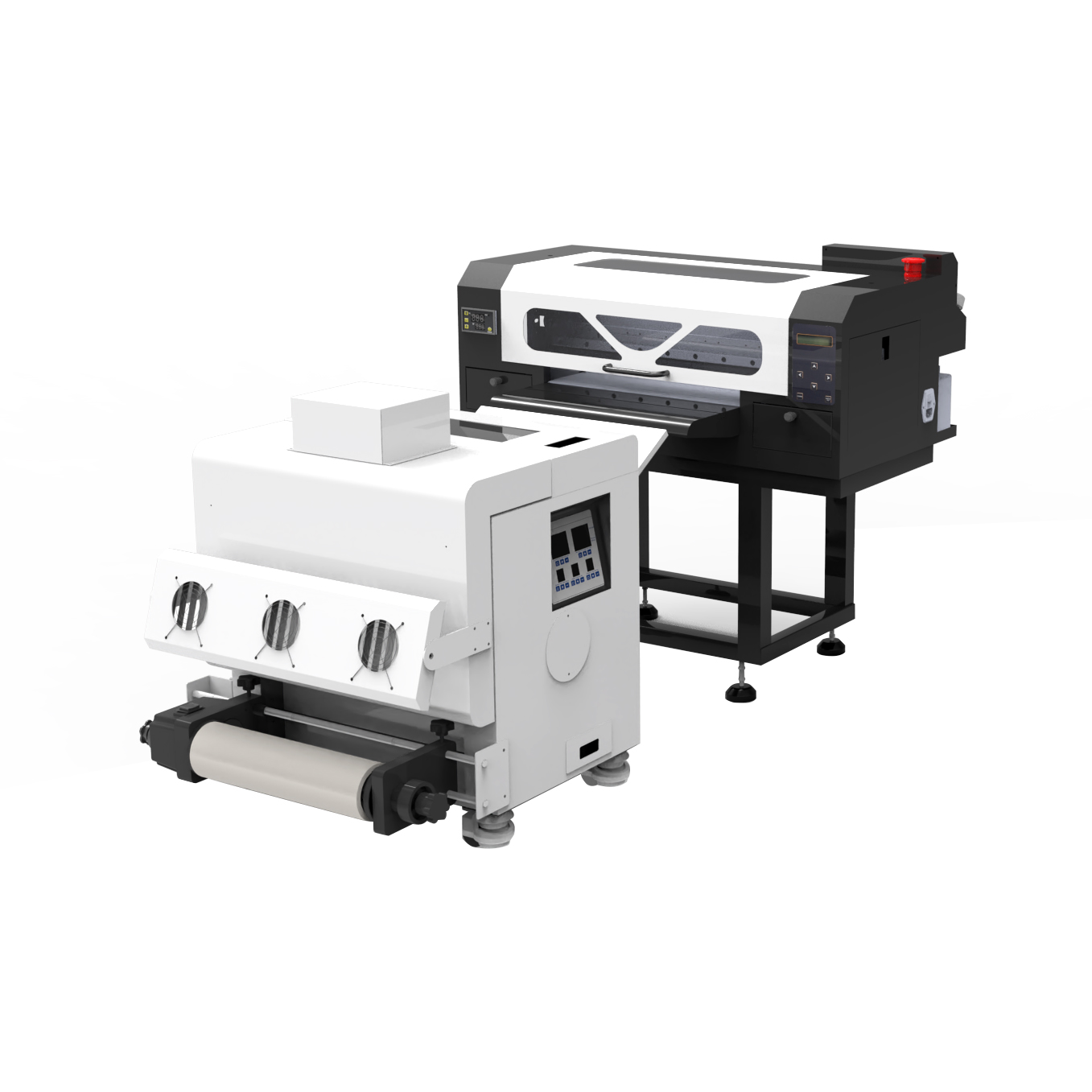
  • DTF printer
  • Powder application (manual or shaker)
  • Curing method (oven/dryer)
  • Heat press

Reality: DTG tends to have fewer “steps” per print once pretreat is standardized, while DTF adds transfer steps—but can help you batch work efficiently.

Production & Scaling: Which Is Faster?

Scaling depends on your shop flow. Some suppliers claim very large productivity advantages for DTF over DTG, but treat those numbers as marketing unless you validate with your own workflow.

Where DTF scales well

  • You can batch-print transfers
  • You can press later (or outsource pressing)
  • You can stock popular designs as transfers

Where DTG scales well

  • On-demand single items (especially light garments)
  • High detail artwork without transfer handling
  • You want “print → cure → ship” simplicity

Maintenance & Downtime: The Hidden Deciding Factor

DTG maintenance reality

DTG commonly requires strong routines around white ink and printhead health. Pretreat and curing consistency also affect repeatability.

DTF maintenance reality

DTF also uses white ink (maintenance still matters), plus you’ll manage powder dust, curing consistency, and transfer handling.

Practical takeaway:
If you hate daily routines and environment control, neither is “maintenance-free”—but DTG (especially white ink) is often described as more routine-sensitive.

Which One Should You Choose? (Decision Guide)

Choose DTG if:

  • Your core products are premium cotton tees/hoodies
  • You care most about soft feel + photo detail
  • You run on-demand and want fewer transfer steps

Choose DTF if:

  • You print on many fabric types (poly, blends, mixed inventory)
  • You want to batch transfers and scale pressing
  • Your business includes logos, workwear, uniforms, sportswear

Many successful shops use both

DTG for premium cotton/high-detail; DTF for everything else—especially when customers request mixed garment types.

FAQs: DTG vs DTF

Is DTG better than DTF for photo prints?

DTG is often favored for photo detail on cotton and soft-hand feel, while DTF can still do high detail but may feel more like a transfer depending on settings.

Does DTG always require pretreatment?

If you print white ink, pretreat is typically required to prevent the white ink from absorbing into fibers and to improve results.

Does DTF require a heat press?

Yes—DTF transfers are typically applied with a heat press after powder application and curing.

Which lasts longer: DTG or DTF?

Many comparisons suggest DTF can be extremely durable when applied correctly, and DTG durability is also strong when pretreat and curing are correct. In practice, your settings and materials are decisive.

Conclusion

  • DTG is the “premium cotton, soft-hand, photo-detail” specialist—best when you control garment type and process.
  • DTF is the “versatility + scaling” workhorse—best when you print across many fabrics or want a transfer-based production system.

You May Like

A production-ready solution designed for shops that need higher throughput and a more automated workflow.

A practical choice for startups and small studios that want reliable output without over-investing.

Balanced performance for print shops that need speed + stable output in an A3 footprint.

Designed for users who prioritize fine detail, smooth gradients, and premium print feel.

A dependable A3 model for steady daily output, popular for small-business production routines.

Compact entry-level model perfect for startups and small batch production.

Enhanced A4 model with improved ink efficiency for daily small-scale production.

A3 format printer with reliable R1390 motherboard for medium production.

Standard A3 model with 250ml ink tanks for consistent daily operation.

L1800 print head model offering superior color reproduction for detailed designs.

A3 Max series with XP600 print head for increased speed and efficiency.

A3 Max DTF Printer

High-performance A3 model with DX7 print head for professional results.

High-performance A3 model with XP600 print head for professional results.

Professional dual print head A3 printer for high-volume production.

a1 xp600 dtf printer

Industrial wide-format printer with dual XP600 heads (620mm width).

High-speed industrial model with dual I1600 heads (10㎡/h output).

Premium industrial printer with dual I3200 heads for maximum productivity.

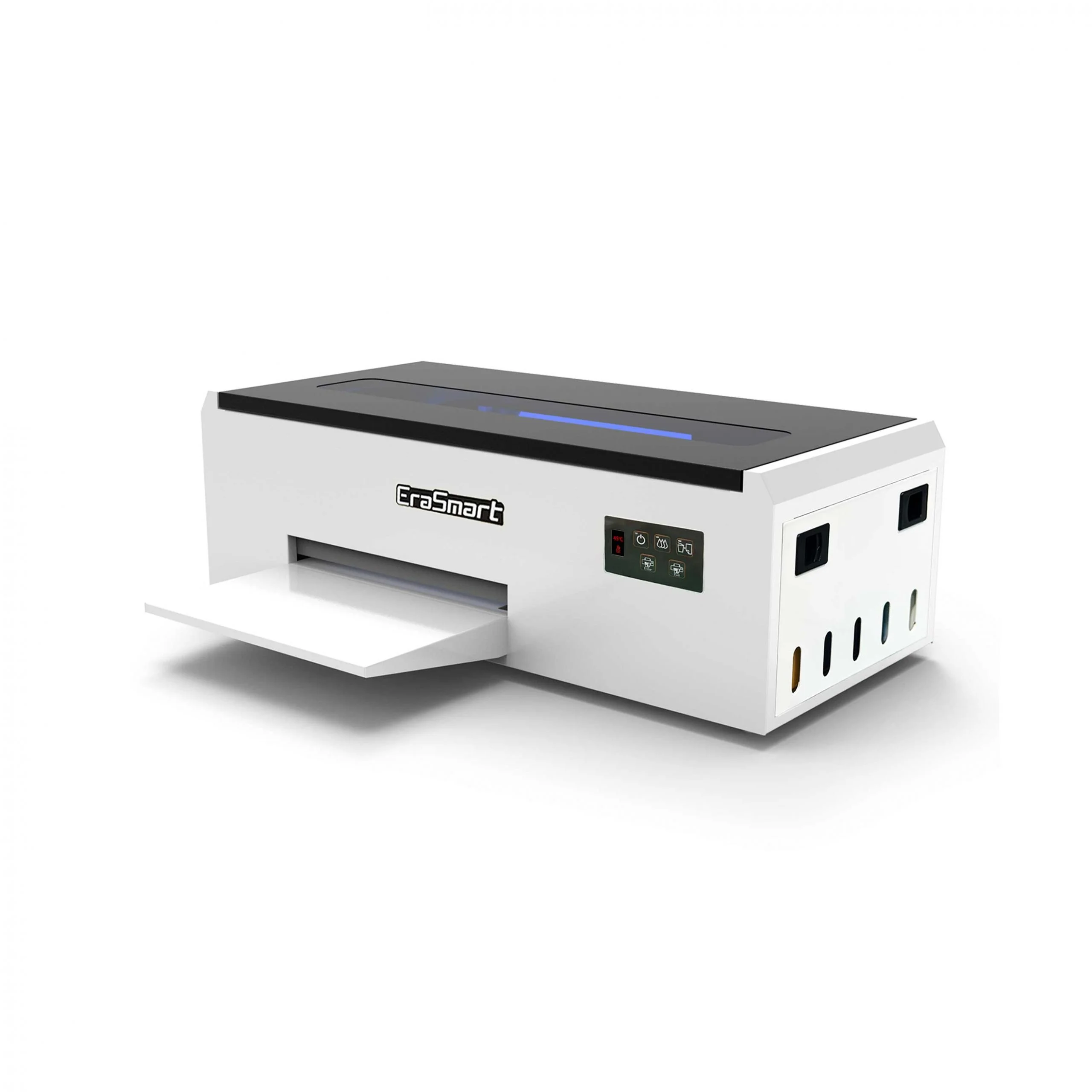
EraSmart A3 DTG Printer T-Shirt Printing Machine

One model, fully optimized for stable white ink printing, anti-clog maintenance, and easy daily operation—ideal for custom apparel, small shops, and on-demand production.

A3L-PRINTER4

MAY BE YOU LIKE ALSO
  • EraSmart Printer

    uv printer
    DTF printer
    DTG printer
    Heat press machine
    Advertising printer

  • Printer tools

    DTF oven
    Hot Press
    Carving machine
    Mug heat transfer
    Laminating machine

  • Consumables

    Printing INK
    Cellphone case
    Glass product
    Cleaning fluid
    Cotton swab

  • Contact Us

    WhatsApp:+8618566233796
    WeChat: +8618566233796
    Mobile: +8618566233796
    Web:www.erasmart.com
    Shop:www.erasmartmall.com

  • Request A Quote

    Just provide a few details and we will help you get quick quotes!