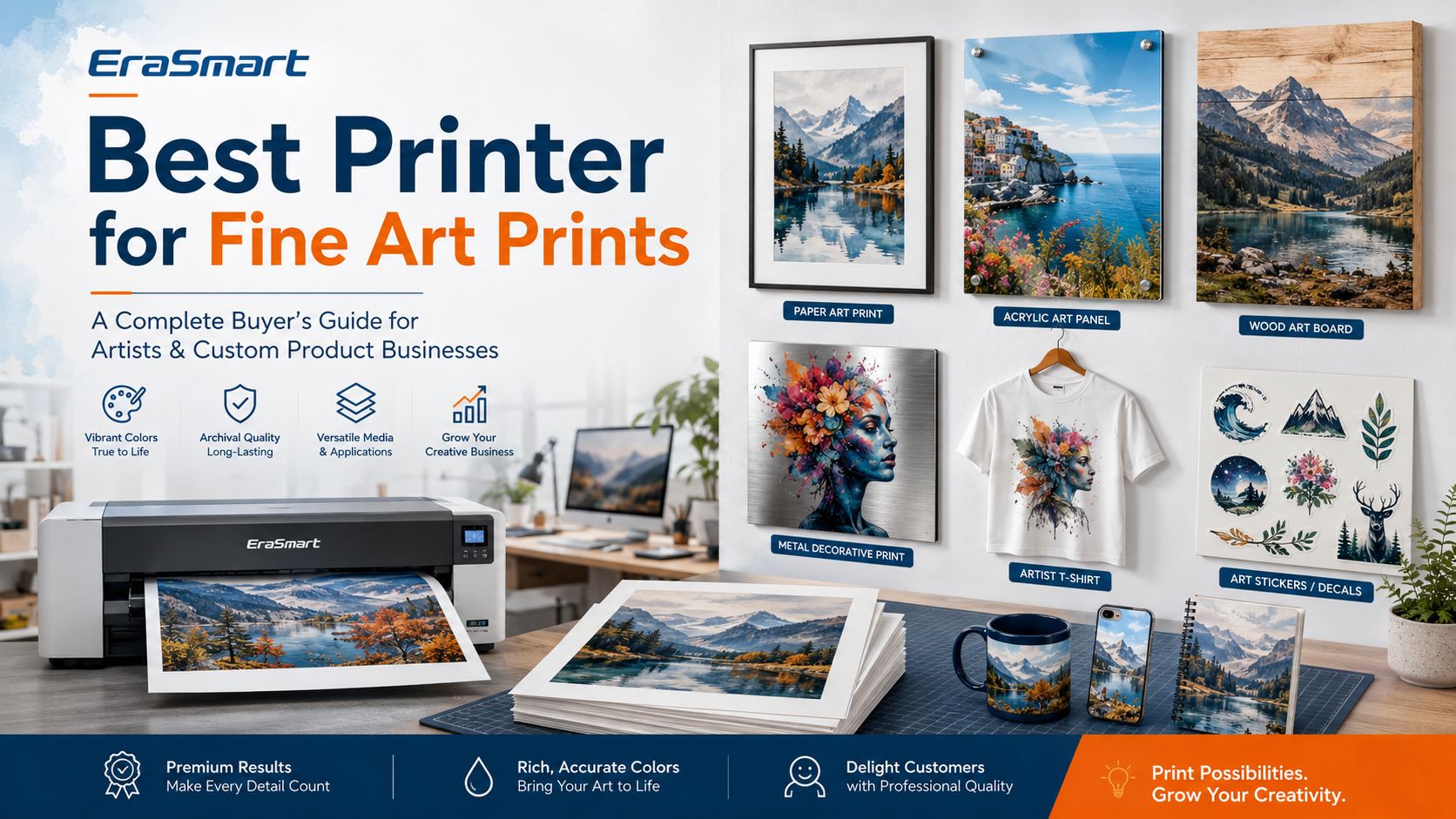
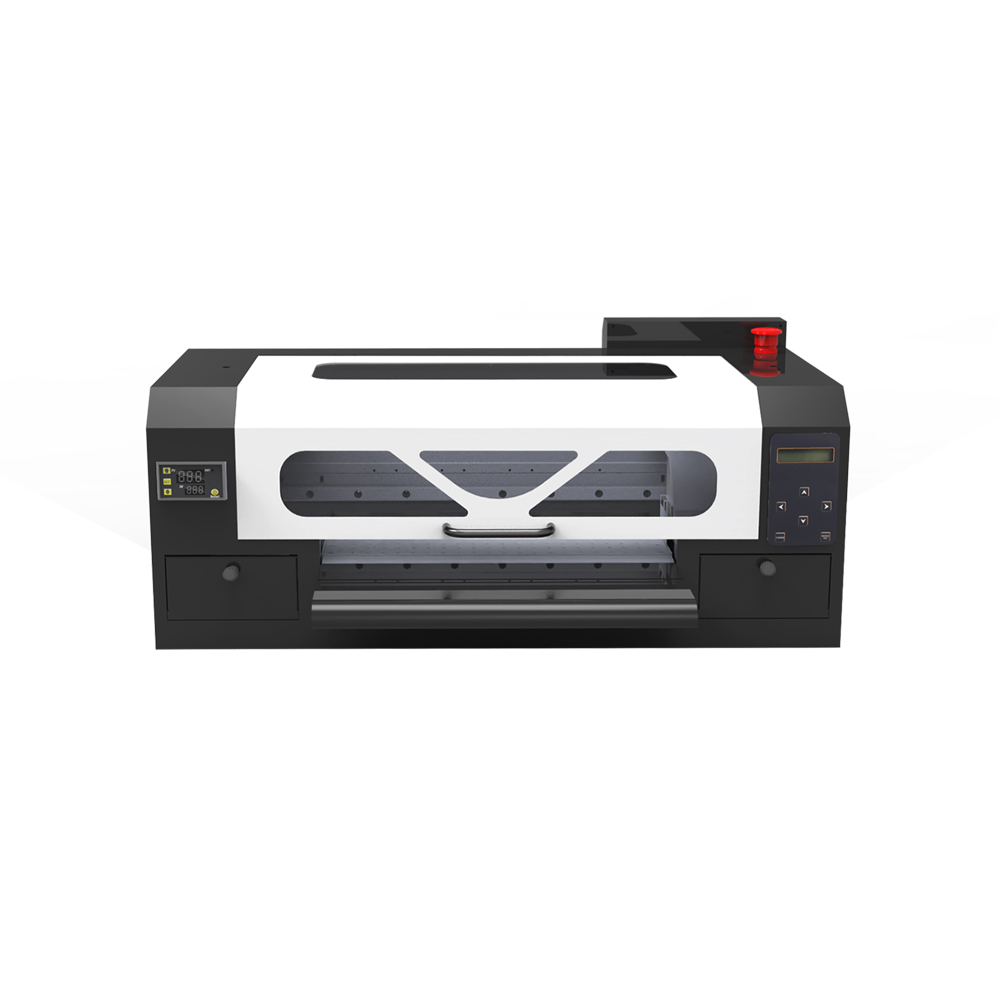
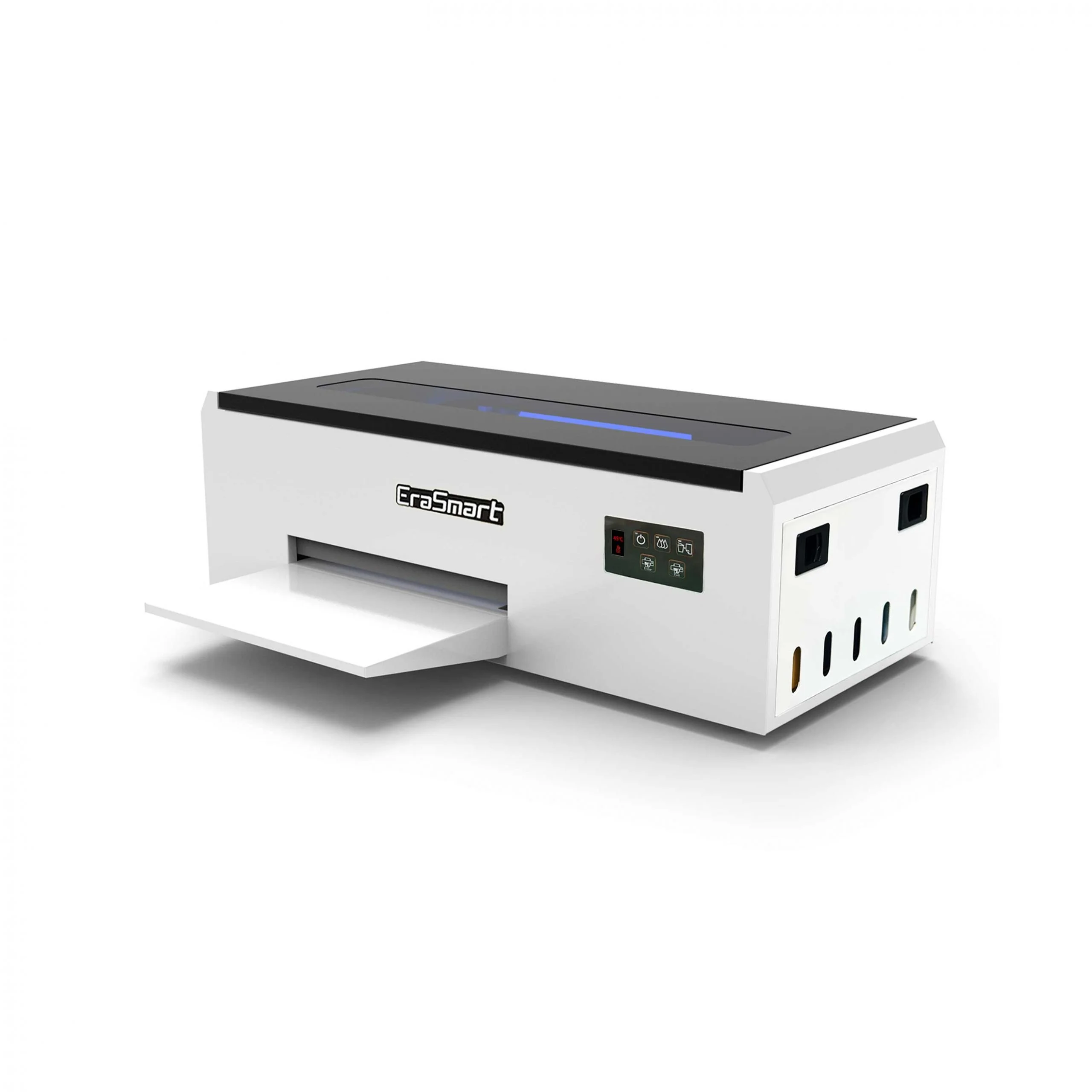
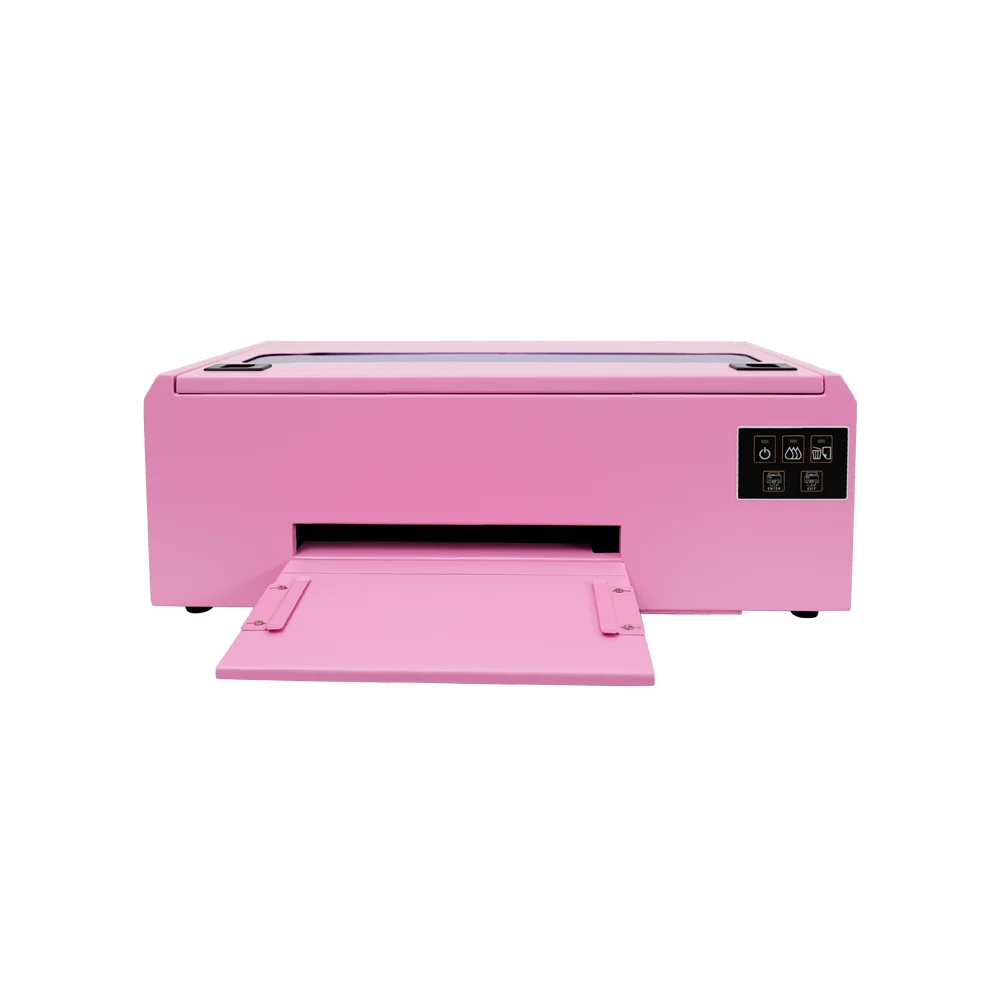
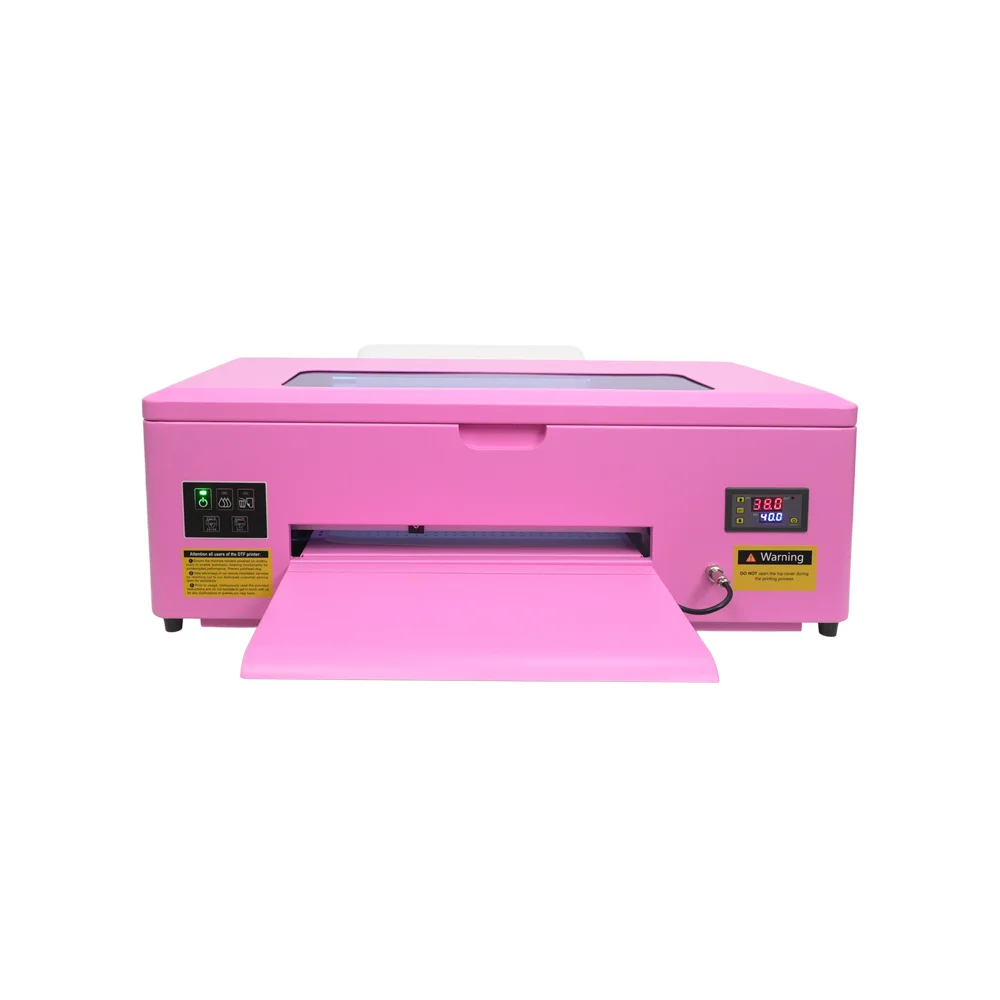
Choosing the best printer for fine art prints depends on what you mean by “fine art prints.” If your goal is to produce gallery-style paper reproductions for collectors, exhibitions, and archival sales, a professional pigment inkjet photo printer with fine art paper support is usually the right direction. Canon explains that pigment inks are commonly used for professional fine art papers because they support wider color performance, deeper tones, and longer-lasting output for exhibition and sale.
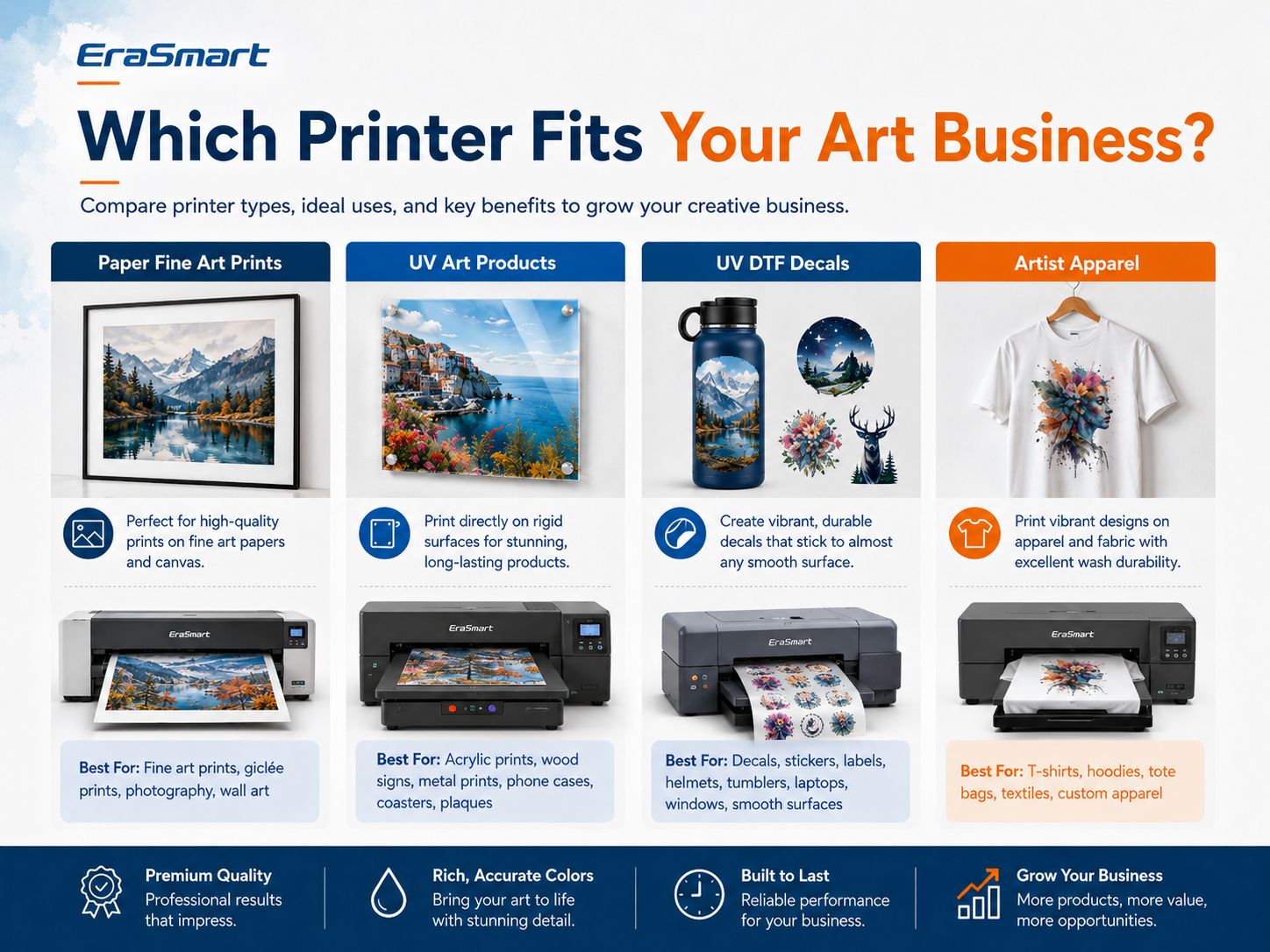
However, if your goal is to turn artwork into sellable products, such as acrylic art panels, wood art boards, metal prints, phone cases, packaging art, wall décor, gift products, or art merchandise, then the best printer may not be a traditional paper fine art printer. In that case, a UV printer, UV DTF printer, or DTF printer may be more suitable for building a flexible art product business.
This guide explains how to choose the right printer based on your product type, print surface, color expectation, durability requirement, business model, and budget.
The best printer depends on the final product.
| Business Goal | Best Printer Type |
|---|---|
| Gallery-quality paper art prints | Pigment inkjet photo printer |
| Archival art reproductions on cotton paper | Pigment inkjet printer with fine art paper support |
| Acrylic art panels | UV printer |
| Wood art boards | UV printer |
| Metal art prints and decorative plates | UV printer |
| Phone cases with artist designs | UV printer or UV DTF printer |
| Art stickers, decals, and packaging labels | UV DTF printer |
| Artist T-shirts, hoodies, and tote bags | DTF printer |
| Short-run art merchandise | UV printer + DTF printer + UV DTF printer |
| High-value custom gift products | UV printer or UV DTF printer |
The simple rule is this: choose a pigment inkjet printer for paper-based fine art reproductions; choose UV, UV DTF, or DTF printing when you want to turn artwork into physical products and merchandise.
A fine art print usually refers to a high-quality reproduction of an original artwork, photograph, illustration, or digital painting. It may be sold as a limited edition, open edition, gallery print, collector print, poster, or decorative product.
Traditional fine art prints are often produced on:
cotton rag paper
matte fine art paper
textured watercolor-style paper
baryta paper
canvas-style media
archival photo paper
The NEDCC notes that fine art papers are often made from cotton rag or alpha-cellulose, and coated inkjet papers can improve image quality, brightness, color range, and ink stability.
But today, artists are not limited to paper. Many artists and small businesses also sell:
acrylic wall art
wood panel art
metal decorative prints
phone cases
stickers
tote bags
T-shirts
packaging art
gift products
personalized art merchandise
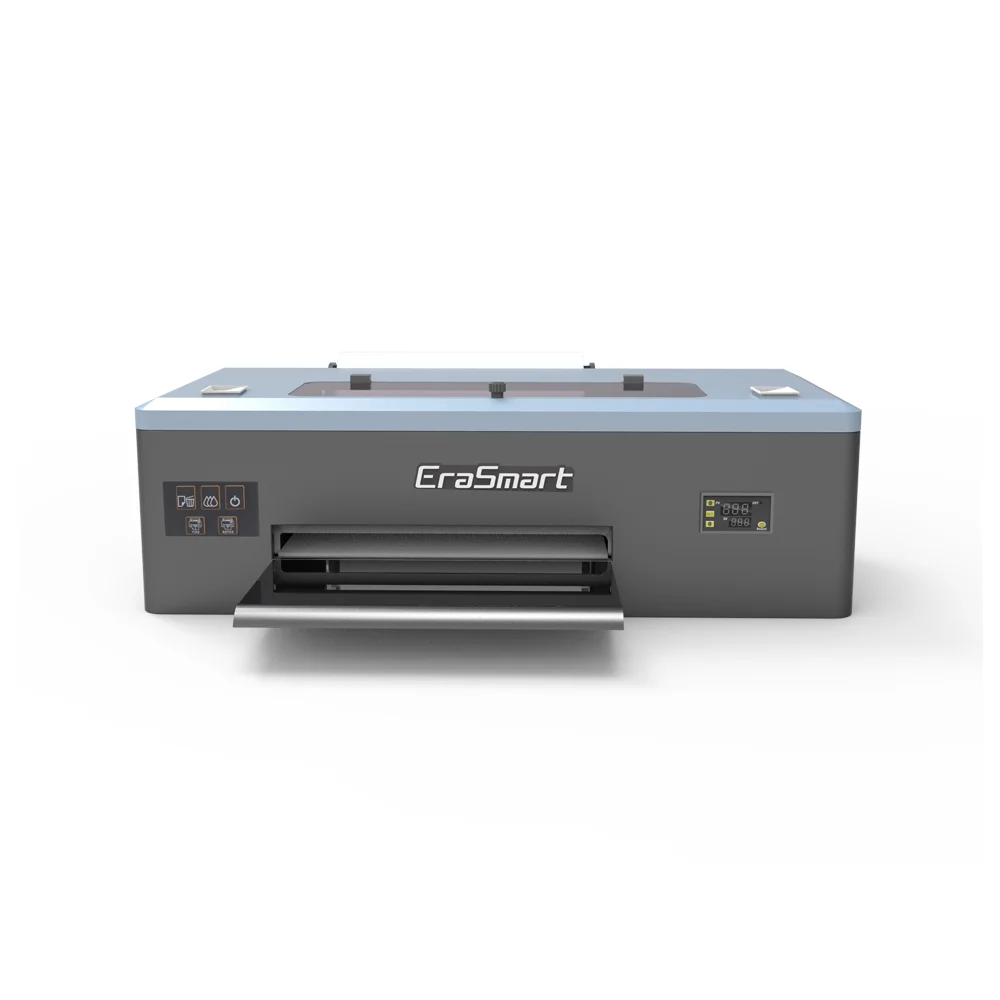
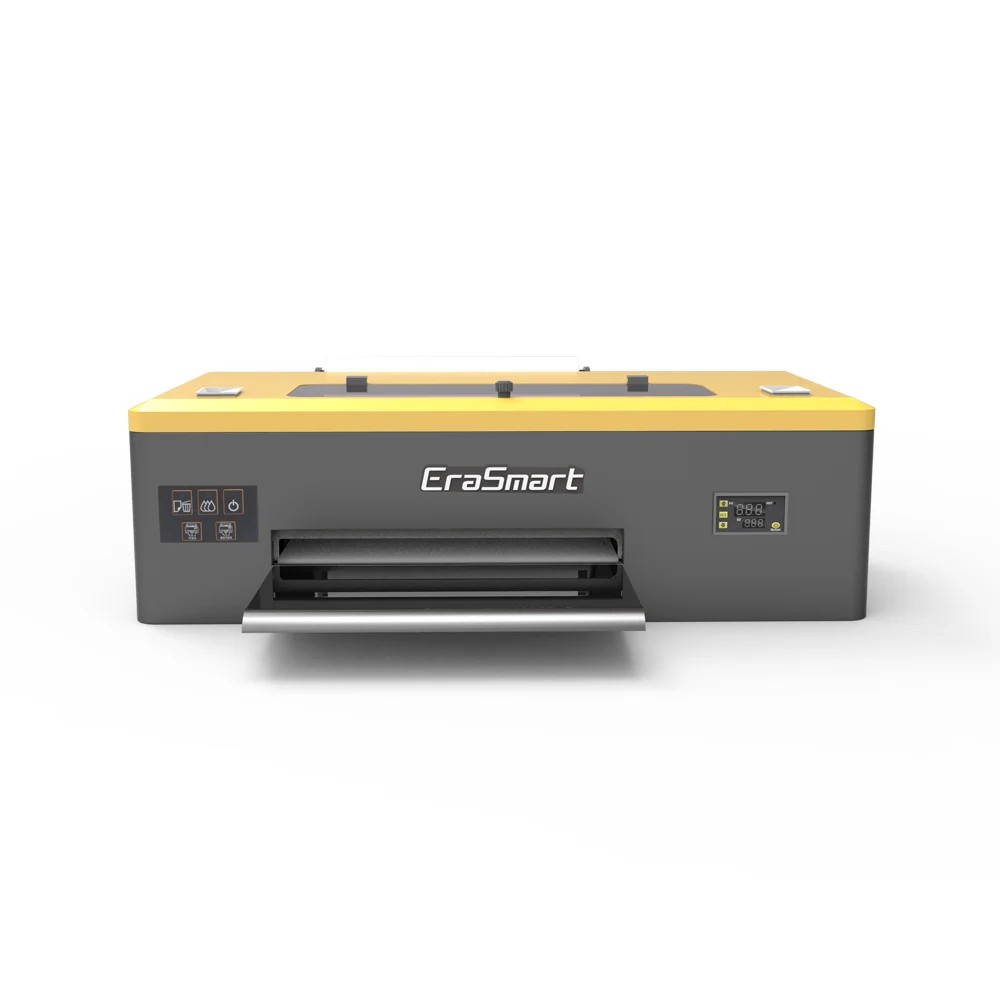
This is where EraSmart’s product-focused printing systems become more relevant.
Before buying a printer, decide whether your business is based on paper prints or art products.
| Printer Direction | Best For | Main Advantage |
|---|---|---|
| Pigment inkjet printer | Gallery paper prints, archival reproductions | Excellent color, paper compatibility, archival presentation |
| UV printer | Acrylic, wood, glass, metal, phone cases, rigid products | Direct printing on hard surfaces |
| UV DTF printer | Stickers, decals, cup wraps, product labels | Premium transfer decals for hard surfaces |
| DTF printer | T-shirts, hoodies, tote bags, apparel merch | Full-color textile transfers for wearable products |
A traditional fine art paper printer is excellent for artists who sell framed prints. But if your goal is to build a broader custom product business, an EraSmart UV Printer can help turn artwork into acrylic panels, wood boards, metal plates, phone cases, and other rigid products.

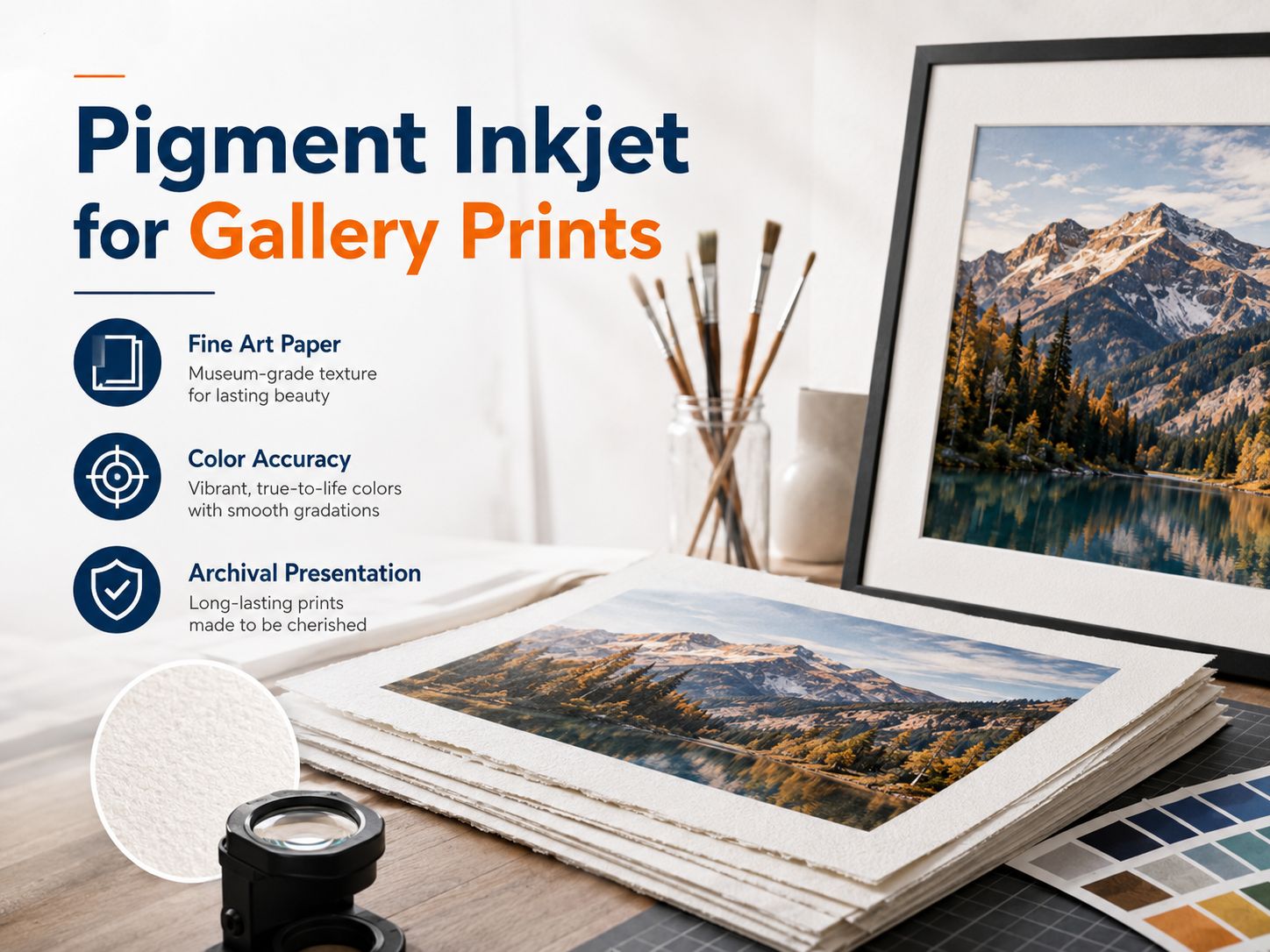
A pigment inkjet printer is usually the best choice for traditional fine art paper prints. It is designed for accurate color, smooth gradients, wide tonal range, and compatibility with professional photo and fine art papers.
Choose this type of printer if you want to sell:
gallery art prints
photography prints
illustration prints
watercolor reproductions
limited-edition paper prints
collector prints
framed artwork
portfolio prints
exhibition prints
For this workflow, the most important factors are:
pigment ink system
color accuracy
paper compatibility
ICC profile support
maximum print size
borderless printing support
archival paper compatibility
ink cost
maintenance cost
color calibration
Canon’s fine art printing guidance highlights pigment ink as suitable for exhibition and selling artwork because of its color performance and long-lasting print quality.
This is the right direction if your business is built around paper-based fine art reproduction.
If you want to print artwork directly onto hard surfaces, a UV printer is often a better business tool than a traditional paper printer.
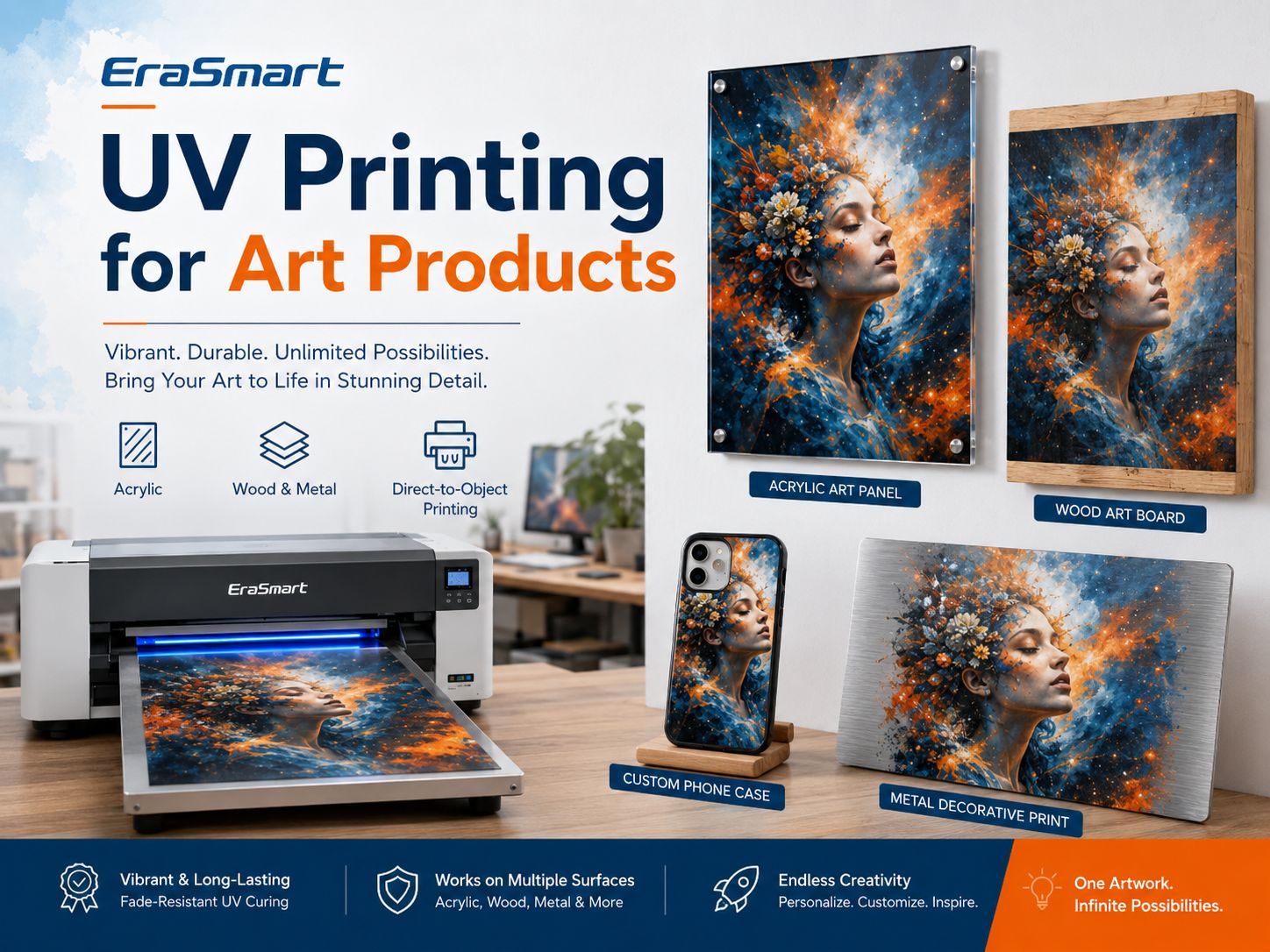
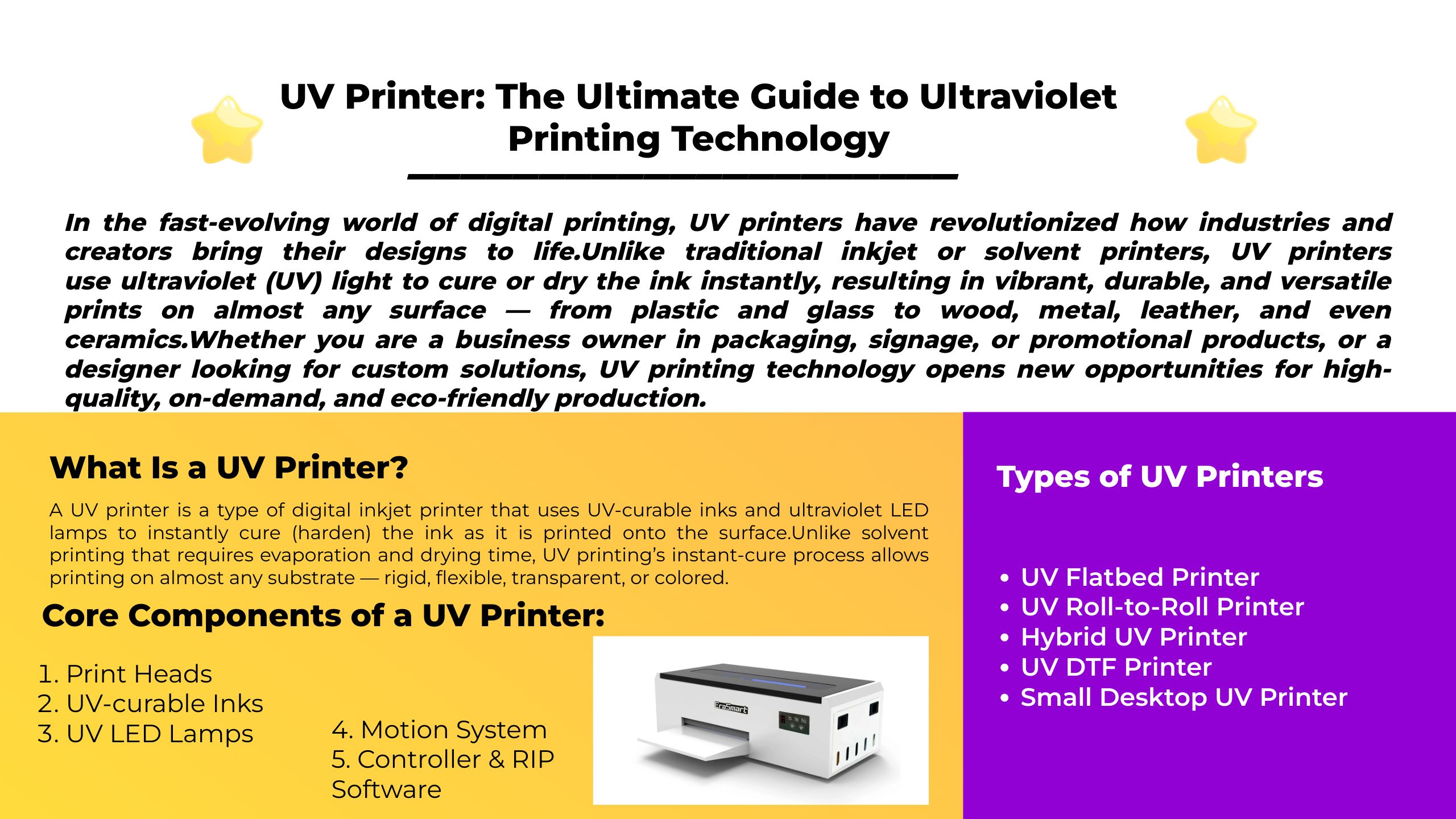
A UV printer uses UV-curable ink and UV light curing to print directly onto rigid or semi-rigid materials. EraSmart’s UV printer category is designed for materials such as metal, acrylic, glass, wood, plastic, ceramics, leather, and more, with instant curing and vivid high-resolution output.
Choose an EraSmart UV Printer if you want to produce:
acrylic art panels
wood art boards
metal art plates
phone case art
glass art gifts
ceramic tiles
leather art accessories
packaging art samples
decorative plaques
personalized wall décor
artist-branded promotional products
This is a strong option for artists who want to sell physical art products instead of only paper prints.

UV printing is useful for fine-art-inspired products because it can print directly on many materials. This allows an artist or custom shop to build a wider catalog.
For example, one artwork can become:
an acrylic desk plaque
a wall décor panel
a phone case
a wood sign
a metal plate
a gift box cover
a candle jar label
a promotional product
a collectible art object
If you want to understand how UV printing works and what it can print on, EraSmart’s UV Printer Guide is a useful supporting article.
For art products, CMYK color alone is not always enough. White ink and varnish can make printed products look more premium.
White ink helps when printing on:
transparent acrylic
glass
dark materials
colored plastic
metal surfaces
clear packaging
Varnish can add:
gloss
spot coating
raised texture
highlight effects
premium surface feel
extra visual depth
This is especially useful for acrylic art, luxury gift products, packaging art, phone cases, and decorative panels.
EraSmart’s UV Ink Guide: CMYK, White Ink, and Varnish explains how CMYK, white ink, and varnish layers work together in UV printing.

If your art business focuses on stickers, decals, cup wraps, bottle labels, cosmetic labels, packaging labels, or small hard-surface transfers, a UV DTF printer may be the better choice.
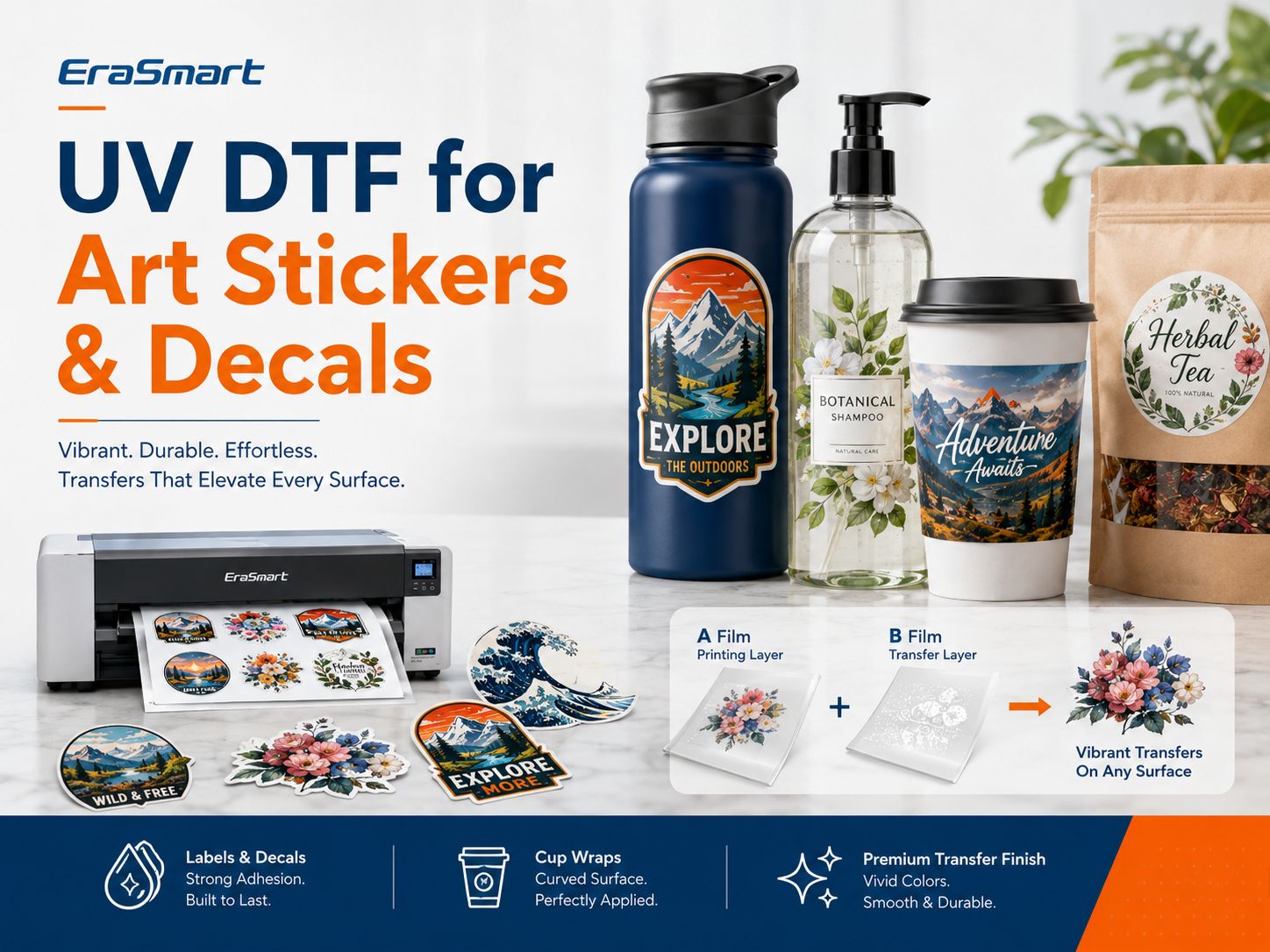
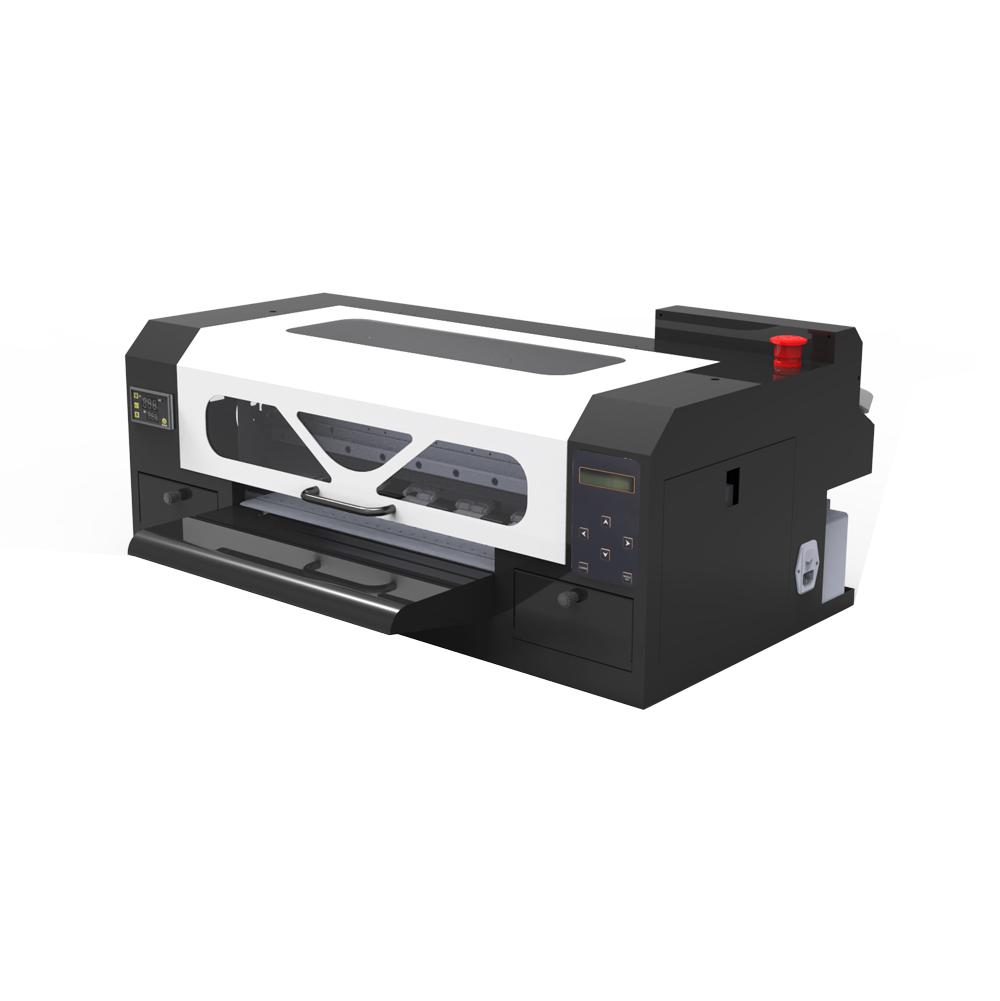
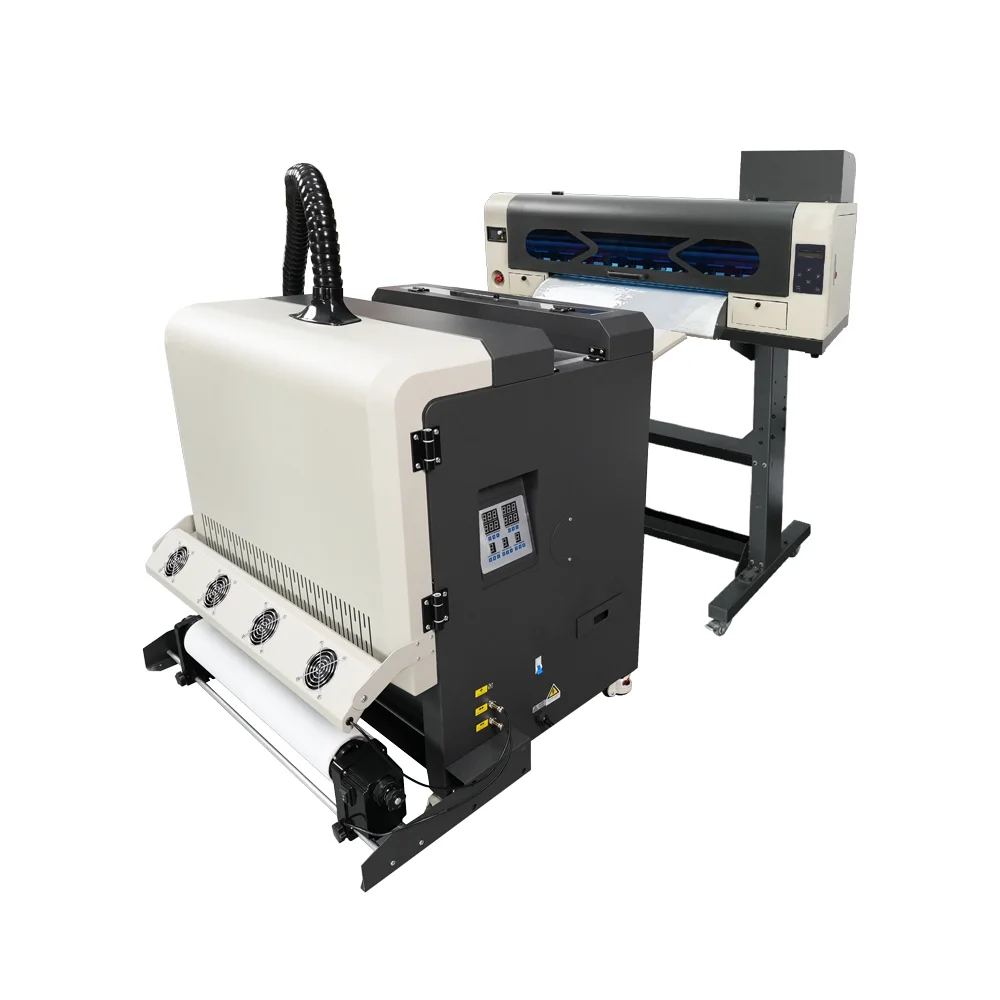
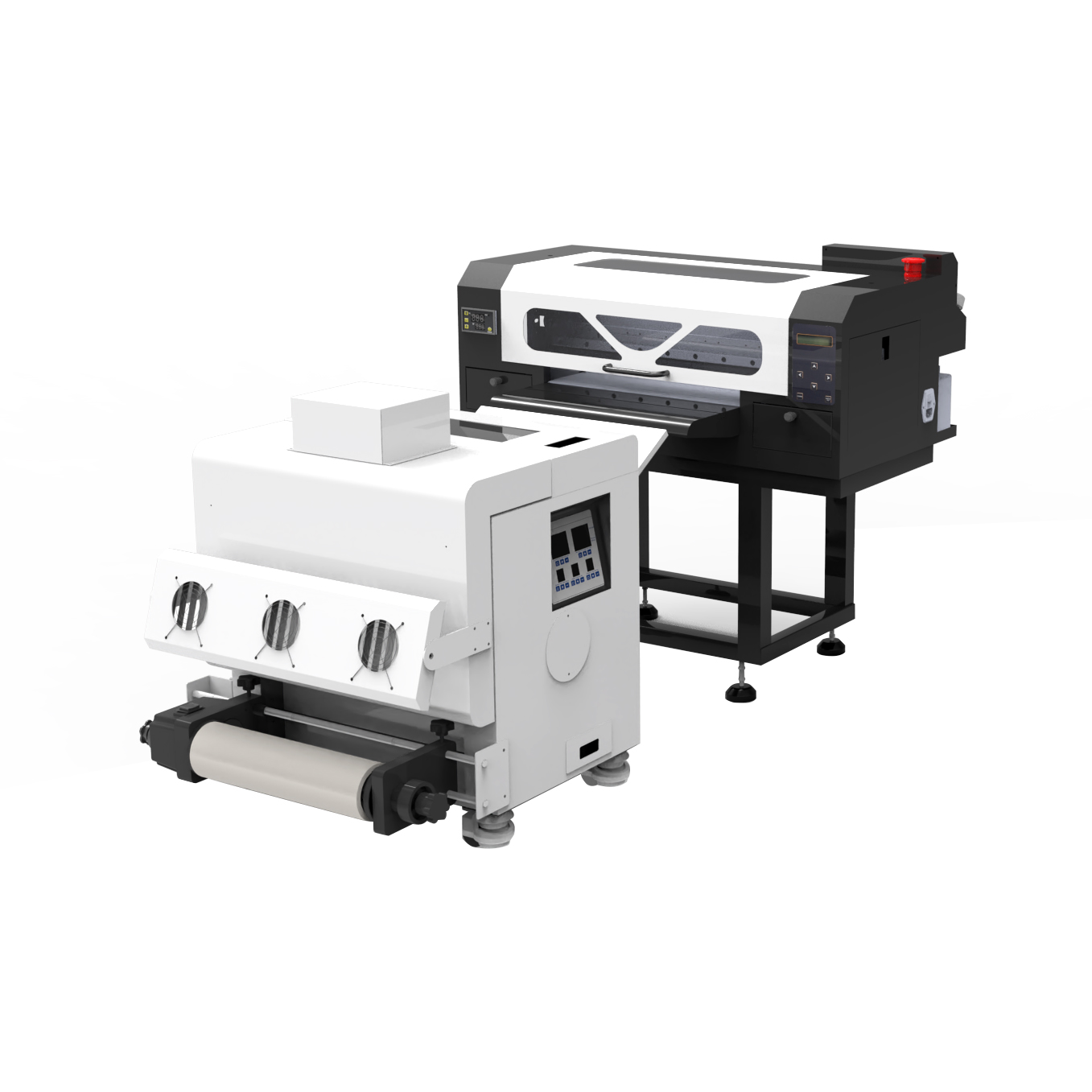
A UV DTF printer prints UV ink onto A film, laminates it with B film, and creates a transfer decal that can be applied to hard surfaces. EraSmart’s UV DTF offering is positioned around A3 / 350 mm width, CMYK + White + Varnish, powderless A/B film workflow, no oven, no heat press, and up to 1440 dpi output for decals and labels.
Choose an EraSmart UV DTF Printer if you want to sell:
art stickers
premium decals
cup wraps
bottle labels
acrylic decals
phone case decals
laptop skins
cosmetic labels
candle jar labels
product packaging decals
artist-branded stickers
collectible decal sheets
This is a good direction for artists who want to sell smaller, lightweight products online.
| Factor | UV Printer | UV DTF Printer |
|---|---|---|
| Workflow | Prints directly onto product | Prints decal first, then applies to product |
| Best for | Flat rigid products | Stickers, labels, decals, cup wraps |
| Surface shape | Best on flat or fixtured products | Easier for curved or irregular hard surfaces |
| Product examples | Acrylic panels, wood boards, metal plates, phone cases | Bottles, cups, packaging, jars, gadget skins |
| Setup need | Product positioning and fixture may matter | Decal application skill matters |
| Business model | Finished custom products | Decals, labels, and transfer products |
For a complete comparison, read EraSmart’s UV DTF Printer vs UV Printer guide.

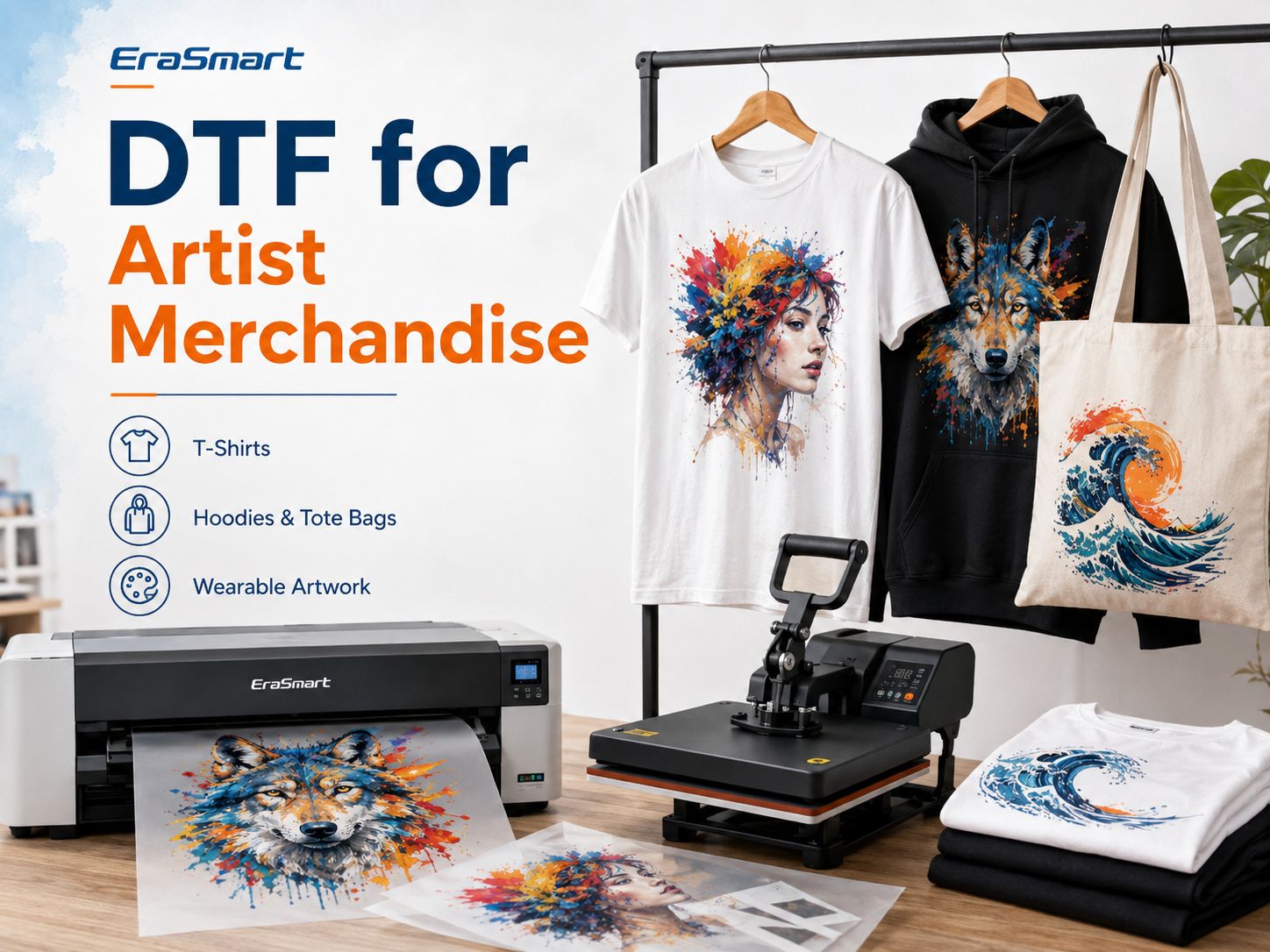
If you are an artist who wants to sell wearable products, a DTF printer is usually more suitable than a UV printer.
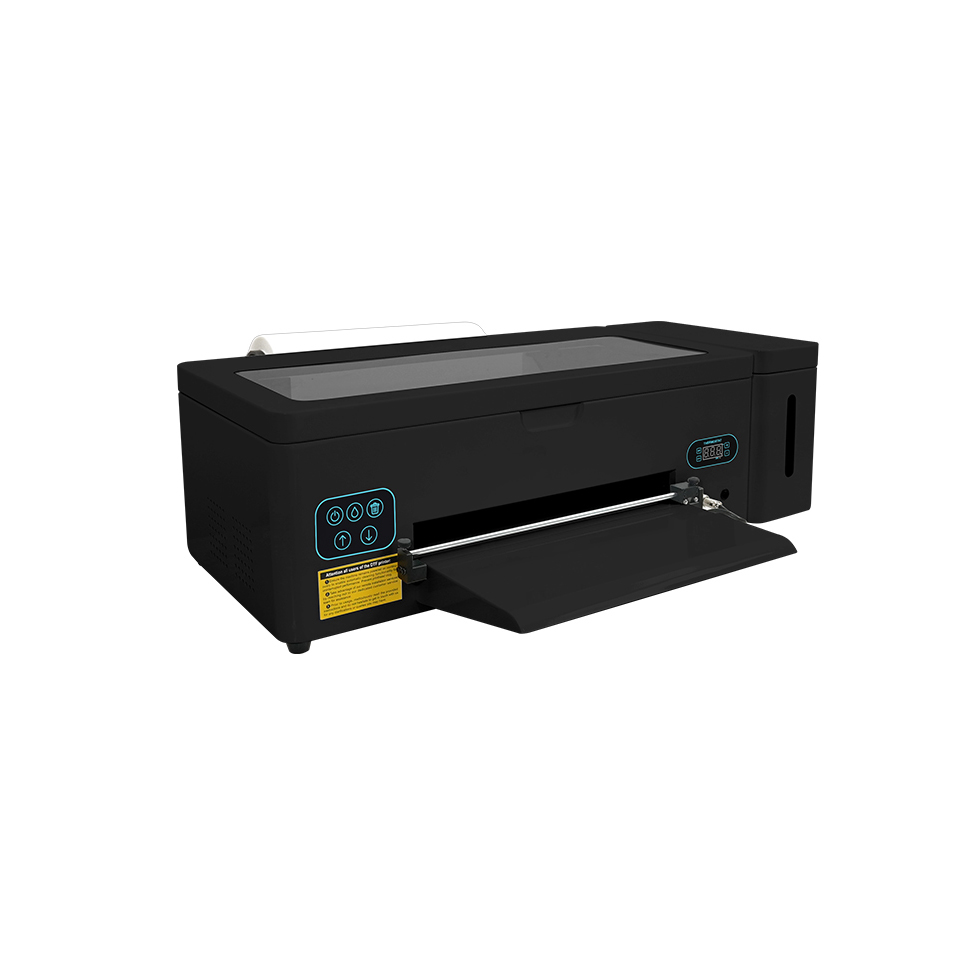
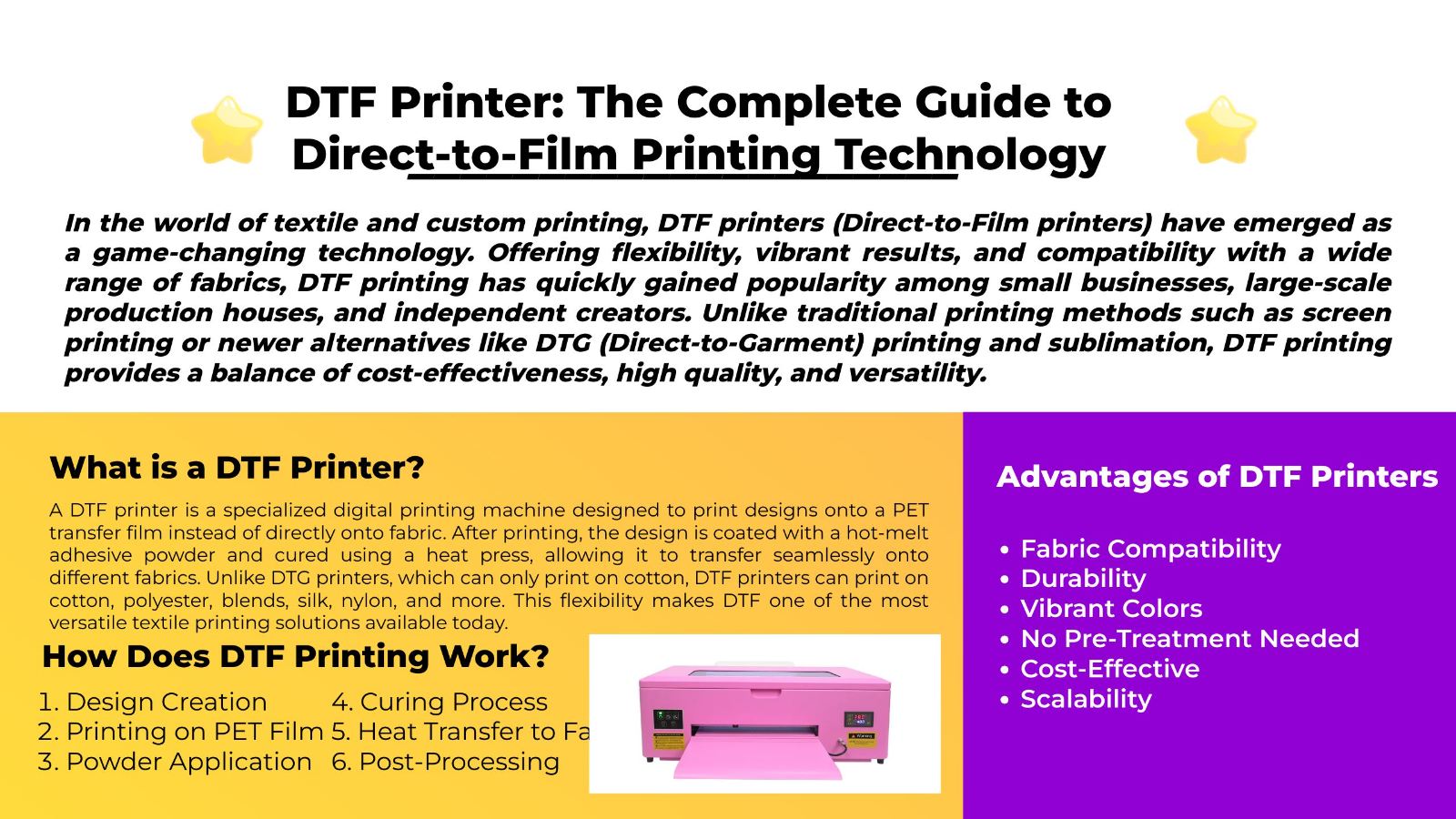
DTF printing is designed for textile transfers. It prints artwork onto PET film, applies hot-melt powder, cures the transfer, and heat presses it onto garments. EraSmart’s DTF printer page highlights use on cotton, silk, polyester, denim, leather, nylon, blends, and dark-colored garments, with a print-add-powder-press workflow.
Choose an EraSmart DTF Printer if you want to sell:
artist T-shirts
hoodies
tote bags
canvas bags
streetwear graphics
band merch
event shirts
creator merchandise
art brand apparel
limited-edition clothing drops
If your artwork has strong characters, bold graphics, colorful illustrations, or social-media appeal, DTF can help turn that artwork into wearable products.
For apparel production planning, see EraSmart’s DTF Production Workflow and How to Choose a DTF Printer.
| Art Business Model | Recommended Printer |
|---|---|
| Photographer selling gallery prints | Pigment inkjet printer |
| Illustrator selling paper prints | Pigment inkjet printer |
| Artist selling acrylic wall art | UV printer |
| Gift shop selling art plaques | UV printer |
| Sticker artist selling premium decals | UV DTF printer |
| Artist selling T-shirts and tote bags | DTF printer |
| Brand selling art phone cases | UV printer or UV DTF printer |
| Candle or cosmetic brand using art labels | UV DTF printer |
| Local shop selling personalized art gifts | UV printer |
| Multi-product art merchandise business | UV printer + DTF printer + UV DTF printer |
The best choice depends less on the word “art” and more on the product you plan to sell.
Printer size should match your product size and business stage.
For paper fine art prints, size usually depends on the largest print you plan to sell:
A4 / letter size for small prints
A3 / 13-inch class for small art shops
17-inch class for larger collector prints
24-inch and above for studio or gallery production
For product printing, size depends on the physical object:
small UV printers for phone cases, tags, small gifts
A3 UV printers for acrylic panels, plaques, packaging samples
larger UV printers for bigger signs and art boards
A3 UV DTF printers for stickers, labels, cup wraps, and decals
A3 DTF printers for apparel and tote bag transfers
EraSmart’s UV Printer Guide recommends choosing a UV printer based on product category, material size, print effect, daily volume, and maintenance capability.
Fine art buyers care about detail, color, and surface quality. Product buyers care about visual impact, durability, and finish.
Important print quality factors include:
resolution
color accuracy
gradient smoothness
ink density
white ink opacity
varnish effect
material compatibility
surface adhesion
scratch resistance
repeatability
For paper art prints, color profile and paper choice are critical.
For UV art products, material preparation and ink layer setup matter.
For UV DTF decals, film quality and lamination matter.
For DTF apparel, powder curing and heat press settings matter.
| Ink Type | Best For | Main Strength |
|---|---|---|
| Pigment ink | Paper fine art prints | Archival-style paper reproduction |
| UV ink | Hard product printing | Direct printing on rigid surfaces |
| DTF ink | Textile transfers | Apparel and fabric merchandise |
| UV DTF ink | Hard-surface decals | Stickers, labels, cup wraps, transfers |
Do not choose ink only by color brightness. Choose ink based on the final product surface and business model.
If you are an artist, designer, illustrator, or custom product business, EraSmart workflows can help you expand beyond paper prints.
Acrylic prints can look modern and premium. They are suitable for desk décor, wall art, awards, brand displays, wedding gifts, and collector-style products.
Best workflow: UV Printer
Wood art products have a warm handmade feel. They work well for home décor, rustic signs, café art, wedding signs, and personalized gifts.
Best workflow: UV Printer
Metal prints can be used for modern wall décor, nameplates, brand art, signage, and premium gift products.
Best workflow: UV Printer
Artists can turn illustrations into phone cases, laptop skins, power bank designs, and small tech accessories.
Best workflow: UV Printer or UV DTF Printer
Stickers and decals are easy to sell online and easy to ship. UV DTF can create premium decals with gloss, white ink, and raised effects.
Best workflow: UV DTF Printer
T-shirts, hoodies, and tote bags are strong products for artists with bold graphics, characters, streetwear concepts, or fan communities.
Best workflow: DTF Printer
Small brands often need short-run packaging labels, candle jar labels, cosmetic labels, and gift box decals.
Best workflow: UV DTF Printer
A paper fine art printer is not the same as a UV printer, DTF printer, or UV DTF printer. Choose based on the final product.
High DPI does not guarantee professional results. Artwork quality, ink type, material, color management, and workflow control all matter.
Paper, acrylic, wood, metal, glass, film, and fabric all require different printing workflows.
A paper printer is excellent for art prints, but it will not print directly onto acrylic, wood, metal, or phone cases.
UV printing is not the right primary method for T-shirts. For apparel, choose textile DTF. EraSmart’s DTF Printer lineup is the better direction for garments.
All professional printers need maintenance. Ink, film, paper, powder, varnish, and cleaning routines affect the final result.

Before buying a printer, answer these questions:
Do not start with “I want to print art.” Start with the product:
paper prints
acrylic panels
wood boards
metal art
phone cases
stickers
labels
T-shirts
tote bags
packaging
gift products
The product determines the printer.
Collectors may prefer paper prints. Gift buyers may prefer acrylic or wood products. Online fans may prefer stickers and apparel. Small brands may need packaging decals.
Choose printer size based on your most common product size, not only your largest dream project.
For transparent, dark, or colored surfaces, white ink is often important. For premium products, varnish can increase value.
A small studio may be better with compact UV, DTF, or UV DTF equipment. Larger machines require more space, ventilation, storage, and workflow planning.
A beginner does not always need the largest machine. Start with a system that fits real orders and can scale later.
If you want to sell many types of art merchandise, consider combining workflows over time.
If your business is focused on traditional gallery paper prints, choose a professional pigment inkjet printer with fine art paper support.
If your business wants to print artwork directly onto rigid products such as acrylic, wood, metal, glass, phone cases, and decorative panels, choose an EraSmart UV Printer.
If your business wants to sell premium art stickers, decals, cup wraps, labels, and packaging transfers, choose an EraSmart UV DTF Printer.
If your business wants to sell artist T-shirts, hoodies, tote bags, and wearable merchandise, choose an EraSmart DTF Printer.
If you want to compare UV DTF, textile DTF, and UV flatbed printing, read EraSmart’s UV DTF vs Textile DTF vs UV Flatbed guide before making a final decision.
For traditional gallery-style fine art paper prints, the best choice is usually a professional pigment inkjet printer paired with suitable fine art paper and color management.
For custom art products, the best printer depends on the surface:
Use a UV printer for acrylic, wood, metal, glass, phone cases, and rigid art products.
Use a UV DTF printer for stickers, decals, labels, cup wraps, and hard-surface transfers.
Use a DTF printer for T-shirts, hoodies, tote bags, and artist apparel.
Use a pigment inkjet printer for archival-style paper reproductions.
The best printer is not the one with the biggest specification sheet. It is the printer that matches your art product, customer expectation, production workflow, and profit model.
Need help turning your artwork into sellable products? Share your target products, material type, print size, expected order volume, and budget range with EraSmart.
Our team can help you choose the right UV Printer, UV DTF Printer, or DTF Printer for your fine art product business.
A production-ready solution designed for shops that need higher throughput and a more automated workflow.
A practical choice for startups and small studios that want reliable output without over-investing.
Balanced performance for print shops that need speed + stable output in an A3 footprint.
Designed for users who prioritize fine detail, smooth gradients, and premium print feel.
A dependable A3 model for steady daily output, popular for small-business production routines.
Compact entry-level model perfect for startups and small batch production.
Enhanced A4 model with improved ink efficiency for daily small-scale production.
A3 format printer with reliable R1390 motherboard for medium production.
Standard A3 model with 250ml ink tanks for consistent daily operation.
L1800 print head model offering superior color reproduction for detailed designs.
A3 Max series with XP600 print head for increased speed and efficiency.
High-performance A3 model with DX7 print head for professional results.
High-performance A3 model with XP600 print head for professional results.
Industrial wide-format printer with dual XP600 heads (620mm width).
Premium industrial printer with dual I3200 heads for maximum productivity.
uv printer
DTF printer
DTG printer
Heat press machine
Advertising printer
DTF oven
Hot Press
Carving machine
Mug heat transfer
Laminating machine
Printing INK
Cellphone case
Glass product
Cleaning fluid
Cotton swab
WhatsApp:+8618566233796
WeChat: +8618566233796
Mobile: +8618566233796
Web:www.erasmart.com
Shop:www.erasmartmall.com
WhatsApp us
Just provide a few details and we will help you get quick quotes!
Tell us your printing needs. Our team will reply within 24 hours.