Small Size Flatbed Inkjet Printer Manufacturer

15 Personalized Wedding Favor Ideas with UV Printing | EraSmart
Personalized wedding favors can do more than carry a couple’s names and wedding date. The strongest ideas are useful, connected to the celebration, and designed well enough that guests may keep them after the event.
For wedding planners, gift studios and small print businesses, UV printing creates opportunities to produce customized keepsakes in short runs. A UV flatbed printer prints directly onto compatible rigid blanks such as acrylic, coated wood and selected finished items. UV DTF uses a separate print-to-film workflow for applying designs to compatible smooth hard surfaces, including selected glassware and curved containers.
The opportunity is not simply to make 15 different products. It is to build a coordinated collection, personalize each order accurately, and produce the required quantity without losing control of setup, quality or delivery.
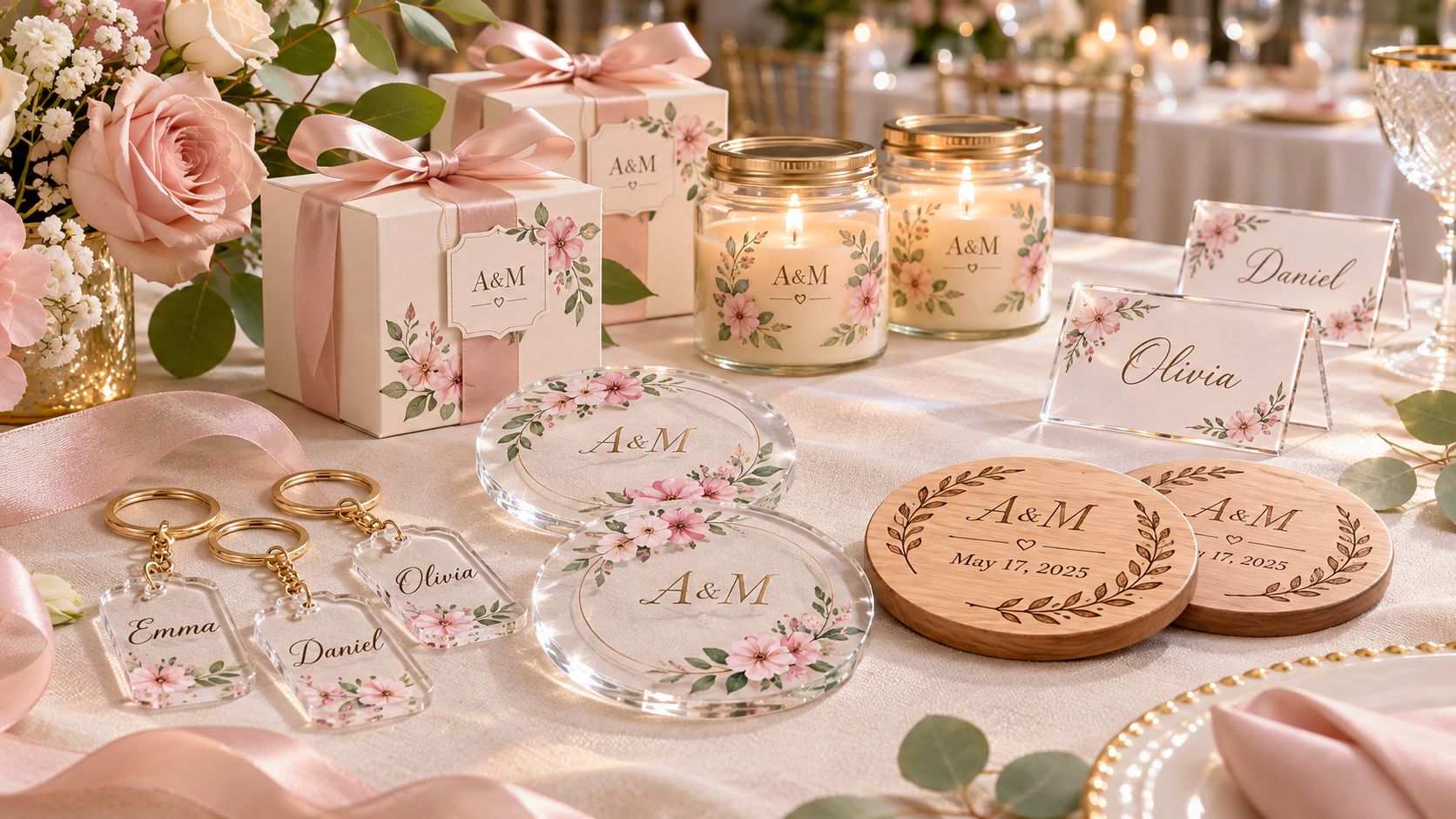
Quick answer: UV-printed wedding favors are personalized gifts decorated either by printing UV-curable ink directly onto a compatible object with a UV flatbed printer, or by applying a UV DTF transfer to a compatible smooth hard surface. Flatbed printing is well suited to suitable rigid blanks such as acrylic tags, coasters and name cards. UV DTF is useful for selected curved products such as glass jars and drinkware. Always test the exact blank, coating and finished use before producing an order.
Why Are Personalized Wedding Favors a Relevant Product Opportunity?
Wedding favors are not a guaranteed requirement for every celebration, and couples make decisions according to guest count, style and budget. However, recent wedding research shows that personalized keepsakes remain a meaningful part of the favor mix.
Zola’s 2026 Registry & Gifting Survey reports that 59% of couples planned to, or did, give guests some type of favor. Among the 355 couples in the survey who gave favors, 37% chose personalized keepsakes, while 9% selected custom candles or home goods. The same survey reports that, among couples who had already celebrated their wedding, 56% spent $5 or less per guest on favors.
These figures describe wedding-favor choices, not demand for UV printing specifically. They are useful because they show why suppliers should develop products that are personal, useful and cost-conscious. See Zola’s 2026 wedding favor survey and guidance.
Another useful direction is the dual-purpose favor: a product that also works as a place card, table detail or part of the reception design. The Knot’s 2026 wedding-favor coverage highlights practical gifts and favors that can also serve as seating or décor elements. See The Knot’s 2026 wedding favor ideas.
For a UV printing business, these trends suggest three product principles:
- Personalization: Names, initials, dates, venue illustrations and short messages make a standard blank feel specific to the event.
- Usefulness: Coasters, luggage tags, magnets and drinkware have a function beyond the wedding day.
- Dual purpose: Name cards, table markers and small signs can become keepsakes guests take home.
UV Flatbed Printing vs. UV DTF for Wedding Favors
UV flatbed printing and UV DTF are two different production workflows. Choosing the correct one is important when planning a wedding favor collection.
| Consideration | UV flatbed printing | UV DTF transfer |
|---|---|---|
| Main process | Prints directly onto a compatible object or material placed on the printer platform | Prints a design onto specialized transfer film, then applies the prepared transfer to a suitable surface |
| Typical wedding products | Acrylic keychains, rigid magnets, bookmarks, coasters, name cards and flat plaques | Selected glass jars, cups, bottles and other compatible smooth hard-surface items |
| Shape considerations | Best when the item can be positioned securely within the printer’s working area and height limits | Useful for selected curved or irregular hard surfaces that are inconvenient to place on a flatbed |
| Setup priorities | Blank dimensions, surface preparation, object height, alignment and positioning jigs | Film workflow, transfer alignment, surface cleanliness, pressure and edge adhesion |
| Important limitation | Ink adhesion and print quality vary with material, coating and surface condition | Transfer adhesion and durability vary with the target surface, finish and use conditions |
A UV flatbed printer is usually the more direct choice for flat acrylic and suitable wood blanks. UV DTF is a separate transfer process; it does not mean that a standard UV flatbed printer can automatically decorate every curved item.
EraSmart explains the difference between direct-to-object UV printing and its UV DTF print-to-film workflow. For any wedding product, test the actual blank and finish before quoting a large order.
15 Personalized Wedding Favor Ideas Using UV Printing
The following ideas are grouped by production method. The material names are starting points, not a guarantee that every blank is printable. Confirm the surface coating, dimensions, adhesion and intended use with a physical sample.
1. Personalized Acrylic Keychains
Recommended process: UV flatbed printing
Typical blank: Pre-cut acrylic keychain blank with a print-compatible surface
Personalization: Guest names, initials, wedding date, venue illustration or a small monogram
Acrylic keychains are compact, lightweight and easy to package. They work for modern, minimalist, floral and destination wedding themes. A couple can use one shared design while changing the guest name on each piece.
Use a consistent artwork template and keep variable text separate from the fixed design. Test the smallest lettering at the finished size, and make sure the print area leaves room for the key ring hole and hardware.

For the product-specific workflow, see How to Make Custom Acrylic Keychains with a UV Printer.
2. Personalized Acrylic Photo Magnets
Recommended process: UV flatbed printing, followed by magnetic backing assembly
Typical blank: Compatible acrylic shape or photo panel, plus a suitable magnet
Personalization: Engagement photo, venue image, couple’s initials or wedding date
Photo magnets give guests a small image they can display at home. They are particularly suitable for destination weddings, family celebrations and events built around a recognizable location.
Print on the compatible acrylic blank, inspect the image and then attach the magnetic backing. Select a magnet that supports the finished product’s weight, and test the adhesive between the backing and the blank.
3. Wooden Wedding Magnets
Recommended process: UV flatbed printing on a tested wood blank, followed by magnetic backing assembly
Typical blank: Flat, consistent wood or coated wood shape
Personalization: Botanical artwork, initials, venue outline or a short thank-you message
Wooden magnets suit rustic, garden, countryside and outdoor wedding themes. The natural grain can become part of the design, but it can also affect color and print consistency.
Test the exact wood species, surface finish and coating. Raw, porous wood may behave differently from sealed or coated blanks, so do not assume that one print profile will work for every wooden product.
4. Custom Acrylic Luggage Tags
Recommended process: UV flatbed printing on a compatible rigid blank
Typical blank: Pre-cut acrylic tag with strap or attachment hardware
Personalization: Guest name, destination, wedding date or a travel-themed illustration
Luggage tags are a natural fit for destination weddings and celebrations where guests travel from different cities or countries. They offer a practical use after the event.
Keep the artwork clear of the strap slot and hardware. Check the tag’s edges, attachment strength and surface durability before approving the final sample.
5. Personalized Acrylic Bookmarks
Recommended process: UV flatbed printing
Typical blank: Thin, pre-cut acrylic bookmark
Personalization: Names, date, a short quote or botanical illustration
Bookmarks are light, easy to mail and suitable for literary, botanical or minimalist wedding themes. They can also work as favors for engagement parties, bridal showers and rehearsal dinners.
Use a print layout that remains readable at the finished size. Leave enough clearance for tassel holes and avoid placing fine details too close to the edge.
6. Custom Wooden Wedding Coasters
Recommended process: UV flatbed printing on a tested wood blank
Typical blank: Flat wood or coated wood coaster
Personalization: Couple’s initials, venue artwork, wedding date or a coordinated pattern
Wooden coasters are practical favors that can match the reception tablescape. They can be produced as individual gifts or as a small set for each household.
Test ink adhesion and the finished surface under the expected handling conditions. Do not describe a printed coaster as heatproof, waterproof or suitable for repeated washing unless the complete product has passed the relevant tests.

7. Clear Acrylic Wedding Coasters
Recommended process: UV flatbed printing; reverse-side printing may be used when the design and printer workflow support it
Typical blank: Clear or frosted acrylic coaster
Personalization: Minimalist monogram, floral motif, venue coordinates or wedding date
Clear acrylic creates a contemporary look and works with modern, coastal and minimalist wedding styles. Depending on the intended appearance, the design may use transparent areas, a white ink backing or full-color artwork.
For reverse-side printing, artwork orientation and the color/white-ink layer order must be configured for the actual RIP workflow. Produce a sample and view it from the intended side before running the order.
8. Acrylic Name Place Cards That Guests Can Keep
Recommended process: UV flatbed printing
Typical blank: Clear, frosted or colored acrylic name card
Personalization: One guest name per piece, with a shared wedding motif
Acrylic name place cards can serve two purposes: they identify each guest’s seat and become a small keepsake after the reception. This dual-purpose approach connects the table setting with the favor rather than adding another unrelated item.
The production challenge is variable data. Use a spreadsheet supplied and approved by the client, check spelling and capitalization, and proof long names before printing the full list.

9. Mini Acrylic Table Number Signs
Recommended process: UV flatbed printing
Typical blank: Acrylic panel or small stand-up sign
Personalization: Table number, names, date or a small design that guests can take home
Table number signs are primarily reception décor, but smaller versions can be designed as keepsakes. A couple may choose a matching series of signs, each with a table number and a shared visual style.
Keep the design legible from a distance and check the stand or base for stability. If the client wants guests to take them home, confirm the quantity and collection plan before production.
10. Personalized Acrylic Drink Charms
Recommended process: UV flatbed printing on compatible pre-cut blanks
Typical blank: Small acrylic charm with a smooth edge and attachment loop
Personalization: Initials, simple icons, table colors or guest names
Drink charms help guests identify their glasses during a reception. They can also become small keepsakes when designed around the wedding theme.
Use lightweight blanks and simple artwork. Check that the attachment loop is secure and that the charm does not create a sharp edge or interfere with normal glass handling. Keep the charm separate from the drinking rim and beverage-contact area.
11. Personalized Bottle Opener Favors
Recommended process: UV flatbed printing on a compatible coated insert or designated print area
Typical blank: Bottle opener with a printable decorative panel or insert
Personalization: Initials, date, venue illustration or a short message
Bottle openers combine a practical function with a personal design. They can suit casual receptions, brewery weddings and rustic themes.
Do not assume that bare metal will accept UV ink reliably. Choose a blank with a confirmed print-compatible coating or a separate printable insert. Keep printing away from the functional opener mechanism and test the finished item before production.
12. Mini Acrylic Photo Blocks
Recommended process: UV flatbed printing on a compatible acrylic face or panel
Typical blank: Acrylic photo block or display piece with a printable surface
Personalization: Couple’s photograph, venue image, date or thank-you message
Acrylic photo blocks are more substantial than small tags and can work as premium keepsakes for close family, wedding parties or smaller celebrations.
Check the block’s thickness, printable face and total height against the printer’s working limits. Review the sample for image sharpness, color and viewing direction.
13. Wooden Wedding Keepsake Ornaments
Recommended process: UV flatbed printing on a tested wood blank
Typical blank: Pre-cut wood ornament with a hanging hole
Personalization: Names, date, venue outline or seasonal artwork
Wooden ornaments suit winter weddings, holiday celebrations and couples who want a keepsake that can be displayed each year. They are also easy to coordinate with a rustic or natural wedding theme.
Check the blank thickness and surface finish, and keep the artwork clear of the hanging hole. Test the print and attachment before producing the full quantity.
14. Personalized Candle Jars
Recommended process: UV DTF transfer on a compatible smooth glass exterior
Typical blank: Suitable glass candle jar
Personalization: Couple’s names, wedding date, botanical design or a short thank-you message
Personalized candle jars can become coordinated favors for romantic, botanical and winter wedding themes. UV DTF may be suitable for applying a design to selected smooth glass containers when the transfer and surface are compatible.
Clean and dry the exterior before application. Follow the transfer supplier’s instructions for pressure, curing or waiting time, and inspect the edges for lifting. Keep decoration away from the wick opening, flame path and areas that may become hot. Test the complete candle-and-container combination and do not make heat-safety claims without supporting validation.

15. Custom Wedding Glass Cups
Recommended process: UV DTF transfer on a compatible smooth exterior surface
Typical blank: Suitable glass cup or tumbler
Personalization: Guest name, initials, wedding logo or a small coordinated motif
Personalized glass cups can serve as welcome gifts, bridal-party gifts or reception favors. A transfer workflow can be useful when direct placement on a flatbed is impractical.
Apply decoration away from the rim and all food-contact areas. Follow the transfer supplier’s care instructions. For example, Avery’s UV DTF guidance recommends handwashing decorated cups and does not recommend dishwasher cleaning. Do not claim microwave or dishwasher compatibility unless the complete decorated product has been tested.
See UV DTF Cup Wrap Ideas for Tumblers, Mugs and Bottles for more transfer-based product inspiration.
Which Wedding Favor Products Should a Printing Business Offer First?
A new personalization business does not need to launch all 15 products at once. Start with items that share materials, production methods and design templates.
| Starter collection | Suggested products | Why it works |
|---|---|---|
| Acrylic keepsake set | Keychains, magnets, bookmarks | Similar blank formats and direct-print workflow |
| Reception table set | Name cards, table number signs, coasters | One wedding identity can be reused across several products |
| Destination wedding set | Luggage tags, photo magnets, acrylic keychains | Travel theme and location artwork can be shared |
| Premium gift set | Photo blocks, candle jars, glass cups | Higher personalization value, but more material and application testing |
A practical first collection could contain three or four products: acrylic keychains, name place cards, coasters and one transfer-decorated item. This gives customers options without creating an unnecessarily complicated production setup.
How to Produce 50, 100 or 200 Personalized Wedding Favors
The main challenge in wedding production is often not printing the same image repeatedly. It is managing names, variations, approvals and packing accurately.
| Order size | Recommended control | Production planning |
|---|---|---|
| 50 pieces | One approved artwork template and a checked guest list | Print a physical proof, confirm every name, then run the batch with a simple checklist |
| 100 pieces | Spreadsheet-driven variable text and a repeatable positioning jig | Separate fixed artwork from names, use batch labels and inspect the first pieces before continuing |
| 200 pieces | Batch scheduling, version control and independent quantity checks | Split the order into manageable batches, record completed quantities and keep each table or recipient group separated |
These are workflow examples, not printer capacity claims. Actual output depends on the product size, printable area, jig spacing, ink coverage, print mode, handling time and assembly requirements.

A Repeatable Wedding Favor Production Workflow
Collect the order brief. Confirm event date, delivery deadline, quantity, product types, blank dimensions, guest list and packaging requirements.
Prepare the artwork system. Create a master template for each product size. Keep fixed design elements separate from variable names and table numbers.
Check the data. Review spelling, capitalization, accents and duplicate names. Ask the customer to approve the final list in writing.
Test the actual blank. Print a sample using the intended material, coating, ink layers and finishing process.
Build the jig and batch layout. Confirm that every blank sits flat and securely, with adequate printhead clearance and consistent placement.
Print and inspect in stages. Check the first pieces before continuing. Record rejects, reprints and completed quantities.
Assemble and pack. Add magnets, rings, tassels or transfer finishing as needed. Sort by table, household or guest name and complete a final count.

How to Price Personalized Wedding Favors
A wedding favor quote should include more than the blank and ink. Small personalized orders can require design setup, proofing, data checks, assembly and individual packaging.
Use this formula:
Cost per sellable item = (blank + ink and consumables + labor + assembly + packaging + allocated setup cost) ÷ expected sellable yield
For example, consider a hypothetical 100-piece acrylic keychain order:
| Cost item | Illustrative cost per piece |
|---|---|
| Acrylic blank and hardware | $0.55 |
| Ink and consumables | $0.12 |
| Printing and handling labor | $0.20 |
| Individual packaging | $0.25 |
| Allocated setup and design | $0.15 |
| Subtotal before rejects | $1.27 |
If the business plans for a 5% reject allowance, the estimated cost per sellable item is $1.27 ÷ 0.95, or approximately $1.34.
At a 50% gross margin target, the illustrative selling price would be $1.34 ÷ 0.50, or approximately $2.68 per item, before taxes, payment fees, shipping and other overhead.
These figures are hypothetical examples to demonstrate the calculation. They are not supplier quotes, market averages or a promise of profit. Replace them with actual local blank prices, ink usage, labor time, packaging costs and reject rates. Quote artwork changes, rush orders and complex sorting separately when necessary.
How to Choose an EraSmart UV Printer for Wedding Favor Production
Choose equipment around the actual product dimensions, material, order mix and available workspace. Do not select a printer based only on the word “A4” or “A3”; compare the effective print area and object-height limit on the exact model.
EraSmart A4 UV Printer XP600
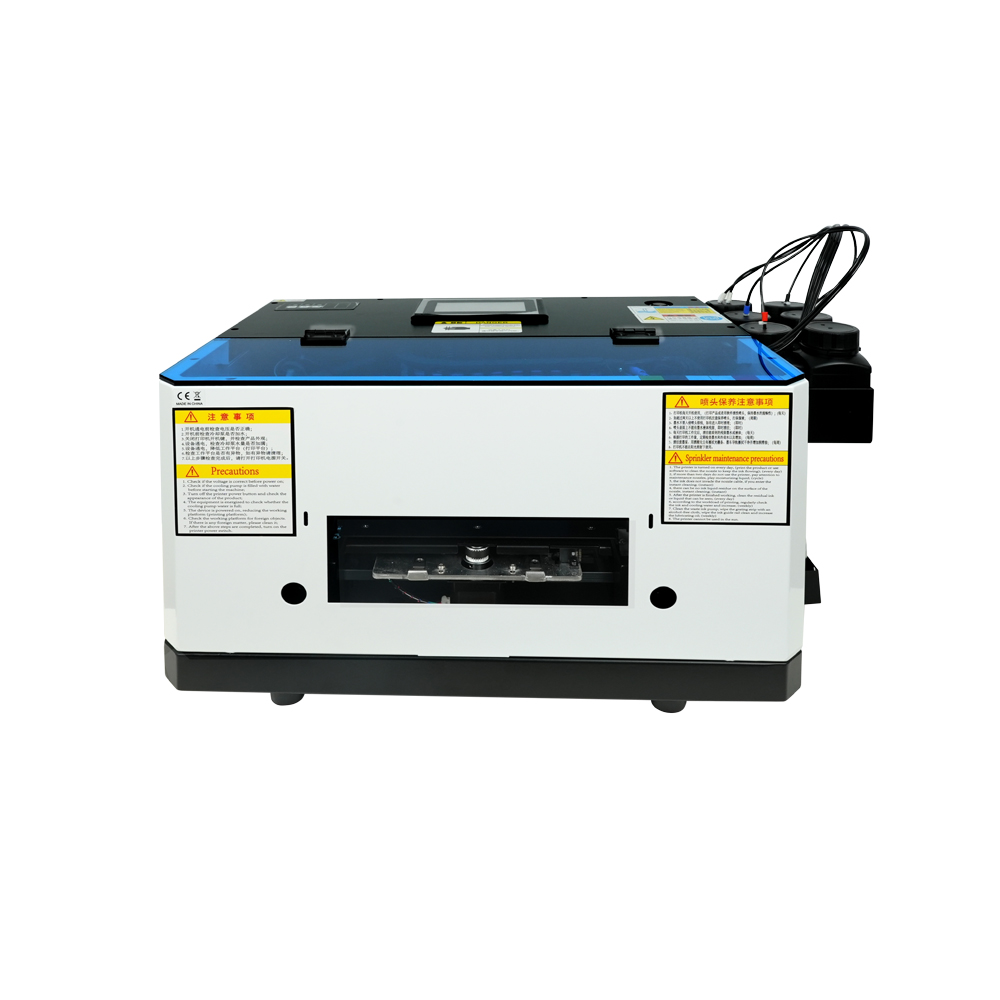
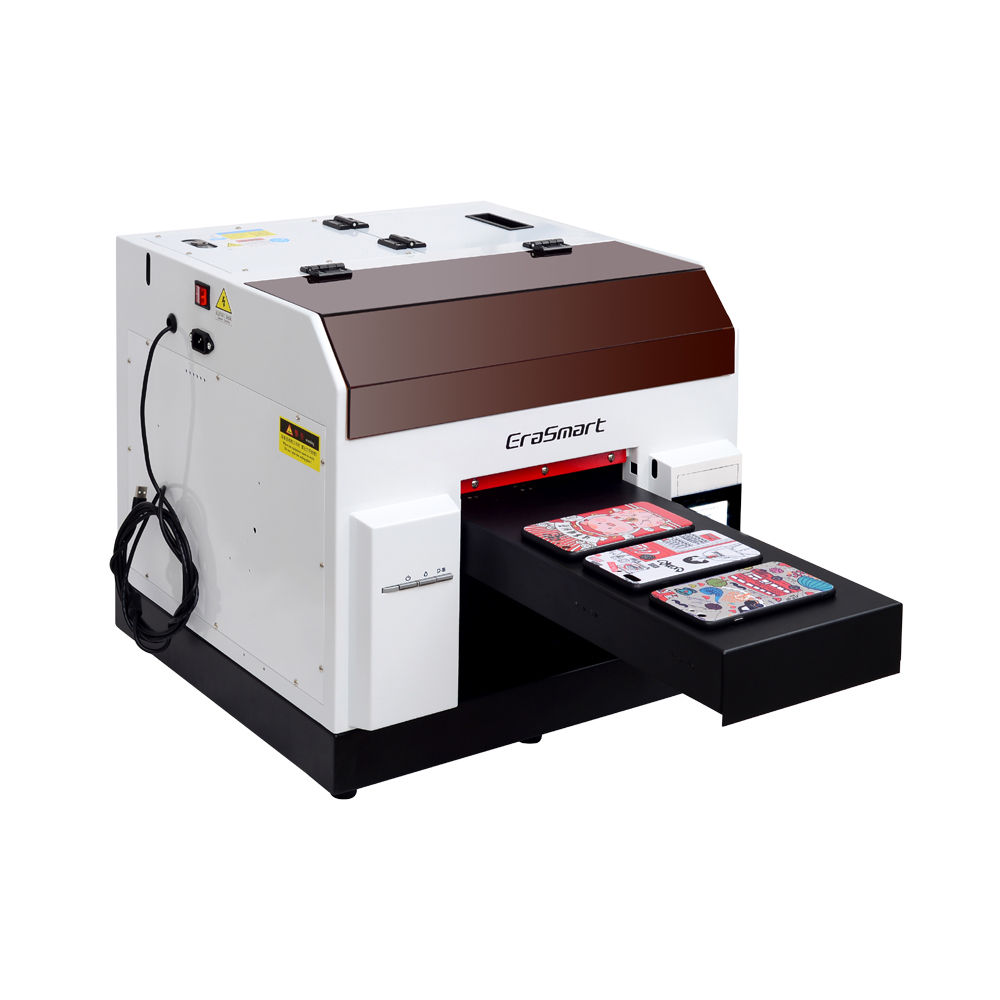
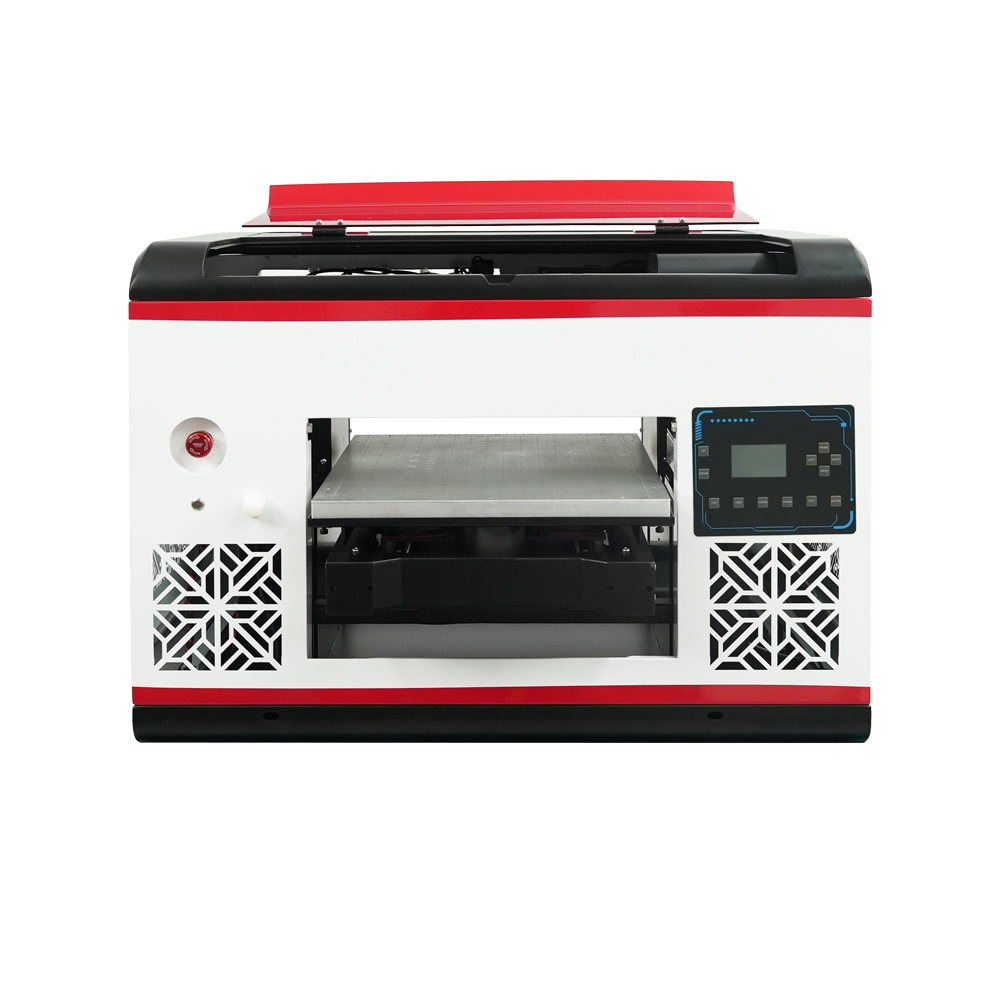
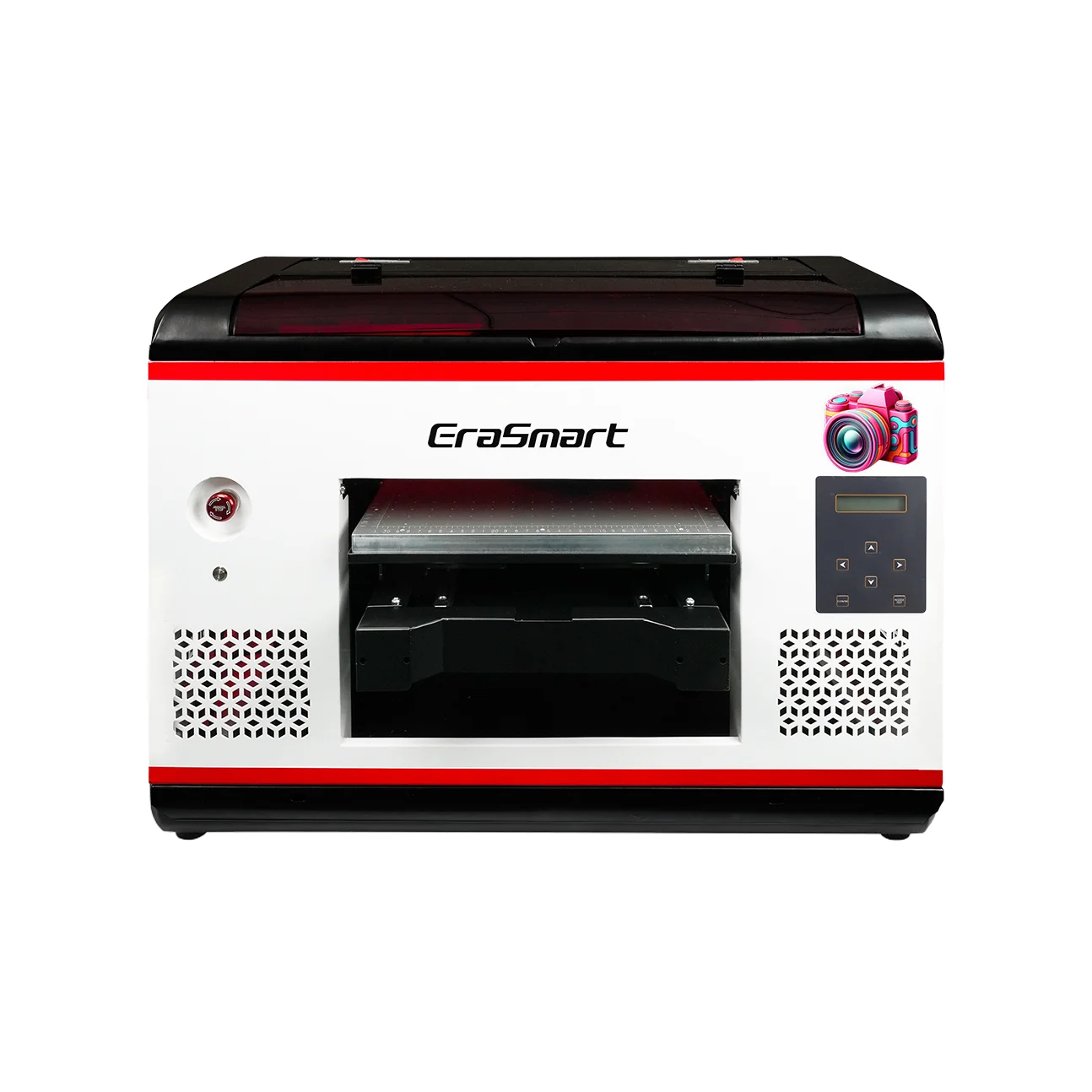
The EraSmart A4 UV Printer XP600 uses a single XP600 printhead and CMYK+WW configuration. Its listed platform size is 210 × 300 mm, while the effective print size is 180 × 290 mm. The listed printing height is 0–125 mm.
It can be considered for compact production of compatible small items such as acrylic keychains, bookmarks, small tags and name cards. When preparing a jig, use the effective print area rather than the platform’s outside dimensions.
EraSmart A3 MAX UV Printer XP600
The EraSmart A3 MAX UV Printer XP600 has a listed print size of 300 × 450 mm, a maximum listed printing height of 130 mm and an integrated suction platform.
The larger working area can provide more flexibility for larger blanks or multiple small products arranged in a jig. The number of items per run still depends on their dimensions, spacing, artwork and print settings.
When to Consider an EraSmart UV DTF Printer
For selected smooth hard-surface products such as compatible glass jars, cups and curved containers, a UV DTF printer may be a better fit than direct flatbed printing. UV DTF prints onto transfer film first; the prepared graphic is then applied to the target surface.
It is a separate workflow and requires suitable film, transfer preparation and surface testing. If a business plans to offer both rigid flat products and curved hard-surface gifts, it may evaluate a flatbed and UV DTF workflow as complementary production options.
Before choosing equipment, prepare a product list with material, dimensions, expected order quantity, personalization requirements and intended use. Share those details when requesting a recommendation.
How to Start a Wedding Favor Printing Business
A focused launch is usually easier to manage than offering every possible wedding product from day one.
Week 1: Choose the Customer and Product Range
Decide whether the main customer will be a wedding planner, venue, bridal boutique, event stylist or the couple directly. Select three or four products that can share blanks, artwork styles or production methods.
Week 2: Make Samples and Test Materials
Produce real samples using the exact blanks you plan to sell. Photograph them, record the settings and document any care limitations. Do not use a digital mockup as proof of material adhesion or finished quality.
Week 3: Build the Personalization and Quoting Process
Create order forms for names, dates, quantities and delivery deadlines. Prepare a proof approval step, a cost calculator and clear policies for late changes or rush orders.
Week 4: Approach Local Partners and Review Feedback
Show sample kits to wedding planners, venues, photographers and local gift businesses. Ask which products fit their clients and budgets. Track enquiries, sample requests, confirmed orders, production time and reprints before expanding the range.
For broader startup planning, see How to Start a UV Printing Business. For more product applications, explore Things to Print with a UV Printer.
Frequently Asked Questions About UV-Printed Wedding Favors
What are UV-printed wedding favors?
UV-printed wedding favors are personalized gifts decorated either by direct UV flatbed printing onto a compatible object or by applying a UV DTF transfer to a compatible hard surface. Common examples include acrylic keychains, magnets, coasters, name cards and selected decorated glass items.
Which wedding favors are suitable for a UV flatbed printer?
Compatible rigid blanks such as acrylic tags, magnets, bookmarks, coasters, name cards, small signs and suitable coated wood items are common candidates. The exact surface and coating should be tested before production.
What is the difference between UV flatbed printing and UV DTF for wedding favors?
A UV flatbed printer prints directly onto the compatible object placed on its platform. UV DTF prints the design onto transfer film first, then applies the prepared transfer to a suitable hard surface. The two methods serve different product shapes and workflows.
Can acrylic wedding favors be printed with white ink?
A UV printer configured with white ink can use white ink as a backing layer or part of a layered design on compatible transparent or dark substrates. The correct layer order depends on whether the item is printed from the front or viewed through the reverse side. Confirm the RIP setup with a physical sample.
Can UV DTF be used on wedding glass cups?
UV DTF transfers can be used on selected smooth glass surfaces when the transfer and glass finish are compatible. Keep decoration away from the drinking rim and food-contact areas. Follow the transfer supplier’s care instructions and do not assume dishwasher or microwave compatibility.
Can I personalize each favor with a different guest name?
Yes. Use a structured spreadsheet and a master artwork template with variable text fields. Check spelling, accents, capitalization and long names, then obtain customer approval before production.
How many wedding favors can be produced in one batch?
There is no universal number. Batch size depends on the printer’s effective print area, blank dimensions, spacing, jig design, print mode, artwork coverage and post-print assembly. Run a timed sample batch before promising a delivery quantity.
Is an A4 or A3 UV printer better for a wedding favor business?
An A4 model can suit smaller products and a compact workspace. An A3 model offers a larger effective working area for bigger blanks or more flexible multi-item layouts. Compare the exact model’s effective print size, object-height limit and platform features.
How should I price a personalized wedding favor order?
Include blanks, ink, consumables, labor, assembly, packaging, setup, rejects, payment fees, shipping and overhead. For personalized orders, charge separately for complex artwork, revisions or rush changes when appropriate.
Are UV-printed wedding favors waterproof or dishwasher-safe?
Do not assume so. Durability depends on the blank, coating, ink or transfer, application process and conditions of use. Follow the material supplier’s care instructions and make only claims supported by testing of the finished product.
Create Personalized Wedding Favors with EraSmart
A wedding favor collection can start with a few compatible blanks and one coordinated design system. Acrylic keychains, magnets, coasters and name cards are potential direct-print products, while selected glass jars and cups may be better suited to a UV DTF transfer workflow.
The right production setup depends on the products, materials, order sizes and finishing steps—not simply the number of ideas in a catalog.
Explore EraSmart UV Printers and EraSmart UV DTF Printers, or contact the team with your target material, product dimensions and expected order quantity to discuss a suitable workflow.
MAY BE YOU LIKE ALSO
Copyright 2020 © EraSmart. | Sitemap